


























Views
Downloads


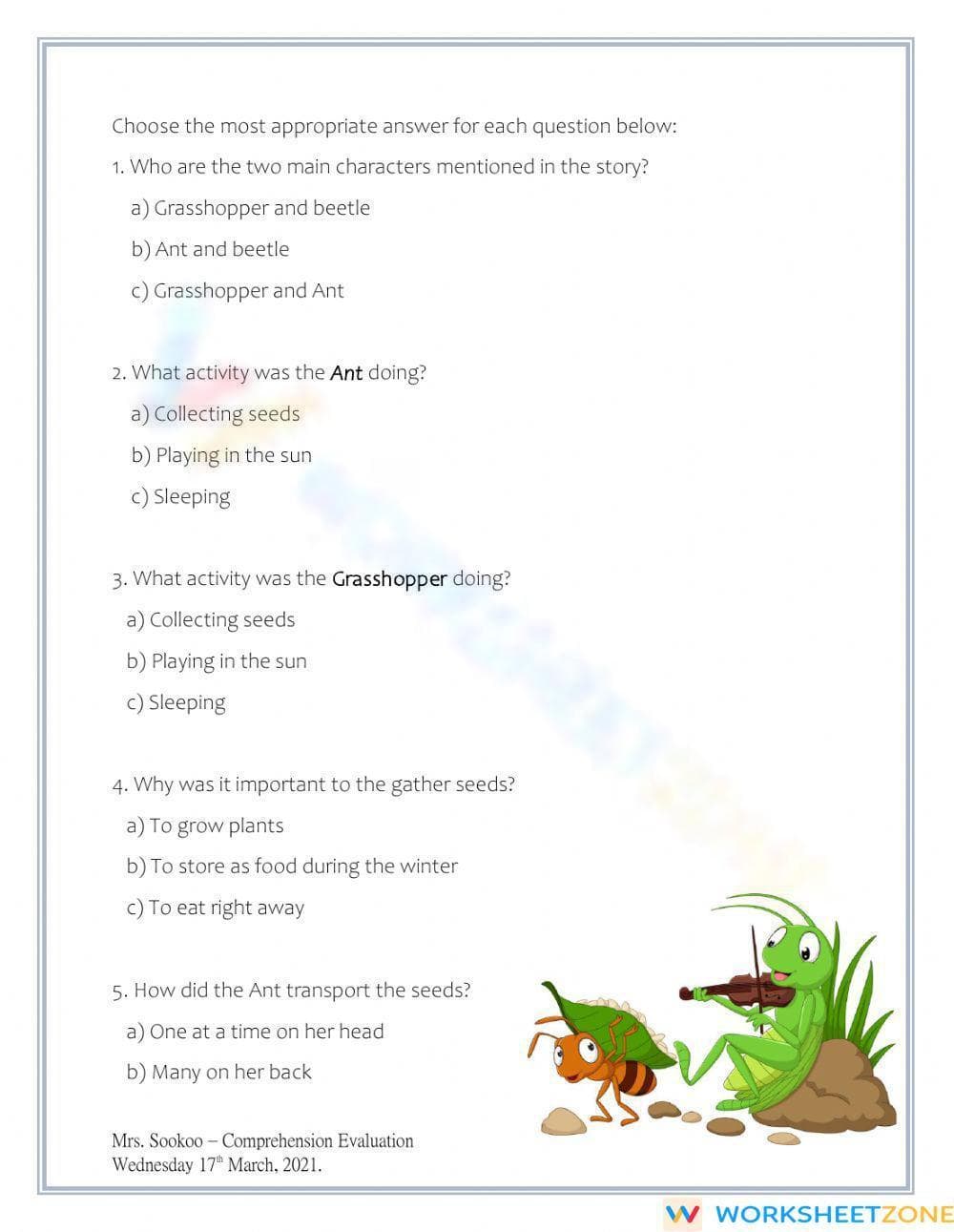


Printable Reading Comprehension Worksheet for Grade 2/3
Paste this activity's link or code into your existing LMS (Google Classroom, Canvas, Teams, Schoology, Moodle, etc.).
Students can open and work on the activity right away, with no student login required.
You'll still be able to track student progress and results from your teacher account.
This ready-to-use worksheet provides a comprehensive evaluation of Grade 2 and 3 reading comprehension. Students engage with two passages—a narrative and a fable—to practice sequencing events and answering questions about key details, character, and central message, reinforcing foundational literacy abilities in a structured format.
At a Glance
- Grade: 2–3 · Subject: English Language Arts (ELA)
- Standard:
CCSS.ELA-LITERACY.RL.2.2— Recount fables and determine their central message or moral.- Skill Focus: Reading Comprehension, Sequencing, Key Details
- Format: 4 pages · 15 problems · Answer key included · PDF
- Best For: Reading assessment, independent practice, sub plans
- Time: 20–30 minutes
What's Inside
This four-page PDF includes two reading activities. The first page features a short narrative where students sequence six key events. The following pages contain the fable "The Ant and the Grasshopper" with nine multiple-choice questions assessing plot, character, and the story's moral. A complete answer key is provided for quick grading.
Zero-Prep Workflow
This resource is built for efficiency. Follow three steps:
- Print (1 minute): The packet prints directly from the PDF file. No other materials are needed.
- Distribute (1 minute): Hand out for independent work. On-page instructions allow students to start immediately.
- Review (5 minutes): Use the answer key for rapid grading or a class review. It's an ideal, low-prep resource for substitute plans.
Standards Alignment
This worksheet aligns with CCSS.ELA-LITERACY.RL.2.2, requiring students to "Recount stories, including fables... and determine their central message." The "Ant and the Grasshopper" activity directly applies this skill. The sequencing task also supports foundational recounting skills. The standard code can be copied directly into lesson plans or curriculum maps.
How to Use It
Use this as a post-instruction assessment, an ELA center activity, or as homework. For formative assessment, note if students struggle with sequencing versus inference to pinpoint needs. Most students can complete the worksheet in 20 to 30 minutes. It's an excellent check for understanding after a unit on fables.
Who It's For
This resource is for 2nd and 3rd graders building reading comprehension skills. The clear layout is accessible for students on grade level. For support, read the fable aloud with a small group. It pairs well with a lesson on story elements.
This comprehension evaluation provides targeted practice for CCSS.ELA-LITERACY.RL.2.2, focusing on recounting fables and identifying the central message. It combines two core ELA tasks: sequencing a narrative and answering key detail questions about a classic fable. Such focused skill practice is critical for developing proficient readers. Research from Fisher & Frey (2014) emphasizes that reading comprehension is not a single skill but a complex combination of abilities, including decoding, understanding text structure, and making inferences, all of which are addressed in this resource. By integrating a sequencing activity with a traditional comprehension check, the worksheet ensures students are practicing the interconnected skills needed to understand and learn from texts. The inclusion of a well-known fable provides a culturally relevant anchor for students as they work toward mastering this foundational ELA standard.


