


























Views
Downloads

Essential Compound Words Worksheet | Grade 1 ELA
Paste this activity's link or code into your existing LMS (Google Classroom, Canvas, Teams, Schoology, Moodle, etc.).
Students can open and work on the activity right away, with no student login required.
You'll still be able to track student progress and results from your teacher account.
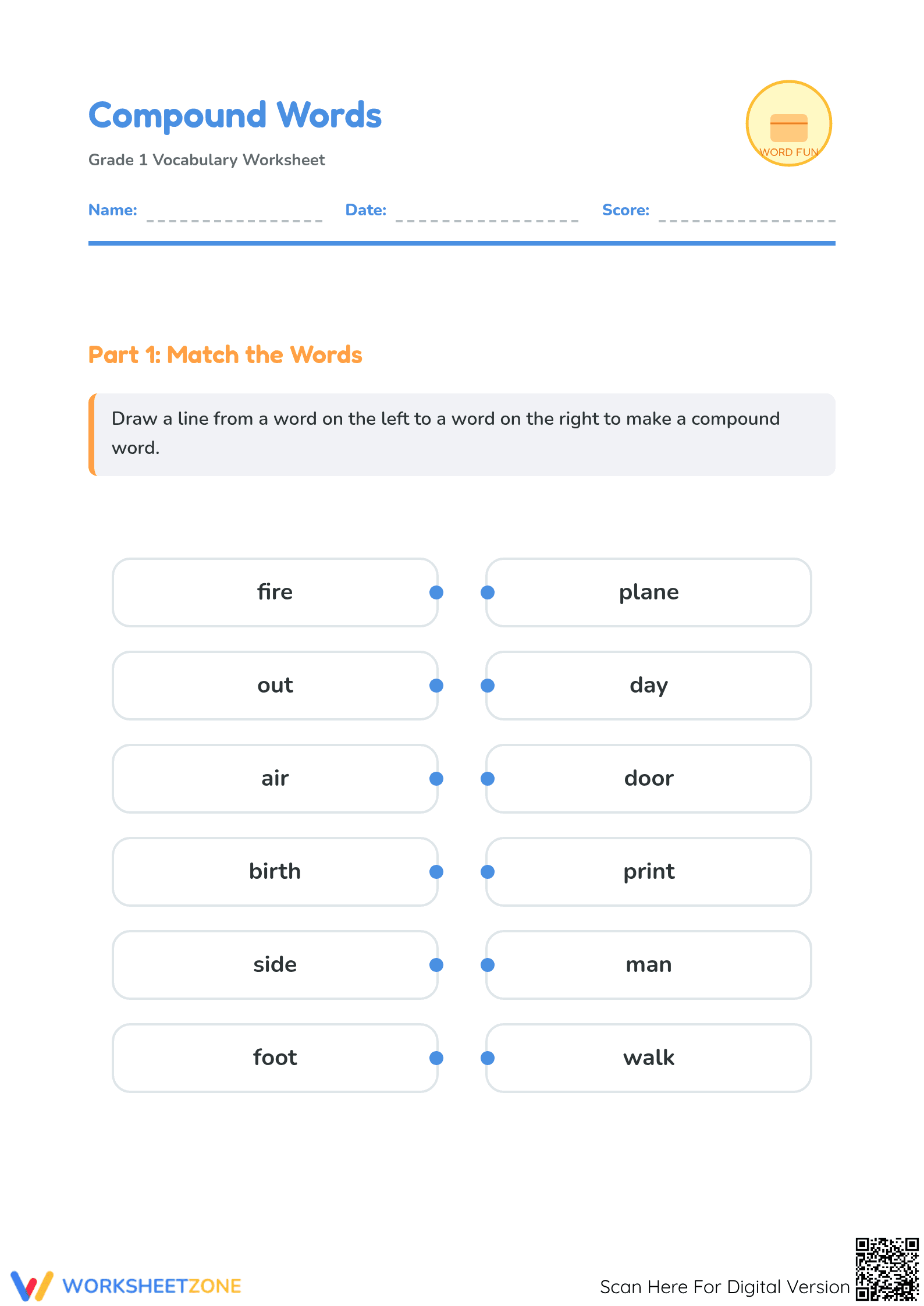
This Grade 1 compound words worksheet helps students understand how two distinct words combine to form a new meaning. By engaging in matching and writing exercises, learners build essential vocabulary and decoding skills. This resource ensures students can identify root words within complex structures, fostering a strong foundation for early literacy and reading comprehension.
At a Glance
- Grade: 1 · Subject: ELA
- Standard:
CCSS.ELA-LITERACY.L.1.4— Determine or clarify the meaning of unknown and multiple-meaning words and phrases- Skill Focus: Compound word formation
- Format: 4 pages · 24 problems · Answer key included · PDF
- Best For: Vocabulary building and literacy centers
- Time: 20–30 minutes
What's Inside
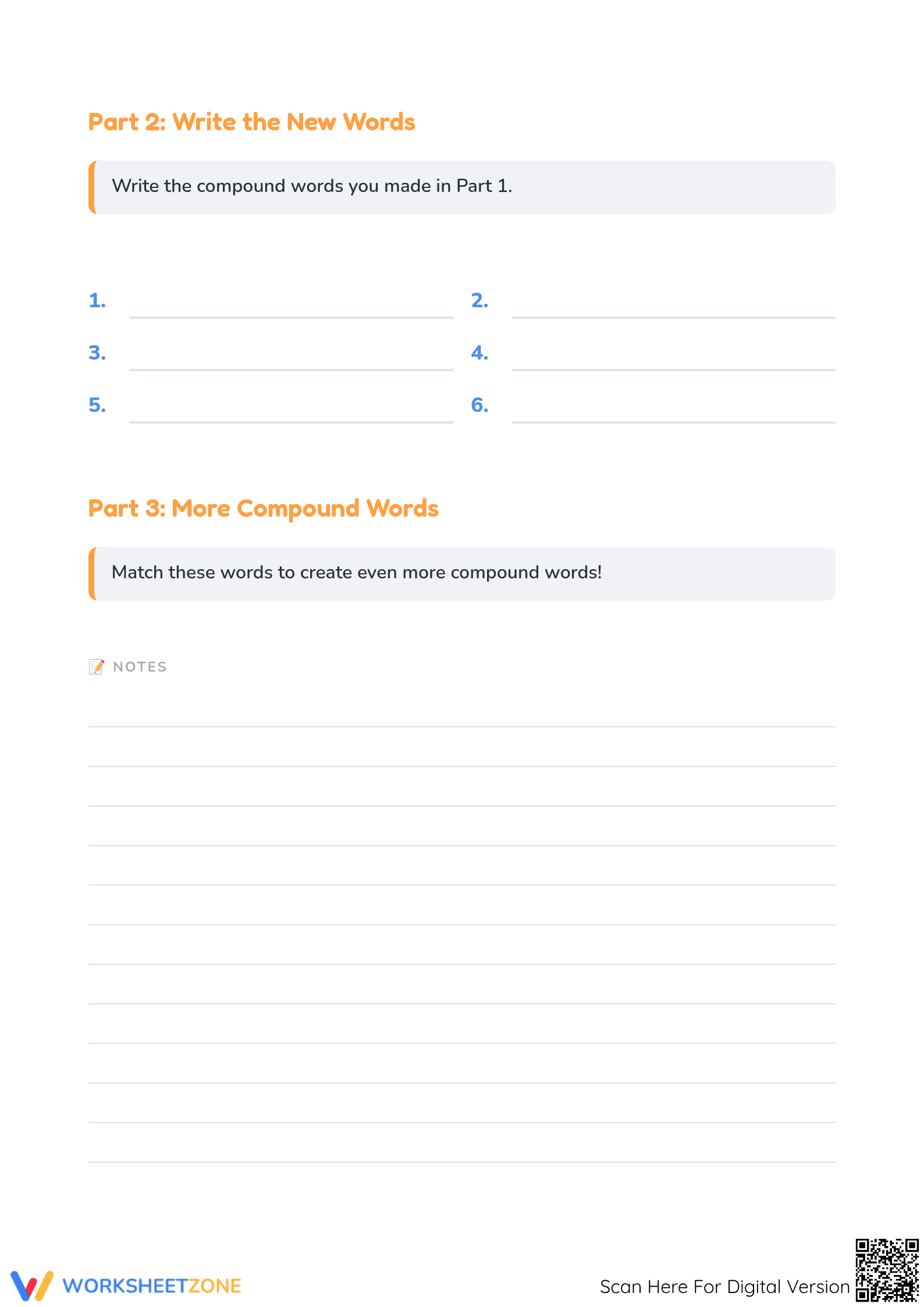
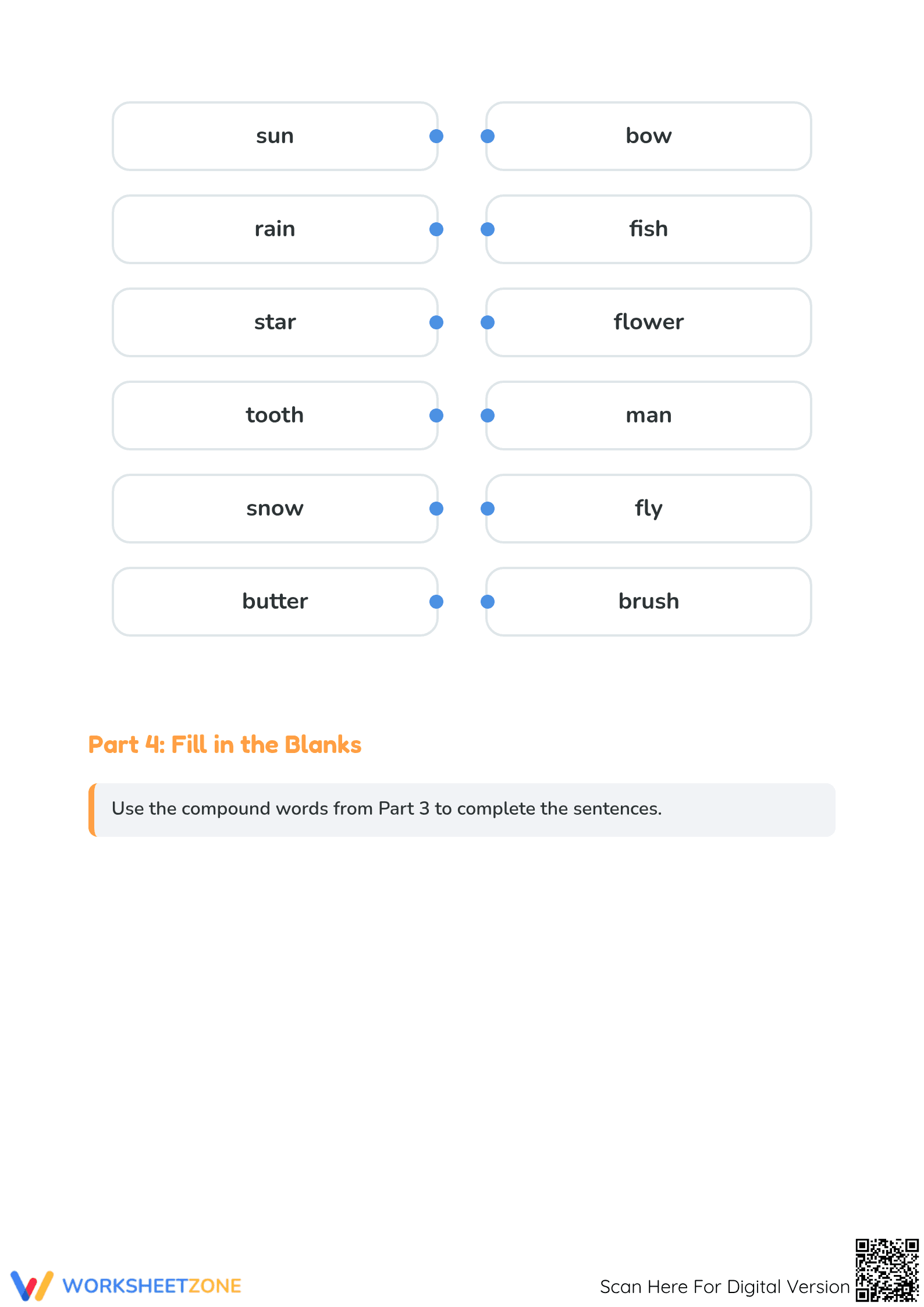
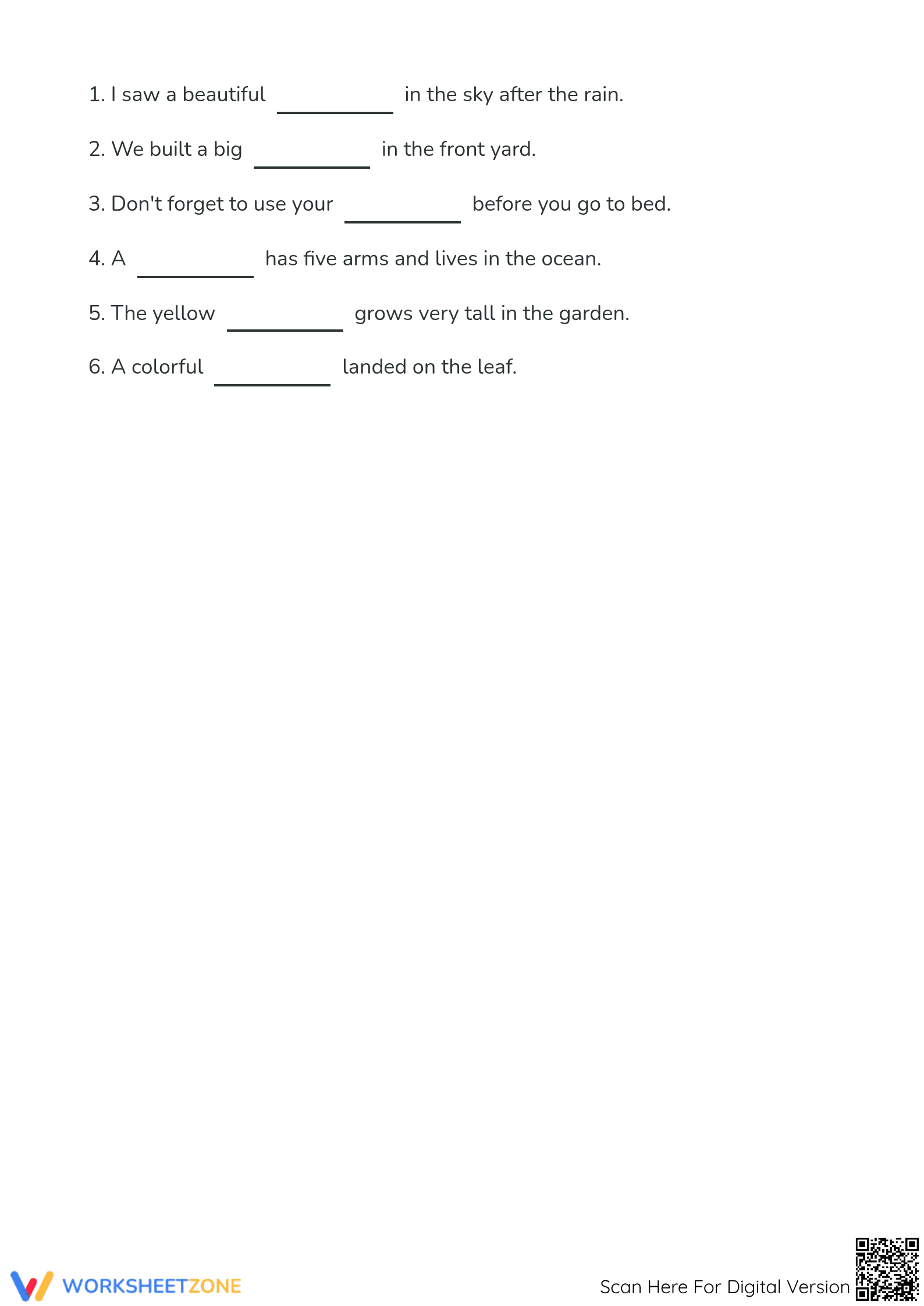
This comprehensive 4-page PDF contains four distinct parts designed to reinforce lexical knowledge. It includes two matching sections where students connect word pairs, a writing section for synthesis, and a sentence-completion task. The layout is clean and student-friendly, featuring a dedicated notes area and a full answer key for quick grading or self-correction.
Skill Progression
- Guided Practice: The worksheet begins with visual matching of 12 initial word segments to build confidence in identifying word parts.
- Supported Practice: Students move to writing the newly formed words, reinforcing spelling and the physical synthesis of the two root words.
- Independent Practice: Learners apply their knowledge to 6 context-based sentences, choosing the correct compound word to complete a thought.
This gradual-release model follows the I Do, We Do, You Do instructional framework to ensure student mastery.
Standards Alignment
This resource is aligned with `CCSS.ELA-LITERACY.L.1.4`, which requires students to determine or clarify the meaning of unknown and multiple-meaning words. It specifically targets the ability to use frequently occurring root words as a clue to the meaning of an unknown word. Both standard codes can be copied directly into lesson plans, IEP goals, or district curriculum mapping tools.
How to Use It
Use this worksheet during a small-group literacy rotation to provide targeted vocabulary support. Teachers can observe students during the matching phase to identify those struggling with word blending. It also serves as an excellent formative assessment after a direct instruction lesson on word parts. Expected completion time for the full set is approximately 25 minutes.
Who It's For
This resource is ideal for first-grade students developing their lexical awareness. It provides necessary scaffolding for English Language Learners (ELL) through clear word pairings and visual structures. Pair this worksheet with a compound word anchor chart or a shared reading passage to maximize the instructional impact and help students see these words in context.
The mastery of compound words is a critical milestone in early literacy, as it introduces students to the concept of morphology and word synthesis. This Grade 1 worksheet aligns with CCSS.ELA-LITERACY.L.1.4 by challenging students to decompose and reconstruct lexical units. Research from Fisher & Frey (2014) emphasizes the importance of the gradual release of responsibility, which this resource mirrors through its progression from simple matching to contextual application in sentences. By engaging with 24 specific tasks, students move beyond rote memorization toward a functional understanding of how language is structured. This systematic approach to vocabulary acquisition is supported by the NAEP framework, which highlights the correlation between morphological awareness and long-term reading comprehension success. Educators can utilize this structured PDF to provide high-quality, evidence-based practice that fits easily into existing ELA blocks while ensuring all learners meet foundational language standards.


