































Complete Travel Vocabulary Word Search | Grade 3 ELA

Paste this activity's link or code into your existing LMS (Google Classroom, Canvas, Teams, Schoology, Moodle, etc.).
Students can open and work on the activity right away, with no student login required.
You'll still be able to track student progress and results from your teacher account.
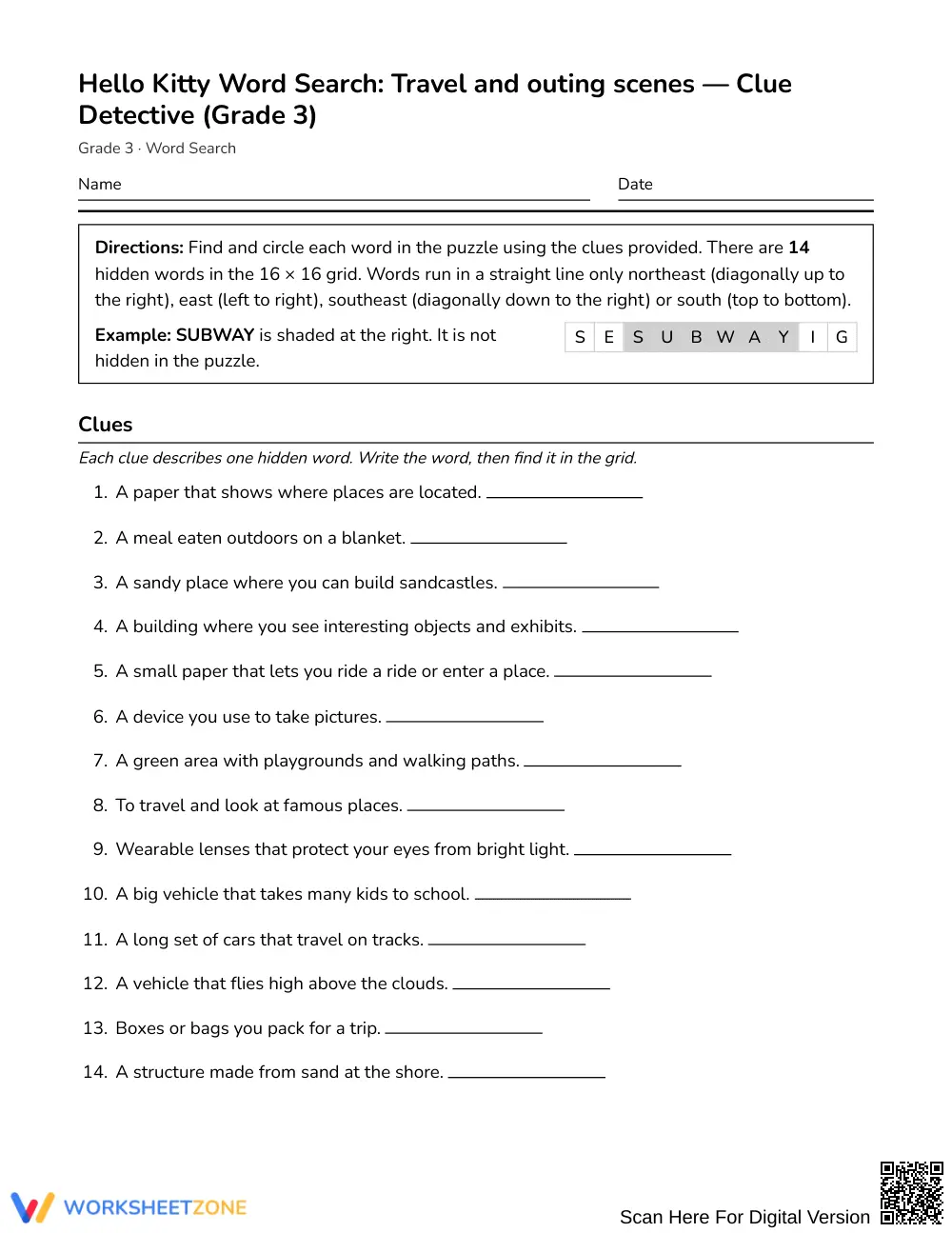
This Grade 3 travel and outing vocabulary word search strengthens semantic understanding by pairing clue definitions with a search puzzle. Students read contextual definitions to identify 14 outing-related terms, reinforcing spelling and reading comprehension across two student pages. The activity builds foundational literacy confidence while offering purposeful vocabulary practice for elementary learners.
At a Glance
- Grade: Grade 3 · Subject: English Language Arts (ELA)
- Standard: Not standards-assessed — vocabulary enrichment for independent word learning
- Skill Focus: Travel and outing scenes vocabulary identification
- Format: 2 pages · 14 words · Answer key included · Printable PDF
- Best For: Morning work, vocabulary stations, and early finishers
- Time: 15–25 minutes of focused learning
What's Inside
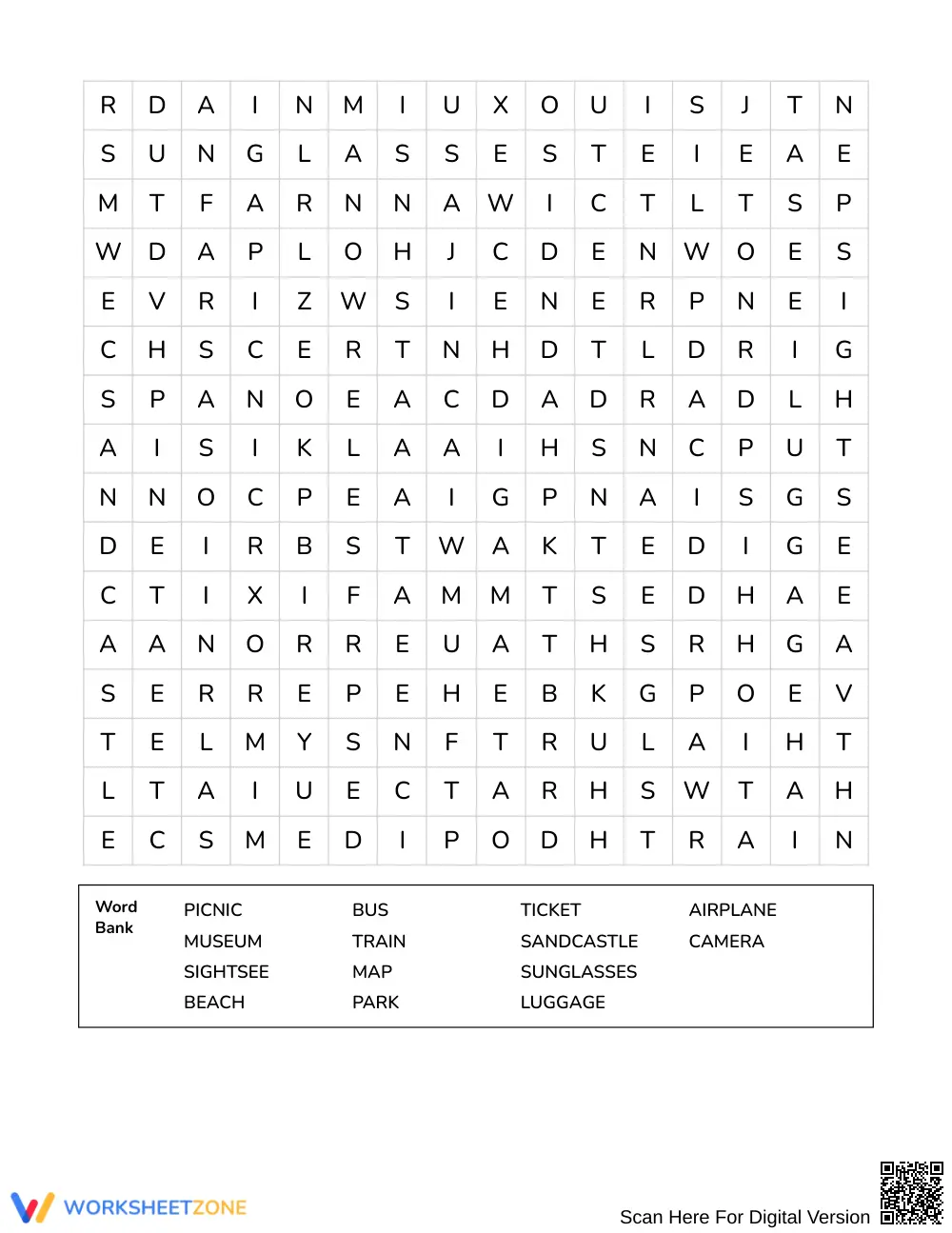
This two-page printable contains 14 themed vocabulary terms centered on travel and outing scenes, accompanied by concise clue definitions for each word. Students read definitions for nouns and verbs such as luggage, museum, ticket, and sightsee before locating them. A comprehensive answer key spanning three pages provides complete puzzle solutions, showing exact word placements for quick verification.
Puzzle Mechanics and Structure
The activity features a 16 x 16 letter grid designed specifically for third-grade readers. Hidden vocabulary words run in four distinct directions: northeast (NE), east (E), southeast (SE), and south (S). Instead of simply matching letter strings from a list, students utilize descriptive clue prompts alongside a shuffled word bank. This design requires learners to connect semantic clues to target words before locating each term across the grid.
Standards Alignment
This word search is designed strictly for vocabulary enrichment and is not aligned to a specific academic standard. The activity supports foundational literacy growth by broadening contextual word recognition and reinforcing thematic travel terminology through recreational puzzle-solving.
How to Use It
Incorporate this puzzle after direct instruction on thematic vocabulary or during literacy centers. First, teachers can assign it as an independent vocabulary consolidation task following an informational reading unit about transportation and geography. Second, use the puzzle during small-group reading rotations where partners read clues aloud to each other. During the activity, observe whether students identify words directly from the contextual clues or rely entirely on letter scanning, which highlights their semantic retrieval strength. Most third-grade students will complete the puzzle in 15 to 25 minutes.
Who It's For
This resource is created for Grade 3 elementary students building thematic word banks. It supports general education classrooms, English language learners developing travel-related vocabulary, and students who benefit from visual-spatial learning tasks. Pair this puzzle with an informational travel text or a community transport anchor chart to give students additional exposure to descriptive vocabulary in authentic reading contexts.
Vocabulary enrichment activities that combine definitional clues with active search strategies significantly enhance lexical acquisition in elementary learners. According to Fisher & Frey (2014), intentional word exposure through varied instructional routines solidifies orthographic mapping and semantic connections, moving vocabulary from receptive recognition to productive language use. While this travel and outing scenes word search is not tied to a formal standard code, it reinforces 14 high-utility thematic words through contextual definition matching. Research demonstrates that pairing descriptive clues with spatial word identification encourages active problem-solving and strengthens spelling memory more effectively than isolated rote memorization. Elementary educators can utilize clue-based puzzles during independent literacy rotations to build student word confidence, support English language learners, and foster positive engagement with print. This structured vocabulary enrichment task provides third-grade students with purposeful language practice that directly supports broader reading comprehension.


