































Complete Travel & Transit Word Search | Grades 5–6 ELA

Paste this activity's link or code into your existing LMS (Google Classroom, Canvas, Teams, Schoology, Moodle, etc.).
Students can open and work on the activity right away, with no student login required.
You'll still be able to track student progress and results from your teacher account.
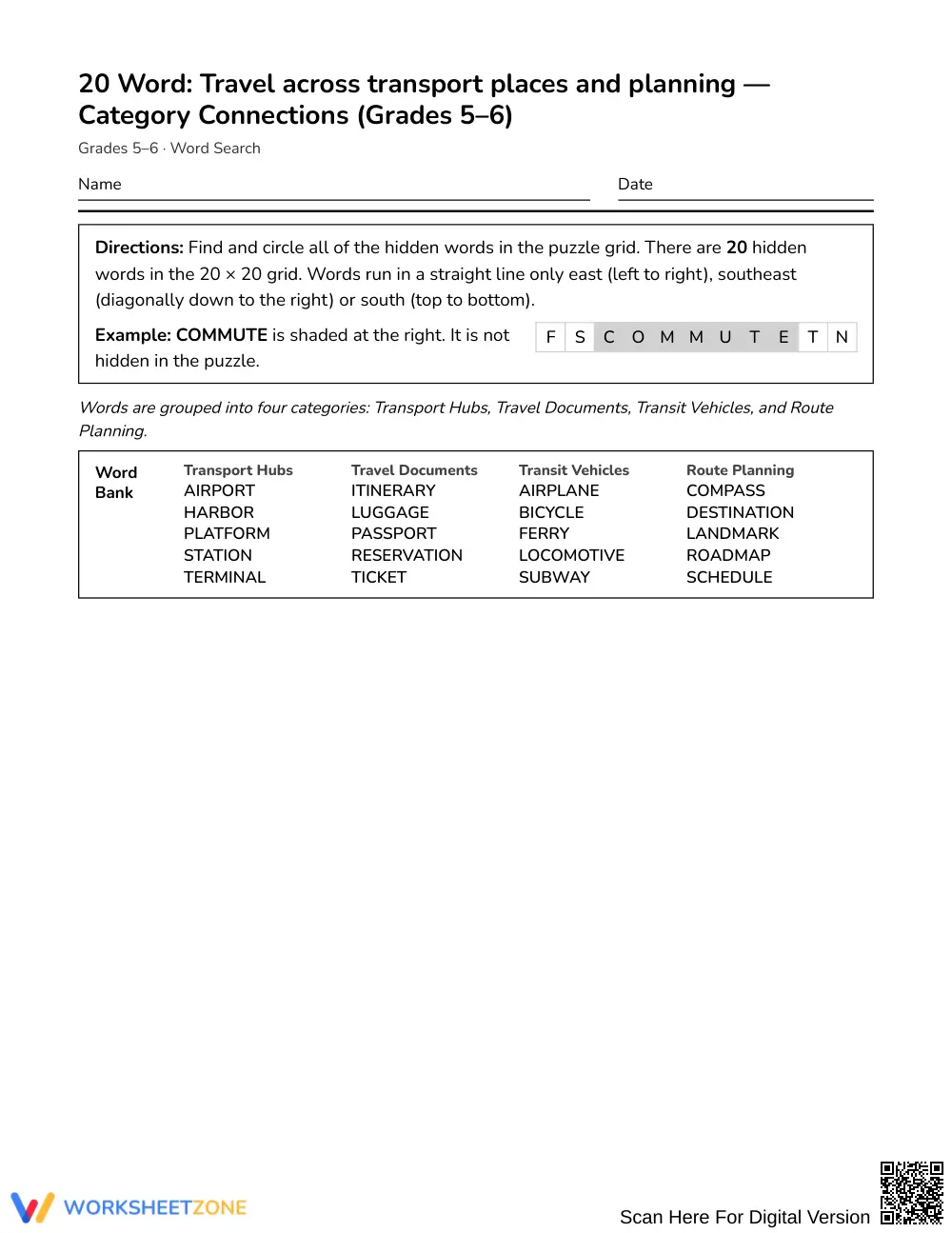
This travel and transportation word search builds upper-elementary vocabulary through targeted thematic recognition. Students identify and reinforce essential terminology related to transit hubs, travel documentation, passenger vehicles, and journey planning. Designed for independent practice, the activity strengthens spelling, semantic sorting, and context-based word identification across diverse informational reading scenarios.
At a Glance
- Grade: Grades 5–6 · Subject: English Language Arts (ELA)
- Standard: Not standards-assessed — vocabulary enrichment
- Skill Focus: Travel across transport places and planning
- Format: 2 pages · 20 words · Answer key included · PDF
- Best For: Vocabulary review and early finishers
- Time: 20–30 minutes
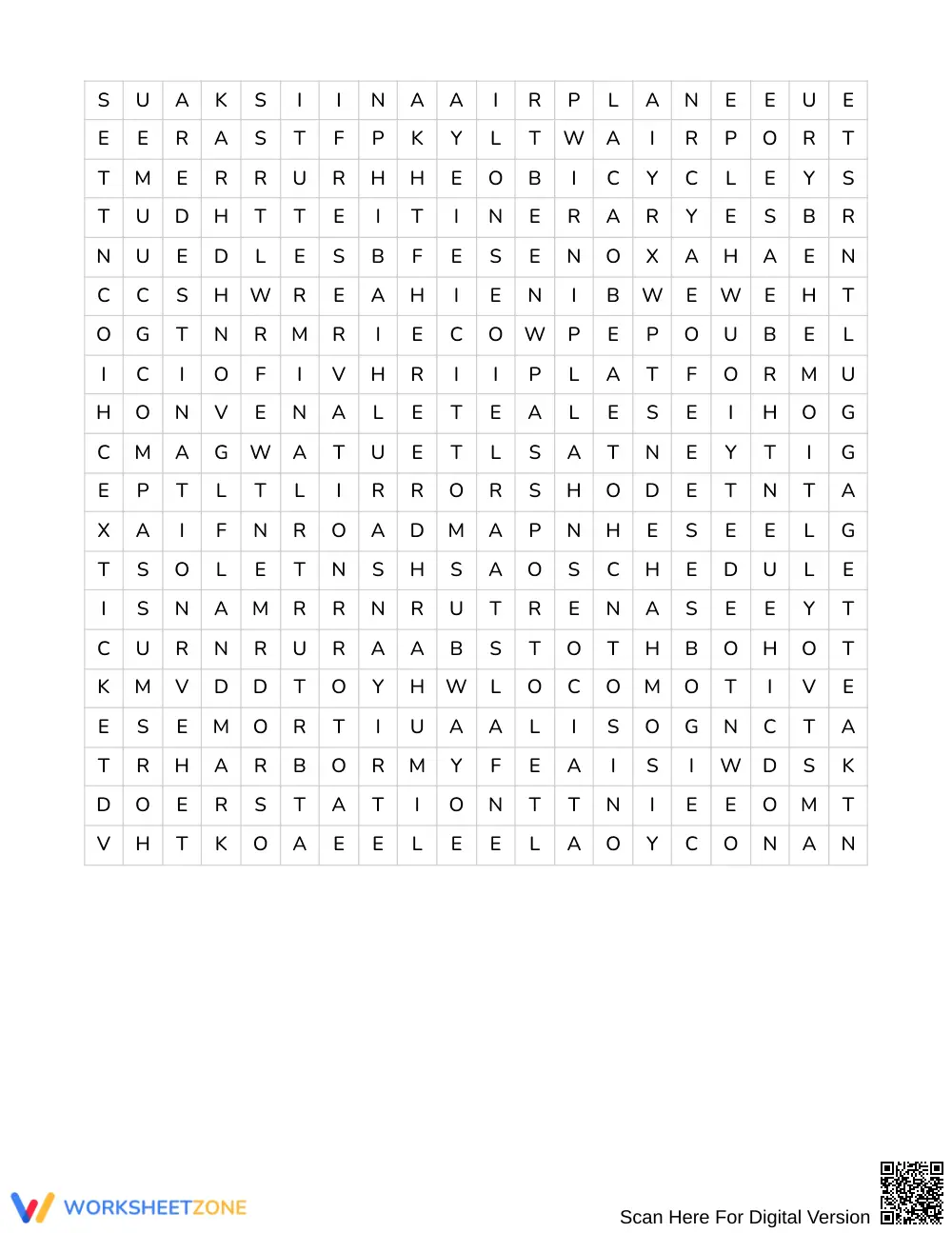
What's Inside: The two-page printable features a clear puzzle layout alongside organized reference lists and context definitions. A complete three-page answer key provides fast verification for student self-checking or quick teacher evaluation.
How the Puzzle Works: Words are arranged within an expansive 20-by-20 grid. Hidden terms run in three standard orientations: East (left-to-right), Southeast (diagonal down-right), and South (vertical top-to-bottom). The activity groups all 20 vocabulary terms into four thematic categories: Transport Hubs, Travel Documents, Transit Vehicles, and Route Planning. Each word includes an explicit informational definition that reinforces core meaning as students locate items.
Standards Alignment: This activity serves as supplemental vocabulary enrichment and is not aligned to a formal state academic standard. It supports domain-specific language acquisition by helping intermediate readers connect transportation terms to clear, practical definitions.
How to Use It: Deploy this puzzle during the consolidation phase after introducing informational texts on transportation, geography, or logistics. It also functions well as an independent warm-up before a travel-writing assignment. For formative assessment, observe whether students identify words using letter-cluster scanning or by reviewing the definitions first to build conceptual connections. Expected completion time is 20 to 30 minutes.
Who It's For: Designed for students in Grades 5–6, this resource offers meaningful language enrichment for general classrooms, English language learners needing contextual cues, and students requiring engaging orthographic practice. Pair this puzzle with a non-fiction reading passage on global transit or an informational writing unit centered on itinerary planning.
Building domain-specific vocabulary requires varied exposures to specialized terminology in organized contexts. According to Fisher & Frey (2014), intentional word exposure coupled with conceptual categorization accelerates reading comprehension and language retention in intermediate readers. This word search supports lexical acquisition by embedding twenty transportation terms within an engaging 20-by-20 grid. Rather than presenting isolated lists, the activity organizes vocabulary into four distinct functional clusters: transit hubs, travel documents, passenger vehicles, and route planning. Explicit definitions accompany each entry, ensuring learners connect orthographic letter patterns with clear semantic meaning. The structured East, Southeast, and South search paths build spatial focus and letter-sequence recognition without overwhelming students. As a zero-prep enrichment tool, the puzzle reinforces core literacy habits, supports independent study routines, and supplies essential background knowledge for upper-elementary informational reading units.


