































Complete Stranger Things Word Search | Grades 8–12 ELA

Paste this activity's link or code into your existing LMS (Google Classroom, Canvas, Teams, Schoology, Moodle, etc.).
Students can open and work on the activity right away, with no student login required.
You'll still be able to track student progress and results from your teacher account.
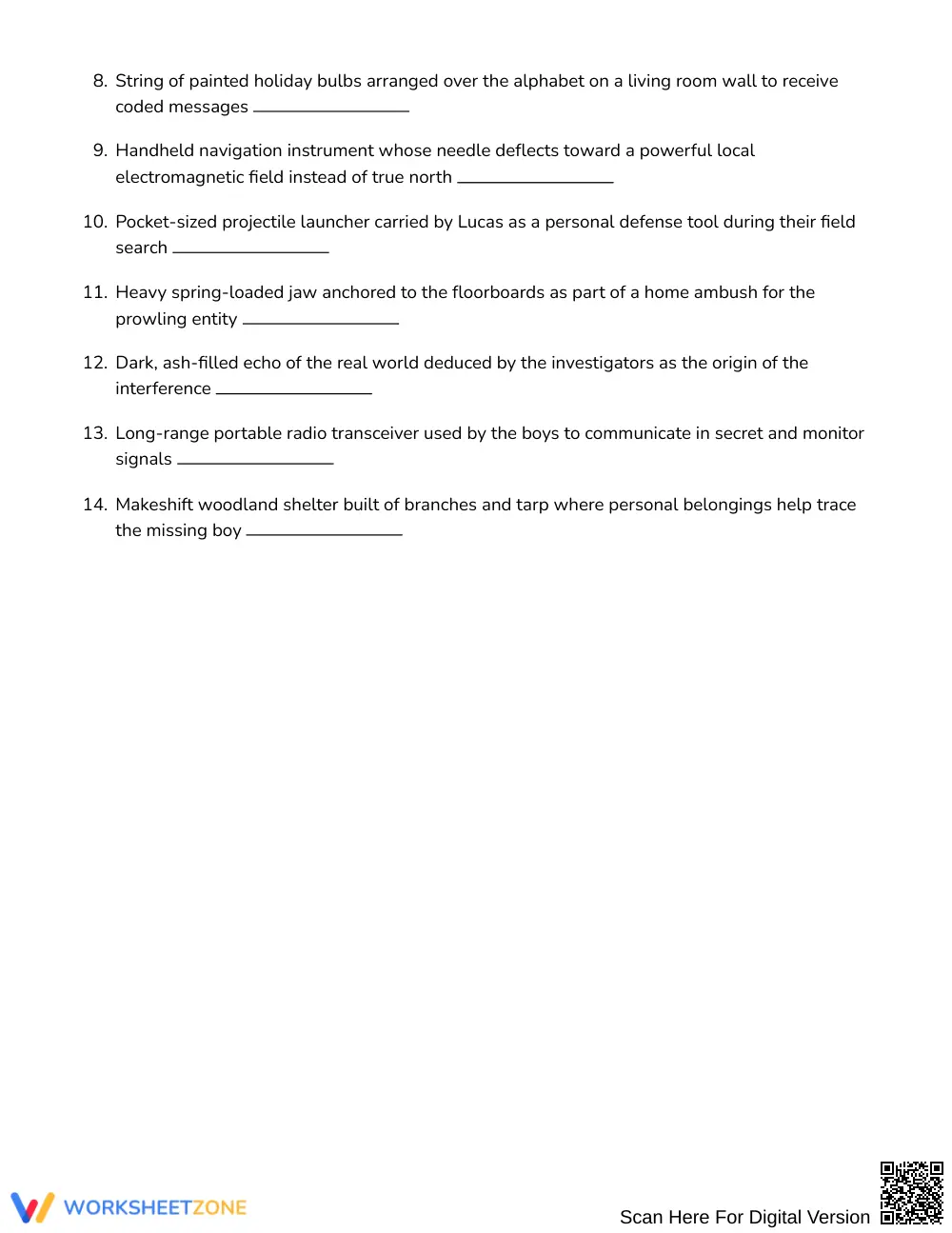
This investigative vocabulary word search challenges secondary students to connect narrative evidence with key mystery terms from Season One. Learners analyze text-based contextual clues to identify fourteen specific story artifacts, locations, and plot devices before locating each hidden term across a custom puzzle grid. It reinforces vocabulary retrieval and close-reading comprehension in English Language Arts.
At a Glance
- Grade: Grades 8–12 · Subject: English Language Arts (ELA)
- Standard: Not standards-assessed — vocabulary enrichment
- Skill Focus: Clues and investigation in season one
- Format: 3 pages · 14 words · Answer key included · PDF
- Best For: Literary mystery unit vocabulary enrichment
- Time: 20–35 minutes
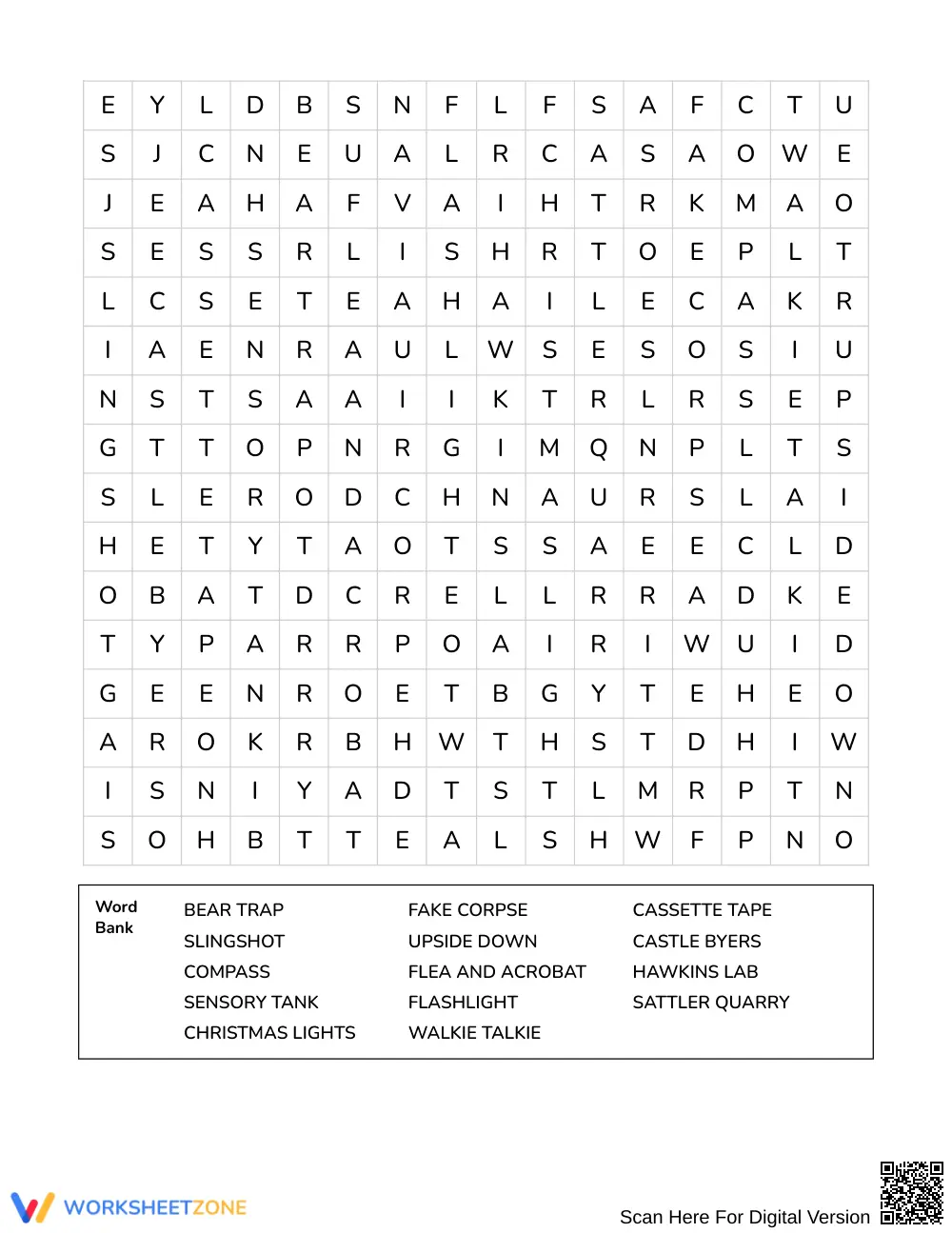
Inside this 3-page printable activity, educators will find a student puzzle worksheet featuring a 16 by 16 letter grid alongside fourteen descriptive mystery clues. Rather than presenting a simple list of terms to copy, the resource provides detailed scenario definitions that require students to deduce the correct vocabulary word before searching. A complete 3-page answer key provides circled solutions for swift grading or student self-checking.
The activity operates on a 16 by 16 letter matrix with hidden terms running across four distinct directional vectors: northeast, east, southeast, and south. Students encounter a shuffled clue bank containing terms such as compass, sensory tank, and castle byers. Learners read each contextual prompt, infer the corresponding investigative device or setting, and track the targeted letter sequences through the grid.
This resource serves as targeted vocabulary enrichment and is not aligned to a formal state or national content standard. It emphasizes deductive reasoning, critical vocabulary recall, and narrative detail tracking without attaching standardized testing criteria.
Introduce this puzzle after completing a suspense or mystery literature unit to consolidate thematic vocabulary, or assign it during independent reading stations to reinforce detective conventions. While circulating, observe whether students identify terms directly from clue context or depend on grid scanning, noting which learners need extra support connecting evidence to inference. Most learners complete the search within 20 to 35 minutes.
This word search targets secondary learners in Grades 8–12 who enjoy forensic analysis, procedural storytelling, and pop-culture mystery narratives. It supports general education classes, literacy intervention groups, and early finishers seeking high-interest contextual word study. Pair this activity directly with a suspense anchor chart, a character tracking log, or a lesson on deductive reasoning in narrative fiction.
Educational research from Fisher & Frey (2014) highlights that purposeful vocabulary acquisition requires varied exposure to specialized language within engaging, authentic contexts. By coupling descriptive clues with word-recognition search tasks, this activity promotes active retrieval rather than passive repetition. Students must process fourteen detailed story descriptions, evaluate semantic clues, and connect specific narrative concepts such as forensic evidence, communication tools, and investigative settings to target terminology. This multi-step process stimulates orthographic mapping and cognitive retention across secondary reading environments. According to Fisher & Frey (2014), intentional word study paired with contextual problem solving deepens lexical access, helping adolescent readers transfer specialized terminology into broader reading comprehension and analytical writing tasks. The printable puzzle provides secondary educators with an organized, evidence-based instructional tool that bridges recreational engagement and rigorous narrative vocabulary development across Grades 8–12 English Language Arts classrooms.


