































Complete Sonic Characters Word Search | Grades 7-8 ELA

Paste this activity's link or code into your existing LMS (Google Classroom, Canvas, Teams, Schoology, Moodle, etc.).
Students can open and work on the activity right away, with no student login required.
You'll still be able to track student progress and results from your teacher account.
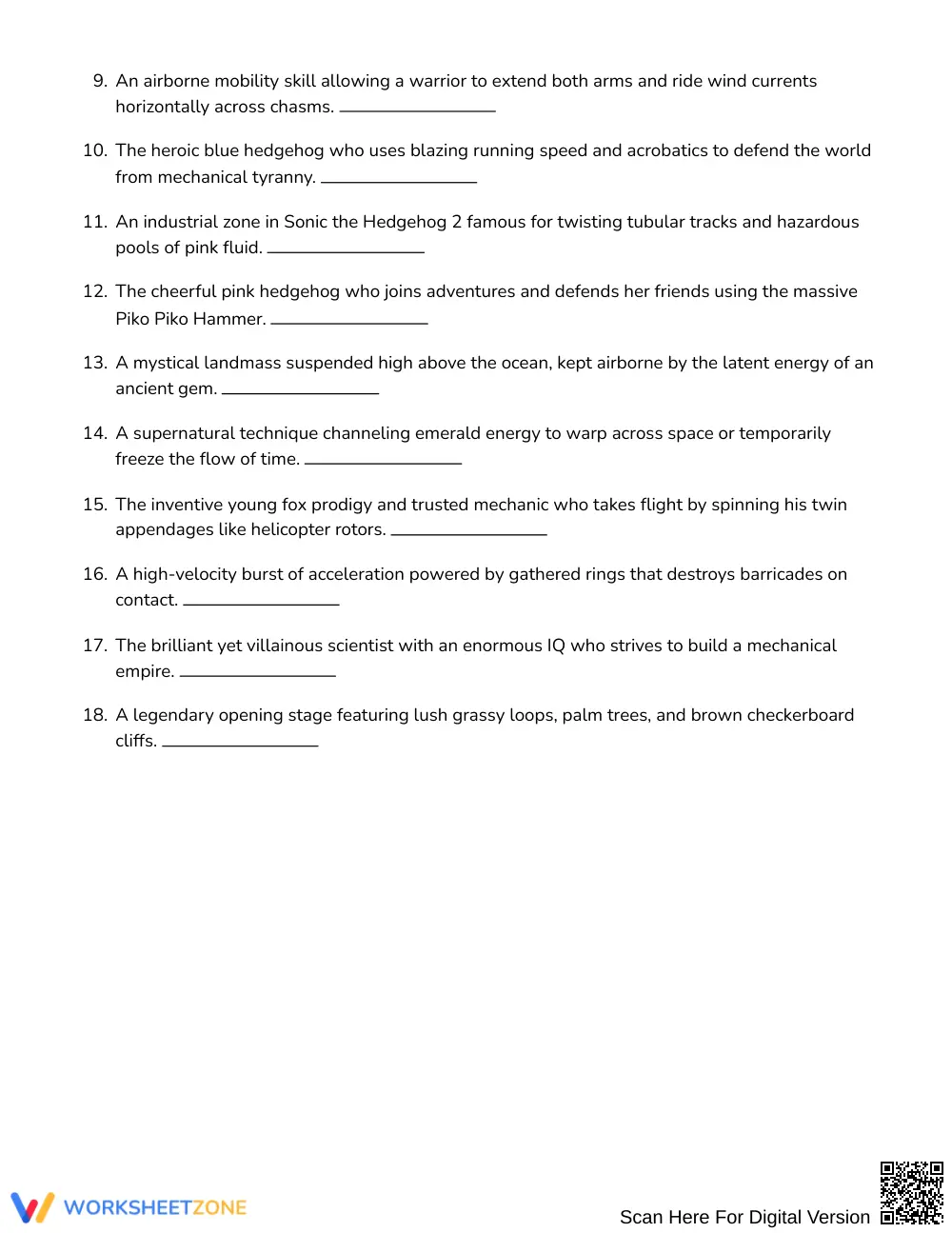
This Grades 7–8 vocabulary word search reinforces literary comprehension and context clues through iconic characters, settings, and abilities from the Sonic universe. Students analyze descriptive text clues to identify 18 hidden vocabulary terms within a challenging grid, making this an engaging cumulative review activity that strengthens descriptive recognition and reading retention.
At a Glance
- Grade: Grades 7–8 middle school · Subject: English Language Arts (ELA)
- Standard: Not standards-assessed — vocabulary enrichment and context reading
- Skill Focus: Characters, settings, and abilities text clue identification
- Format: 3 pages · 18 words · Detailed answer key included · PDF
- Best For: Cumulative vocabulary review, fast finishers, and substitute plans
- Time: 20–30 minutes
What's Inside
The activity package spans 3 student-facing pages designed for clean, legible printing. It features an 18-entry shuffled word bank alongside detailed descriptive clues describing major protagonists, antagonists, famous zones, and signature movement maneuvers. A complete 4-page answer key provides clear visual grids marking letter coordinates for quick self-assessment or teacher grading.
Puzzle Mechanics and Structure
Students work with a dense 20×20 letter grid containing 18 hidden terms. Target words run in all eight possible directions: horizontal, vertical, and diagonal orientations running forward and backward (N, NE, E, SE, S, SW, W, and NW). Rather than simply scanning for letter strings, students read contextual clues that reinforce narrative traits before locating the shuffled terms across the board.
Standards Alignment
This activity is designed strictly for vocabulary enrichment and is not aligned to a specific Common Core or state standard. It provides supplementary contextual reading practice that strengthens general literacy and descriptive comprehension without requiring formal standards documentation.
How to Use It
Deploy this word search during independent seatwork after completing a descriptive writing unit, or keep it ready as an engaging zero-prep option for substitute folders. During completion, conduct brief formative checks by asking students to explain which specific keywords in the clue sentences helped them deduce the corresponding character or stage name. Most middle school students complete the search in 20 to 30 minutes.
Who It's For
This resource is tailored for Grades 7–8 students who benefit from high-interest contextual reading practice, including reluctant readers and visual learners. For differentiated support, pair this activity with a collaborative partner or provide a highlighter so students can underline character traits in the clues before searching.
Engaging middle school learners through high-interest thematic puzzles directly fosters vocabulary retention and text-dependent reading stamina. According to research synthesized by Fisher & Frey (2014), purposeful word work and contextual clue analysis support secondary literacy development by bridging informal background knowledge with structured analytical reading behaviors. This 18-word search activity integrates detailed character descriptions and setting depictions within a structured 20×20 puzzle grid, requiring students to synthesize narrative hints before locating hidden vocabulary terms across eight distinct geometric directions. By combining descriptive clue interpretation with orthographic pattern recognition, the resource transforms traditional word finding into an active reading comprehension exercise. Educators can easily implement this non-standards-assessed vocabulary enrichment tool to reinforce learner motivation during independent study periods, collaborative literacy centers, or structured review blocks, effectively strengthening associative memory, sustained focus, and narrative detail recall across intermediate English Language Arts classrooms.


