































Complete Seasonal Events Word Search | Grades 7–8 Science

Paste this activity's link or code into your existing LMS (Google Classroom, Canvas, Teams, Schoology, Moodle, etc.).
Students can open and work on the activity right away, with no student login required.
You'll still be able to track student progress and results from your teacher account.
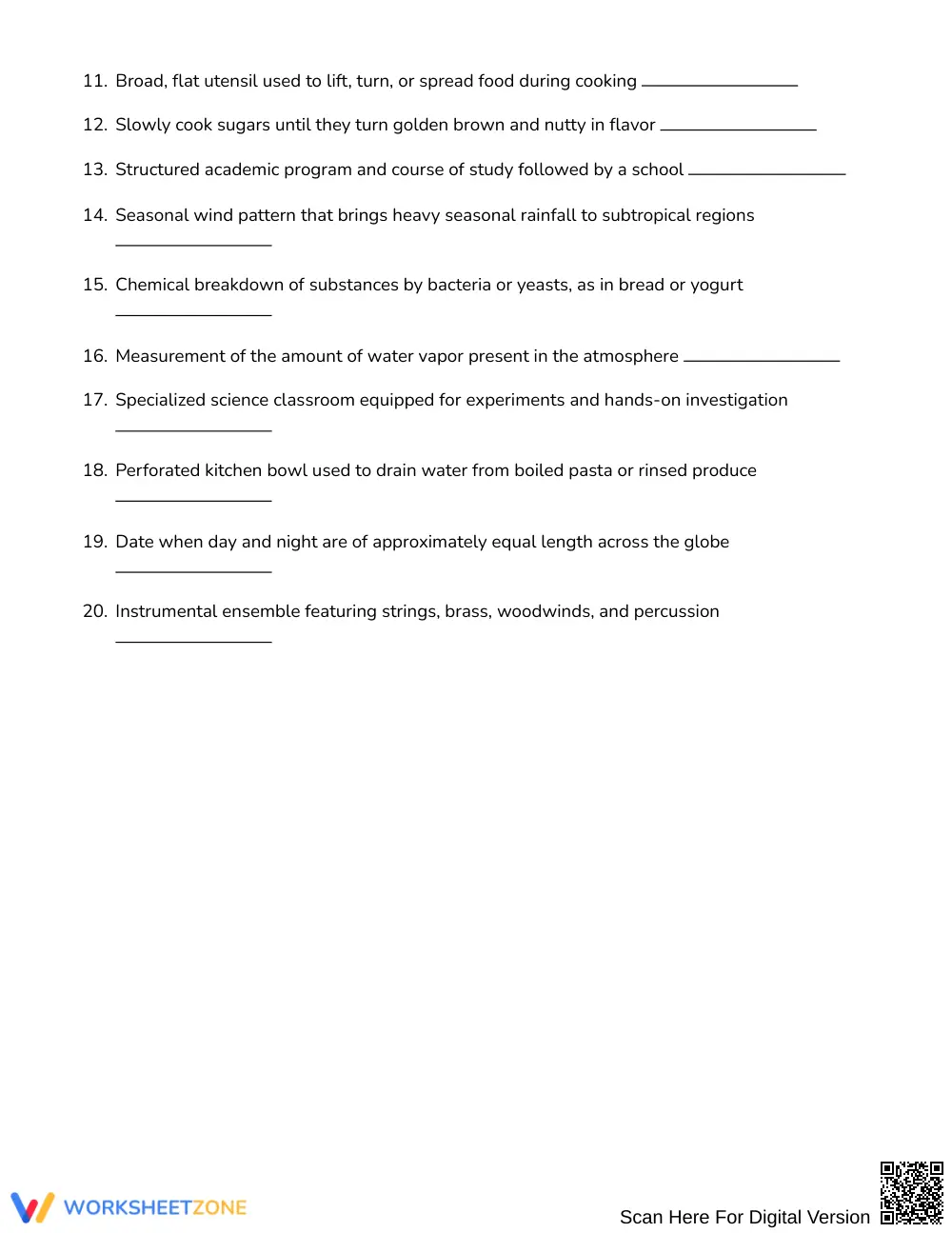
Reinforce middle school earth science concepts and seasonal terminology with this engaging 20-word review activity. Students read content-rich clues, determine key vocabulary terms spanning seasonal weather, cyclical events, and school routines, and locate them across a challenging letter grid, strengthening retention and scientific literacy.
At a Glance
- Grade: Grades 7–8 · Subject: Science
- Standard: Not standards-assessed — vocabulary enrichment
- Skill Focus: Seasonal year across weather activities and events
- Format: 3 pages · 20 words · Answer key included · PDF
- Best For: Vocabulary review and fast finisher work
- Time: 25–35 minutes
What's Inside
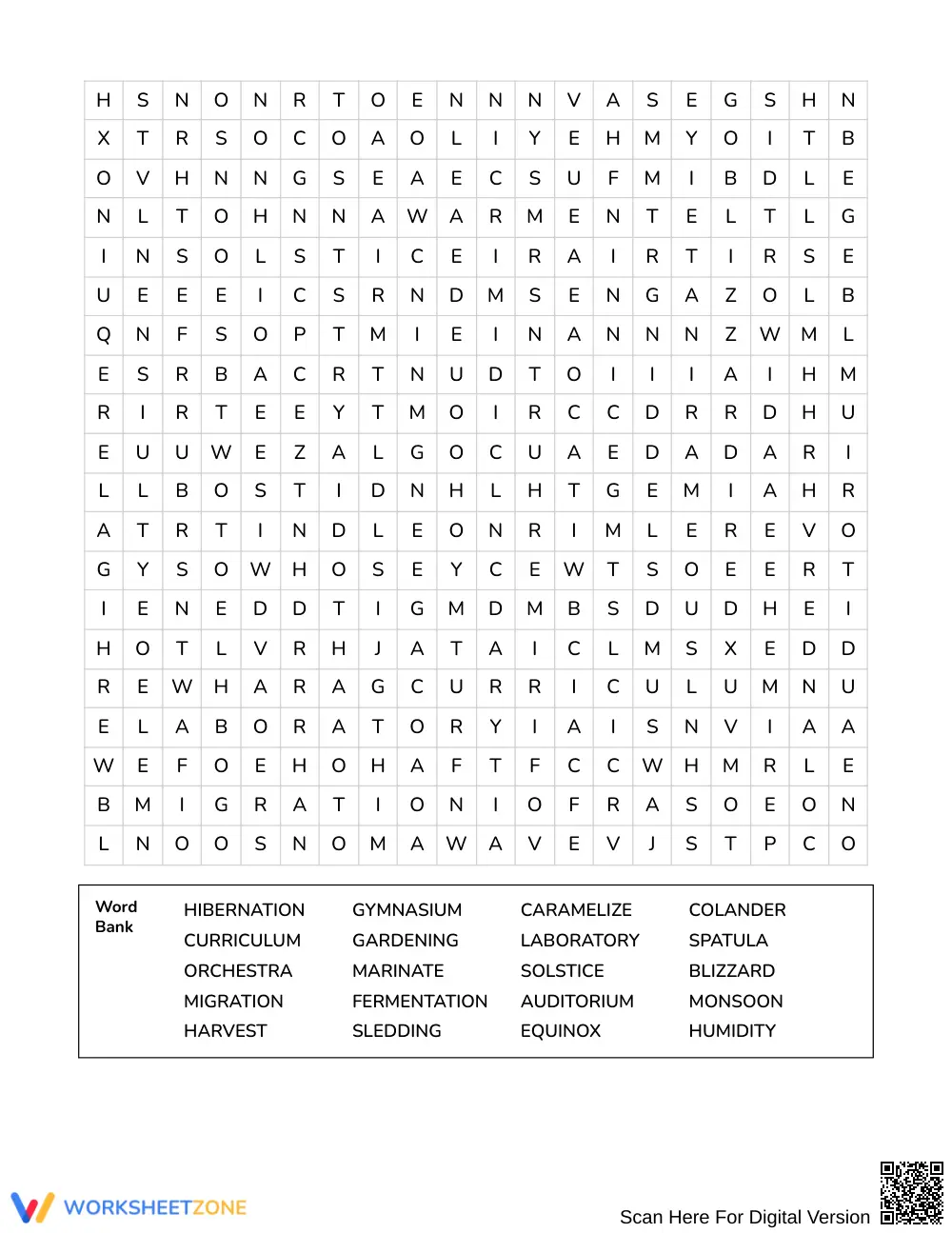
This 3-page printable activity packet features 20 words organized into a challenging puzzle format. Students consult a shuffled word bank and read 20 rigorous definition clues covering meteorological patterns, astronomical cycles, and seasonal events. The activity includes a dedicated 4-page answer key that clearly maps each hidden word across the grid for rapid grading.
How the Puzzle Works
Students solve the puzzle by reading each clue to determine the target vocabulary word before searching the 20 by 20 grid. The 20 words are hidden in all eight possible directions: north, northeast, east, southeast, south, southwest, west, and northwest. A shuffled word bank provides reference support while requiring learners to read carefully and verify spelling.
Standards Alignment
This activity provides targeted vocabulary enrichment and cumulative review rather than formal assessment against a single standard code. By emphasizing domain-specific science vocabulary alongside seasonal contexts, it supports interdisciplinary literacy and vocabulary retention across middle school science curricula.
How to Use It
Deploy this word search during an Earth science unit on seasons and weather as a post-instruction review activity, or use it as an engaging independent sub plan. During seatwork, circulate to observe whether students use the clues to define words independently before checking the shuffled word bank. Most middle school students complete the puzzle in 25 to 35 minutes.
Who It's For
Designed for Grades 7–8 science students, this word search works well for general education classrooms, early finishers, and peer review pairs. For students needing additional scaffolding, pair the activity with a classroom anchor chart on weather systems and astronomical cycles to reinforce conceptual definitions.
Vocabulary acquisition in secondary science classrooms requires repeated, contextual exposure to academic language across diverse instructional settings. As highlighted by Fisher & Frey (2014), intentional word study and retrieval practice reinforce students' conceptual understanding by bridging complex technical scientific terminology with practical real-world applications. This Grades 7–8 seasonal science word search provides targeted vocabulary enrichment across weather events, astronomical cycles, and seasonal activities without the pressure of formal testing. By decoding descriptive clues to identify 20 specific terms before locating them within a complex 20 by 20 letter grid, middle school learners engage both semantic memory and visual-spatial scanning. Integrating clue-based word puzzles into Earth and space science units gives students low-stakes opportunities to consolidate domain-specific terms, supporting critical reading comprehension in informational science texts and strengthening foundational scientific literacy across varied learning environments.


