


























Views
Downloads


Complete School Clubs Word Search | Grades 4–5 ELA
Paste this activity's link or code into your existing LMS (Google Classroom, Canvas, Teams, Schoology, Moodle, etc.).
Students can open and work on the activity right away, with no student login required.
You'll still be able to track student progress and results from your teacher account.
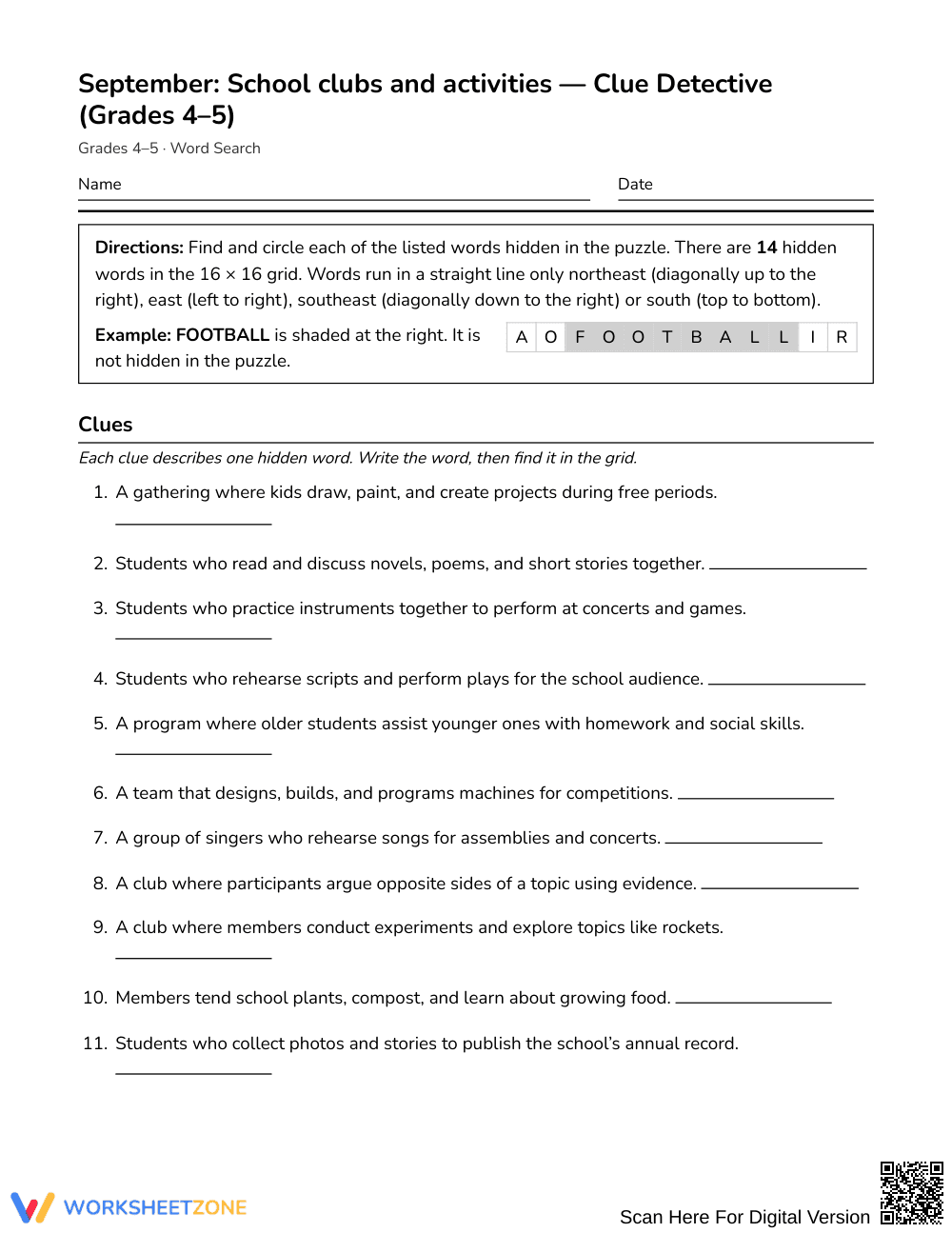
This Grades 4–5 vocabulary word search helps students build familiarity with common extracurricular programs and school community terms. Learners read descriptive definitions to identify 14 target words before searching for them across the puzzle grid, strengthening context clue comprehension, orthographic recognition, and thematic school vocabulary.
At a Glance
- Grade: Grades 4–5 · Subject: English Language Arts (ELA)
- Standard: Not standards-assessed — vocabulary enrichment
- Skill Focus: School clubs and activities
- Format: 3 pages · 14 words · Answer key included · PDF
- Best For: Back-to-school vocabulary practice
- Time: 20–30 minutes
What's Inside
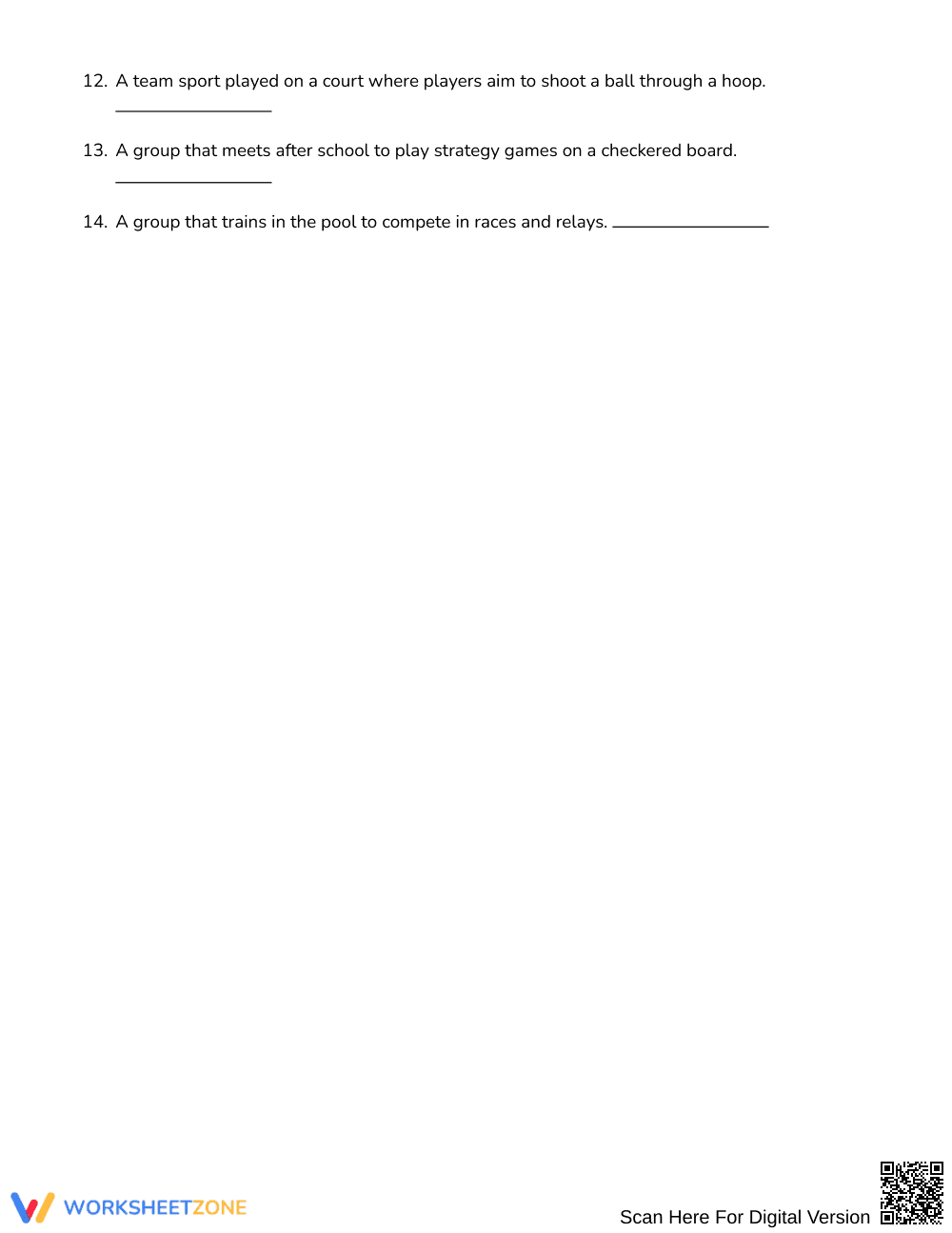
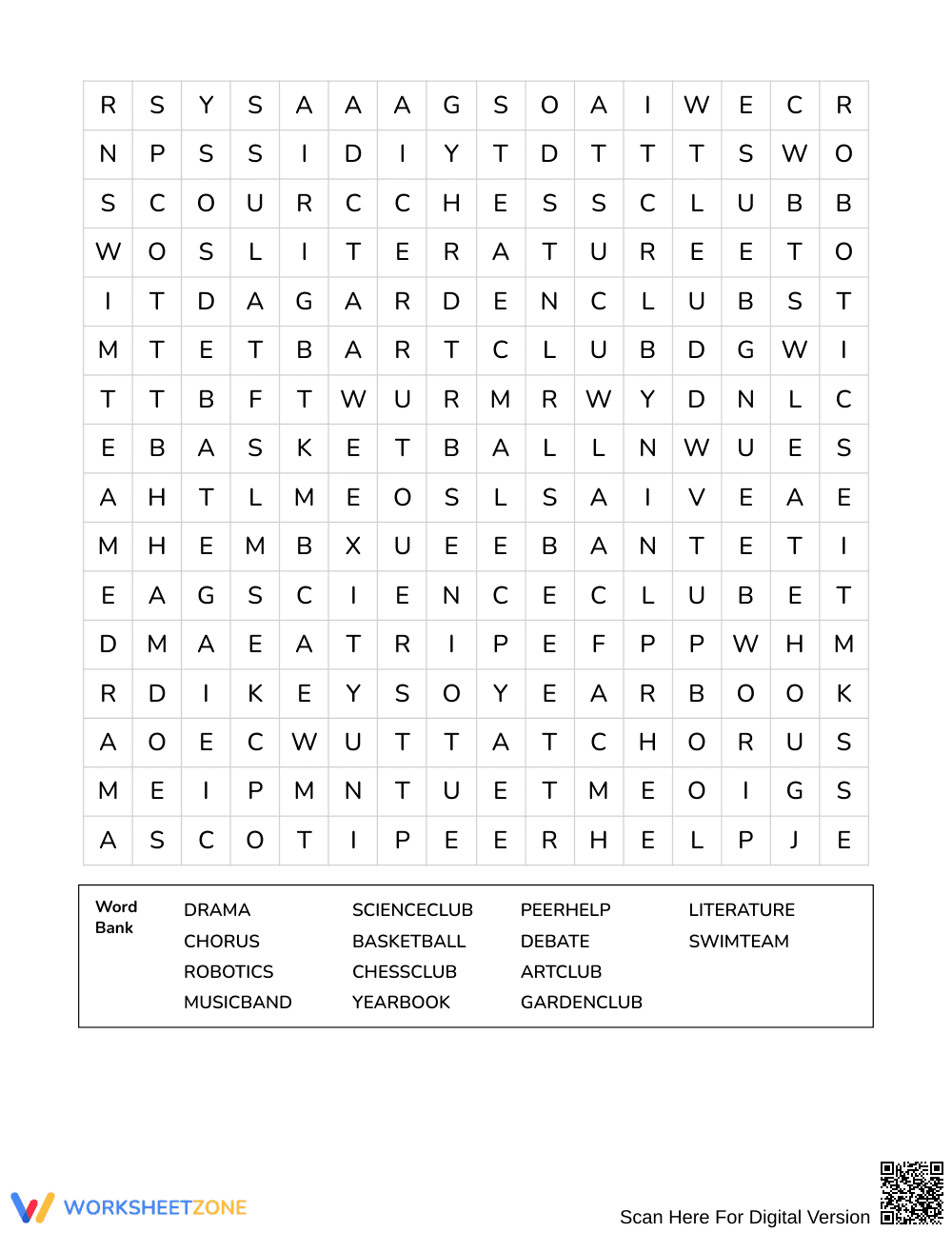
This 3-page printable activity packet includes a full 16x16 puzzle grid, a vocabulary list featuring 14 terms related to school organizations, and clear student directions. It features a complete clue bank pairing every target term with a kid-friendly contextual description, along with a full 3-page answer key showing all circled word locations.
Puzzle Mechanics and Structure
The activity challenges students through systematic letter-scanning and definition matching:
- Grid Dimensions: A spacious 16x16 letter matrix containing hidden letters and target vocabulary.
- Word Placements: Words run in four specific orientations: northeast (NE), east (E), southeast (SE), and south (S).
- Clue Detective Format: Students solve clues matching definitions to terms like robotics, yearbook, debate, and peer help from a shuffled word bank.
Standards Alignment
This resource serves as targeted vocabulary enrichment and is not aligned to a formal state standard. It reinforces general academic language and collaborative school culture concepts across elementary ELA coursework.
How to Use It
Introduce this puzzle during September orientation or homeroom advisory periods to introduce campus extracurricular opportunities to upper elementary students. Alternatively, assign it as an independent literacy station activity after direct instruction on context clues. During independent work, monitor whether students solve the definition clues before scanning the grid to evaluate their reading comprehension. Most students will finish the puzzle in 20 to 30 minutes.
Who It's For
This resource is designed for general education students in Grades 4–5, English language learners developing school-specific vocabulary, and speech-language groups targeting functional community terms. Pair this word search with an informational school handbook or a student club fair writing prompt.
Targeted vocabulary puzzles provide structured exposure to orthographic patterns and contextual meanings that support reading proficiency. According to findings from Fisher & Frey (2014), intentional word exposure embedded in meaningful definitions reinforces schema acquisition and semantic retrieval for upper elementary readers. This 3-page word search supports foundational literacy development by presenting 14 high-utility extracurricular terms within an engaging 16x16 grid structure. By pairing active word searches with clue deciphering across four directional orientations (northeast, east, southeast, and south), students systematically practice reading definitions, confirming word boundaries, and internalizing spelling patterns. The accompanying answer key ensures immediate feedback and independent verification during literacy block rotations, morning warm-ups, or transitional classroom tasks.


