




























Complete Narrative Roles Word Search | Grades 7–8 ELA
Paste this activity's link or code into your existing LMS (Google Classroom, Canvas, Teams, Schoology, Moodle, etc.).
Students can open and work on the activity right away, with no student login required.
You'll still be able to track student progress and results from your teacher account.
Reinforce essential literature concepts and mythological archetypes with this comprehensive vocabulary activity. Students search for key character types, mythological beings, and narrative terms while connecting each word to its story function. Designed for middle school English language arts classrooms, this printable puzzle combines active recall with clear narrative definitions to strengthen literary comprehension.
At a Glance
- Grade: Grades 7–8 · Subject: English Language Arts (ELA)
- Standard: Not standards-assessed — vocabulary enrichment
- Skill Focus: Characters, settings, and narrative roles
- Format: 3 pages · 18 words · Answer key included · PDF
- Best For: Cumulative review or substitute plans
- Time: 25–35 minutes
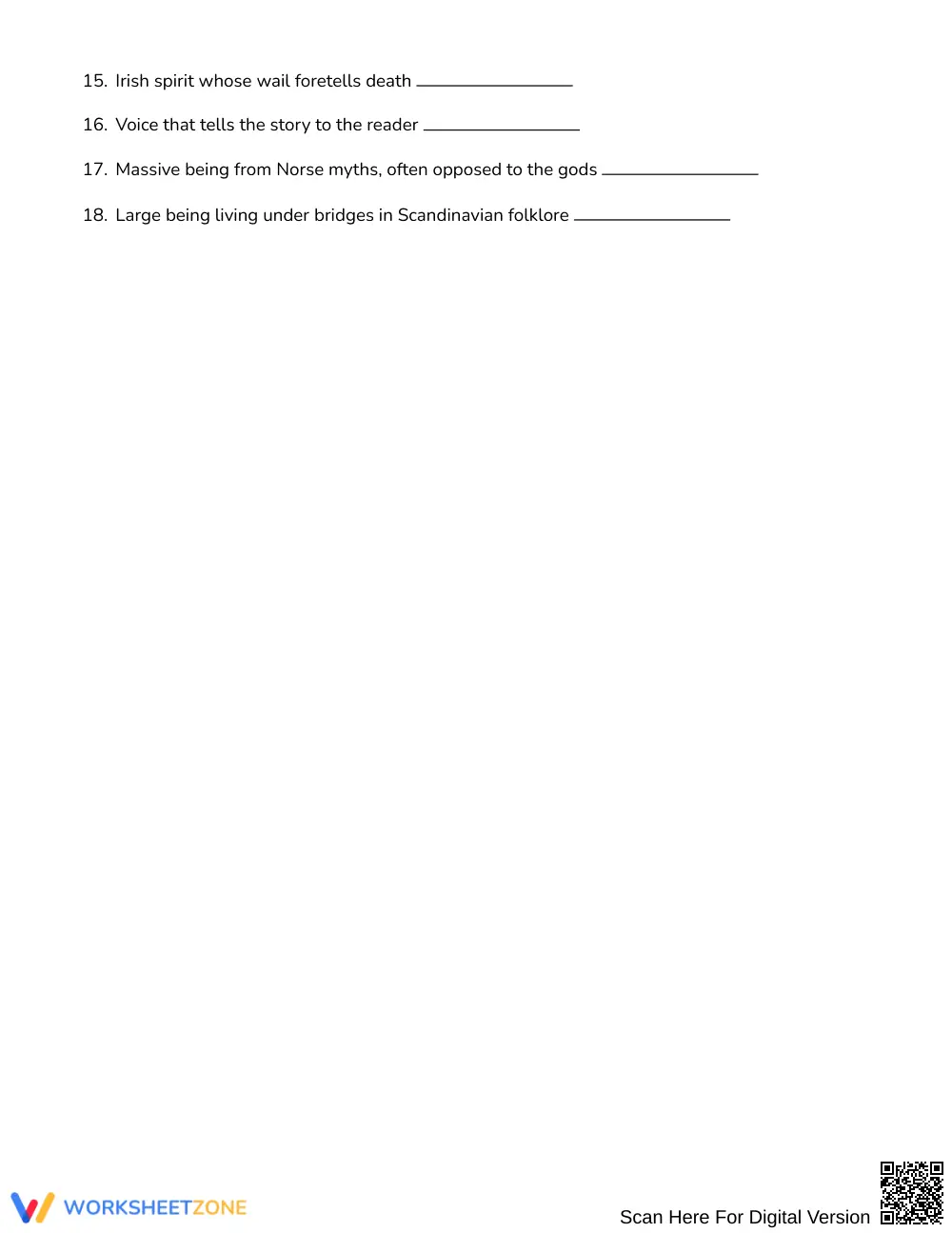
What's Inside: This 3-page printable activity features a challenging letter grid, an 18-word list paired with descriptive narrative clues, and a complete 3-page answer key showing exact letter coordinates. Students review archetypal figures like mentors and tricksters alongside mythological creatures like draugr and valkyries, pairing literary terminology with mythic storytelling traditions.
Puzzle Mechanics: The activity is built on a 20 × 20 letter grid designed to challenge middle school readers. Words are hidden across all eight compass directions: north, northeast, east, southeast, south, southwest, west, and northwest, including forward, backward, and diagonal placements. A companion clue section provides concise narrative definitions for all 18 terms, prompting students to review character functions before locating each hidden target.
Standards Alignment: This resource is designed strictly for vocabulary enrichment and cumulative review, so it is not aligned to a specific state or national content standard. Teachers can integrate these literary terms into any mythology unit, story elements study, or creative writing sequence without pacing friction.
How to Use It: Deploy this activity as a post-reading sponge exercise immediately after direct instruction on archetype theory. Alternatively, leave it as an independent task during emergency substitute coverage. During seatwork, circulate to ensure students cross-reference the clue definitions rather than scanning letters passively. Expected completion time is 25 to 35 minutes.
Who It's For: This puzzle supports general education students in Grades 7–8 exploring classic folklore or hero's journey story frameworks. It provides accessible support for developing readers who benefit from clear context clues. Pair this puzzle with an introductory myth reading or a character archetype graphic organizer to deepen conceptual retention.
Vocabulary acquisition research highlighted by Fisher & Frey (2014) demonstrates that intentional word exposure paired with clear definitions supports long-term retention of domain-specific academic terminology. Middle school readers encounter sophisticated narrative roles across literature, requiring direct engagement with archetypal vocabulary such as protagonists, tricksters, and mythological beings. When students review targeted terminology in structured contexts, their ability to analyze character motivation and narrative structure expands significantly. Integrating low-stakes retrieval tasks alongside definitional clues reinforces word consciousness without cognitive overload. This 18-word enrichment activity delivers structured vocabulary retrieval across an expansive 20 by 20 puzzle framework, establishing a solid foundation for literary analysis across secondary English classrooms.


