




























Views
Downloads


Complete Magical Creatures Word Search | Grades 4–5 ELA

Paste this activity's link or code into your existing LMS (Google Classroom, Canvas, Teams, Schoology, Moodle, etc.).
Students can open and work on the activity right away, with no student login required.
You'll still be able to track student progress and results from your teacher account.
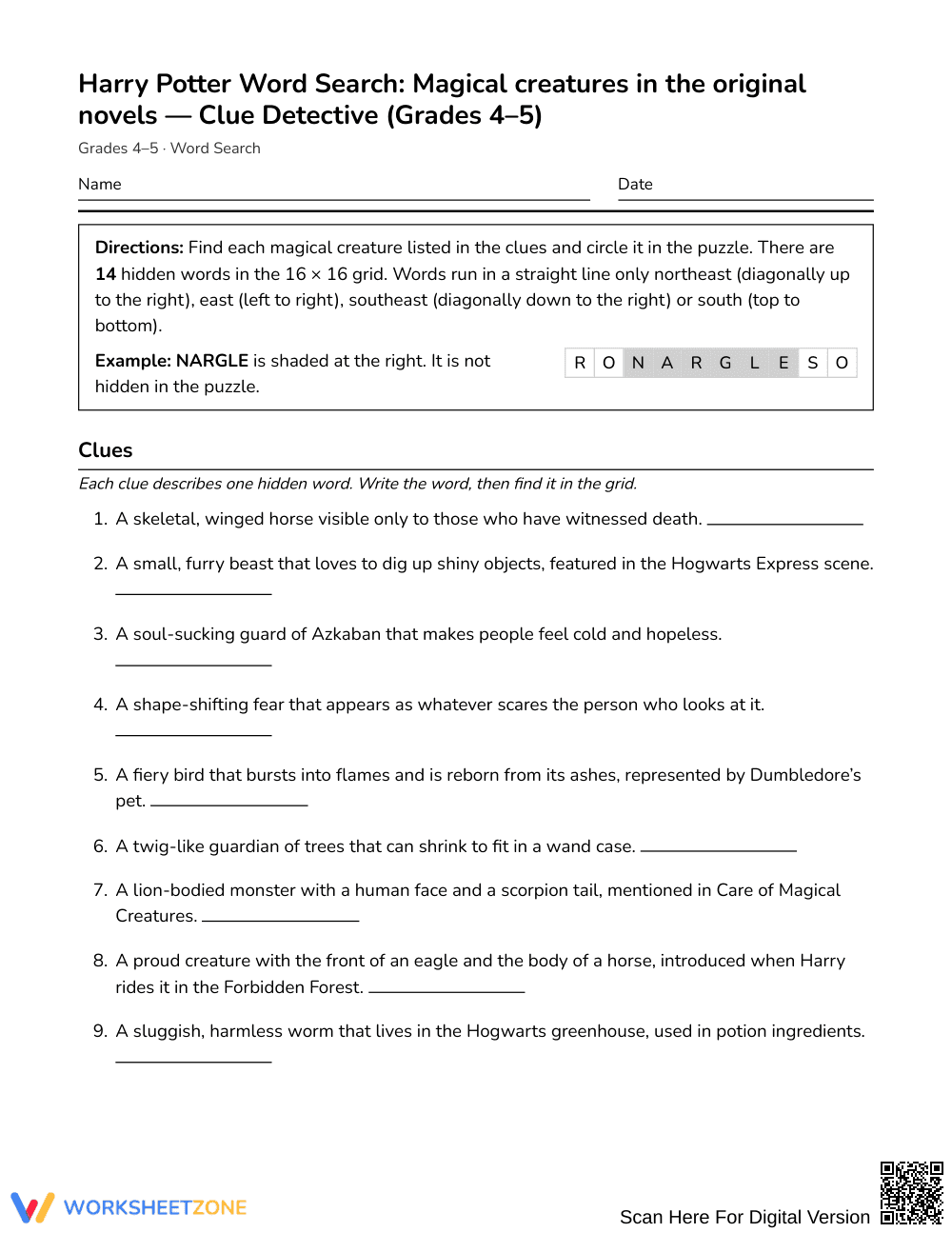
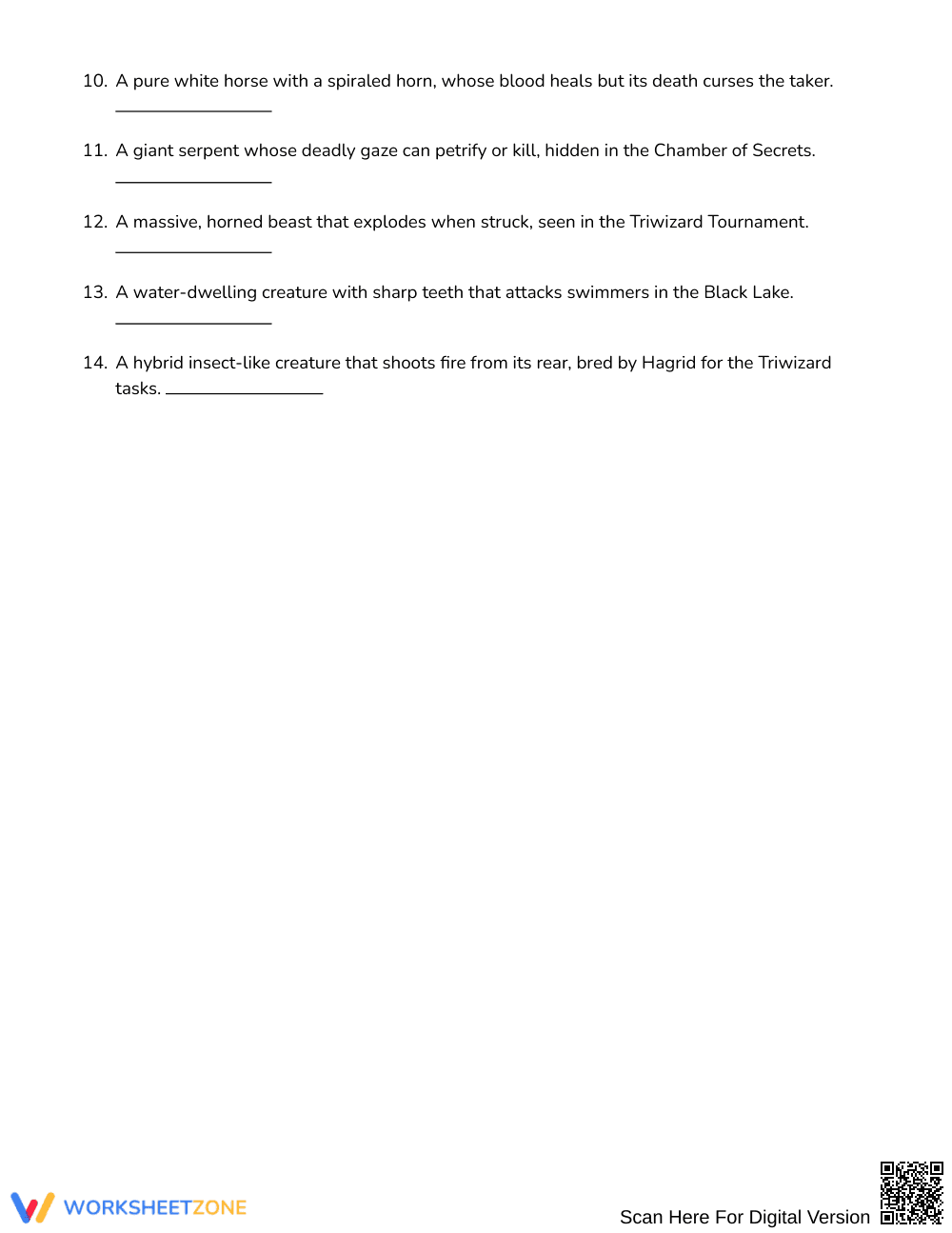
This Grades 4–5 English Language Arts word search builds descriptive vocabulary and text recall through fantasy literature. Students read contextual definitions to identify 14 legendary beasts from the novels, then locate each term inside the grid. The activity reinforces literary comprehension, spelling accuracy, and detail recognition during independent reading blocks or novel studies.
At a Glance
- Grade: Grades 4–5 · Subject: English Language Arts (ELA)
- Standard: Not standards-assessed — vocabulary enrichment through literary clue deciphering
- Skill Focus: Magical creatures in the original novels
- Format: 3 pages · 14 hidden words · Full answer key included · Printable PDF
- Best For: Novel study vocabulary enrichment and independent fast finishers
- Time: 20–30 minutes
The resource contains a student puzzle worksheet, comprehensive definition clues, and a full 3-page answer key showing completed word placements. Rather than relying on a simple word bank, this activity uses a Clue Detective structure where students read narrative descriptions to deduce terms such as Hippogriff, Basilisk, and Thestral before hunting for them in the letter grid.
Puzzle Mechanics: The activity centers on a 16 × 16 letter grid containing 14 hidden target terms. Words run in four specific orientations: northeast (NE), east (E), southeast (SE), and south (S). Instead of presenting a standard list, the puzzle provides a shuffled list alongside rich contextual clues. Students analyze character actions, physical traits, and plot moments from the novels to verify each beast's identity before tracing its path across the grid.
This printable word search is designed purely for vocabulary enrichment and thematic reading engagement; it is not aligned to an assessed state academic standard. Teachers can integrate the activity into recreational reading clubs, thematic fantasy units, or seasonal literacy events to deepen student engagement with descriptive author vocabulary without formal standard testing demands.
Deploy this puzzle as an engaging post-reading activity after finishing a chapter, or assign it during independent literacy centers to reinforce character and creature recall. While students work, circulate and check whether they can connect specific descriptive clues—such as the creature that guards Azkaban—to the correct novel event. Most fourth and fifth graders finish searching in 20 to 30 minutes.
This activity is designed for Grades 4–5 readers exploring fantasy literature, high-interest book clubs, and upper-elementary fast finishers. It provides accessible visual engagement for developing readers while challenging advanced students on plot recall. Pair this word search with a novel excerpt, a character chart, or a creative writing prompt where students invent their own magical creature.
Literary vocabulary enrichment strengthens reading comprehension by helping intermediate elementary learners consolidate domain-specific terminology encountered in complex fiction. According to Fisher & Frey (2014), intentional word exposure through varied context clues allows developing readers to construct deeper schema for literary texts and retain unfamiliar narrative terms over time. This clue-based word search challenges Grades 4–5 students to bridge definition analysis with visual word recognition across 14 hidden terms. By pairing narrative context clues with systematic visual scanning across a 16 × 16 grid, learners reinforce word memory and orthographic mapping without the pressure of formal testing demands. Educators can leverage these findings to transform routine puzzle-solving into purposeful vocabulary acquisition that enhances overall text appreciation. Engaging students in clue deciphering fosters independent problem solving, builds positive recreational reading associations, and actively supports broader fluency goals during upper-elementary literacy blocks.


