































Complete Island Planning Word Search | Grades 7–8 ELA

Paste this activity's link or code into your existing LMS (Google Classroom, Canvas, Teams, Schoology, Moodle, etc.).
Students can open and work on the activity right away, with no student login required.
You'll still be able to track student progress and results from your teacher account.
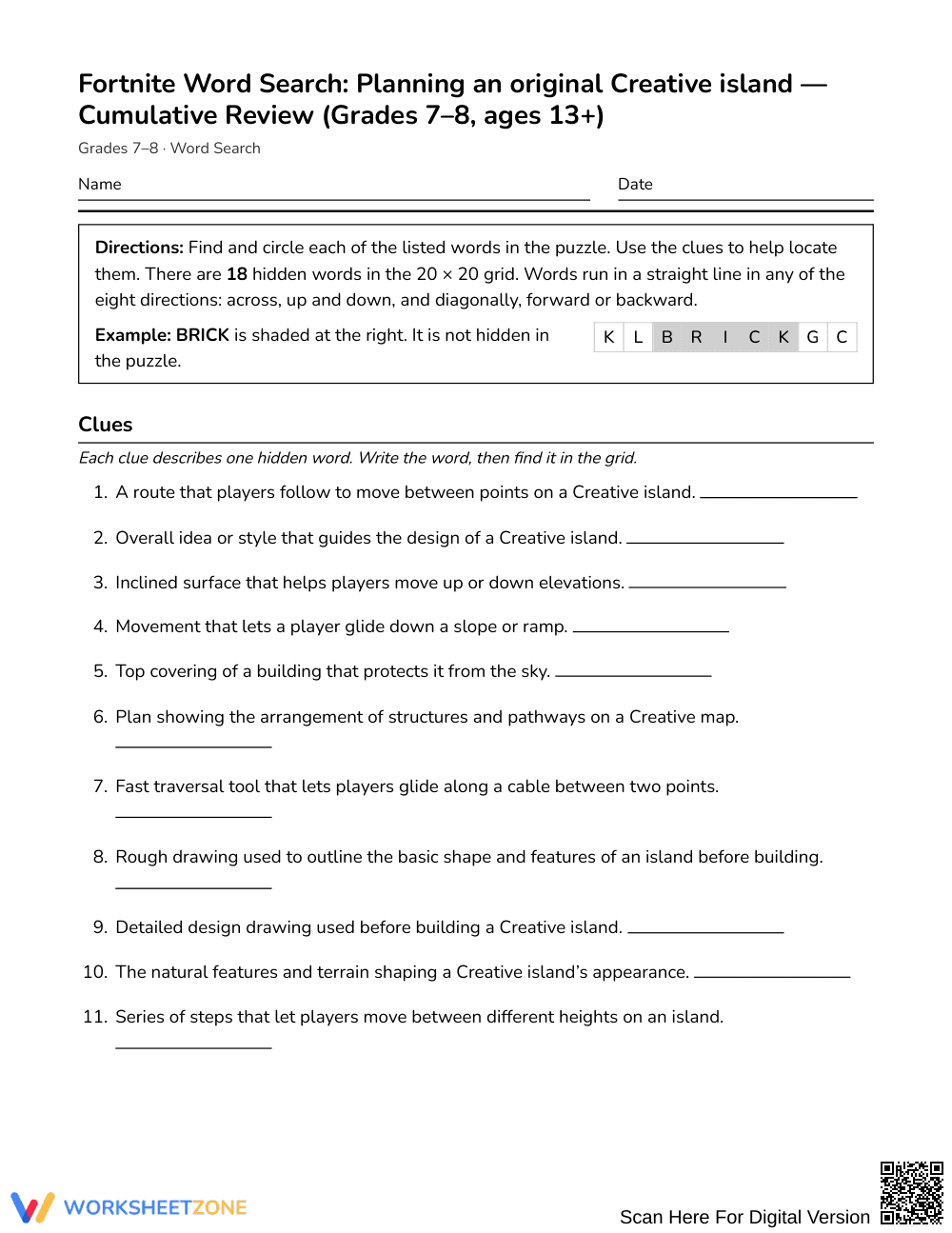
This Grades 7–8 word search reinforces core world-building and design terminology used when planning an original creative island. Students connect structural, environmental, and mobility terms to precise definitions before tracking down target vocabulary hidden across the letter grid. The activity strengthens domain-specific vocabulary retention, reading focus, and spatial reasoning in an engaging, game-inspired format.
At a Glance
- Grade: Grades 7–8 · Subject: English Language Arts (ELA)
- Standard: Not standards-assessed — vocabulary enrichment
- Skill Focus: Planning an original creative island and spatial mapping
- Format: 3 pages · 18 words · Full answer key included · PDF
- Best For: Vocabulary review, independent practice, sub plans, and unit warm-ups
- Time: 20–30 minutes
What's Inside
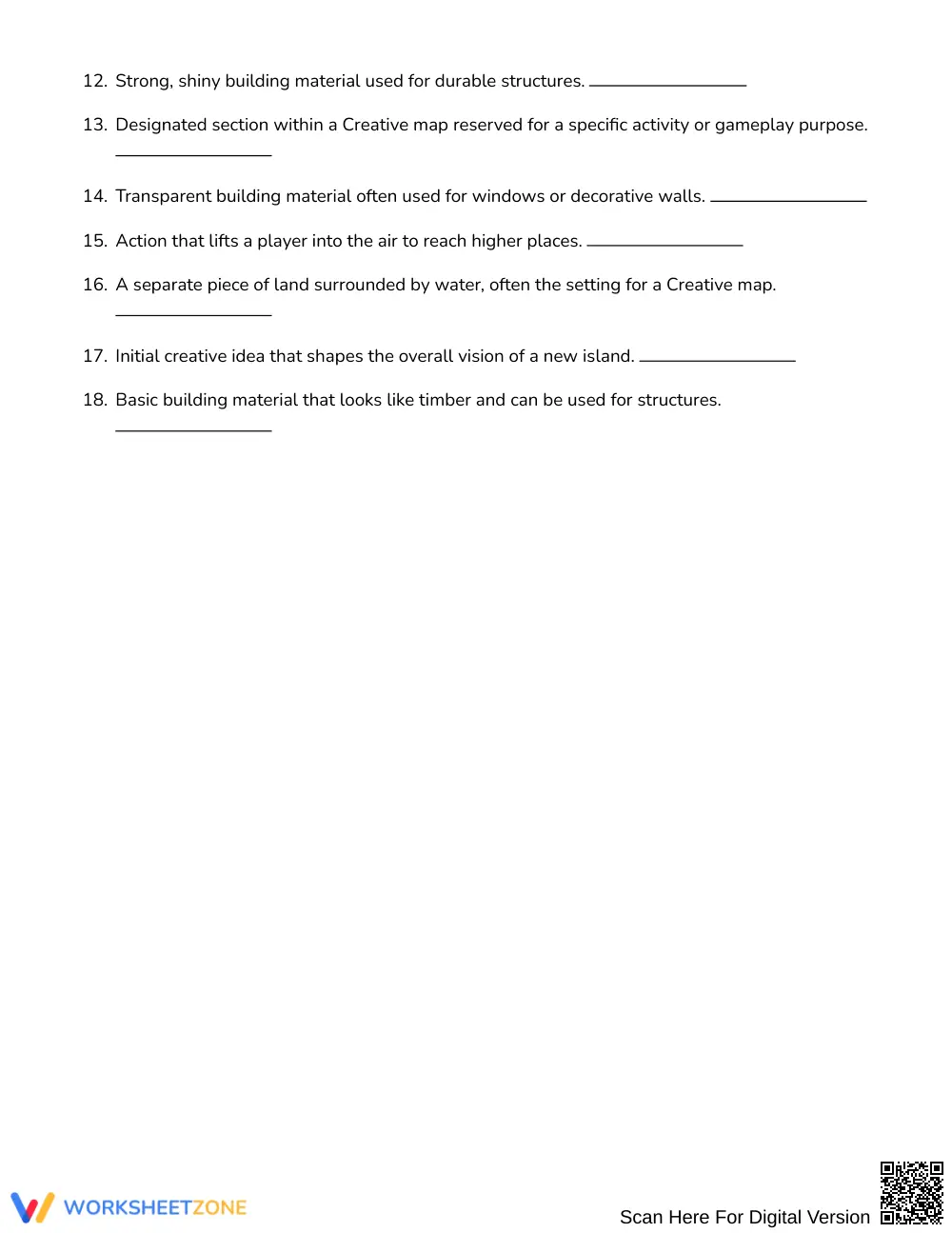
This 3-page printable PDF features an engaging 18-word search puzzle with a full 3-page answer key showing all solutions. The activity provides a shuffled word bank containing architectural, landscape, and movement terminology. Each target word includes a concise, context-based clue defining concepts like blueprints, layouts, pathways, and elevation mechanics, helping students connect vocabulary meaning directly to letter search tasks.
Puzzle Structure and Mechanics
The puzzle is built on a 20 x 20 letter grid containing 18 hidden vocabulary terms. Words run in all 8 directions: north, northeast, east, southeast, south, southwest, west, and northwest. Students reference a shuffled word bank alongside 18 descriptive clues explaining each architectural, environmental, or movement term. Learners read each clue, identify the matching concept, and scan the grid across horizontal, vertical, and diagonal orientations to locate each word.
Standards Alignment
This resource is designed specifically for vocabulary enrichment and is not aligned to a formal academic standard. It supports cross-curricular literacy by exposing students to structural design, architectural planning, and spatial vocabulary within a motivating, game-themed context.
How to Use It
Use this word search as an engaging introductory warm-up before beginning a narrative world-building unit, or assign it after direct instruction on setting design as an independent review activity. During completion, conduct formative observation by watching whether students identify words directly from definitions or scan the grid randomly without consulting the clue list. The full puzzle requires approximately 20 to 30 minutes of focused student work.
Who It's For
This activity is created for Grades 7–8 English Language Arts students, particularly middle school learners interested in digital world building, game mechanics, and descriptive writing. For differentiation, encourage students needing support to highlight clue keywords before searching, while advanced learners can draft original setting descriptions using located terms. Pair this printable with a creative writing storyboard or island layout mapping sheet.
Integrating targeted domain vocabulary into game-themed puzzle formats enhances middle school reading engagement and structural comprehension when planning an original creative island. According to Fisher & Frey (2014), intentional exposure to technical terminology across interactive review tasks consolidates semantic pathways and strengthens vocabulary acquisition far more effectively than isolated memorization. As Grades 7–8 students decode 18 design concepts spanning environmental layouts, building materials, and traversal routes across an 8-directional 20 x 20 grid, they reinforce contextual word meanings through repeated visual and cognitive retrieval. The accompanying definition clues require learners to actively evaluate architectural and spatial functions before locating corresponding letter strings. This purposeful combination of contextual definitions and pattern recognition supports long-term lexical retention, equipping students with the exact descriptive lexicon required to articulate complex setting structures, spatial relationships, and environmental designs during subsequent creative writing or world-building projects.


