




























Views
Downloads


Complete Evidence Evaluation Worksheet | Grade 8 ELA

Paste this activity's link or code into your existing LMS (Google Classroom, Canvas, Teams, Schoology, Moodle, etc.).
Students can open and work on the activity right away, with no student login required.
You'll still be able to track student progress and results from your teacher account.
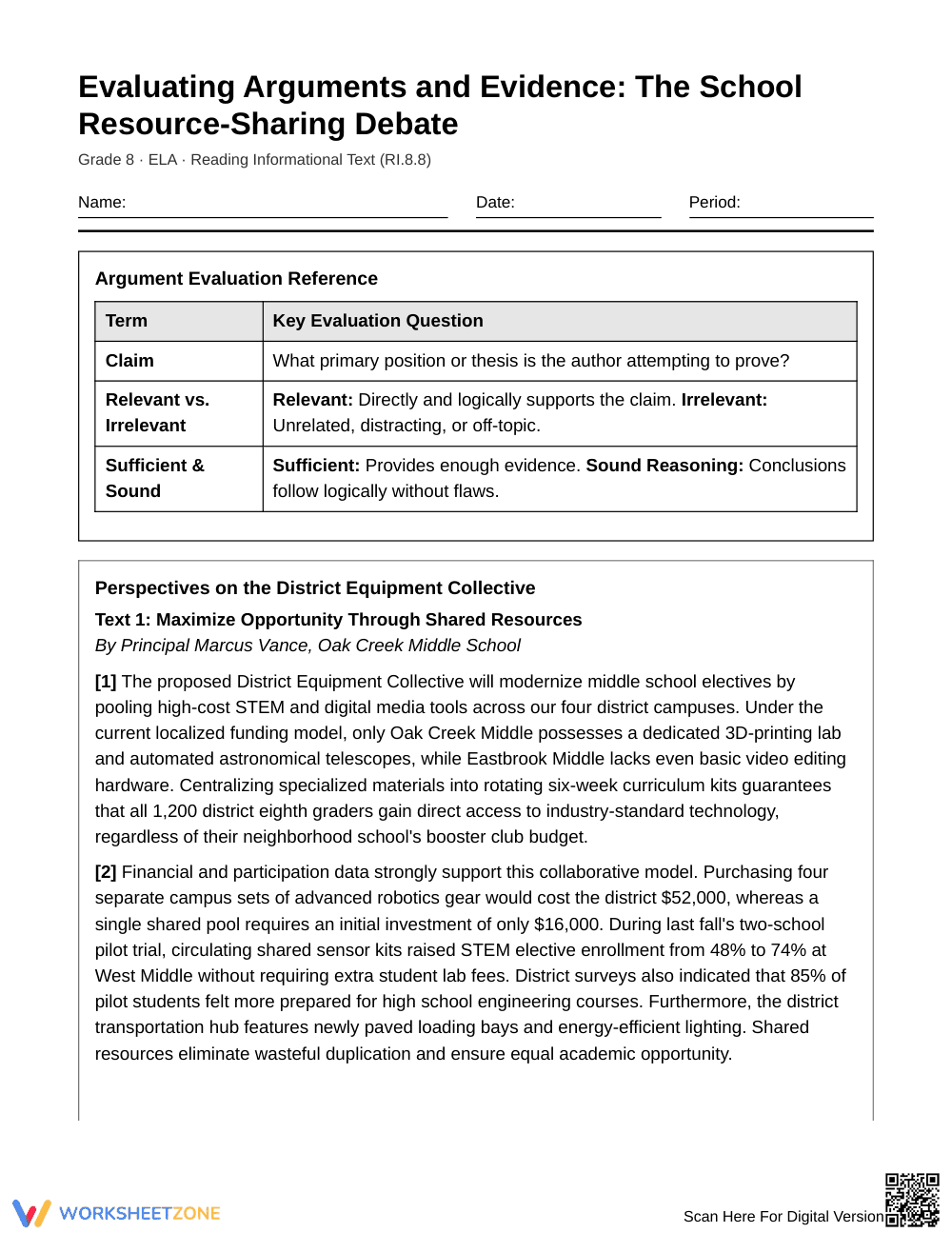
This Grade 8 informational text worksheet equips students to evaluate arguments by distinguishing between relevant data and distracting, irrelevant details. Working through a realistic debate on school resource-sharing, learners analyze how authors build claims, inspect quantitative evidence for soundness, and critique underlying assumptions to reach reasoned, evidence-based evaluations of competing non-fiction texts.
At a Glance
- Grade: 8 · Subject: ELA
- Standard:
RI.8.8— Delineate and evaluate arguments by distinguishing sound reasoning from irrelevant evidence- Skill Focus: Evaluate Relevant and Irrelevant Evidence
- Format: 5 pages · 12 problems · Answer key included · Printable PDF
- Best For: Middle school informational text argument evaluation
- Time: 45–60 minutes of classroom instruction
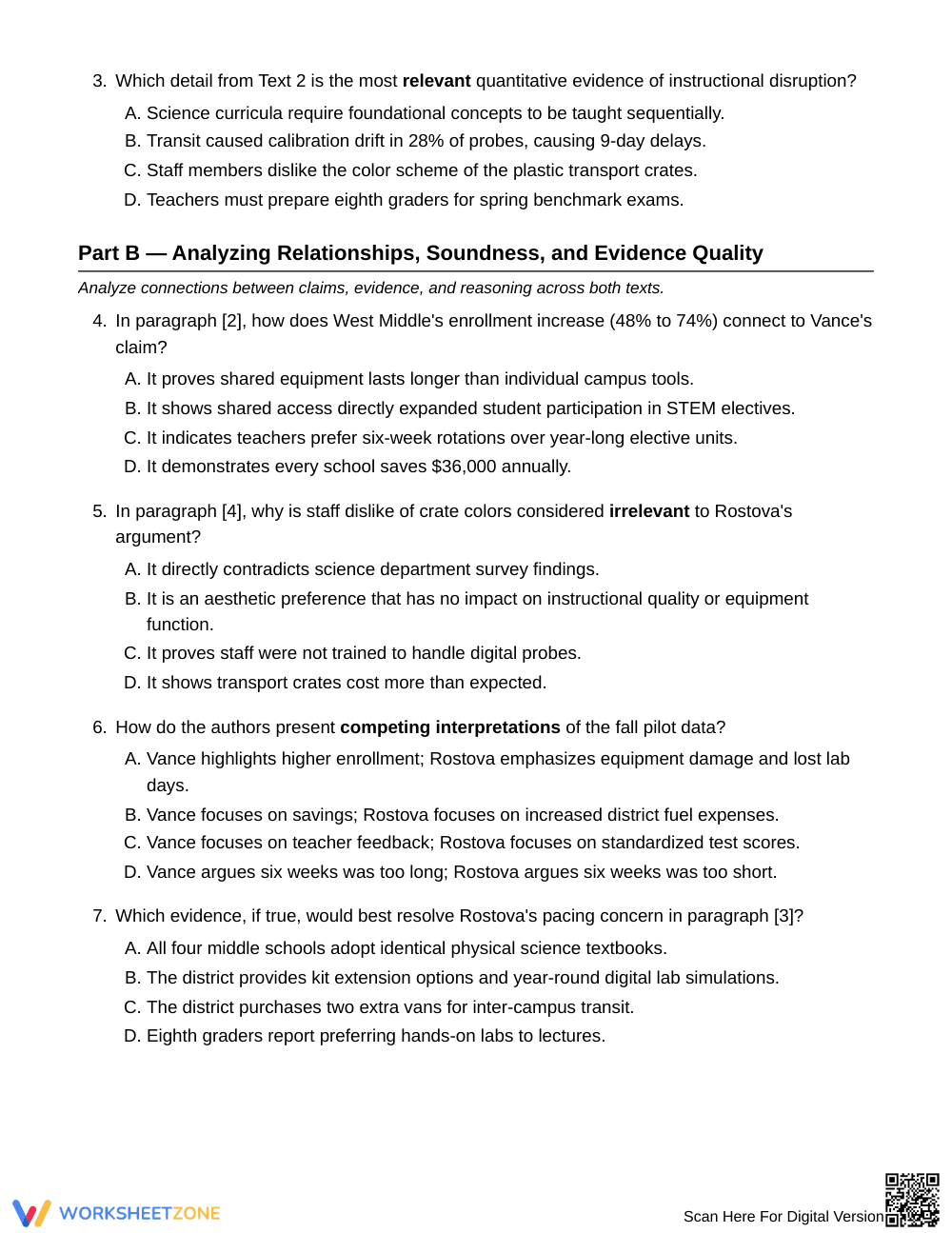
Across five printable pages, this resource centers on two paired point-counterpoint texts examining a school district's equipment-sharing policy. An introductory reference table defines claims, relevance, and soundness. Students encounter three distinct task types: targeted multiple-choice identification, analytical relationship items, and extended written critiques. A comprehensive two-page answer key provides complete rationales for every item.
Skill Progression
- Guided practice: Part A includes 3 multiple-choice questions with a reference chart to help students isolate relevant statistics from off-topic details.
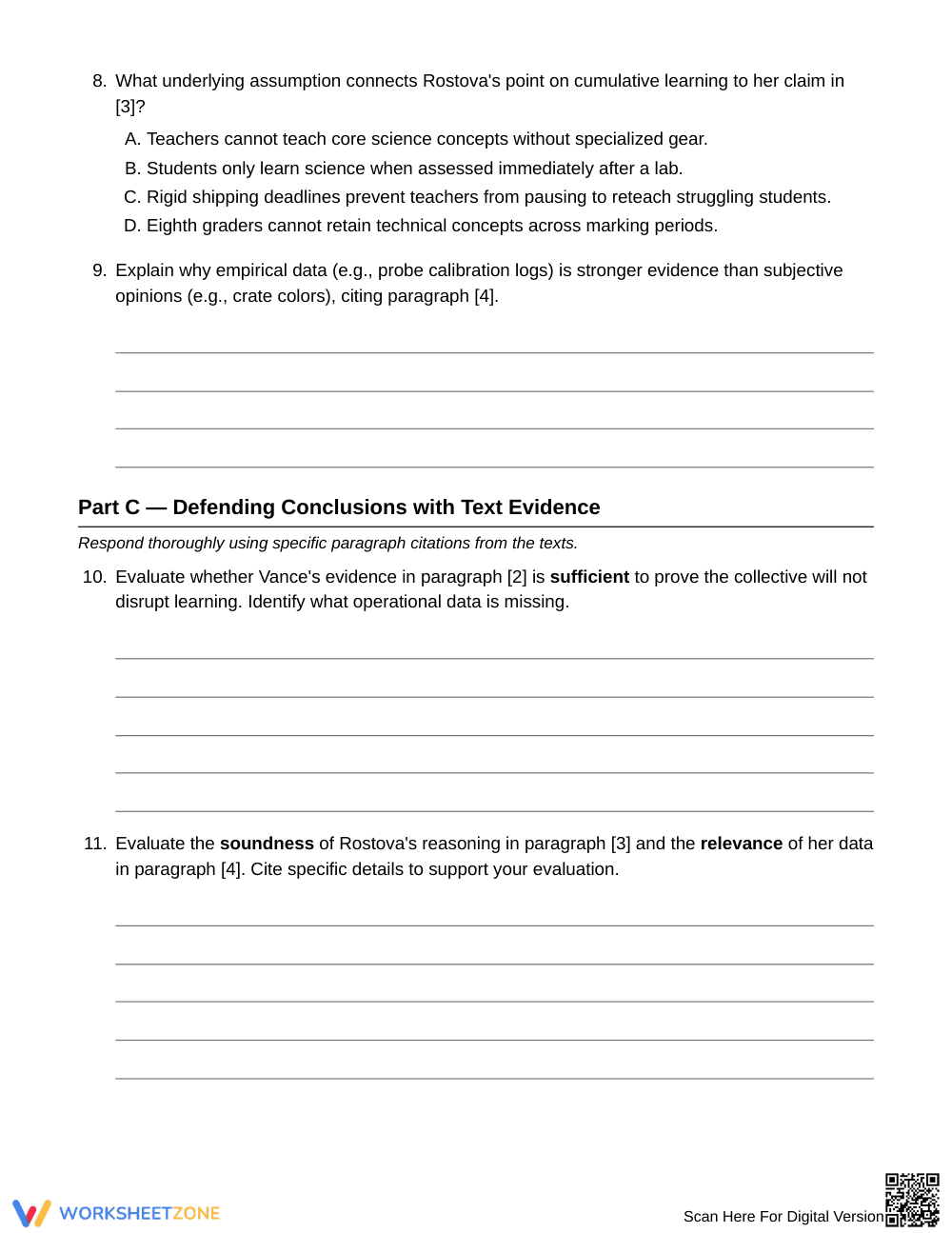
- Supported practice: Part B provides 6 analytical questions prompting students to connect quantitative pilot data to claims and differentiate empirical metrics from subjective opinions.
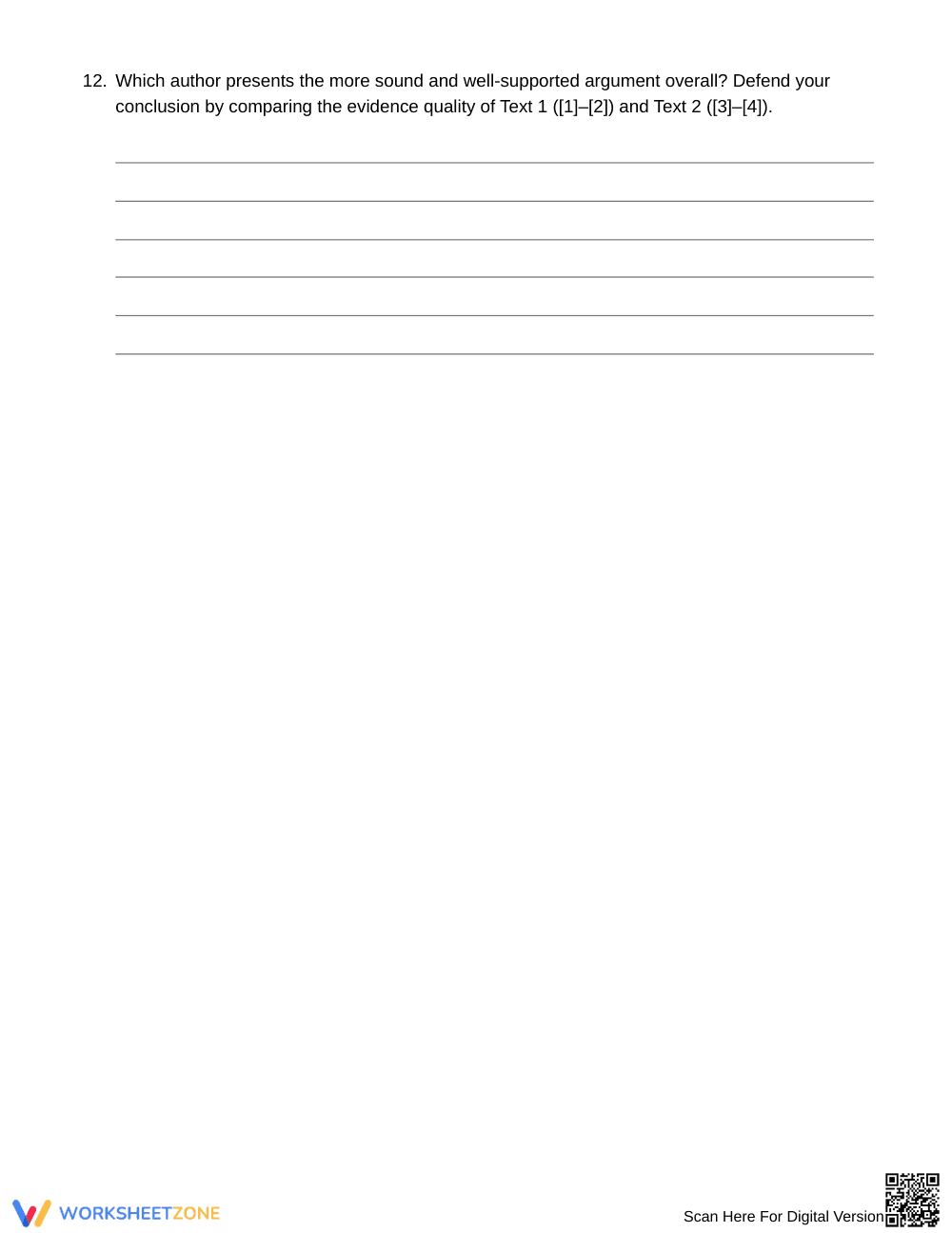
- Independent practice: Part C features 3 open-ended evaluation tasks where learners synthesize both passages, critique missing data, and defend which perspective demonstrates superior reasoning.
This structured progression reflects the gradual release of responsibility model, guiding eighth graders from supported textual identification to rigorous independent argument analysis.
Standards Alignment
This worksheet is aligned to primary standard `RI.8.8`: Delineate and evaluate the argument and specific claims in a text, assessing whether the reasoning is sound and the evidence is relevant and sufficient; recognize when irrelevant evidence is introduced. In addition, it supports `RI.8.1` by requiring students to cite strong, thorough textual evidence when justifying evaluations. Both standard codes can be copied directly into lesson plans, IEP goals, or district curriculum mapping tools.
How to Use It
Deploy this activity immediately after direct instruction on argument structures or as a mid-unit assessment checkpoint. In a 45-minute lesson, teachers can use Part A as paired warm-up practice, guide Part B as a whole-group discussion, and assign Part C for independent demonstration of mastery. During work time, observe whether students misidentify interesting background facts as valid evidence—a frequent roadblock when evaluating relevance.
Who It's For
This resource serves general education eighth-grade ELA students, high school remedial reading groups, and advanced seventh-grade readers preparing for standardized testing. The built-in reference table scaffolds English language learners and students with IEP accommodations. Pair this worksheet directly with a mini-lesson on logical fallacies or a graphic organizer comparing rhetorical appeals.
Mastering argument analysis under RI.8.8 requires middle school students to actively evaluate relevant and irrelevant evidence rather than passively summarizing text. According to Fisher & Frey (2014), explicit instruction in evaluating evidence through gradual release frameworks significantly enhances adolescent reading comprehension and analytical writing fluency. When eighth-grade students inspect point-counterpoint texts, they learn to separate substantive quantitative data, such as equipment calibration records, from superficial details like aesthetic crate color preferences. This targeted practice strengthens critical literacy by teaching learners to audit an author's reasoning before accepting conclusions. Grounded in research-backed literacy routines, this five-page instructional module guides pupils through twelve scaffolded prompts that move from foundational detail location to nuanced comparative critique. By evaluating the sufficiency and soundness of competing claims, students develop the analytical stamina and evaluative judgment essential for success in high school rhetoric and college-readiness benchmarks.


