




























Views
Downloads


Complete Dog Habitats Word Search | Grades 6–7 ELA

Paste this activity's link or code into your existing LMS (Google Classroom, Canvas, Teams, Schoology, Moodle, etc.).
Students can open and work on the activity right away, with no student login required.
You'll still be able to track student progress and results from your teacher account.
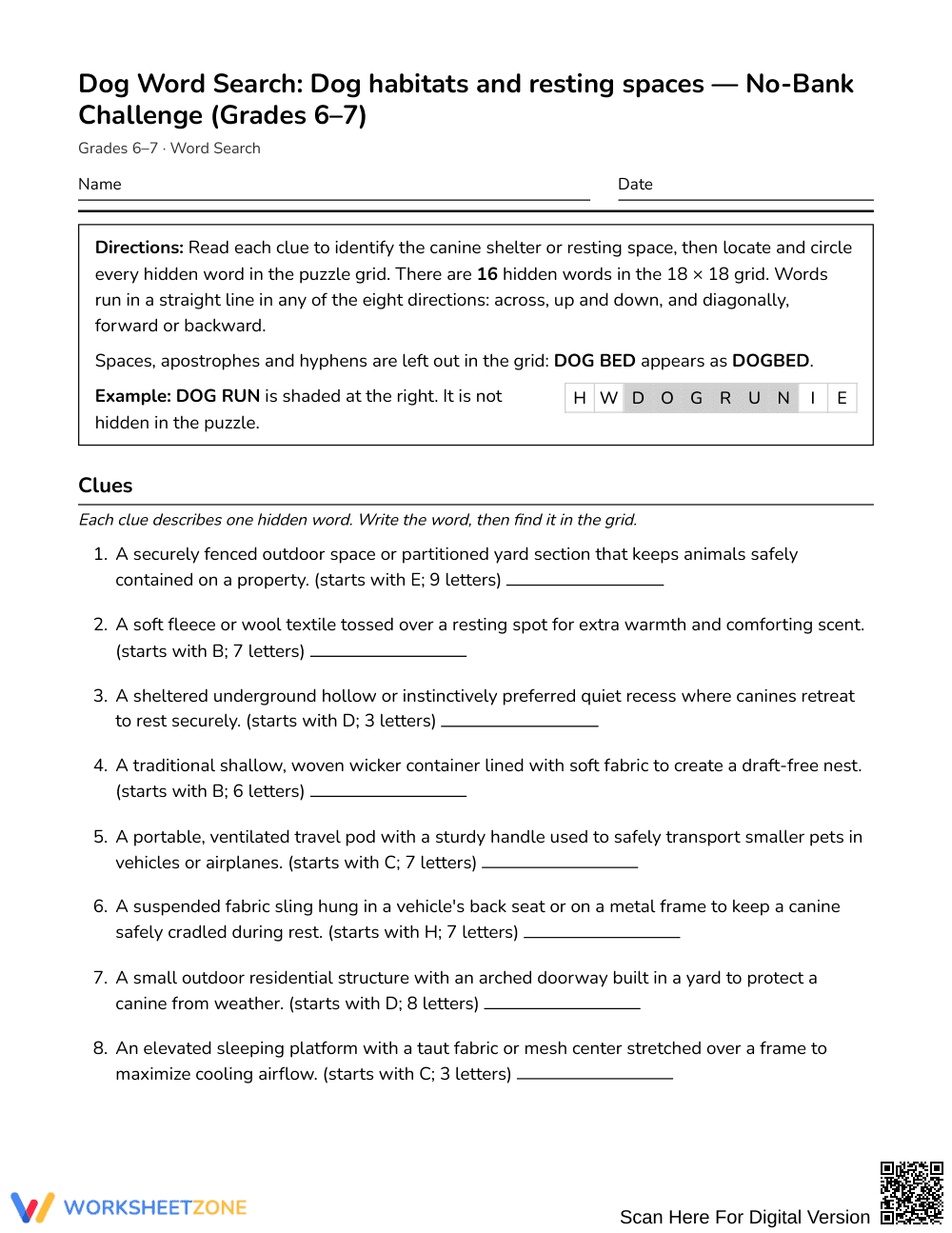
This Grades 6–7 vocabulary word search challenges students to expand their domain-specific language around animal care and shelters. Learners read descriptive definitions to deduce 16 target terms before searching for them in the letter grid. The no-bank design promotes careful reading comprehension and active recall rather than passive letter matching.
At a Glance
- Grade: Grades 6–7 · Subject: English Language Arts (ELA)
- Standard: Not standards-assessed — vocabulary enrichment
- Skill Focus: Dog habitats and resting spaces vocabulary
- Format: 3 pages · 16 words · Answer key included · PDF
- Best For: Vocabulary enrichment and fast-finisher activity
- Time: 20–30 minutes
What's Inside
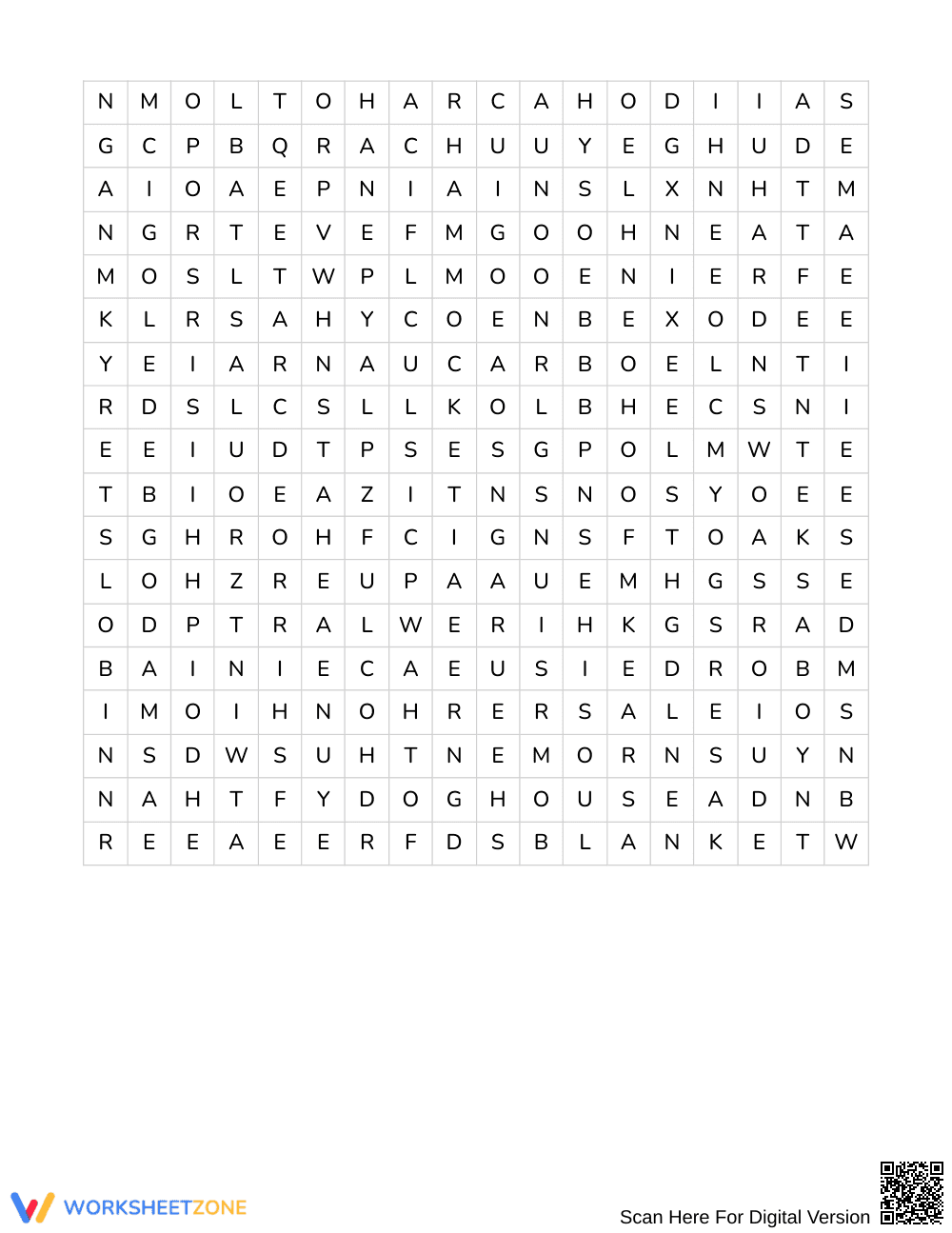
This 3-page printable activity features a full-page puzzle grid, a detailed clue sheet with 16 descriptive prompts, and a comprehensive 4-page answer key showing exact word placements. Rather than relying on a traditional word bank, students analyze context clues for shelter types like kennels, whelping boxes, and bolsters before locating each hidden term.
Puzzle Mechanics & Structure
This puzzle is structured to provide an engaging cognitive challenge through specific design elements:
- Grid Dimensions: An 18 x 18 letter matrix provides an expansive search field with ample letter density.
- Word Orientation: Hidden vocabulary runs in all 8 compass directions: North, Northeast, East, Southeast, South, Southwest, West, and Northwest, including forward, backward, and diagonal orientations.
- Clue-Based Search: With no visible word bank provided, students must actively solve 16 informational definitions to identify their search targets, strengthening context clue synthesis.
Standards Alignment
This word search serves as general vocabulary enrichment and is not aligned to a specific state or national academic standard. It reinforces contextual inference, informational text reading, and spelling recognition across middle school language arts classrooms.
How to Use It
Introduce this activity during an informational text unit on domesticated animals or as an independent literacy center after direct vocabulary instruction. It also serves as an engaging quiet-work task for early finishers or emergency substitute packets. As students work, circulate to observe whether they deduce the vocabulary terms from clues independently or require contextual prompting. Expect learners to complete the puzzle in 20 to 30 minutes.
Who It's For
This activity is designed for Grades 6–7 English Language Arts students, ESL learners building descriptive noun lexicons, and animal science interest groups. Pair this printable with an informational reading passage about working canines or a descriptive writing prompt focused on animal welfare.
Contextual vocabulary acquisition relies on active retrieval practices that connect word meanings directly to orthographic patterns. According to Fisher & Frey (2014), intentional word-learning strategies succeed when students actively engage with definitions before applying terminology in literacy tasks. This 16-word puzzle incorporates an 18 x 18 letter grid spanning all eight cardinal and diagonal directions, requiring middle school learners in Grades 6–7 to process semantic definitions of canine shelters and resting equipment. By withholding a visible word bank, the activity transforms routine puzzle completion into an active inferencing exercise that reinforces technical vocabulary, spelling accuracy, and text-based problem-solving skills across 3 structured pages.


