
































Complete Disney Companions Word Search | Grades 6–7 ELA

Paste this activity's link or code into your existing LMS (Google Classroom, Canvas, Teams, Schoology, Moodle, etc.).
Students can open and work on the activity right away, with no student login required.
You'll still be able to track student progress and results from your teacher account.
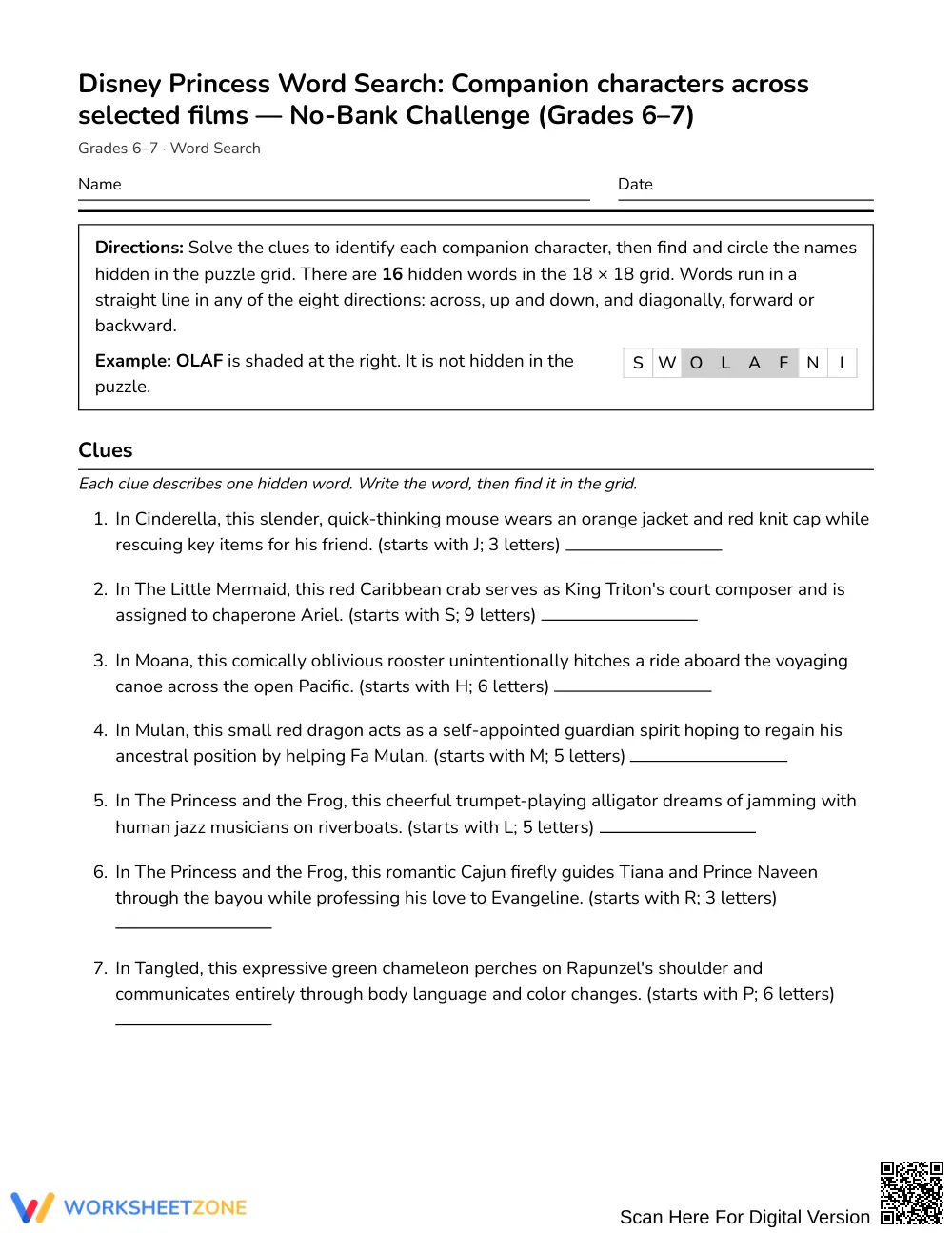
This Disney Princess companion characters word search challenges middle school students in Grades 6–7 to recall character details, infer names from descriptive clues, and locate 16 hidden terms. By replacing a traditional word bank with rich character descriptions, this activity reinforces reading comprehension and vocabulary recall through engaging, puzzle-based critical thinking.
At a Glance
- Grade: Grades 6–7 · Subject: English Language Arts (ELA)
- Standard: Not standards-assessed — vocabulary enrichment
- Skill Focus: Companion characters across selected films
- Format: 3 pages · 16 words · Answer key included · PDF
- Best For: Vocabulary enrichment and fast-finisher activities
- Time: 25–35 minutes
What's Inside
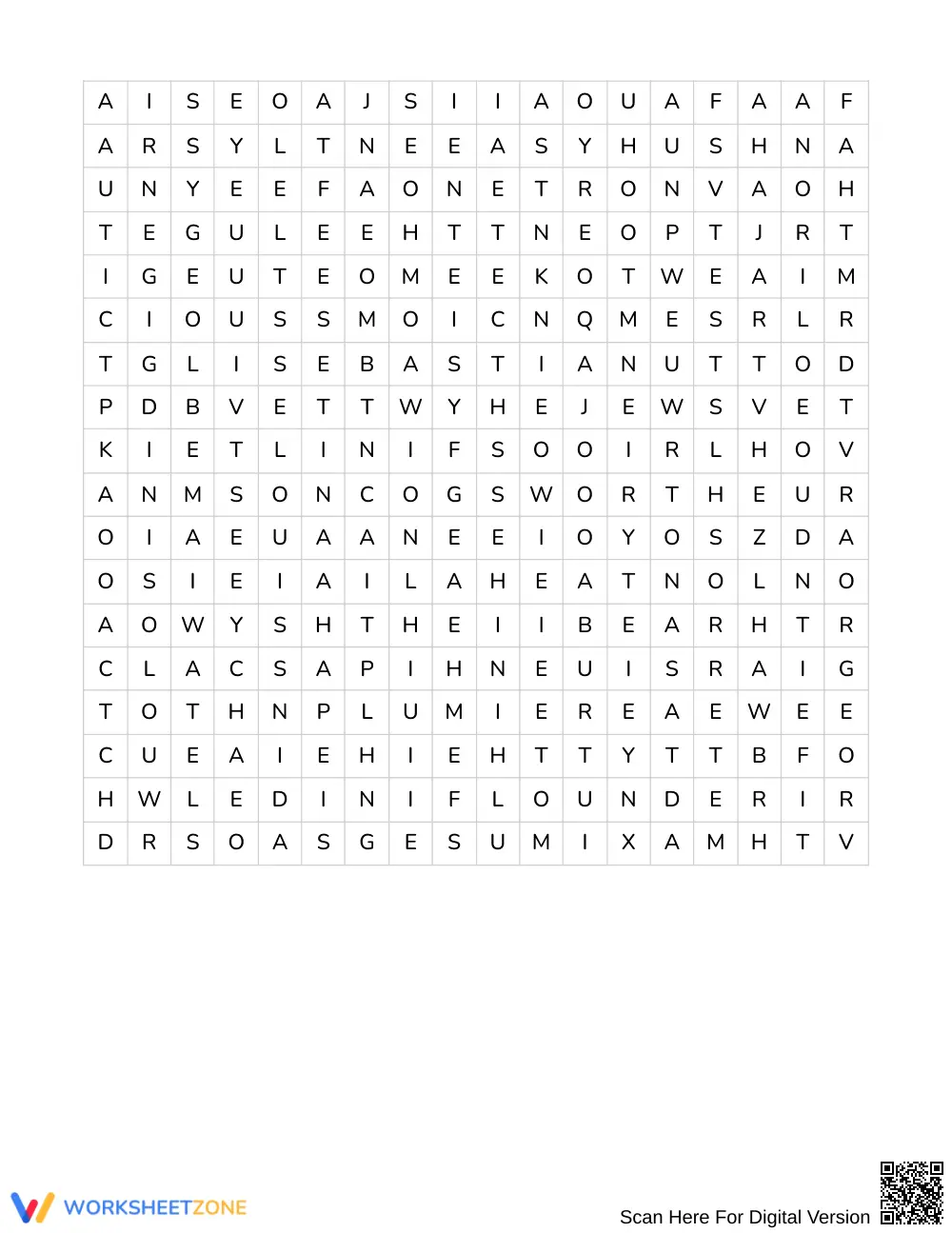
This 3-page printable resource includes an 18 x 18 puzzle grid, sixteen detailed narrative clues, and a four-page answer key showing full letter placement. Rather than scanning for words from an open list, students analyze descriptive clues highlighting iconic sidekick traits and story roles before hunting for the hidden names.
Puzzle Structure and Mechanics
This word search eliminates passive scanning by requiring students to solve clues before searching the grid. Target words are hidden across an 18 x 18 matrix in all eight directions: north, northeast, east, southeast, south, southwest, west, and northwest. Without an overt word bank, learners must evaluate character traits to deduce names like Flounder, Sebastian, and Cogsworth before tracking them across diagonal and reverse paths.
Standards Alignment
This resource serves as supplemental vocabulary enrichment and character study rather than addressing an assessed standard. By analyzing character traits and descriptive text within the clue list, students apply close-reading strategies that reinforce narrative comprehension across secondary English Language Arts curricula.
How to Use It
Use this resource after direct instruction on characterization or descriptive language. It functions well as an extension task for fast finishers or as a partner warm-up where students discuss clues before circling names. While students work, observe how effectively they identify character traits from text evidence. Expected completion time is 25 to 35 minutes.
Who It's For
Designed for Grades 6–7, this no-bank word search provides an engaging cognitive challenge for middle school learners. For emerging readers or English language learners, provide the first letter of each companion name as a scaffold. Pair this activity with a character analysis mini-lesson or creative writing assignment.
Integrating contextualized word puzzles into English Language Arts instruction supports cognitive engagement and lexical memory. As Fisher & Frey (2014) demonstrate in their research on literacy scaffolds, combining clue-based inference with active retrieval solidifies vocabulary comprehension far more effectively than isolated rote recall. When middle school students in Grades 6–7 evaluate narrative clues to determine hidden companion names without a visual word bank, they execute multiple tiers of semantic processing. Readers must parse syntax, synthesize descriptive character traits, and access long-term memory before engaging in visual-spatial orthographic scanning. This multi-step problem-solving sequence transforms an enrichment puzzle into a rigorous reading exercise that exercises mental flexibility and textual interpretation. Incorporating structured clues alongside an 18 x 18 letter grid reinforces orthographic mapping and close reading, helping secondary educators maintain academic stamina during transition blocks, literacy centers, and independent practice routines.


