































Complete Community Word Search | Grades 7–8 Social Studies

Paste this activity's link or code into your existing LMS (Google Classroom, Canvas, Teams, Schoology, Moodle, etc.).
Students can open and work on the activity right away, with no student login required.
You'll still be able to track student progress and results from your teacher account.
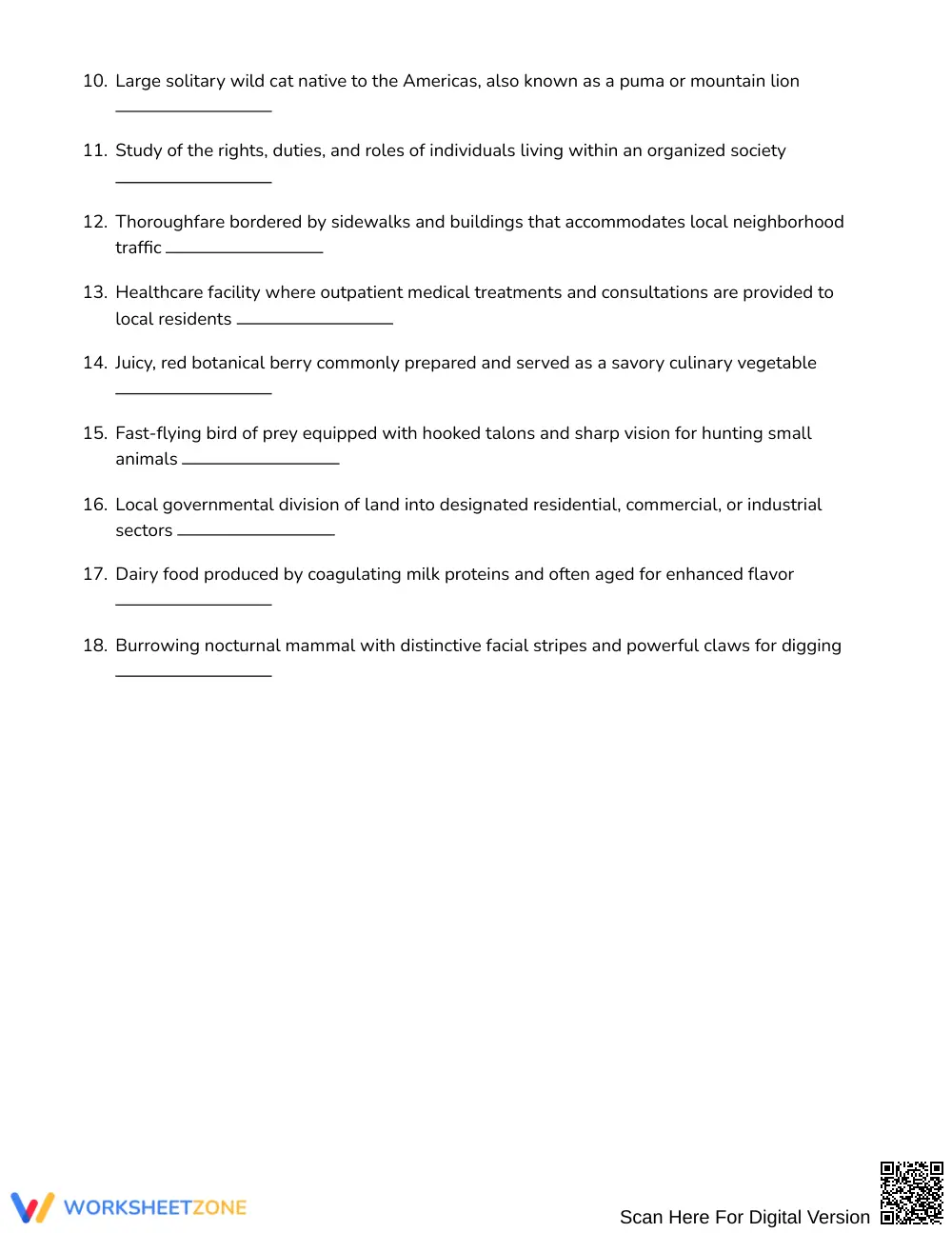
This community and culture word search strengthens secondary vocabulary by pairing definitional clues with targeted word identification. Students read contextual descriptions to deduce target terms before locating them across the grid, reinforcing key civic, ecological, and everyday concepts. This engaging format provides an effective vocabulary review that solidifies retention across multiple thematic categories.
At a Glance
- Grade: Grades 7–8 · Subject: Middle School Social Studies
- Standard: Not standards-assessed — vocabulary enrichment activity
- Skill Focus: Six-letter community words, animal names, and food terms
- Format: 3 pages · 18 words · Full answer key included · PDF
- Best For: Thematic vocabulary review, emergency sub plans, and enrichment
- Time: 20–30 minutes for complete activity
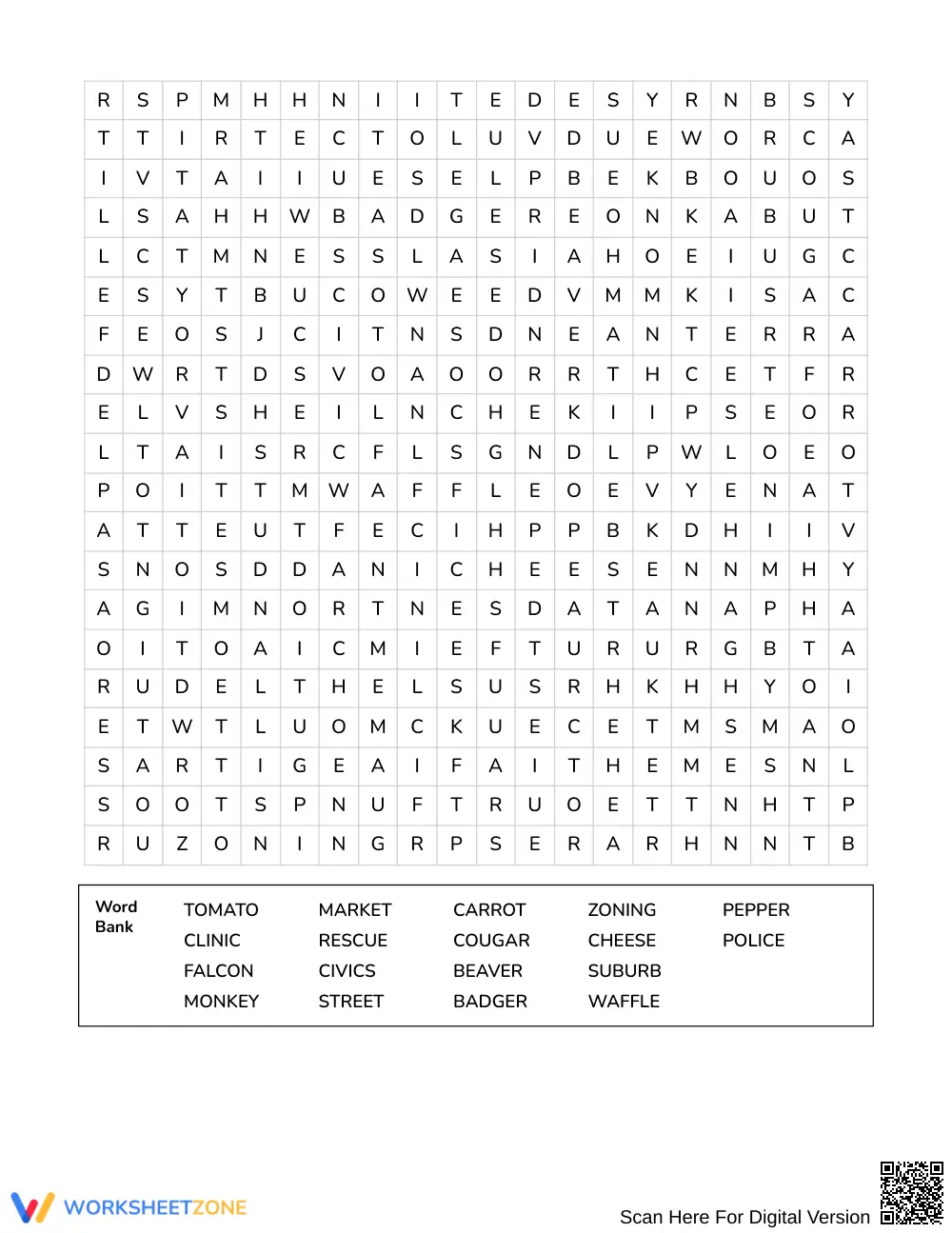
This 3-page printable activity features 18 words embedded in an expansive letter layout. Rather than providing a passive word bank, the activity supplies descriptive clues for every term, requiring middle school learners to demonstrate reading comprehension before searching the puzzle. The resource includes complete answer key pages displaying highlighted word placements for quick verification.
The puzzle is constructed on a 20 × 20 grid designed to challenge middle school students. The 18 words run in all eight possible directions: horizontal, vertical, and diagonal paths running north, northeast, east, southeast, south, southwest, west, and northwest. A shuffled word bank provides reference support, while paired definitional clues prompt students to match context clues to target terms before locating them within the dense grid matrix.
This resource serves as targeted vocabulary enrichment and is not aligned to a specific academic standard. It supports cross-disciplinary literacy and civic terminology through contextual definitions and active word recognition.
Introduce this word search after direct instruction on community structures, municipal agencies, and zoning practices to consolidate academic language. It serves effectively as a quiet independent transition task or a flexible emergency sub plan. During the activity, circulate to observe whether learners solve clues through textual context or scan the letter grid first, which highlights varying vocabulary fluency. Expect completion within 20 to 30 minutes.
Designed for middle school learners in Grades 7–8, this activity benefits general education classes, English language learners needing contextual definitions, and students seeking structured enrichment. Pair this puzzle with an introductory community civics reading passage or an interactive municipal government map study.
Contextual vocabulary enrichment supports secondary literacy development by reinforcing morphological recognition and orthographic memory across content areas. According to Fisher & Frey (2014), intentional exposure to academic and domain-specific words through structured clue-solving bridges the gap between passive recognition and active conceptual recall. Engaging middle school learners with multi-directional letter grids encourages persistent visual scanning and reinforces spelling patterns for complex community, civic, and environmental terms. Rather than memorizing isolated lists, students encounter definitional descriptions that activate prior knowledge before searching for each hidden target term. This two-step retrieval process promotes cognitive engagement, solidifying term comprehension for diverse learners including striving readers and multilingual students. Incorporating purposeful puzzle tasks into social studies curricula reinforces vocabulary acquisition without excessive instructional overhead, ensuring that essential community terminology becomes permanently integrated into students' ongoing academic language foundation.


