































Complete Chinese Cuisine Word Search | Grades 7–8 ELA

Paste this activity's link or code into your existing LMS (Google Classroom, Canvas, Teams, Schoology, Moodle, etc.).
Students can open and work on the activity right away, with no student login required.
You'll still be able to track student progress and results from your teacher account.
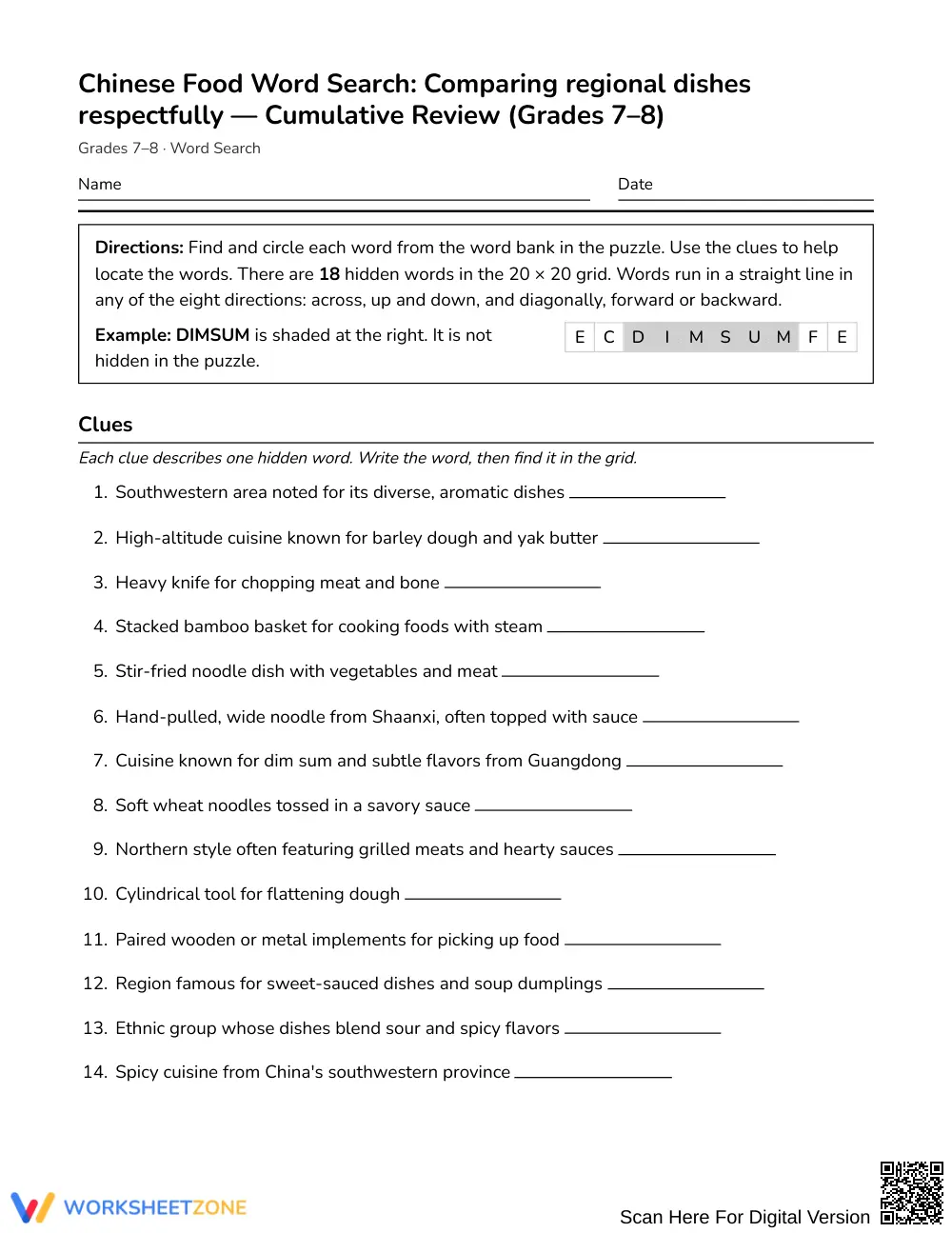
This Grades 7–8 vocabulary word search builds cultural awareness and culinary terminology as students examine regional Chinese cuisines respectfully. Students identify authentic culinary traditions, ingredients, and kitchen tools while connecting distinct geographic areas to their cooking styles. The activity reinforces thoughtful language and cultural appreciation through an engaging puzzle format.
At a Glance
- Grade: Grades 7–8 · Subject: English Language Arts (ELA)
- Standard: Not standards-assessed — vocabulary enrichment
- Skill Focus: Comparing regional Chinese dishes respectfully
- Format: 3 printable pages · 18 hidden vocabulary words · Full answer key included · PDF document
- Best For: Cross-curricular vocabulary enrichment, fast finishers, and culinary culture units
- Time: 20–30 minutes
What's Inside
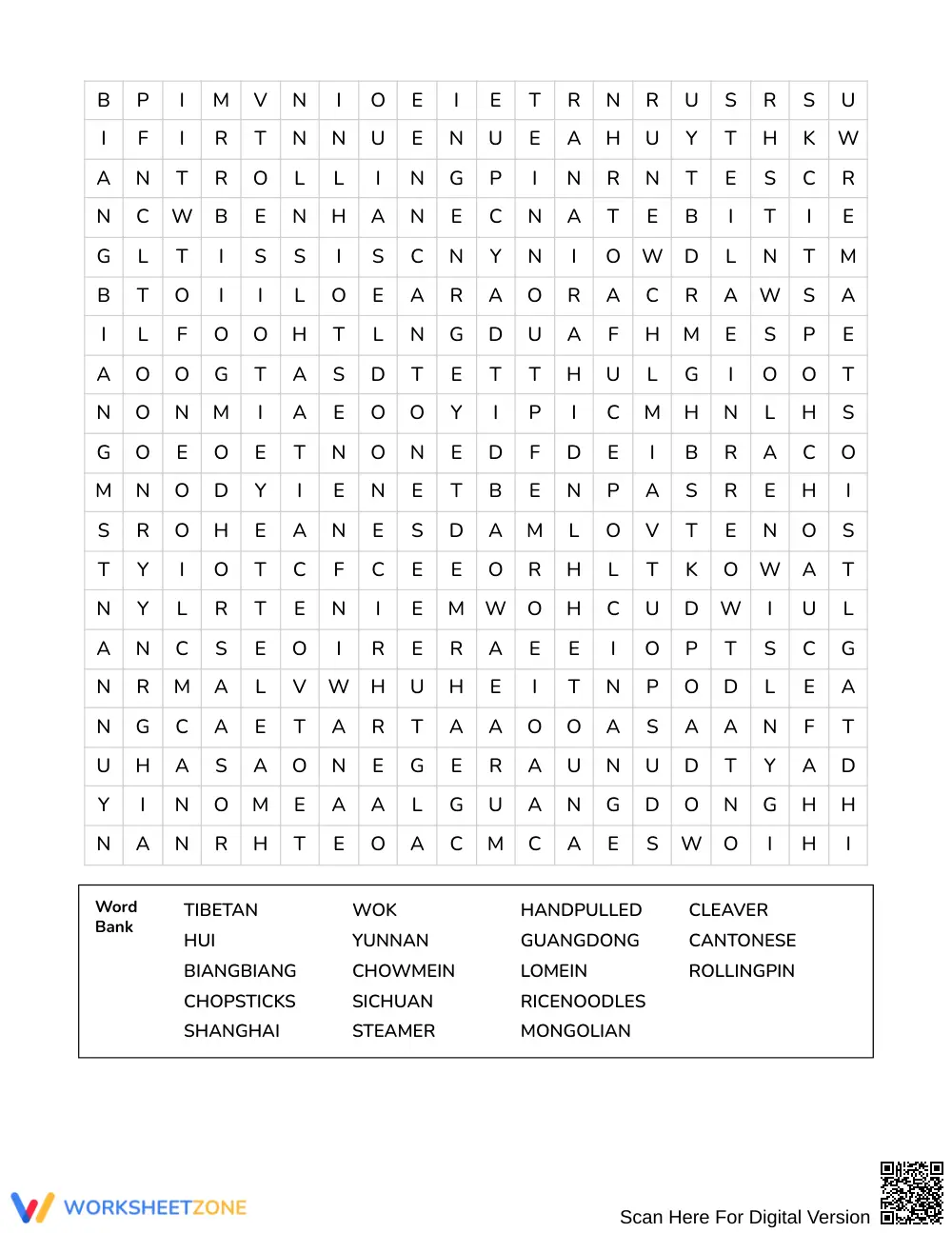
This 3-page printable activity pack features a full-size word search puzzle accompanied by contextual clues for 18 vocabulary terms. Students consult a shuffled word bank highlighting regional cooking styles, noodle varieties, and traditional implements. A matching 3-page answer key displays term locations clearly for rapid grading and student self-checking.
Puzzle Mechanics and Structure
The puzzle challenges middle school students across a 20 x 20 grid designed to foster scanning and pattern recognition. Vocabulary terms run in all eight possible directions: N, NE, E, SE, S, SW, W, and NW. Each entry in the shuffled word bank features a concise cultural clue, guiding learners to connect culinary terms directly to authentic regional traditions and cooking techniques.
Standards Alignment
This resource serves as targeted vocabulary enrichment and cultural exploration; it is not formally aligned to a state or national learning standard. Instead, it supplements middle school English Language Arts curricula by developing domain-specific vocabulary and fostering respectful discussions around diverse food cultures.
How to Use It
This word search fits easily into a 20- to 30-minute classroom block:
- Unit Introduction: Distribute the puzzle before reading global texts. Students review clues to build background knowledge and explore specialized terminology prior to discussion.
- Formative Extension: Assign the puzzle during independent practice. As a formative check, observe whether students read the culinary clues to locate terms rather than relying solely on letter matching.
Who It's For
This activity is designed for Grades 7–8 students studying language arts, geography, or world cultures. For emerging bilingual students, teachers can highlight the first letter of key words or encourage partner work. It pairs effectively with informational articles on world cuisines or anchor charts detailing sensory descriptive language.
Building domain-specific vocabulary and comparing regional dishes respectfully enables middle school learners to develop cultural empathy alongside linguistic fluency. Research by Fisher & Frey (2014) emphasizes that intentional word-learning experiences require students to engage with terms across meaningful semantic networks, contextual definitions, and orthographic patterns. Word searches that incorporate explanatory clues transform basic letter-finding drills into cognitive processing exercises where learners connect culinary concepts with geographic origins and cultural heritage. By encountering 18 specialized terms—including regional classifications like Yunnan and Sichuan alongside traditional tools such as steamers and cleavers—students internalize respectful descriptors for unfamiliar cuisines. This non-standards-assessed enrichment activity supports general literacy growth, cultural literacy, and morphological awareness in middle grades classrooms. Integrating thematic puzzles alongside authentic informational texts provides teachers with an accessible, high-interest tool to reinforce academic and cultural vocabulary acquisition across diverse student populations.


