































Complete Bathroom Fixtures Word Search | Grades 7–8 ELA

Paste this activity's link or code into your existing LMS (Google Classroom, Canvas, Teams, Schoology, Moodle, etc.).
Students can open and work on the activity right away, with no student login required.
You'll still be able to track student progress and results from your teacher account.
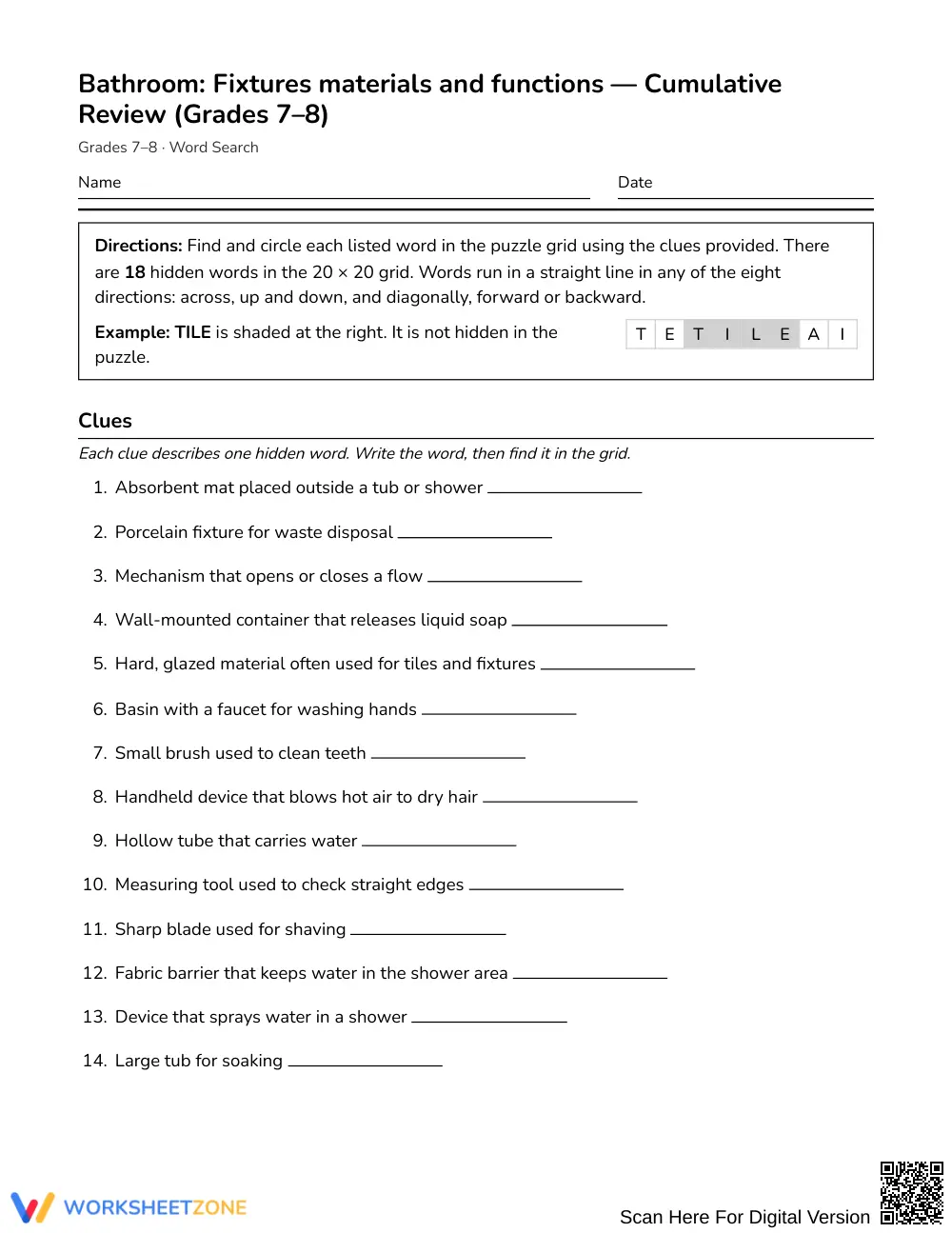
Reinforce bathroom fixtures, materials, and functional vocabulary with this cumulative review activity. Students read descriptive clues to identify and locate target terms across a large letter grid, strengthening spelling and domain-specific terminology. This 3-page word search provides a complete vocabulary check for middle school English language arts classrooms.
At a Glance
- Grade: Grades 7–8 · Subject: English Language Arts (ELA)
- Standard: Not standards-assessed — vocabulary enrichment
- Skill Focus: Bathroom fixtures, materials, and functions
- Format: 3 pages · 18 words · Answer key included · PDF
- Best For: Vocabulary review and fast-finisher work
- Time: 20–30 minutes
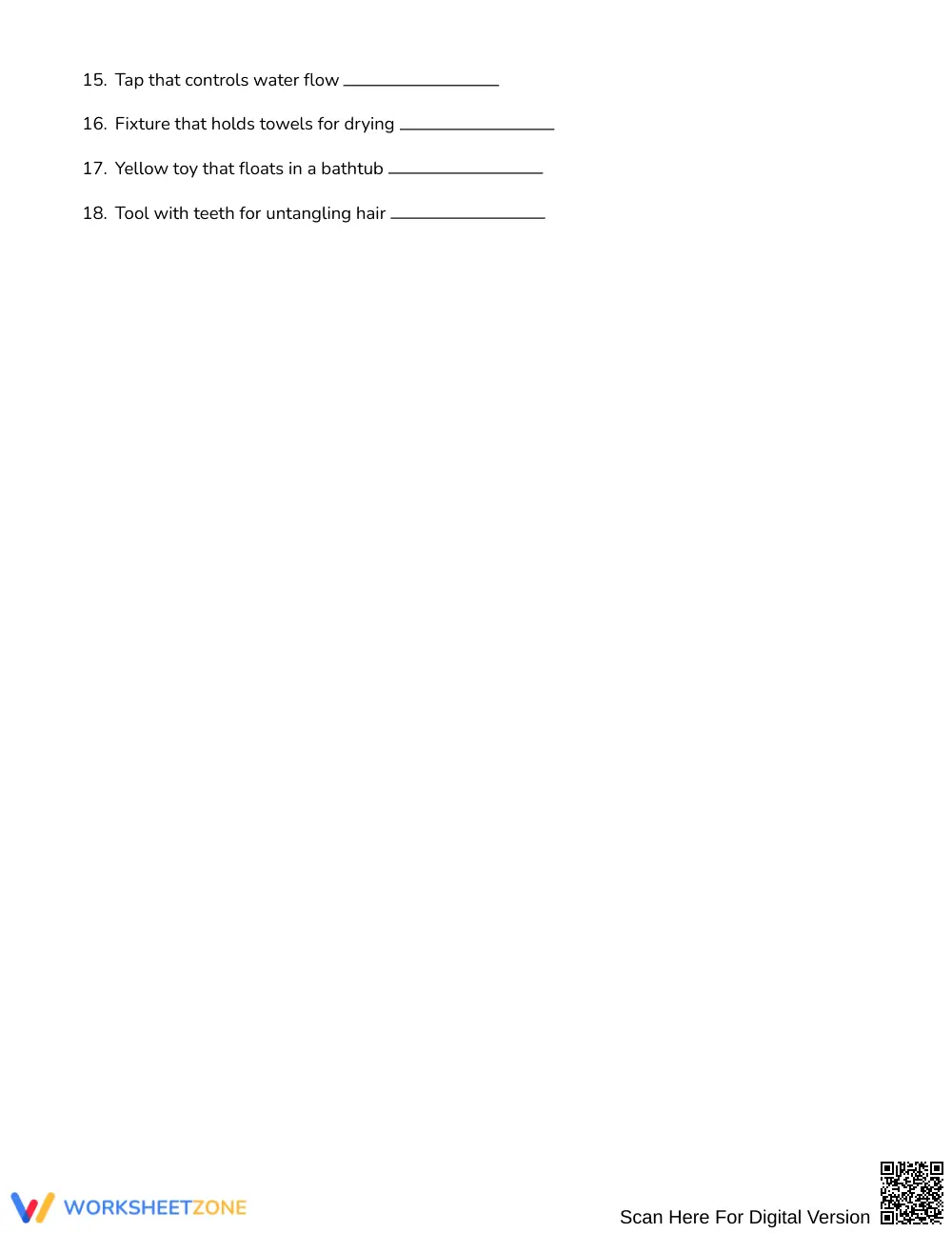
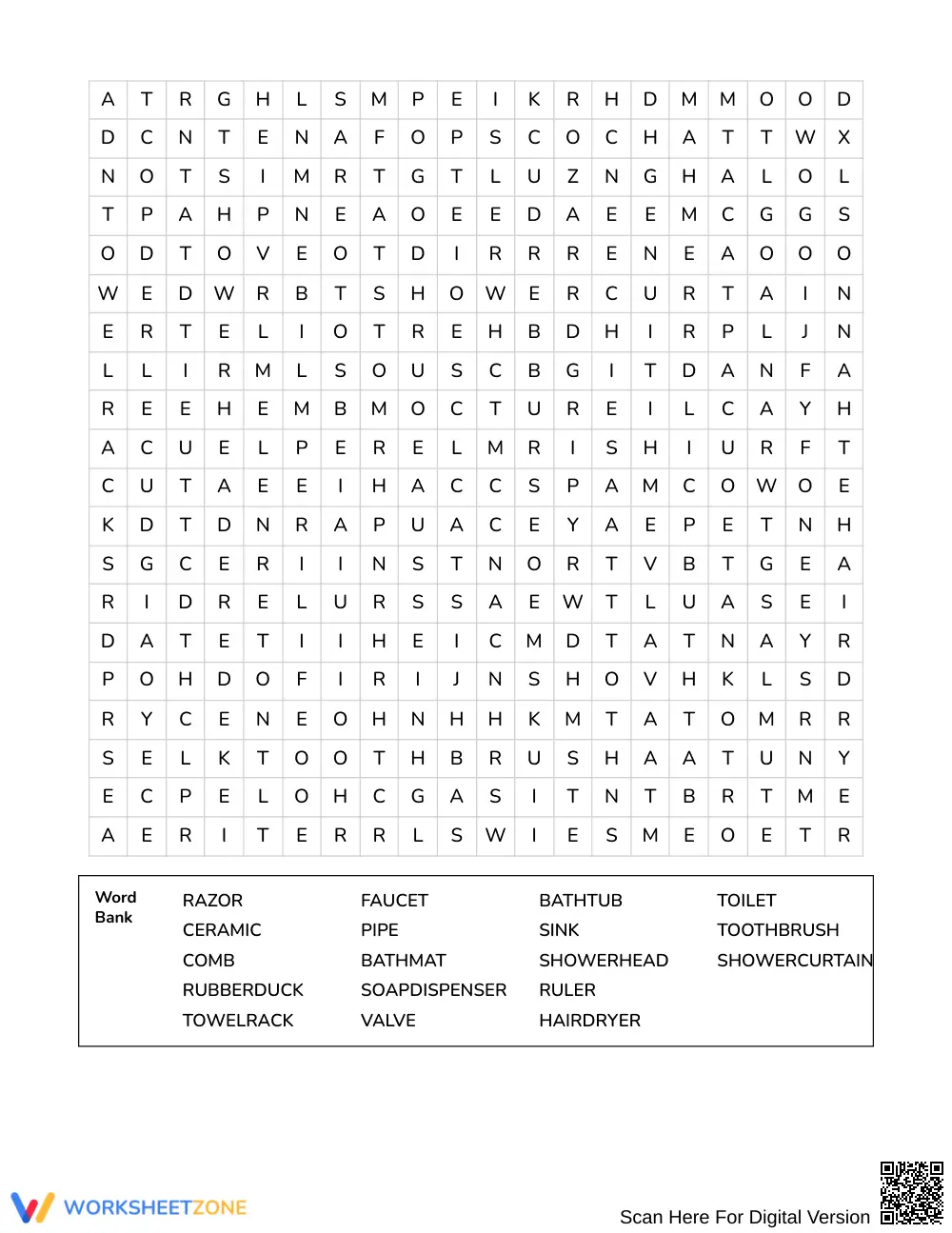
This printable resource features a 3-page student packet alongside a matching 3-page answer key. The centerpiece is an engaging word puzzle paired with an 18-item clue bank that defines every hidden term, such as porcelain fixtures, plumbing valves, and grooming tools. Instead of merely hunting for letters, students connect functional definitions to specific terms before tracking down the vocabulary within the grid.
Puzzle Mechanics and Structure
Built across a challenging 20 x 20 letter grid, this puzzle conceals all 18 vocabulary words in eight potential directions: north, northeast, east, southeast, south, southwest, west, and northwest. A shuffled word bank ensures that students read each term carefully rather than scanning predictably down a neat alphabetical list. By pairing definitions directly with the target terms, the layout requires learners to process word meanings as they search, turning a recreational format into an effective contextual vocabulary drill.
Standards Alignment
This word search is designed strictly for vocabulary enrichment and is not aligned to a specific grade-level academic standard. It supports general language acquisition and practical descriptive terminology by highlighting household fixtures, functional components, and building materials commonly encountered in functional texts and technical manuals.
How to Use It
Introduce this puzzle after completing a unit on descriptive writing or informational texts. It functions well during independent seatwork while the teacher pulls small groups for reading intervention, or as an engaging entry task on a review day. For formative assessment, observe whether students read the clues to verify spelling before searching the grid or rely solely on letter clusters. Learners typically finish in 20 to 30 minutes.
Who It's For
This activity serves students in Grades 7–8 who benefit from contextual word recognition, including English language learners acquiring practical home-environment vocabulary. For students needing support, pair the puzzle with an illustrated home fixtures anchor chart or an introductory glossary before independent searching begins.
Fisher & Frey (2014) emphasize that domain-specific vocabulary acquisition thrives when students repeatedly encounter target words through intentional, multi-faceted practice that links definitions with orthographic recognition. This 18-word puzzle reinforces language development by requiring middle school students to process definitions of utilitarian objects, hardware, and structural materials before identifying the terms within a complex 20 x 20 letter array. Although designed as non-standardized vocabulary enrichment rather than formal assessment prep, the resource deepens word familiarity, reinforces correct spelling patterns, and improves semantic recall. Integrating descriptive clues alongside a randomized word bank transforms recreational pattern-seeking into a rigorous lexical task. Educators can utilize this 3-page resource to bridge everyday spoken vocabulary with technical literacy, providing structured independent practice that supports language retention across diverse learning environments.


