


























Views
Downloads

Printable Addition and Subtraction Mastery | Grades 2-4
Paste this activity's link or code into your existing LMS (Google Classroom, Canvas, Teams, Schoology, Moodle, etc.).
Students can open and work on the activity right away, with no student login required.
You'll still be able to track student progress and results from your teacher account.
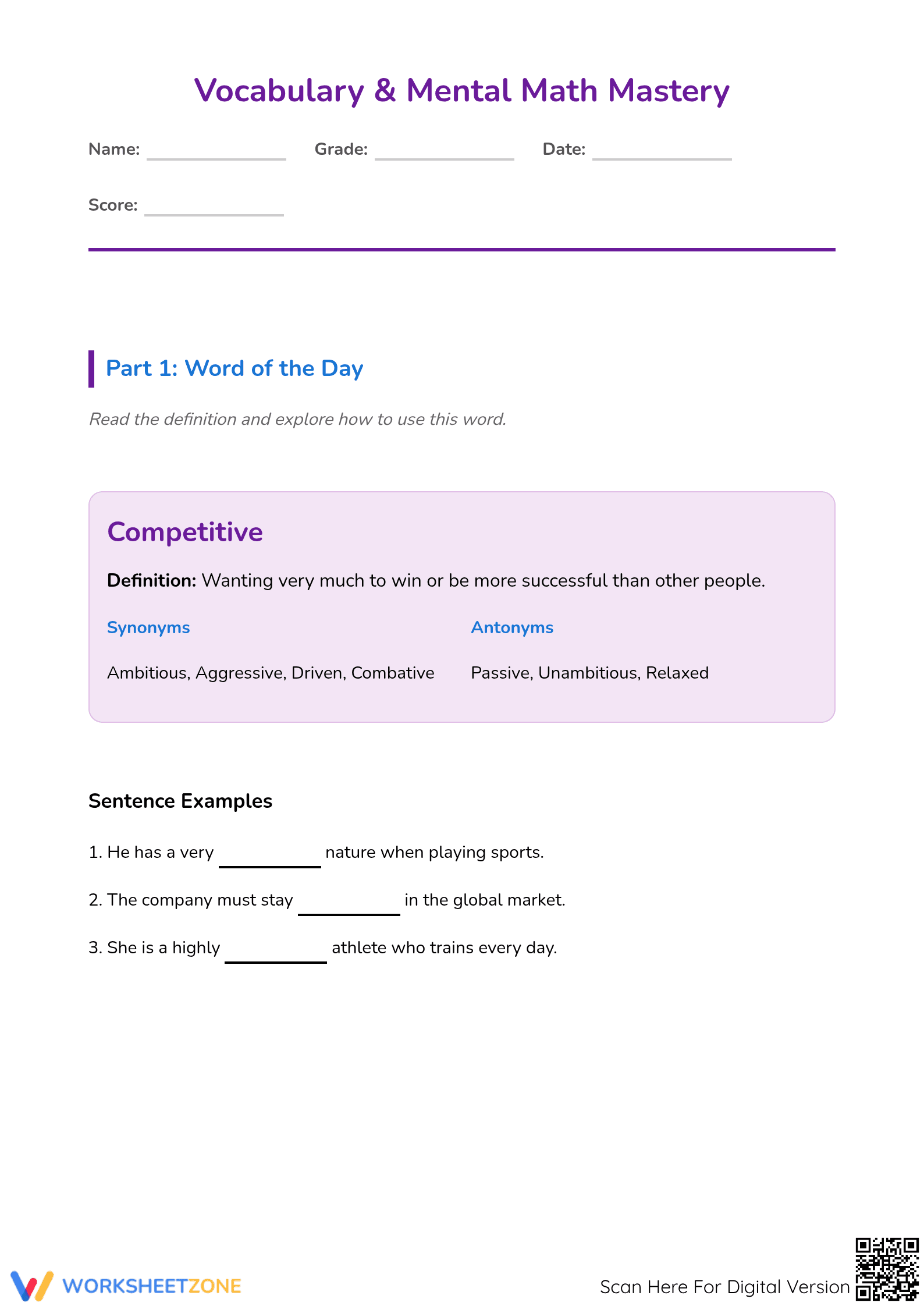
This comprehensive Grades 2-4 worksheet bridges the gap between language arts and mathematics by combining vocabulary acquisition with rigorous mental math practice. Students explore the word "competitive" through definitions and usage before transitioning into high-frequency addition and subtraction challenges designed to build computational fluency and confidence.
At a Glance
- Grade: 3 · Subject: Math
- Standard:
CCSS.MATH.CONTENT.3.NBT.A.2— Fluently add and subtract within 1000 using place value strategies- Skill Focus: Mental math fluency and vocabulary mastery
- Format: 5 pages · 30 problems · Answer key included · PDF
- Best For: Daily warm-ups and math-center rotations
- Time: 25–35 minutes
What's Inside
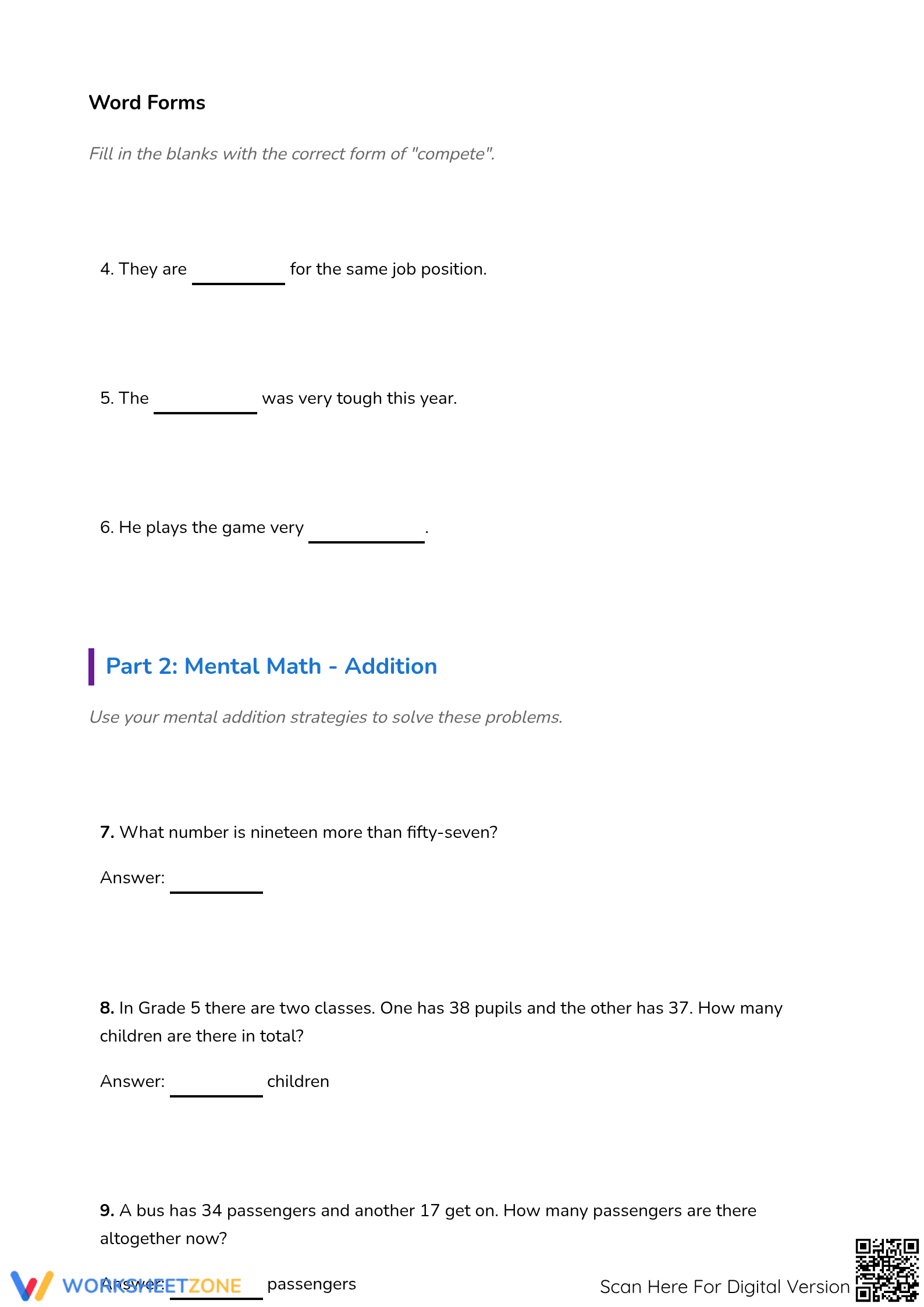
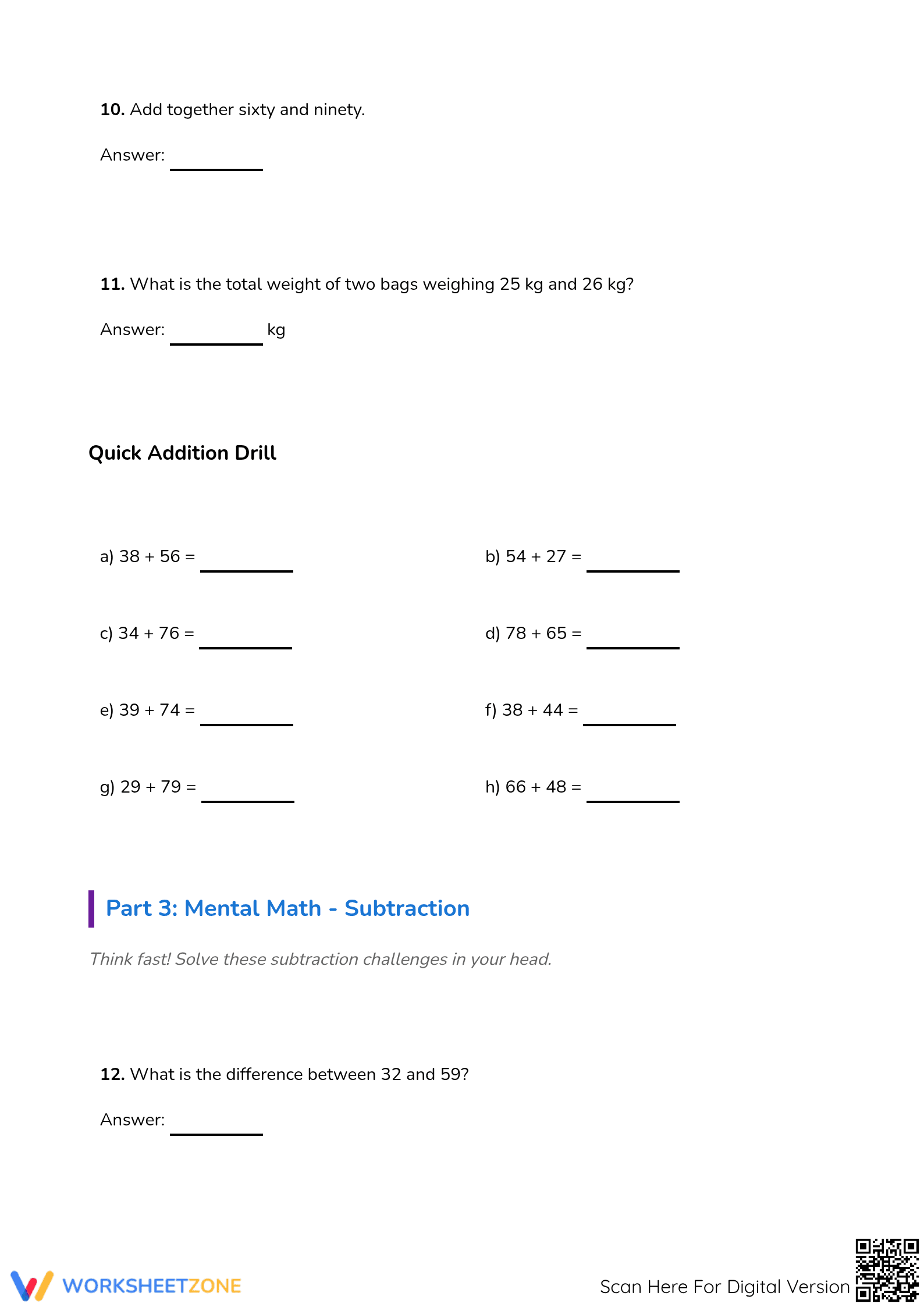
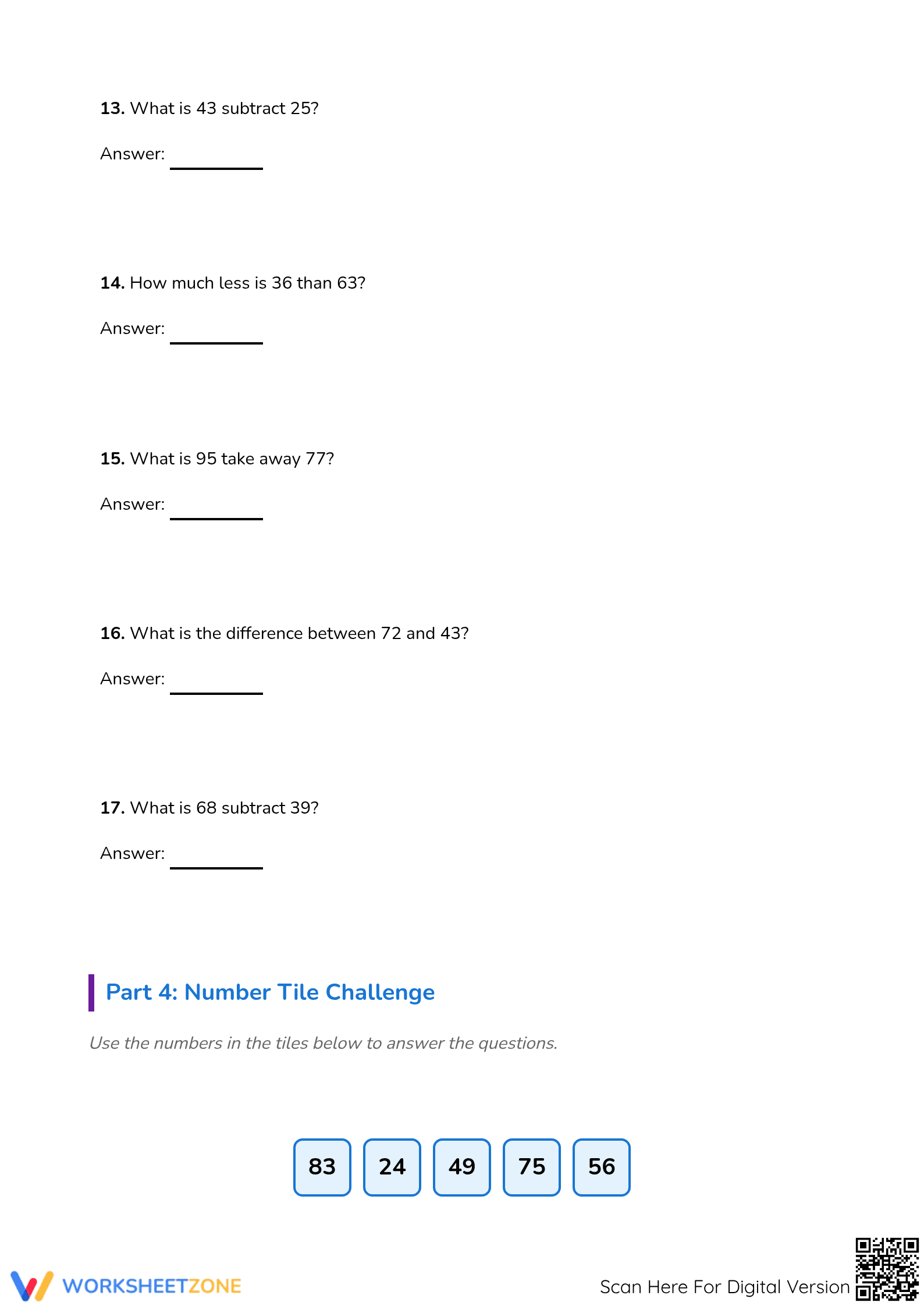
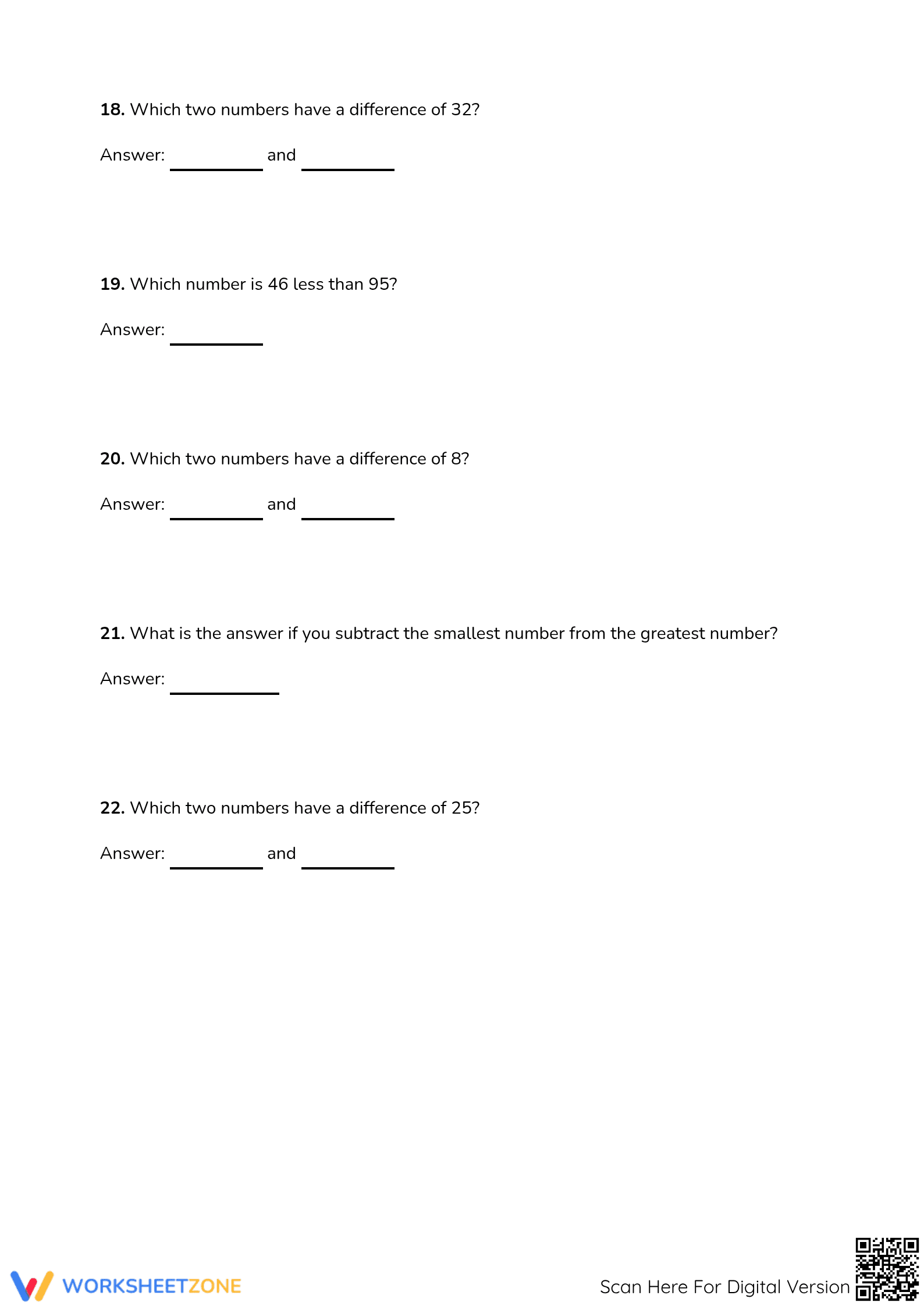
This five-page PDF includes a structured Word of the Day study on the term "competitive," featuring synonyms, antonyms, and sentence completion tasks. The math portion transitions into five sections: mental addition word problems, a quick addition drill with eight items, mental subtraction challenges, and a final "Number Tile Challenge" that requires logical reasoning to find specific differences and sums using a set of provided values.
Skill Progression
- Guided Practice: Students begin with vocabulary contextualization and simple mental addition word problems, using scaffolded sentence frames to build confidence (6 tasks).
- Supported Practice: The middle section features a timed-style addition drill and subtraction word problems that require applying mental strategies to two-digit numbers (14 tasks).
- Independent Practice: The final Number Tile Challenge demands mastery of the relationship between addition and subtraction as students select values to solve complex comparison problems (10 tasks).
The resource uses a gradual-release model to move from basic recall to higher-order application.
Standards Alignment
The primary focus of this worksheet is `CCSS.MATH.CONTENT.3.NBT.A.2`, which requires students to fluently add and subtract within 1000. It also supports `CCSS.ELA-LITERACY.L.3.6` by providing explicit instruction in academic vocabulary that is essential for understanding competitive environments and mathematical comparisons. Both standard codes can be copied directly into lesson plans, IEP goals, or district curriculum mapping tools.
How to Use It
Use this resource as a "Bell Ringer" activity at the start of a math block to settle students with a familiar vocabulary task before pivoting into high-intensity mental drills. During instruction, teachers can use the Number Tile Challenge as a formative assessment to observe how students choose strategies—such as rounding or decomposing numbers—to find specific differences. Expect completion in approximately 30 minutes.
Who It's For
This worksheet is ideal for third-grade students working toward computational fluency, though it provides excellent review for fourth graders or a challenge for advanced second graders. It naturally pairs with a place-value anchor chart or a "Word of the Day" bulletin board to reinforce the integrated ELA and math concepts throughout the school week.
According to the RAND AIRS 2024 report, integrating academic vocabulary with subject-specific drills significantly enhances long-term retention of both linguistic and procedural knowledge. This worksheet leverages that research by anchoring math practice in the context of the word "competitive," a term frequently encountered in standardized testing. By practicing CCSS.MATH.CONTENT.3.NBT.A.2 fluently adding and subtracting through both drills and logical tile challenges, students develop a more robust mathematical identity. The varied task structure, from word problems to number tile puzzles, aligns with evidence-based practices for building computational fluency while simultaneously expanding the student's lexicon. This dual-exposure approach is critical for learners who benefit from seeing mathematical relationships expressed in both numeric and verbal formats, ensuring that skills are not developed in isolation but as part of a broader academic toolkit.


