


























Views
Downloads

CCSS.MATH.CONTENT.5.G.B.4: Essential Geometry Guide
Paste this activity's link or code into your existing LMS (Google Classroom, Canvas, Teams, Schoology, Moodle, etc.).
Students can open and work on the activity right away, with no student login required.
You'll still be able to track student progress and results from your teacher account.
Mastering Quadrilateral Classification and Geometric Hierarchies
Students will master the geometry of polygons by categorizing shapes based on their defining attributes. This comprehensive 4-page resource ensures learners can distinguish between squares, rectangles, and trapezoids through evidence-based reasoning. By the end of these activities, students will confidently map the relationships between complex geometric figures.
At a Glance
- Grade: 5 · Subject: Geometry
- Standard:
CCSS.MATH.CONTENT.5.G.B.4— Classify two-dimensional figures in a hierarchy based on properties- Skill Focus: Quadrilateral Classification
- Format: 4 pages · 26 problems · Answer key included · PDF
- Best For: Grade 5 Geometry Mastery Unit
- Time: 30–45 minutes
What’s Inside
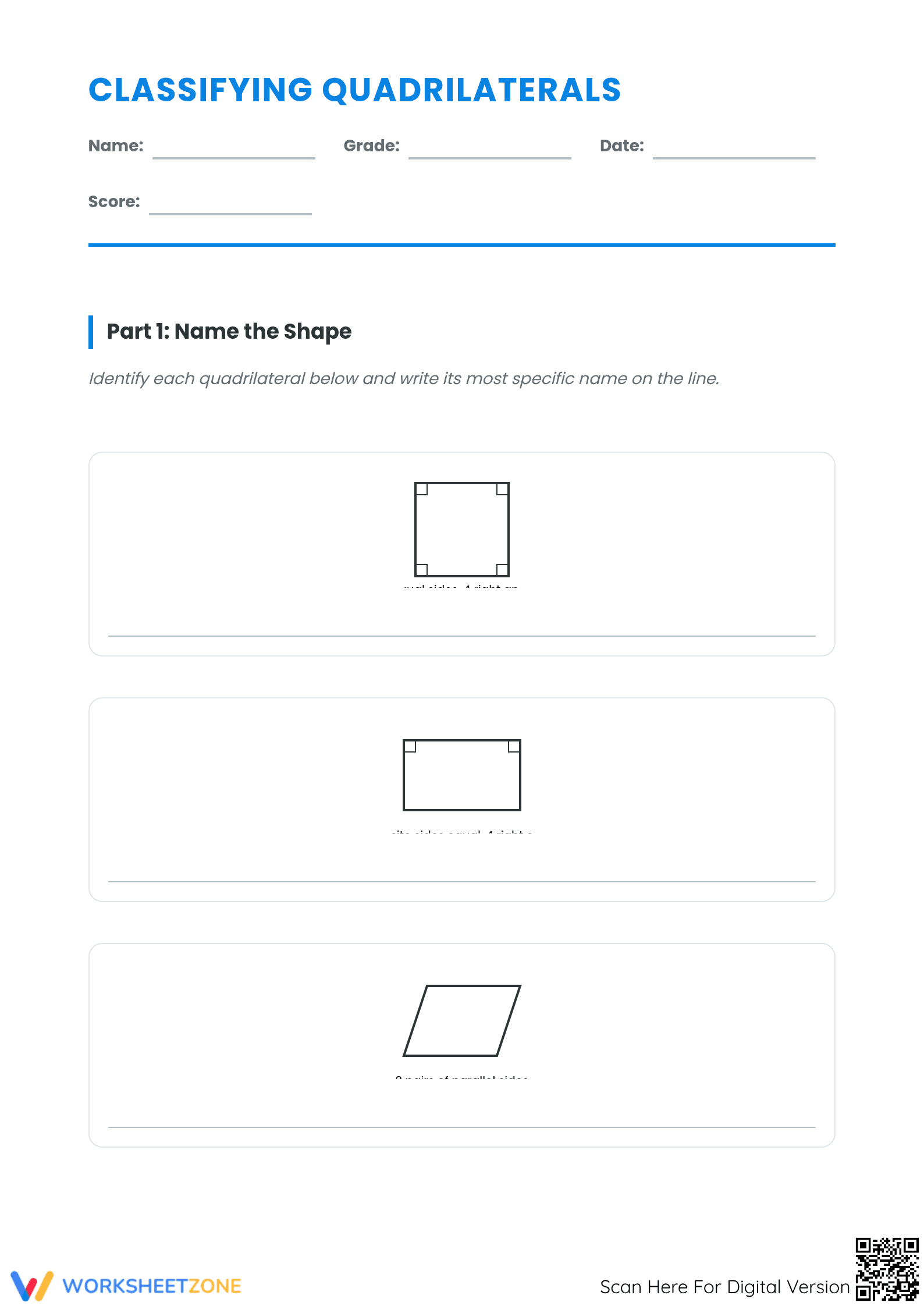
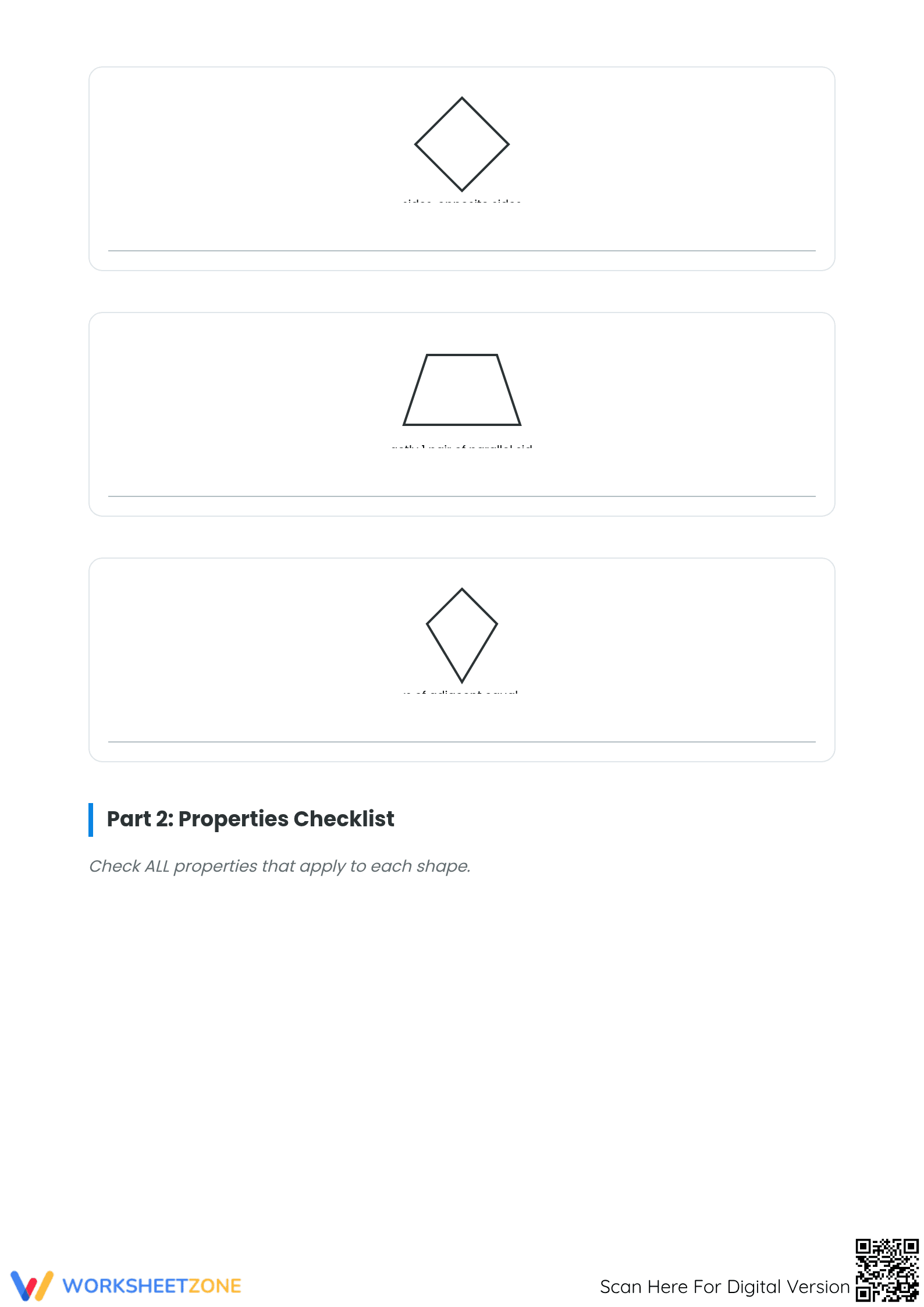
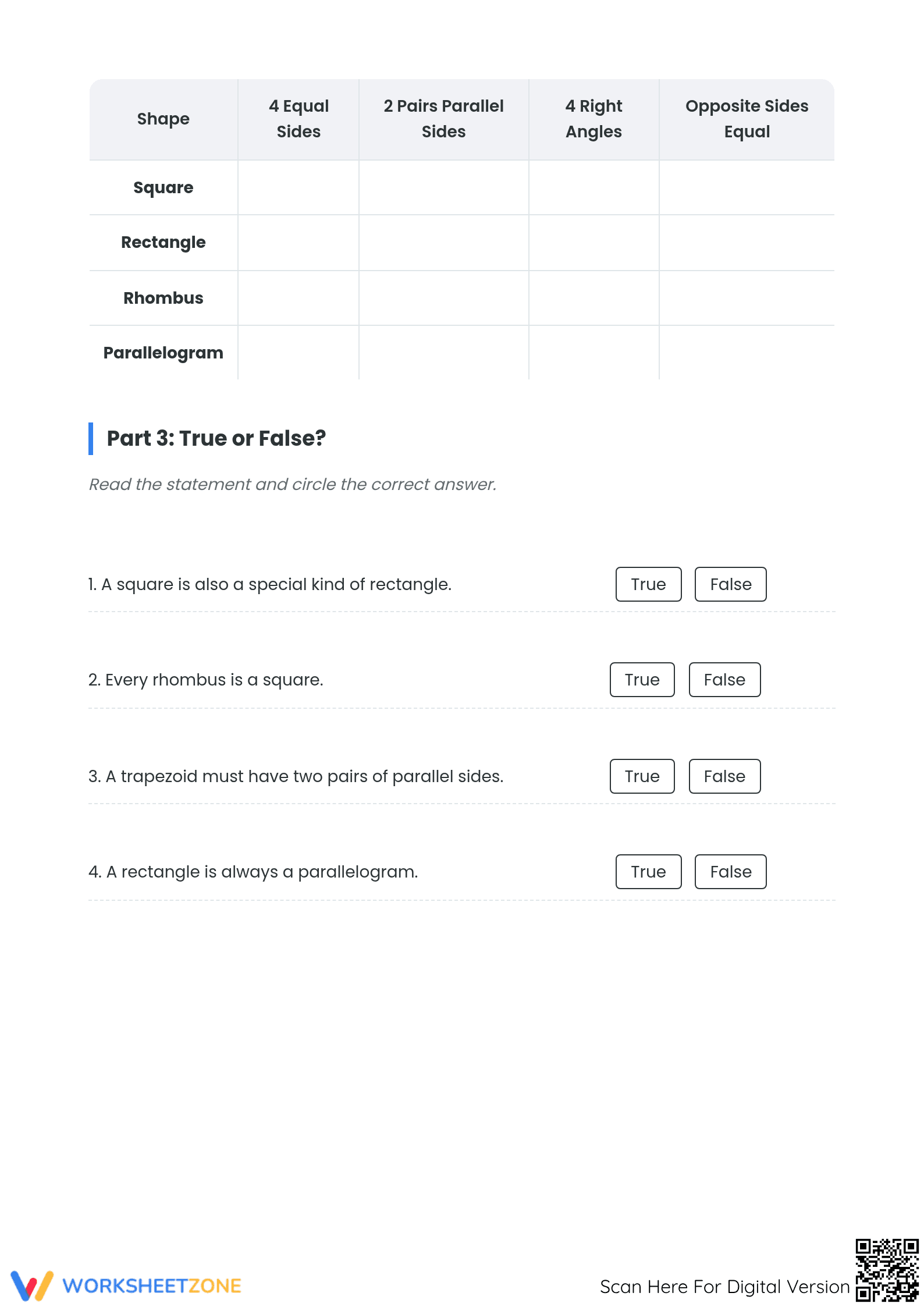
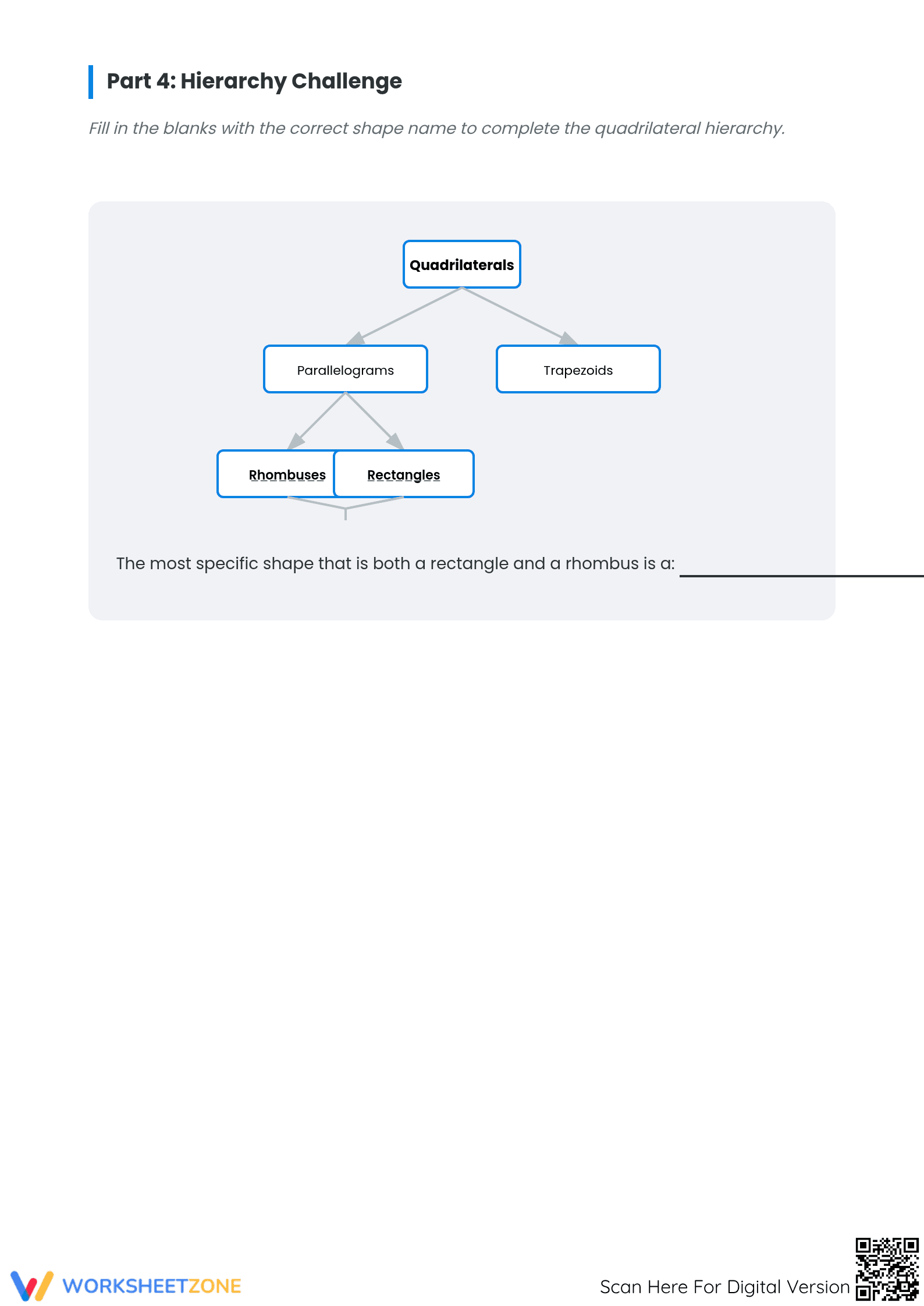
This standards-aligned packet includes a multi-step progression designed to ensure students move beyond simple memorization. The resource consists of identification exercises for six primary quadrilaterals, a rigorous properties checklist, true-or-false conceptual assessments, and a visual hierarchy tree challenge. Each page is meticulously designed with clear diagrams, and the included answer key allows for immediate feedback and efficient grading during busy classroom hours.
Mastery Evidence
The worksheet is structured to provide clear evidence of student proficiency across tiers of geometric understanding. Identification tasks verify recognition, while the properties checklist maps attributes like parallel sides and right angles to standard expectations. Finally, the hierarchy tree and conceptual true-or-false questions assess the ability to explain how shapes belong to multiple categories.
Standards Alignment
The primary focus of this resource is CCSS.MATH.CONTENT.5.G.B.4: "Classify two-dimensional figures in a hierarchy based on properties." It also supports CCSS.MATH.CONTENT.5.G.B.3 by helping students understand that attributes belonging to a category of two-dimensional figures also belong to all subcategories of that category. Both standard codes can be copied directly into lesson plans, IEP goals, or district curriculum mapping tools to ensure compliance with state and national frameworks.
How to Use It
This packet is ideal for independent practice after direct instruction. A strong formative assessment strategy is to observe students as they complete the hierarchy tree; placing "Square" at the intersection of "Rectangle" and "Rhombus" indicates conceptual mastery. Expect completion of the full 4-page packet in approximately 40 minutes.
Who It’s For
This resource is designed for Grade 5 students, serving as an excellent extension for Grade 4 learners or review for Grade 6. The structured layout and clear visual cues make it accessible for students with diverse learning needs who benefit from organized graphic organizers.
The CCSS.MATH.CONTENT.5.G.B.4 standard requires a sophisticated understanding of how geometric shapes relate to one another within a structured hierarchy. According to the RAND AIRS 2024 analysis of mathematics curricula, effective geometry instruction must move beyond static definitions toward a dynamic understanding of properties as defining characteristics. This worksheet facilitates that shift by forcing students to reconcile the overlapping attributes of parallelograms and trapezoids. By engaging with 26 distinct tasks across 4 pages, learners develop the cognitive schemas necessary for higher-order spatial reasoning. The hierarchy challenge specifically targets the misconception that shapes can only belong to one category, a critical hurdle in elementary mathematics. This evidence-based approach aligns with the best practices for developing geometric fluency and ensures that students are prepared for the more rigorous coordinate geometry tasks encountered in middle school. Access this printable PDF today to support your students' journey toward mathematical proficiency.


