


























Views
Downloads

Complete Character Analysis Worksheet | Grade 10-12 Ready
Paste this activity's link or code into your existing LMS (Google Classroom, Canvas, Teams, Schoology, Moodle, etc.).
Students can open and work on the activity right away, with no student login required.
You'll still be able to track student progress and results from your teacher account.
This comprehensive character analysis worksheet provides high school and college students with a structured framework to deconstruct complex literary figures. By moving from basic traits to thematic significance, students develop a nuanced understanding of how authors craft identity and drive narrative momentum through characterization. This resource ensures students engage deeply with the text.
At a Glance
- Grade: 10–College · Subject: ELA
- Standard:
CCSS.ELA-LITERACY.RL.11-12.3— Analyze how the author develops and relates story elements like character- Skill Focus: Indirect Characterization (STEAL)
- Format: 3 pages · 10 sections · Answer key included · PDF
- Best For: Novel studies and literary analysis essays
- Time: 45–60 minutes
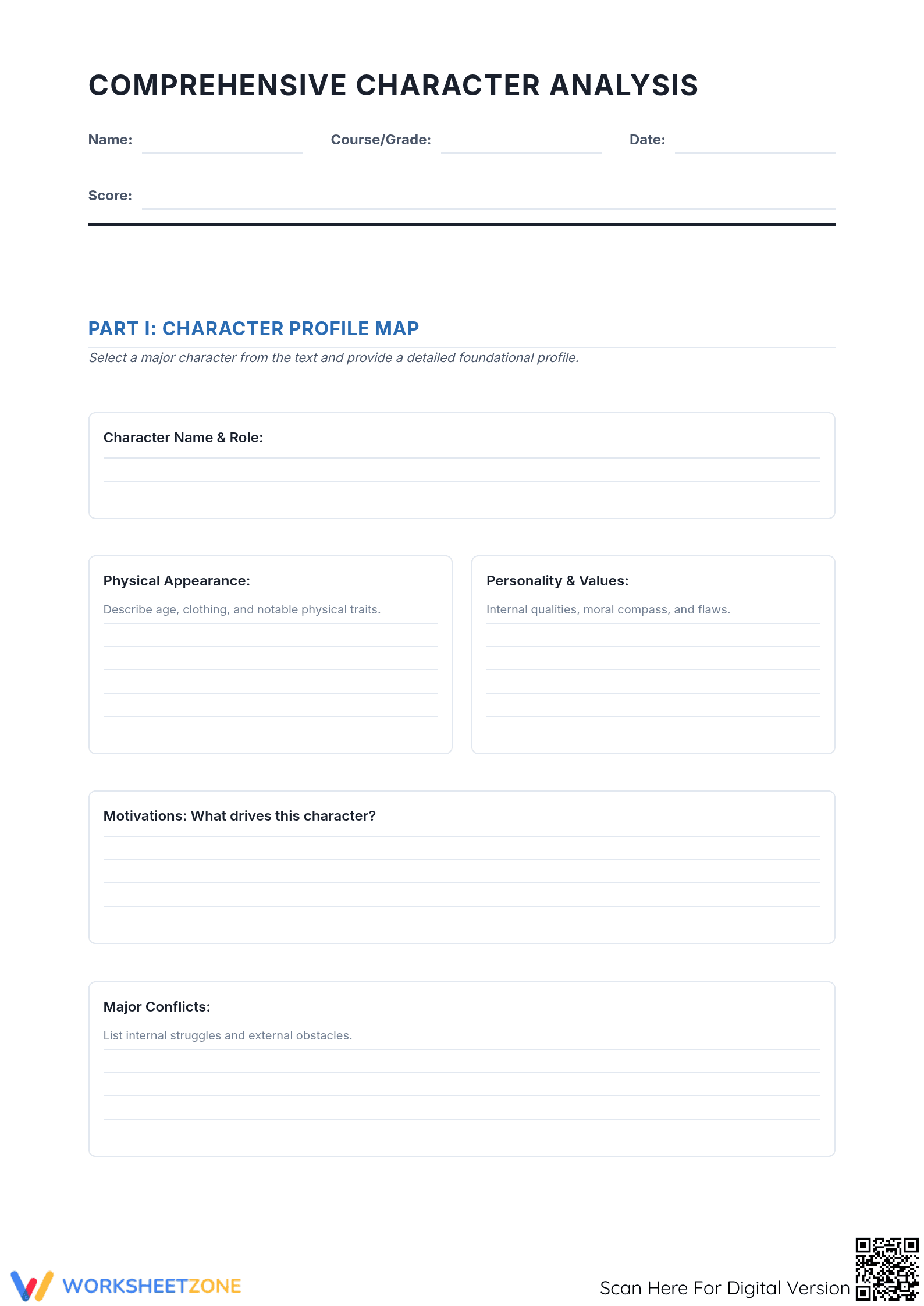
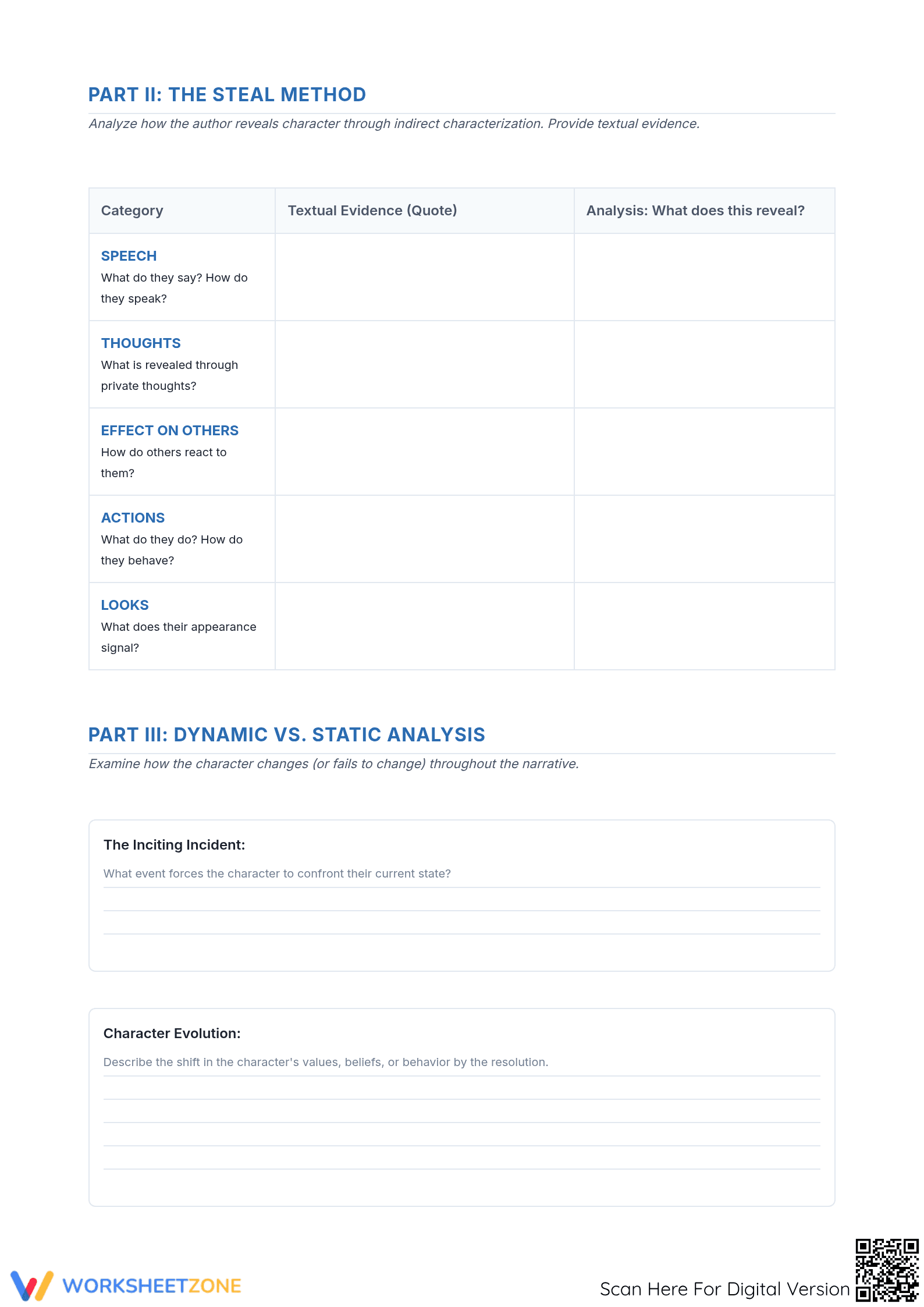
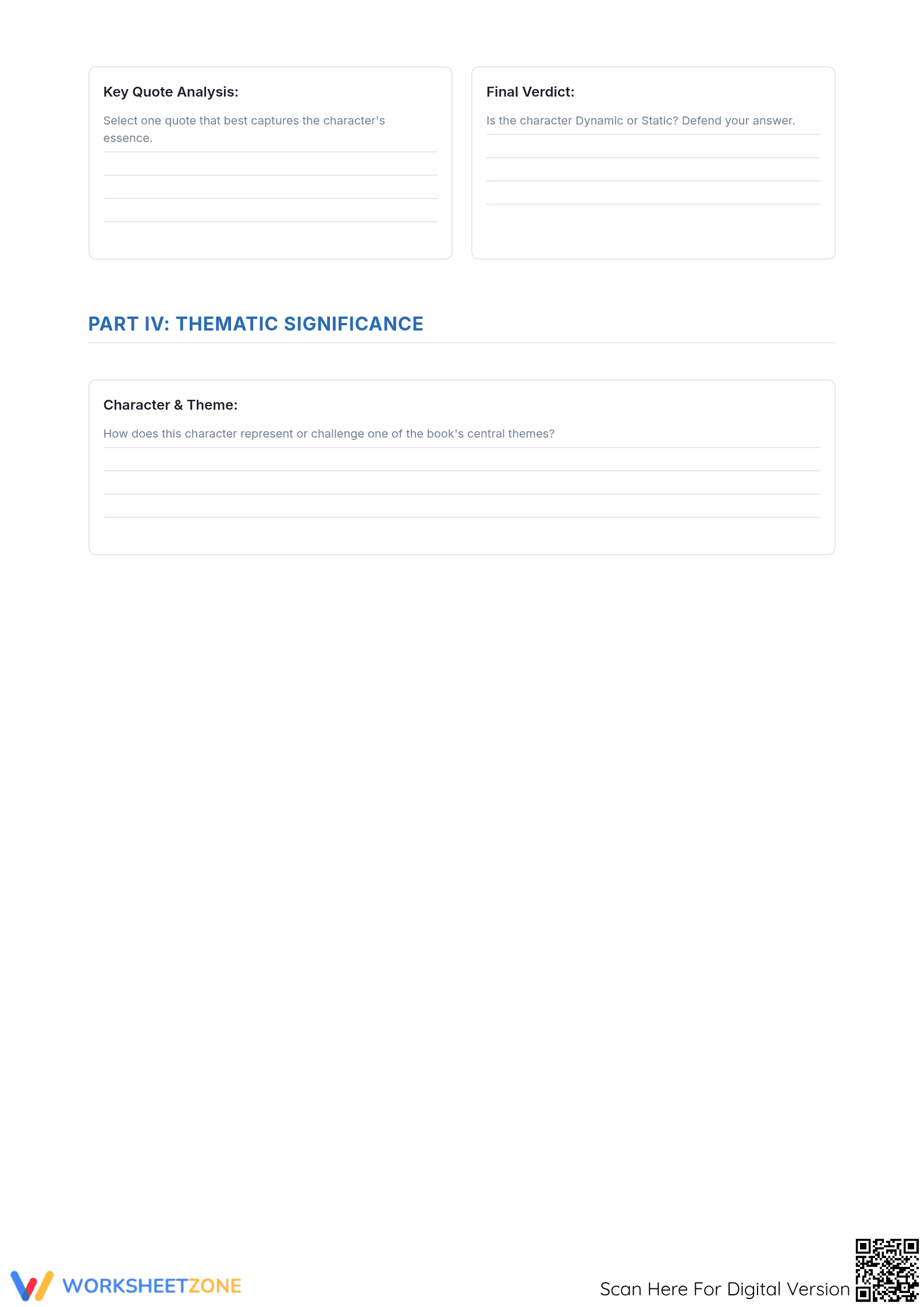
The 3-page PDF includes a Character Profile Map, a dedicated STEAL method chart for evidence-based analysis, and sections for tracking character evolution. Students evaluate inciting incidents and determine if a character is static or dynamic, concluding with a detailed analysis of how the character embodies the text's central themes. The layout provides ample space for detailed student responses.
Mastery Evidence
This resource breaks down characterization into measurable sub-skills: identifying physical traits, extracting textual evidence for indirect characterization, and synthesizing character arcs. Each section serves as a data point for mastery of CCSS.ELA-LITERACY.RL.11-12.3. Teachers can use the final verdict and thematic significance sections to assess whether students have reached the exceeding tier of literary analysis, making it easy to record progress in gradebooks or IEP documentation.
Standards Alignment
The primary focus is `CCSS.ELA-LITERACY.RL.11-12.3`, which requires students to analyze the impact of the author’s choices regarding how to develop and relate elements of a story. It also supports RL.11-12.1 by demanding specific textual evidence for every inference made during the STEAL analysis. Both standard codes can be copied directly into lesson plans, IEP goals, or district curriculum mapping tools.
How to Use It
Assign this worksheet during the middle of a novel study once the protagonist has faced a significant conflict. Use the STEAL chart as a formative assessment to check if students can distinguish between what a character says and what their actions actually reveal. It typically takes 45 to 60 minutes for a thorough completion, depending on the complexity of the chosen text.
Who It's For
Designed for Grade 10 through College ELA students, this is ideal for AP Literature or honors-level courses. It pairs naturally with a graphic organizer for plot structure or an anchor chart on common literary archetypes to provide additional support for students. The clear headings make it accessible for diverse learners in a secondary classroom.
According to the RAND AIRS 2024 report, structured scaffolds like the STEAL method significantly improve a student's ability to move from literal comprehension to abstract literary analysis. This worksheet aligns with those findings by providing a 3-page roadmap that forces students to ground their interpretations in specific textual evidence. By requiring students to analyze the inciting incident and character evolution, the resource ensures that learners are not just describing a character, but are instead analyzing the mechanics of the narrative arc as required by CCSS.ELA-LITERACY.RL.11-12.3. Research from Fisher & Frey (2014) suggests that such gradual-release frameworks are essential for mastering complex ELA standards in secondary education. This printable PDF serves as a rigorous tool for evidence-based writing, ensuring that every student has the necessary prompts to reach a final verdict on character development and thematic impact.


