


























Views
Downloads

Grade 2 Character Traits Worksheet | Essential Printable
Paste this activity's link or code into your existing LMS (Google Classroom, Canvas, Teams, Schoology, Moodle, etc.).
Students can open and work on the activity right away, with no student login required.
You'll still be able to track student progress and results from your teacher account.
Identifying character traits allows second-grade readers to move beyond simple plot recall toward deep literary analysis. This two-page worksheet provides a structured framework for students to observe, categorize, and compare the personalities of four distinct characters. By engaging with specific adjectives like intelligent and brave, students build the vocabulary necessary for complex reading comprehension.
At a Glance
- Grade: 2 · Subject: ELA
- Standard:
CCSS.ELA-LITERACY.RL.2.3— Describe how characters in a story respond to major events and challenges- Skill Focus: Character Trait Identification
- Format: 2 pages · 12 problems · Answer key included · PDF
- Best For: Independent practice or literacy centers
- Time: 15–20 minutes
What's Inside
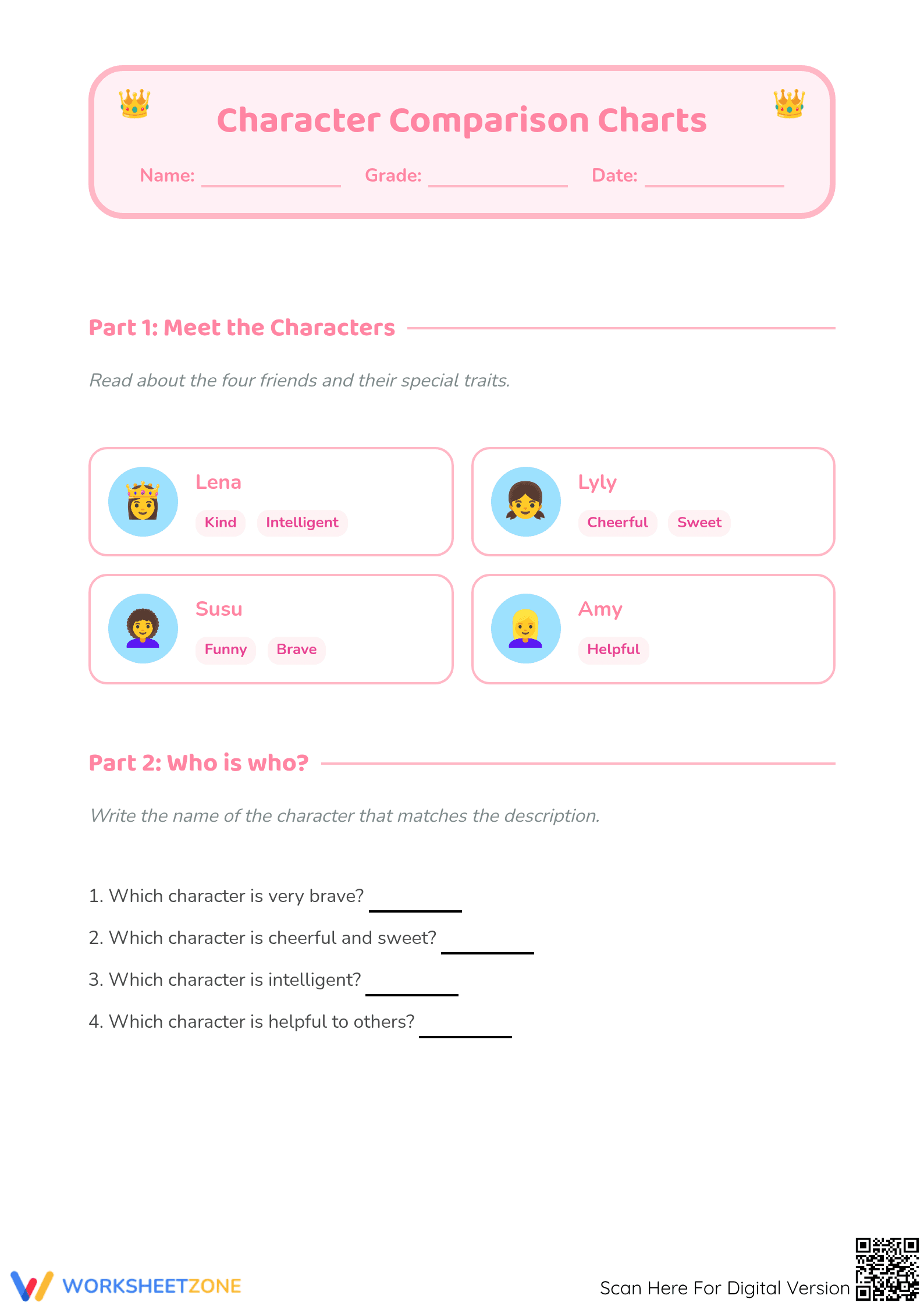
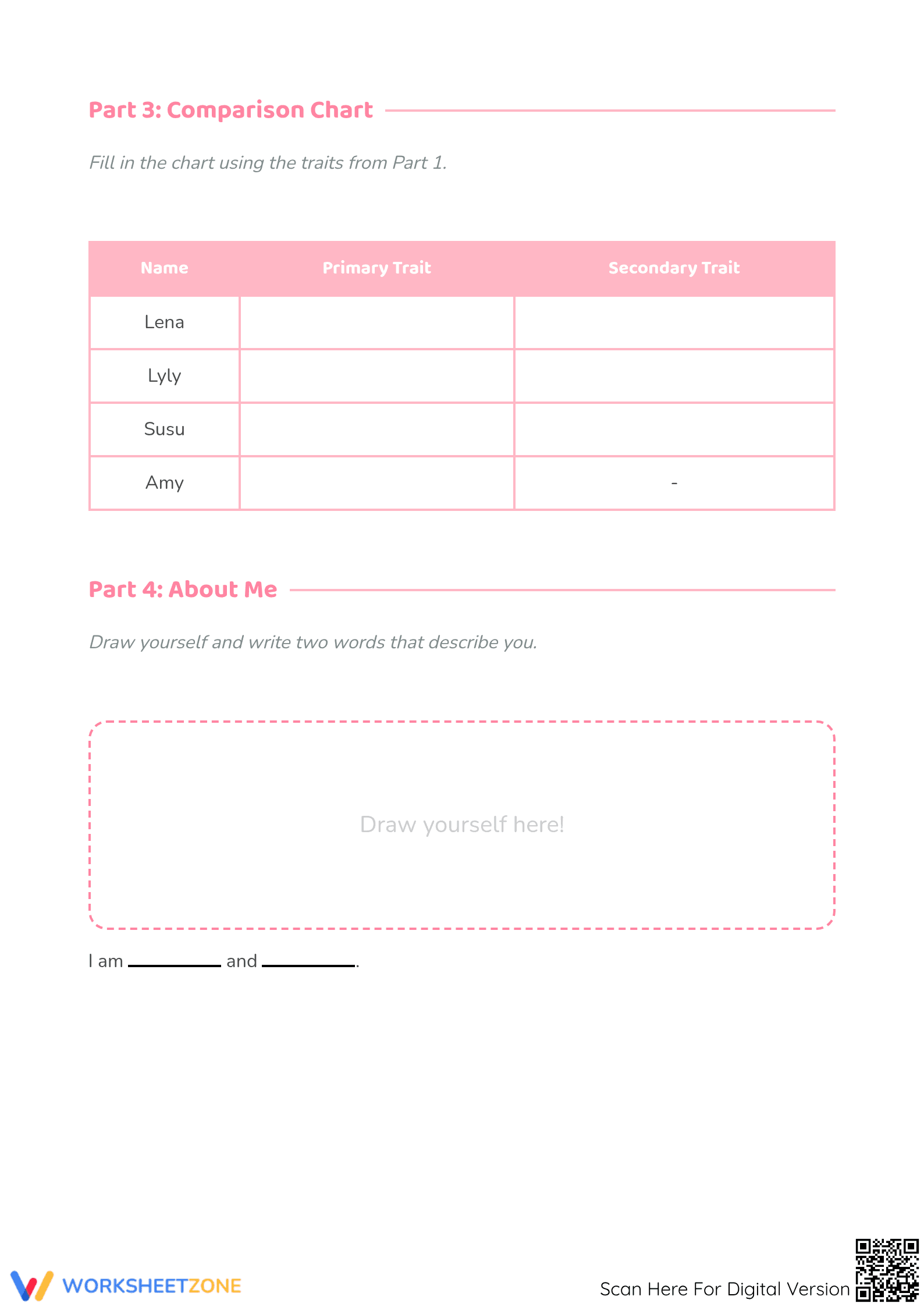
This comprehensive resource features four character profiles—Lena, Lyly, Susu, and Amy—each paired with specific descriptive traits. The first page includes a Who is Who? identification section with four text-based questions. The second page transitions to a structured comparison chart where students must organize primary and secondary traits. It concludes with a creative About Me section for personal application.
Zero-Prep Workflow
- Print: Generate the two-page PDF in less than 30 seconds for your entire class.
- Distribute: Hand out the sheets with zero additional teacher setup; instructions are self-explanatory.
- Review: Use the included answer key for a rapid five-minute whole-class review or peer-grading session.
Total teacher preparation time is under two minutes, making this an ideal choice for sub plans or busy mornings.
Standards Alignment
The primary focus is CCSS.ELA-LITERACY.RL.2.3, which requires students to describe how characters respond to challenges and display specific traits. By categorizing these traits in a table, students also meet requirements for RL.2.1 by answering who questions based on textual evidence. Both standard codes can be copied directly into lesson plans, IEP goals, or district curriculum mapping tools.
How to Use It
Use this worksheet during the independent practice phase of a gradual release lesson on characterization. It serves as an excellent formative assessment tool; observe if students can accurately transfer traits from the profiles to the comparison chart. Completion typically ranges from 15 to 20 minutes, making it an ideal choice for a literacy rotation or a reliable assessment of character analysis skills.
Who It's For
This resource is tailored for Grade 2 students but is highly effective for Grade 3 students requiring remediation or English Language Learners building descriptive vocabulary. It pairs naturally with a character-driven picture book or an anchor chart displaying common adjectives. The visual icons provide helpful scaffolds for emerging readers to connect words with character identities.
Character analysis is a pivotal component of early literacy development, as noted by Fisher & Frey (2014) in their research on scaffolding reading comprehension. This worksheet targets CCSS.ELA-LITERACY.RL.2.3 by requiring students to synthesize character information into a structured comparison format. By moving from simple identification to a comparative table, the activity mirrors the cognitive demands of high-stakes assessments while remaining accessible for seven-year-old learners. Research from the NAEP suggests that students who can identify and relate to character motivations and traits demonstrate significantly higher overall reading proficiency scores. This resource provides the 12 specific tasks necessary to bridge the gap between decoding and deep comprehension. The inclusion of a self-reflection component ensures that the skill of trait identification is internalized through personal connection, a strategy proven to increase retention in primary-grade ELA instruction.


