


























Views
Downloads
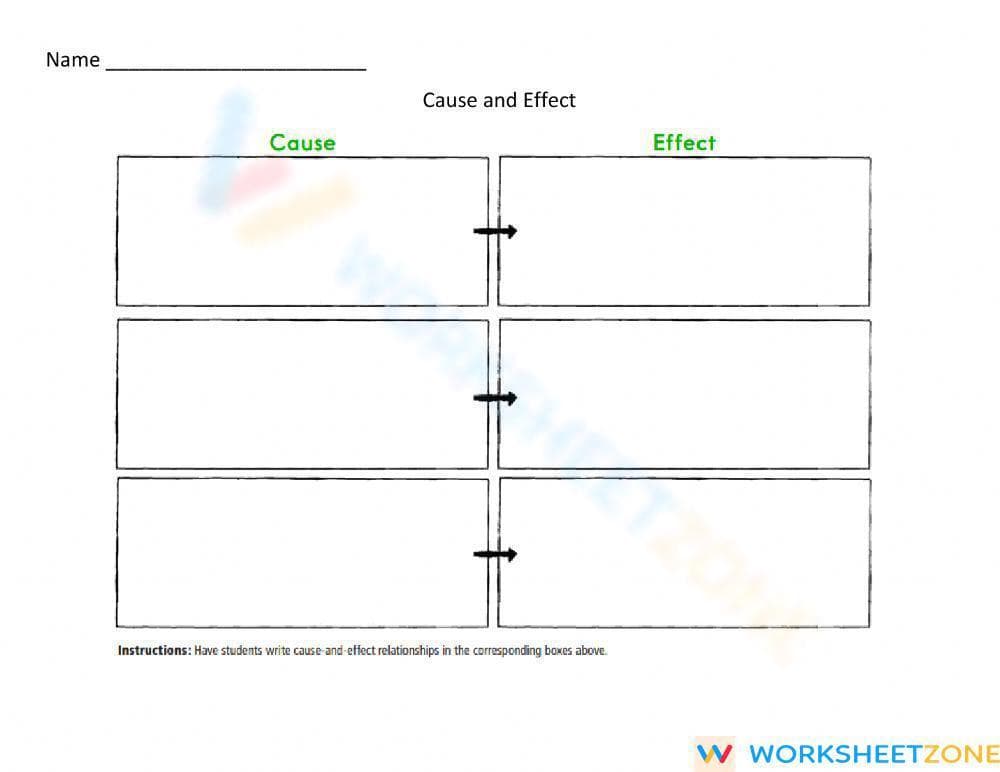

Grade 2 Cause and Effect — Printable No-Prep Worksheet
Paste this activity's link or code into your existing LMS (Google Classroom, Canvas, Teams, Schoology, Moodle, etc.).
Students can open and work on the activity right away, with no student login required.
You'll still be able to track student progress and results from your teacher account.
Mastering Cause and Effect in Grade 2
This worksheet helps second-grade students visually map cause and effect from any text. It provides a clear structure for identifying why events happen and what their results are, turning an abstract concept into a concrete, visible relationship. It is a foundational tool for building reading comprehension and analytical skills.
At a Glance
- Grade: 2 · Subject: ELA
- Standard:
CCSS.ELA-LITERACY.RI.2.3— Describe the connection between a series of events or ideas.- Skill Focus: Cause and Effect
- Format: 1 page · 3 problems · No answer key · PDF
- Best For: Reading comprehension, independent practice
- Time: 10–15 minutes
What's Inside
This one-page PDF contains a clean graphic organizer with three rows. Each row features a "Cause" box and a corresponding "Effect" box, linked by an arrow. The simple design focuses student attention on recording textual relationships. No answer key is provided, as this is a versatile tool designed for use with any story or article the teacher selects.
A Zero-Prep Workflow for Teachers
This resource is built for efficiency, letting you focus on teaching, not prep. The workflow is simple: 1. Print: The single-page PDF is ready to go. 2. Distribute: Hand it out for individual or pair work during any reading activity. 3. Review: Use completed sheets for a quick partner share-out or as a formative assessment. Total teacher prep time is under two minutes, making it ideal for substitute plans, reading centers, or homework.
Standards Alignment
This worksheet directly supports CCSS.ELA-LITERACY.RI.2.3, which requires students to "describe the connection between a series of events or ideas in a text." It provides the graphic framework to practice and demonstrate this specific skill. While aligned with informational texts (RI), it works equally well for literature standard RL.2.1 (asking and answering "why" questions). Both standard codes can be copied into lesson plans or curriculum maps.
How to Use It
This versatile tool can be used in multiple ways. Use it during guided reading with a small group by pausing after a key section to identify one cause-and-effect relationship. For formative assessment, collect the organizers after independent reading. A quick scan reveals which students are making logical connections versus simply sequencing events. The activity takes approximately 10 to 15 minutes.
Who It's For
Designed for first to third-grade students who are learning to analyze text structures, this tool is especially helpful for visual learners. It provides clear, concrete practice. For students needing support, a teacher can pre-fill the "Cause" box and have them find the resulting "Effect." Pair this worksheet with a high-interest article or a classic narrative to provide clear examples of cause and effect.
This graphic organizer provides a structured format for students to practice identifying textual relationships, a key skill in CCSS.ELA-LITERACY.RI.2.3. By requiring students to isolate a cause and its effect, the worksheet helps them move beyond simple sequencing to genuine analysis. This process aligns with research on effective comprehension instruction. Graphic organizers are a proven method for helping students make their thinking visible and organize information from a text (Fisher & Frey, 2014), a critical step toward deep reading comprehension. The tool facilitates the explicit teaching of text structure, which the RAND AIRS (2024) report identifies as a high-impact strategy for improving reading outcomes. It serves as a simple vehicle for this evidence-based practice.


