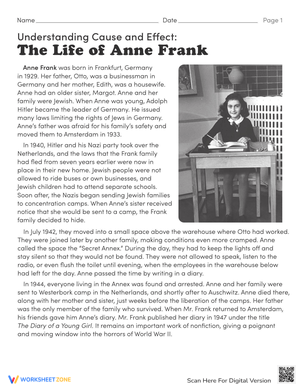
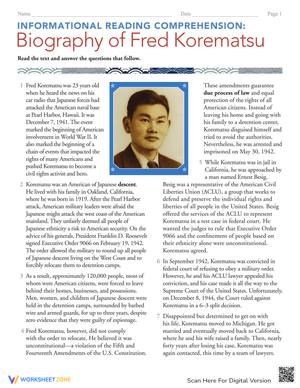
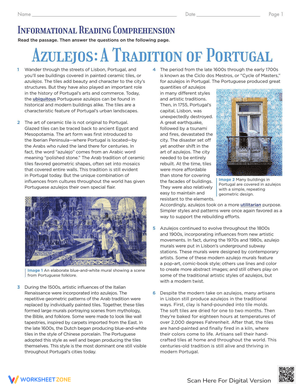
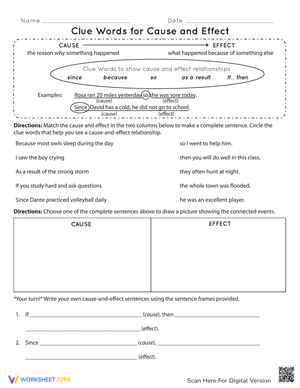
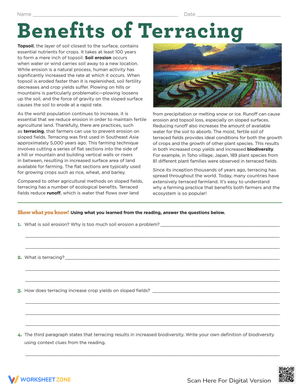
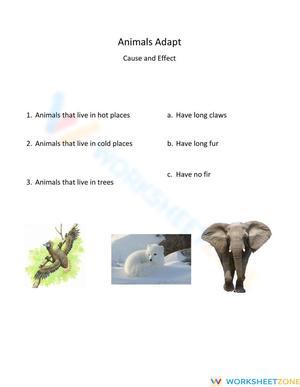
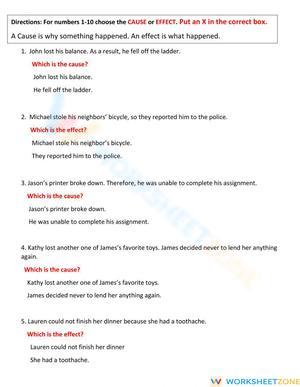
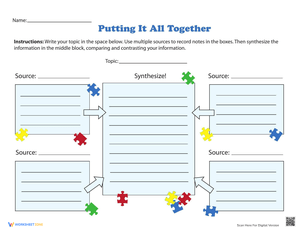
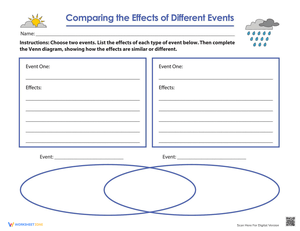
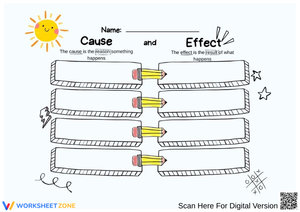
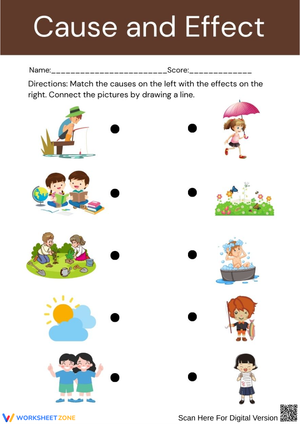
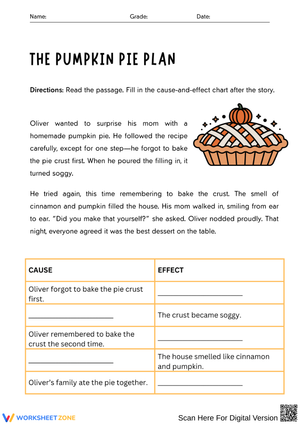
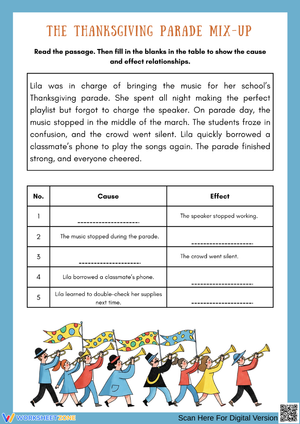
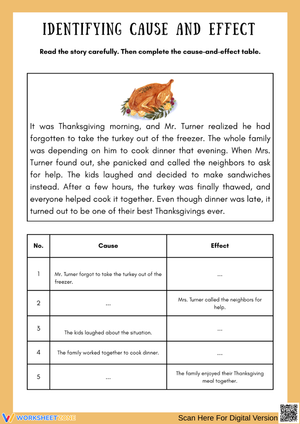
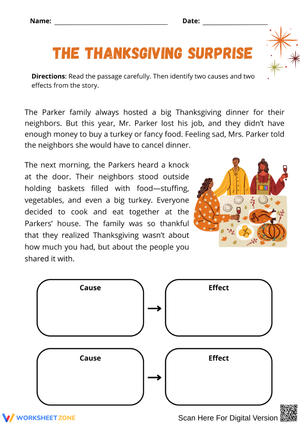
These cause and effect in nonfiction worksheets give teachers a targeted set of resources for one of the most demanding skills in the informational reading strand — reasoning through why events happen, not just recording that they did. Each worksheet pairs a nonfiction passage with structured activities that ask students to mark signal language, trace relationships, and explain causal connections in their own words. The set draws on science, history, and social studies contexts because causal reasoning shows up across content areas and students need exposure to it beyond ELA class.
What Each Worksheet Asks Students to Do
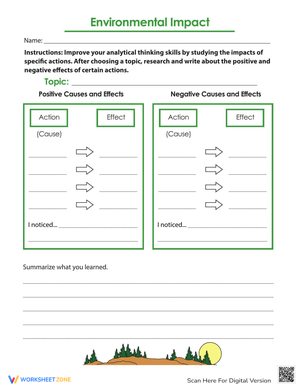
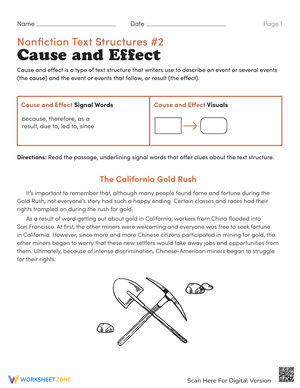
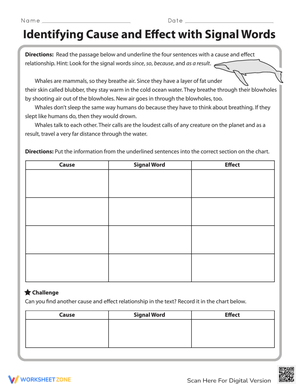
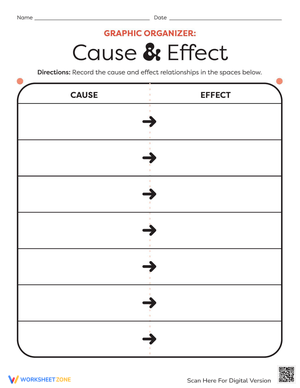
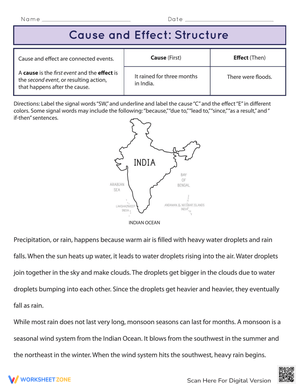
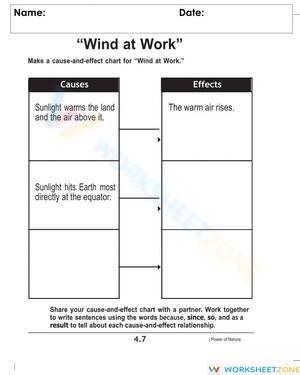
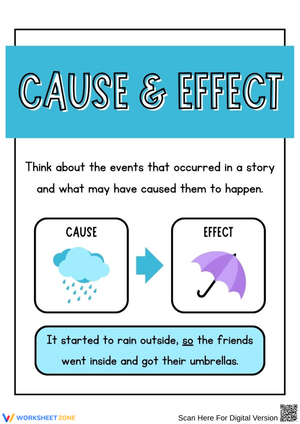
The activities move through several distinct skill layers rather than repeating the same task. Students begin by underlining signal words directly in the passage — because, since, due to to mark causes; therefore, as a result, consequently to mark effects — before they touch any graphic organizer. That annotation step matters because it forces students to read for structure before they start writing about it. From there, they complete cause-and-effect maps using their own phrasing, not lifted sentences from the text. Several worksheets in the set include multi-step causal chains, where one cause produces two or more effects or where an effect becomes the cause of a later event — a structure that appears regularly in science passages about ecosystems and weather systems and one students need to encounter in practice before they meet it cold on an assessment.
- Signal word annotation within the passage before any written response
- Single cause-to-single effect mapping
- Multi-step chains: one cause, multiple effects, or cascading sequences
- Distinguishing causal relationships from chronological order
- Writing original cause-and-effect statements grounded in text evidence
- Short constructed-response questions that require students to explain connections, not just name them
Student Errors Worth Knowing Before You Assign These
The most persistent problem is sequence confusion. Students see that Event A appears before Event B in the text and conclude A caused B. If you flip the order of those same sentences, many students will reverse their answers — which tells you they are reading chronologically, not causally. The fastest fix is a deliberately absurd example: show two sentences — "The crops failed. A drought had been building for months." — and ask whether the crop failure caused the drought. The impossibility of that reading lands faster than any formal explanation.
A second consistent error is sentence-level reversal. In a line like "The soil eroded because of sustained rainfall," students frequently name soil erosion as the cause because it appears first in the sentence. They follow grammatical position rather than logical direction. This is worth naming explicitly when you model the first worksheet, because once students hear the error described and see it corrected, they begin catching it in their own work.
Students working with multi-step chains almost always stop at the first cause-and-effect pair. A passage describing how a factory closure led to unemployment, which strained local tax revenue, which eventually cut school budgets, will produce student maps showing only that first link. Pausing after each step and asking "and then what happened because of that?" — out loud, as a class — is one of the more reliable ways to build the habit of following a chain to its end.
How to Build These Worksheets Into Your Instructional Week
These resources fit most naturally into a gradual-release sequence across three to four days. Open with a whole-group think-aloud using one of the simpler passages — mark the signal words aloud, narrate your thinking as you fill in the organizer, and make the sequence-versus-causation distinction explicit before students work on their own. On days two and three, move into small-group work where you can circulate and catch errors in real time. The cause and effect in nonfiction worksheets work especially well in small-group rotation because each worksheet is self-contained — no setup required beyond distributing them and confirming students understand the annotation step.
For independent practice, these are better assigned on Tuesday or Wednesday after an initial whole-group lesson — not day one, when students still have unresolved questions about the format. If you run literacy centers, a cause-and-effect station with two worksheets and a self-check answer key gives you time to pull a reading group without the station turning into a management problem. Reserve the multi-step chain worksheets for end-of-unit consolidation rather than introduction; the demand of tracking two or three effects from a single cause needs to arrive after students are confident with single pairs.
Adjusting the Set for Different Reading Levels
For students still building fluency, reduce the cognitive demand at the text level rather than at the reasoning level. Pre-read the passage aloud together, or provide a brief vocabulary preview for two or three words that carry causal weight. Sentence frames — "The [cause] happened, which led to [effect]" — give students enough structure to express their thinking without the writing demand obscuring what they actually understand about causation. Bolding signal words in the passage for these students is also reasonable; the goal is to train their attention toward those words, and making them visible first is a legitimate starting point.
Students who move through a worksheet quickly benefit more from the constructed-response extension questions than from additional mapping tasks. Ask them to find a second causal relationship in the same passage that the organizer did not address, or to write two or three sentences evaluating whether the author's stated cause actually accounts for the described effect. That last task requires evaluative reading — deciding whether the logic holds — and it is a meaningful stretch for students who are ready to move past identifying relationships and start questioning them.
Standard Alignment
These worksheets align most directly with CCSS.ELA-LITERACY.RI.3.3, RI.4.3, and RI.5.3, which ask students to explain events, procedures, ideas, or concepts in historical, scientific, or technical texts — including what happened and why — based on specific information in the text. RI.4.3 is the anchor standard where this skill is typically taught explicitly; by RI.5.3, students are expected to apply causal reasoning across relationships between multiple events or concepts, not just paired ones. Teachers in grades 3 and 4 will find the single-pair mapping worksheets most applicable, while 5th-grade teachers will want to prioritize the multi-step chain worksheets as preparation for the greater text complexity that standard demands.
In states using NGSS, the practice of analyzing cause and effect connects to Science and Engineering Practice 6 — constructing explanations — and runs through several disciplinary core ideas built on the premise that phenomena have identifiable, traceable causes. A cause and effect in nonfiction worksheets that draws from science passages gives science teachers a way to reinforce this reasoning habit using content from their own subject area rather than asking students to transfer the skill from a generic ELA context.
Frequently Asked Questions
What grade levels are these worksheets appropriate for?
The set is written for grades 3 through 6. Simpler passages with shorter sentences and more explicit signal words work well for 3rd grade; the multi-step chain worksheets are a better fit for 5th and 6th graders reading denser informational text. A 4th-grade class can work through most of the set across a unit, using the single-pair worksheets early and the more complex ones as the unit progresses.
How can I tell whether a student truly understands the causal relationship or is just copying from the passage?
The constructed-response questions are the most useful diagnostic here. A student who can copy a sentence into a graphic organizer but cannot explain in their own words why one thing led to another is recognizing signal-word format, not reasoning causally. Ask students to complete the map with the passage face-down — writing from memory about the relationship — and the difference between genuine understanding and pattern-matching becomes obvious quickly.
Can science and social studies teachers use these worksheets without coordinating with ELA?
Yes, and that is one of the more practical uses of the set. Several of these worksheets draw from science and history content, so a 5th-grade science teacher can assign a cause and effect in nonfiction worksheets during an ecosystems unit without requiring cross-curricular coordination. The skill transfer runs in both directions — students who practice causal reasoning in science read history passages more analytically, and the reverse holds as well.












 Interactive Worksheet Maker
 Quiz Maker
 Word Search Maker
 Crossword Puzzle Maker
 Word Scramble Generator
 Sentence Scramble Generator
 Handwriting Worksheet Generator
 Name Tracing Generator
 Fill In The Blank Generator