


























Views
Downloads

Complete Grade 2 Math Assessment: Aligned Standards Test
Paste this activity's link or code into your existing LMS (Google Classroom, Canvas, Teams, Schoology, Moodle, etc.).
Students can open and work on the activity right away, with no student login required.
You'll still be able to track student progress and results from your teacher account.
This comprehensive Grade 2 math assessment provides a robust diagnostic tool to evaluate student proficiency across essential early elementary domains. By integrating arithmetic fluency with geometry and real-world word problems, the worksheet ensures students can apply mathematical concepts in varied contexts. It serves as a definitive benchmark for identifying specific areas requiring intervention or acceleration.
At a Glance
- Grade: 2 · Subject: Math
- Standard:
CCSS.MATH.CONTENT.2.OA.B.2— Fluently add and subtract within 20 using mental strategies and memory- Skill Focus: Mixed Operations, Geometry, Time, and Word Problems
- Format: 5 pages · 20 problems · Answer key included · PDF
- Best For: End-of-unit summative assessment and diagnostic tracking
- Time: 30–45 minutes
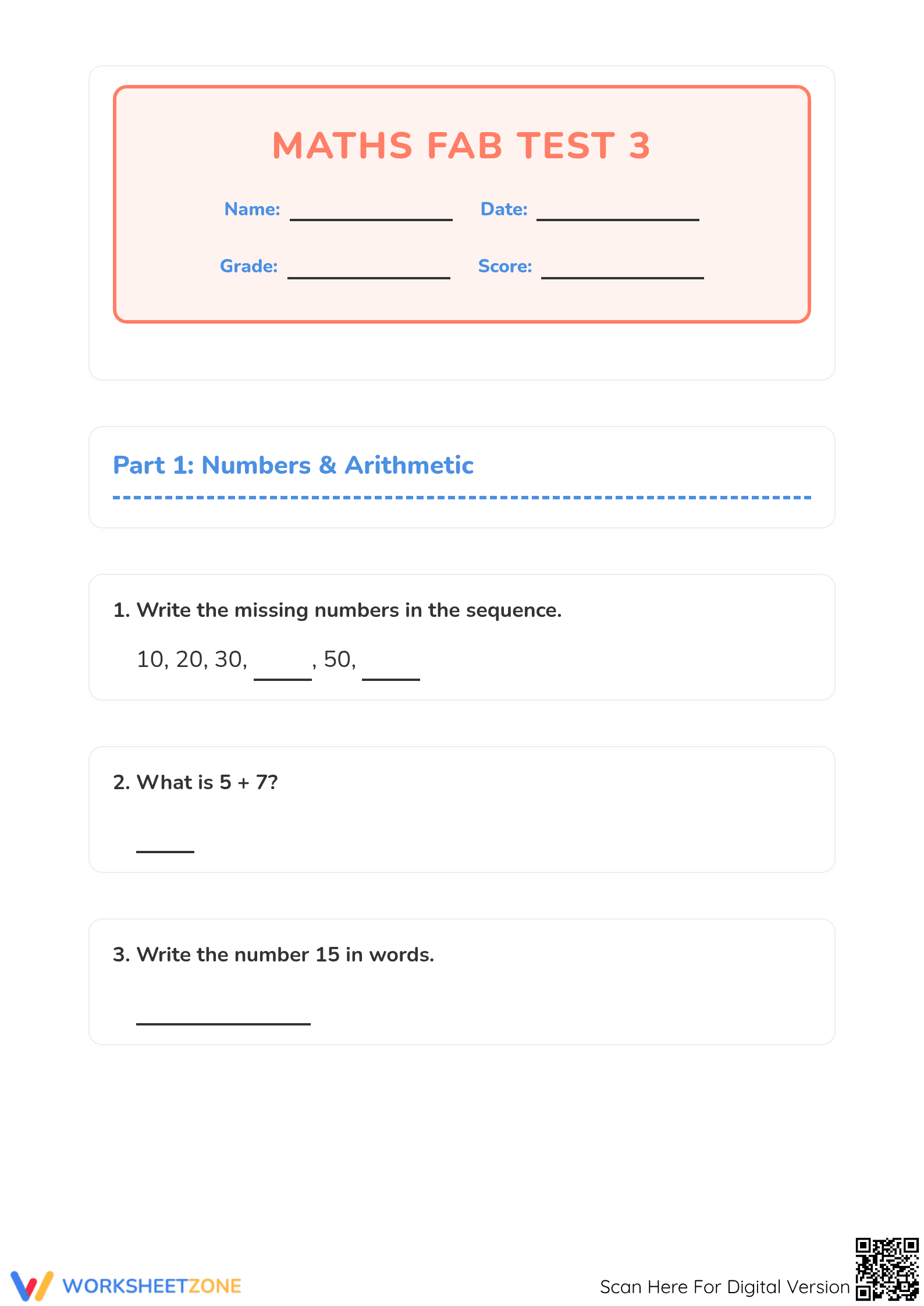
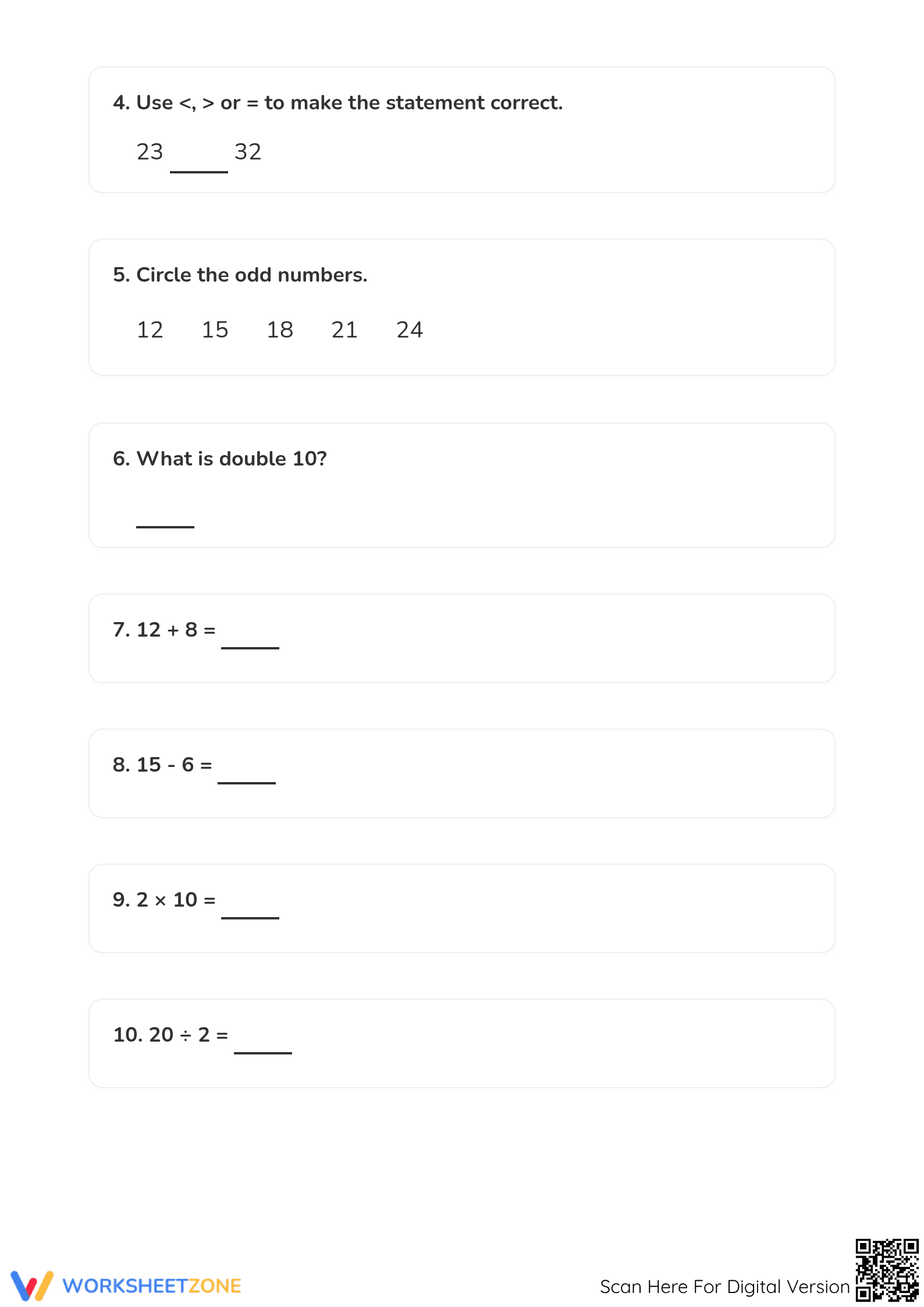
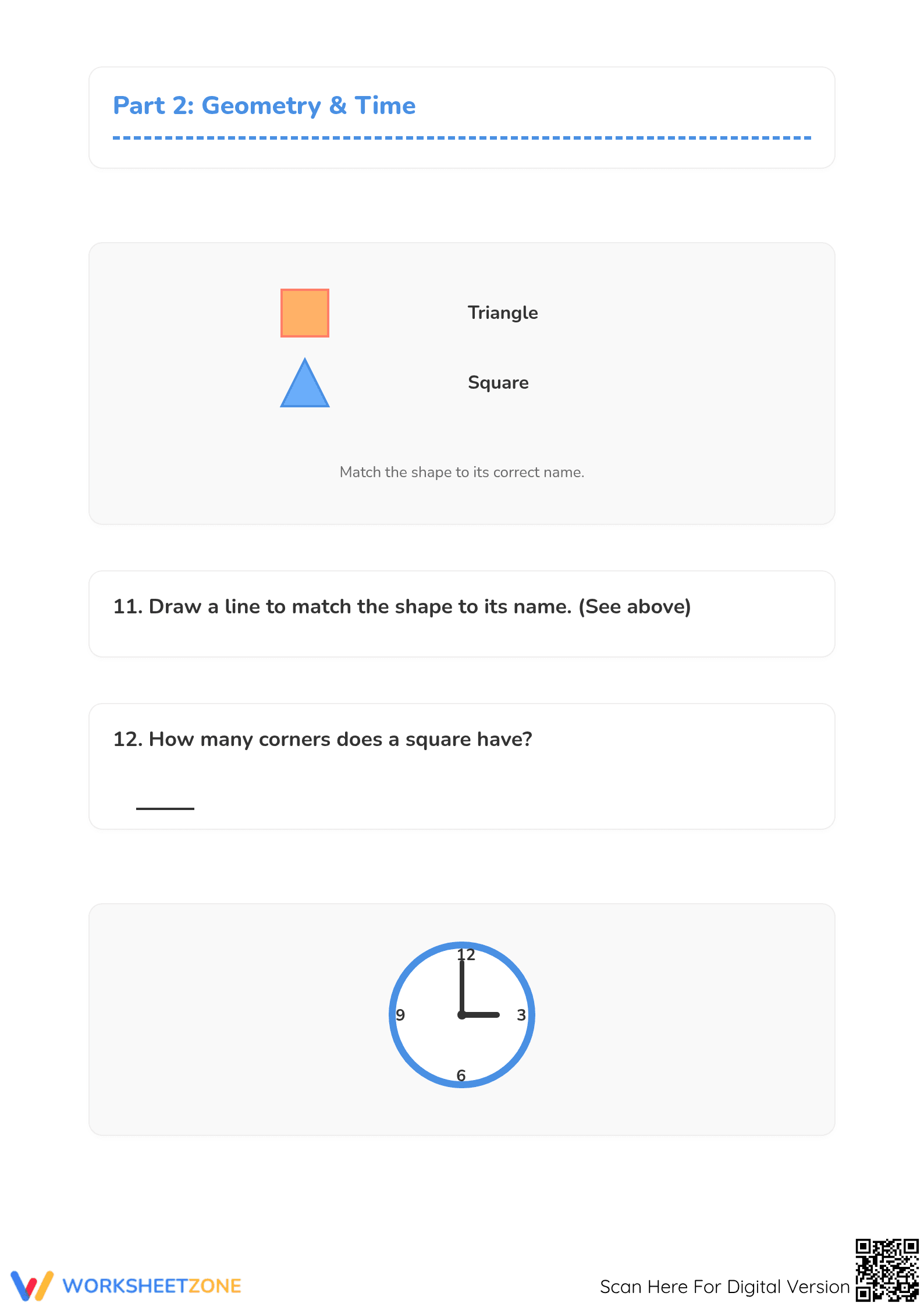
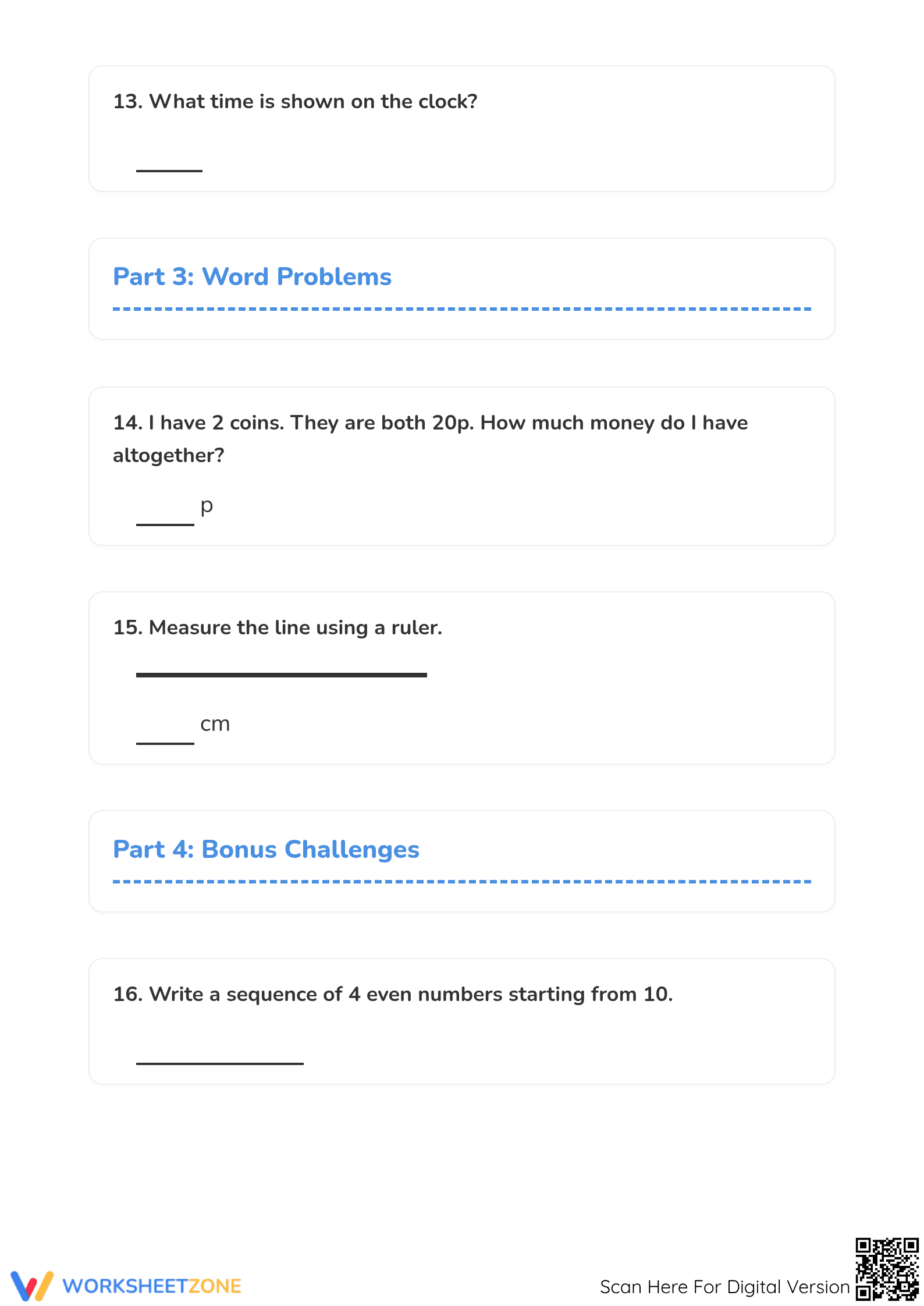
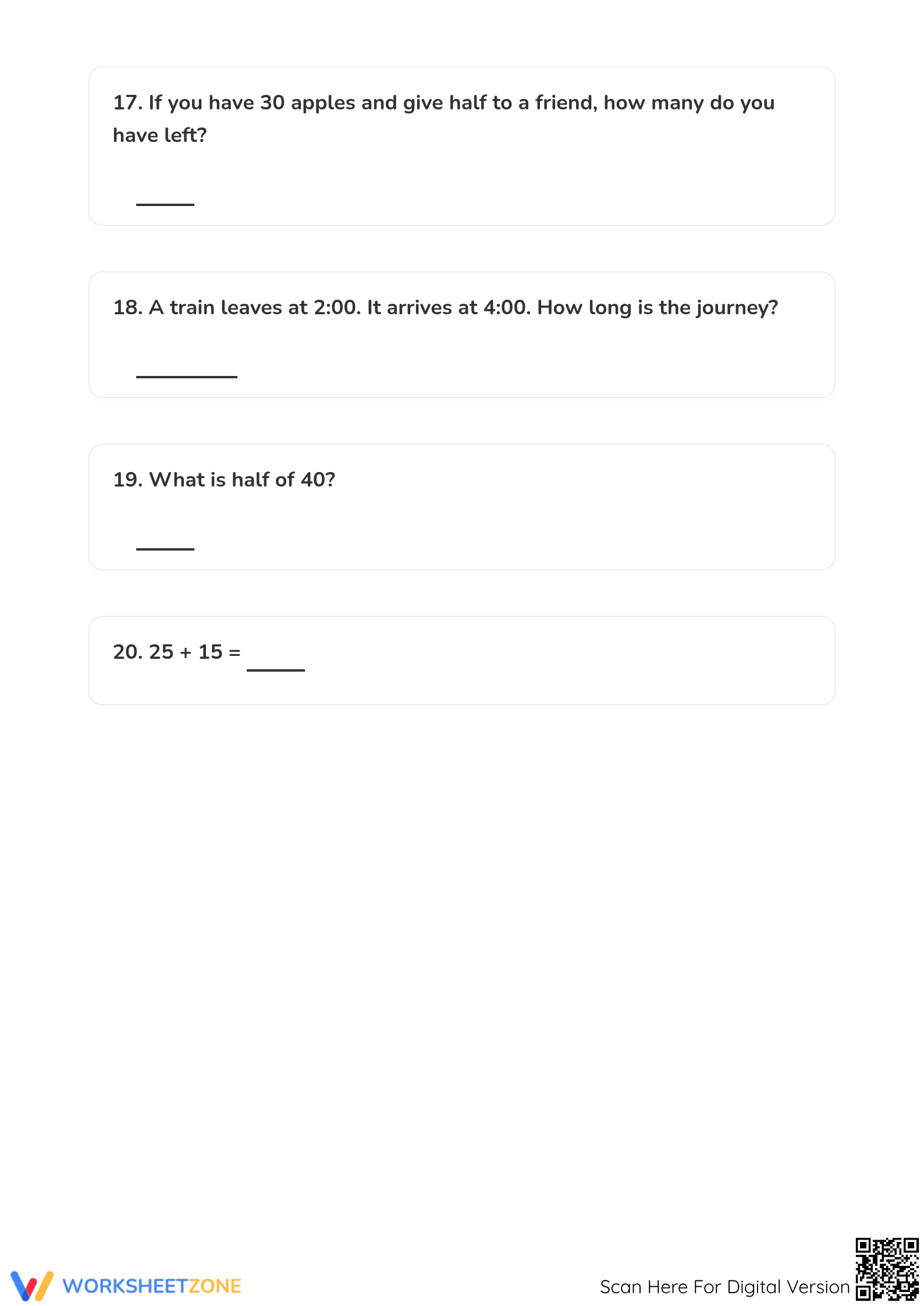
Inside this five-page resource, educators will find 20 carefully structured tasks divided into logical instructional blocks. The worksheet includes sequence completion, double-digit addition and subtraction, shape identification, and analog clock reading. It concludes with multi-step word problems involving currency and halving, supported by a full answer key for efficient grading and immediate feedback.
This assessment is designed to provide clear evidence of student mastery across the primary domains of the second-grade math curriculum. Part 1 measures Operations and Algebraic Thinking, specifically measuring fluency in addition and subtraction facts within 20. Part 2 transitions to Geometry and Measurement, requiring students to identify shapes and tell time to the nearest half-hour. Part 3 applies these skills to real-world contexts like money and measurement. Finally, the Bonus Challenges serve as an extension to identify students performing at the exceeding level by introducing early multiplication and division concepts. Teachers can utilize these scores to document progress on IEP goals or to inform small-group placement based on specific skill gaps identified in each section.
The primary alignment for this resource is CCSS.MATH.CONTENT.2.OA.B.2, which requires students to fluently add and subtract within 20. Additionally, it supports 2.MD.C.7 and 2.G.A.1 by incorporating time and geometry tasks. Both standard codes can be copied directly into lesson plans, IEP goals, or district curriculum mapping tools.
For optimal results, administer this worksheet as a summative unit test or a mid-year diagnostic. Educators should observe students during the word problem section to identify if difficulties arise from reading comprehension or mathematical logic. Expect most students to complete the 20 tasks within a single 45-minute instructional block, allowing for a structured review session afterward.
This resource is tailored for second-grade students but serves as an excellent bridge for third graders requiring a review of foundational concepts. It is particularly effective for inclusion classrooms where teachers need to document specific sub-skill mastery. Pair this assessment with a physical clock model or base-ten blocks for students requiring concrete scaffolding.
According to the RAND AIRS 2024 report on elementary mathematics instruction, frequent formative assessment using multi-domain worksheets is a primary driver of student retention in early elementary grades. This Grade 2 math worksheet directly addresses the requirements of CCSS.MATH.CONTENT.2.OA.B.2 by providing structured opportunities for students to demonstrate arithmetic fluency while simultaneously reinforcing spatial reasoning and temporal awareness. Research from NAEP indicates that students who engage with varied problem types—ranging from simple arithmetic to complex multi-step word problems—develop more robust mental models than those who practice skills in isolation. By integrating geometry, time, and word problems into a single five-page document, this resource supports the Fisher & Frey (2014) framework for gradual release of responsibility. This comprehensive approach ensures that the standard code is not just a label, but a functional guide for curriculum mapping and instructional design in the modern classroom environment.


