


























Views
Downloads
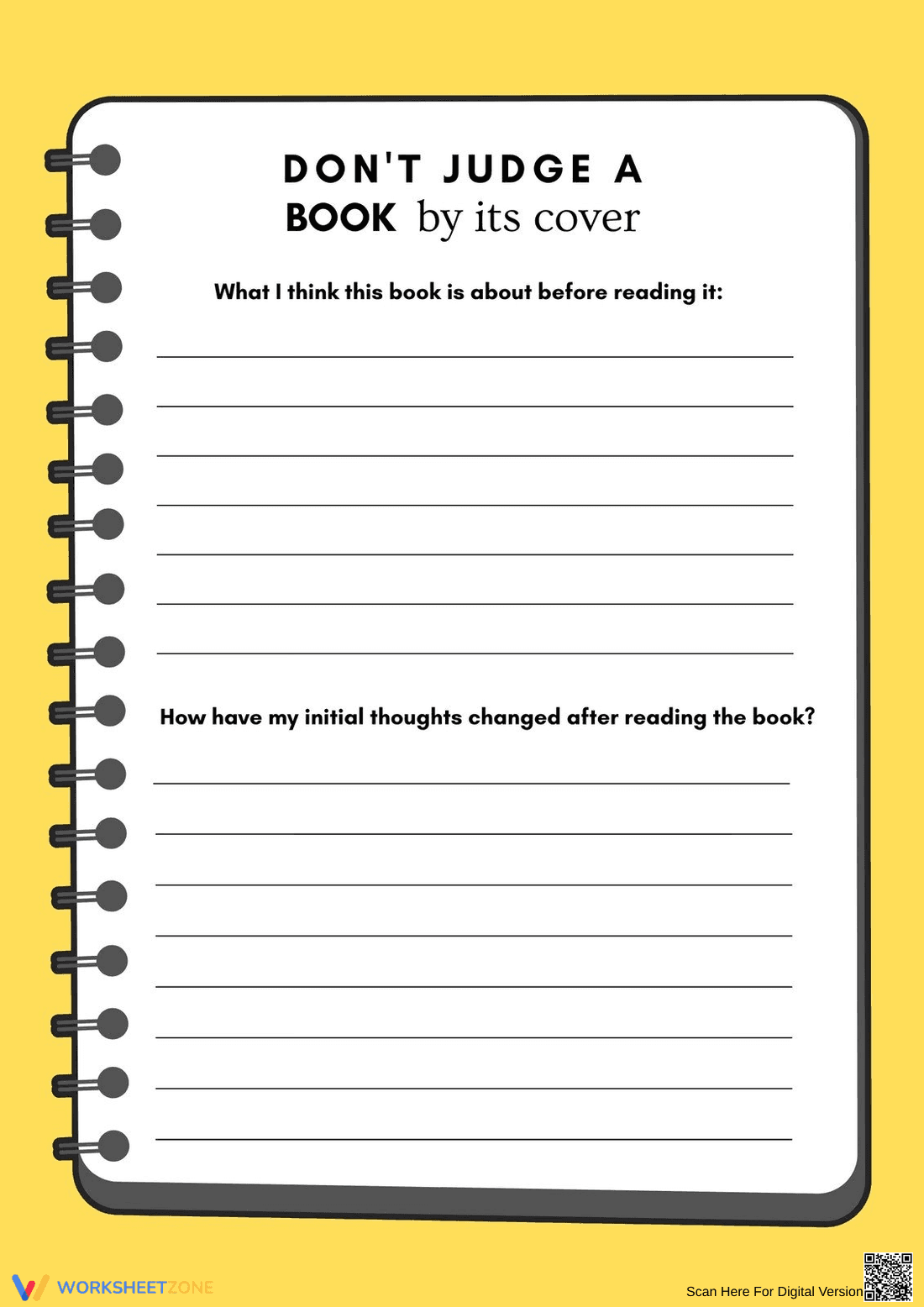

Book Thoughts Before and After Worksheet | Grade 3 Essential
Paste this activity's link or code into your existing LMS (Google Classroom, Canvas, Teams, Schoology, Moodle, etc.).
Students can open and work on the activity right away, with no student login required.
You'll still be able to track student progress and results from your teacher account.
This Grade 3 reading reflection worksheet helps students develop metacognitive skills by documenting their initial predictions and final conclusions. By comparing before and after thoughts, learners practice critical analysis and evidence-based reasoning. This resource ensures students engage deeply with text covers and content, fostering a more thoughtful approach to independent or guided reading sessions.
At a Glance
- Grade: 3 · Subject: ELA
- Standard:
CCSS.ELA-LITERACY.RL.3.1— Ask and answer questions to demonstrate understanding of a text- Skill Focus: Prediction and Reflection
- Format: 1 page · 2 prompts · No answer key needed · PDF
- Best For: Reading response and book club journals
- Time: 10–15 minutes
Inside this single-page PDF, you will find a clean, notebook-themed layout designed to minimize distractions. It features two primary writing sections: one for pre-reading predictions based on the cover and title, and a second for post-reading reflection. The ample lined space allows for detailed student responses, making it a versatile tool for various book lengths and genres.
The zero-prep workflow is designed for maximum efficiency. First, print the single-page PDF (30 seconds). Second, distribute the sheets to students before they begin a new text (1 minute). Finally, review student responses during a post-reading discussion to assess comprehension and growth (5 minutes). This resource is a perfect grab-and-go option for substitute plans or literacy centers.
This resource aligns with CCSS.ELA-LITERACY.RL.3.1, which requires students to ask and answer questions to demonstrate understanding of a text, referring explicitly to the text as the basis for the answers. It also supports RL.3.2 by encouraging students to recount stories and determine central messages. Both standard codes can be copied directly into lesson plans, IEP goals, or district curriculum mapping tools.
Use this worksheet during the launch phase of a new unit to gauge student interest and prior knowledge. It also serves as an excellent formative assessment tool; observe if students' after thoughts reflect specific details from the text or if they remain surface-level. Expect students to spend 5 minutes on the first prompt and 10 minutes on the second.
This worksheet is ideal for third-grade students but can be adapted for second or fourth-grade learners. It is particularly effective for students who benefit from structured writing frames to organize their thoughts. Pair this resource with a colorful picture book or the first chapter of a new novel to maximize engagement during independent reading time.
According to Fisher & Frey (2014), metacognitive strategies like predicting and reflecting are essential for developing proficient readers who can monitor their own comprehension. This worksheet directly addresses these needs by providing a structured environment for students to document their cognitive shifts. By using the CCSS.ELA-LITERACY.RL.3.1 standard as a foundation, the resource ensures that student reflections are grounded in textual evidence rather than mere guesswork. Research from the NAEP indicates that students who regularly engage in self-reflection during reading show higher levels of overall literacy achievement. This 1-page tool provides the necessary scaffolding for Grade 3 learners to transition from passive reading to active interrogation of a text. It serves as a reliable artifact for portfolios, demonstrating a student's ability to synthesize new information and adjust their understanding based on evidence found within the narrative or informational text provided.


