




























Views
Downloads
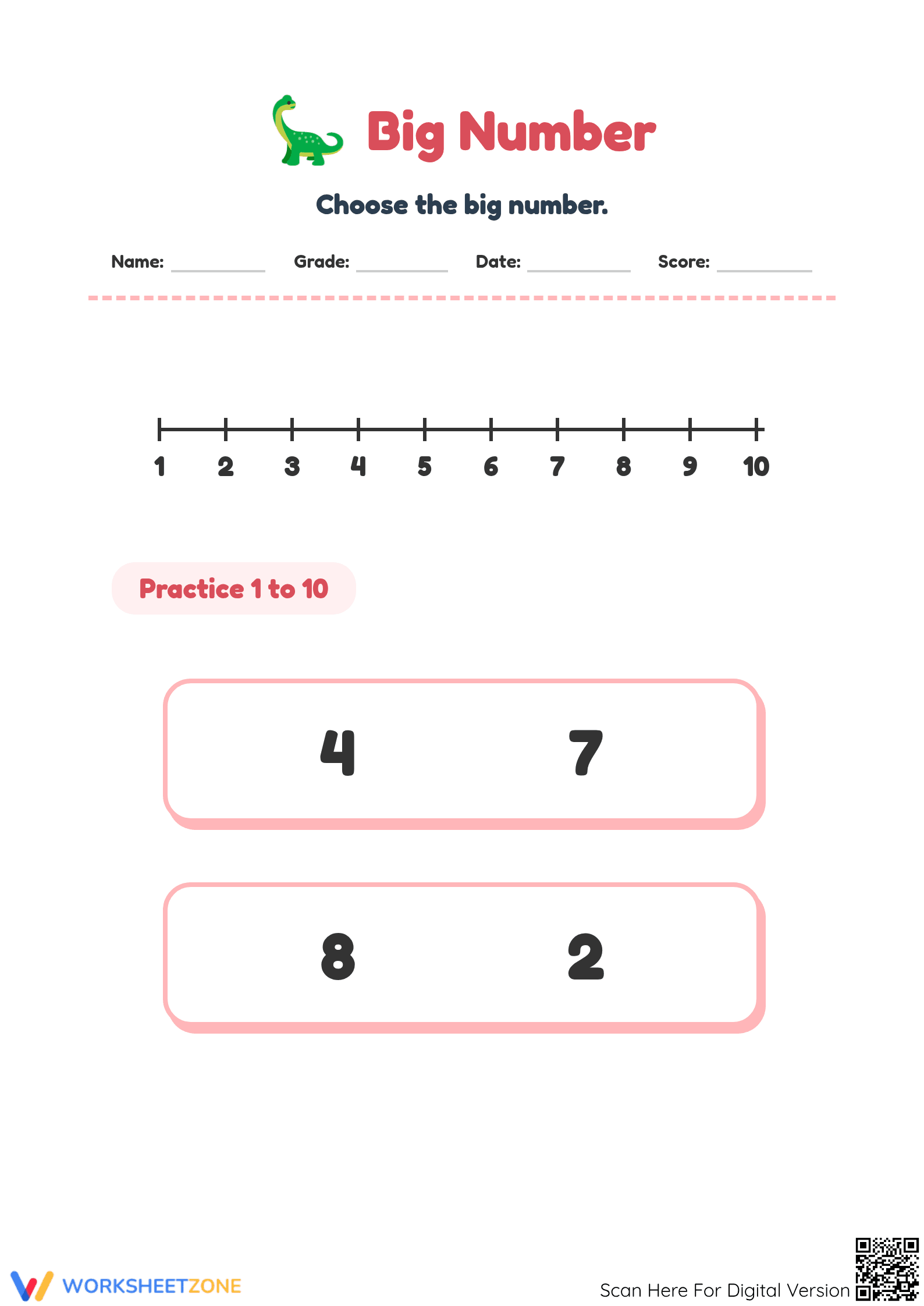
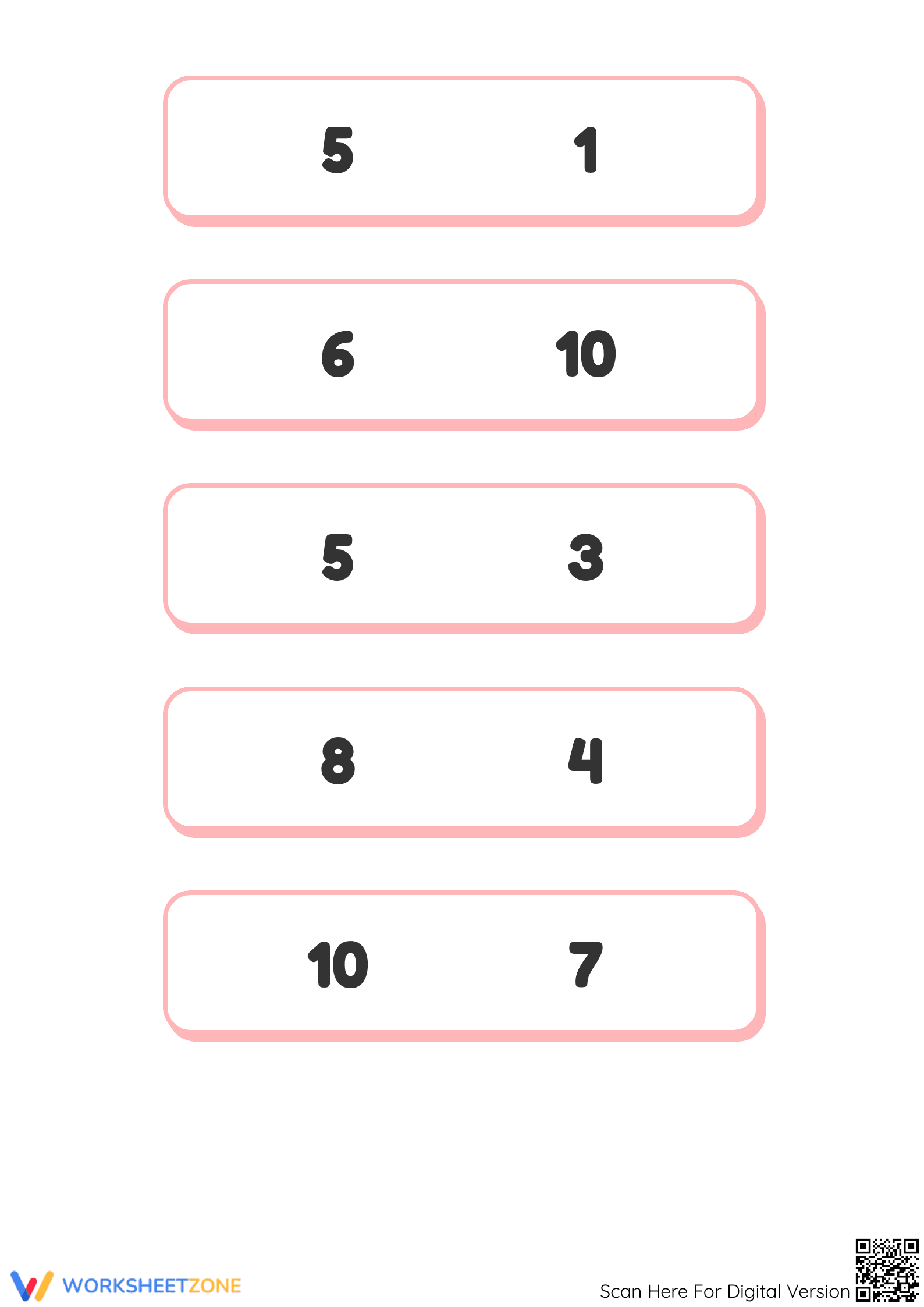
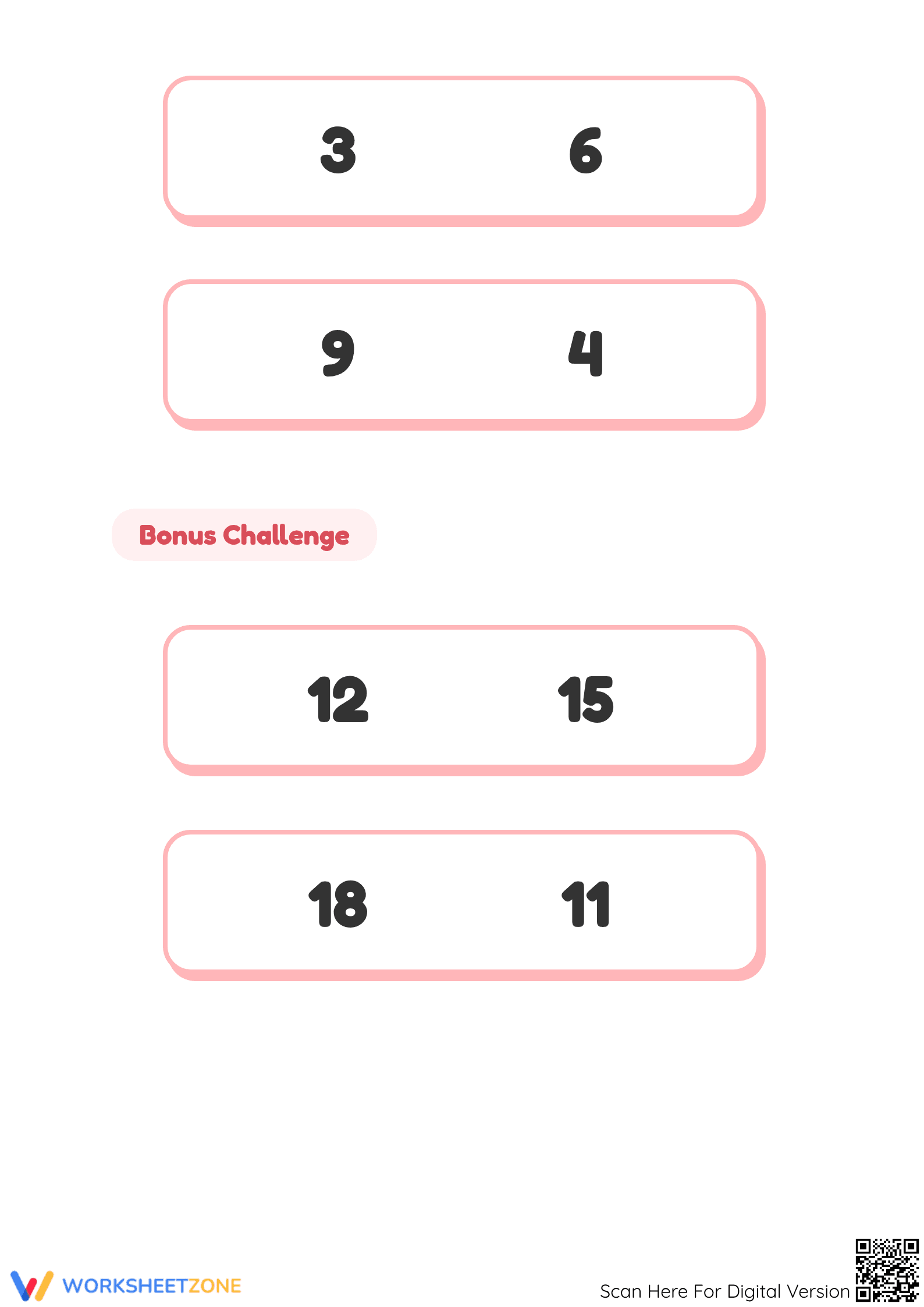
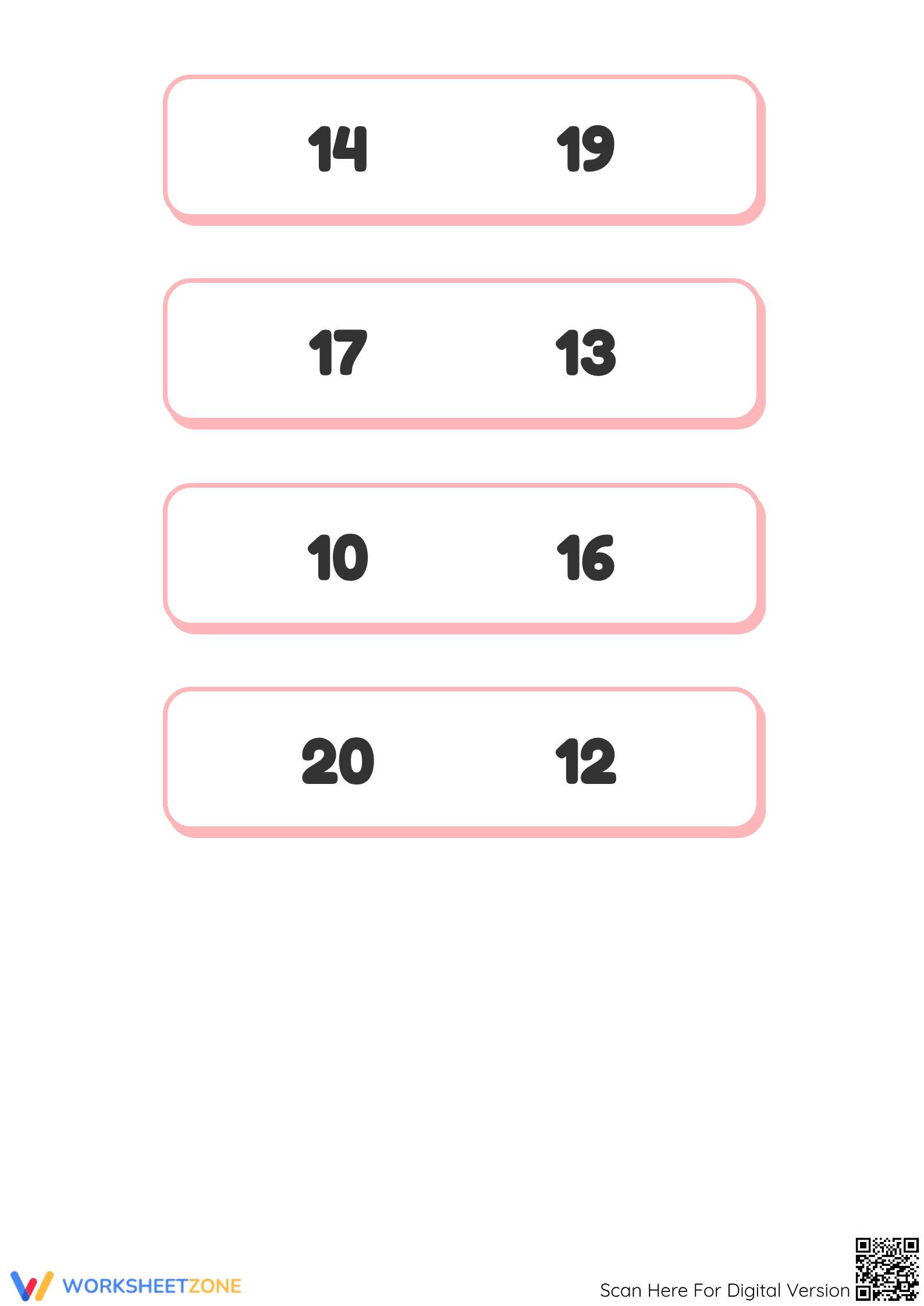

Kindergarten Comparing Numbers — Printable No-Prep Worksheet

Paste this activity's link or code into your existing LMS (Google Classroom, Canvas, Teams, Schoology, Moodle, etc.).
Students can open and work on the activity right away, with no student login required.
You'll still be able to track student progress and results from your teacher account.
This Kindergarten math worksheet provides focused practice on comparing numbers from 1 to 10. Students will build foundational number sense by identifying the greater number in 18 distinct problems. It's designed for independent work and reinforces the core concept of quantity comparison, a critical early math skill.
At a Glance
- Grade: Kindergarten · Subject: Math
- Standard:
CCSS.MATH.CONTENT.K.CC.C.7— Compare two numbers between 1 and 10 presented as written numerals.- Skill Focus: Comparing single-digit numbers
- Format: 4 pages · 18 problems · Answer key included · PDF
- Best For: Independent practice or math centers
- Time: 10–15 minutes
What's Inside
This resource includes three pages of student activities and a one-page answer key for quick grading. Each page presents six problems where students circle the larger of two numerals. The layout is clean and spacious, ensuring early learners can focus on the task without visual distraction. The self-contained format makes it an ideal print-and-go activity.
A Zero-Prep Workflow
Designed for busy teachers, this worksheet can be deployed in under two minutes. The workflow is simple:
- Print (1 minute): The file is a ready-to-print PDF.
- Distribute (30 seconds): Hand out the pages. The instructions are self-evident.
- Review (30 seconds): Use the provided answer key to quickly check student work or allow for self-correction.
Its straightforward nature makes it an excellent choice for a substitute teacher plan, homework, or a quiet math center.
Standards Alignment
This worksheet is directly aligned with Common Core standard CCSS.MATH.CONTENT.K.CC.C.7, which requires students to compare two numbers between 1 and 10 presented as written numerals. The tasks provide direct, focused practice for this key Kindergarten goal. The standard code can be copied directly into lesson plans or curriculum maps.
How to Use It
This versatile worksheet is effective as a pre-assessment before a lesson on number comparison or for independent practice afterward. It also functions as a quick formative assessment; as students work, observe which number pairs cause hesitation to gain insight into their number sense. Most students will complete the activity in 10 to 15 minutes.
Who It's For
This resource is designed for Kindergarten students learning to compare numerals. It is also suitable for advanced Preschoolers or for first-graders needing reinforcement of this concept. The simple, repetitive task structure benefits students requiring clear, focused practice. Pair this worksheet with hands-on counting blocks to connect numerals to physical quantities.
This worksheet provides targeted practice for CCSS.MATH.CONTENT.K.CC.C.7, helping students learn to compare two numbers between 1 and 10. Foundational number sense, including the ability to discern quantity and compare numerals, is a strong predictor of later academic success. Research highlighted by the NAEP confirms that a solid grasp of number properties in early grades is essential for building the procedural fluency and conceptual understanding required for more complex topics like addition, subtraction, and place value. By offering 18 clear, repetitive exercises, this resource gives students the structured practice needed to internalize the concept of "greater than" and build confidence in their quantitative reasoning, aligning with findings on the importance of early, targeted skill development from sources like RAND AIRS 2024.


