


























Views
Downloads

Beginning Sound Phonics Worksheet | Grade 1 Essential
Paste this activity's link or code into your existing LMS (Google Classroom, Canvas, Teams, Schoology, Moodle, etc.).
Students can open and work on the activity right away, with no student login required.
You'll still be able to track student progress and results from your teacher account.
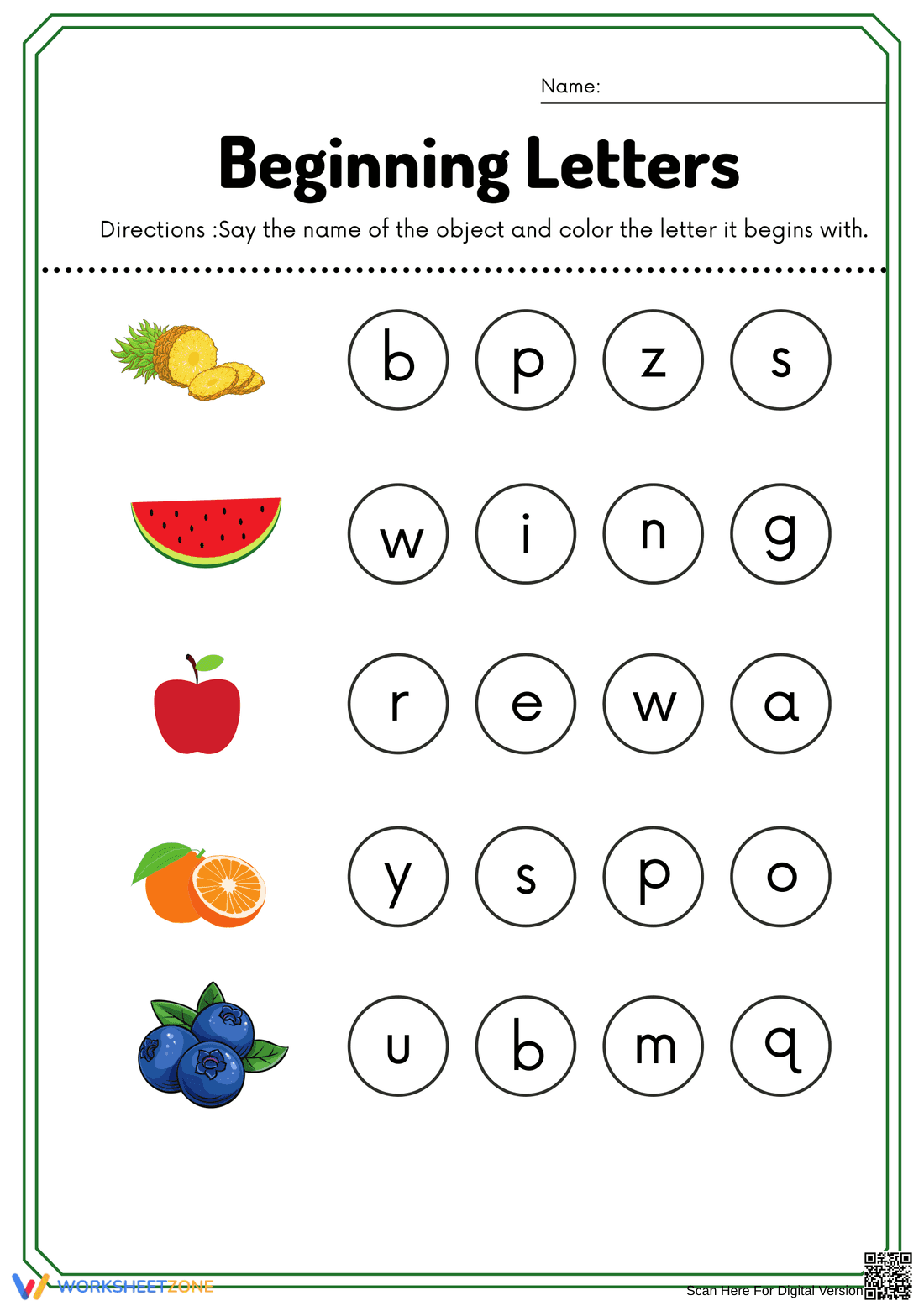
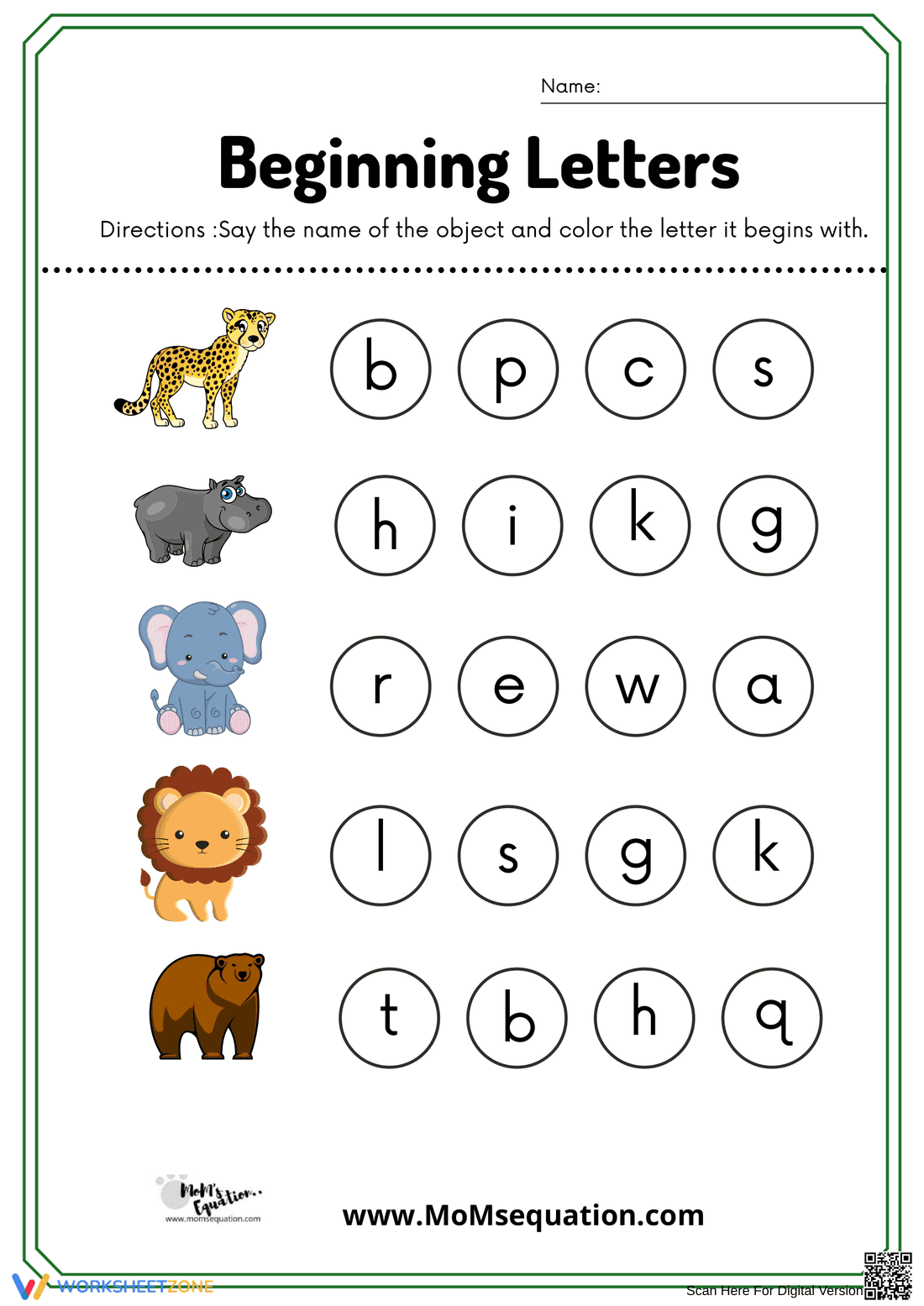
This Grade 1 phonics worksheet helps students master initial consonant sounds through engaging visual identification. By connecting vibrant images of fruits and animals to their corresponding starting letters, learners strengthen their phonemic awareness and letter-sound correspondence. It provides a clear, structured path for early readers to isolate and identify beginning sounds accurately.
At a Glance
- Grade: 1 · Subject: English Phonics
- Standard:
CCSS.ELA-LITERACY.RF.1.2.C— Isolate and pronounce initial sounds in spoken single-syllable words- Skill Focus: Beginning sound identification
- Format: 2 pages · 10 problems · Answer key included · PDF
- Best For: Independent morning work or literacy centers
- Time: 10–15 minutes
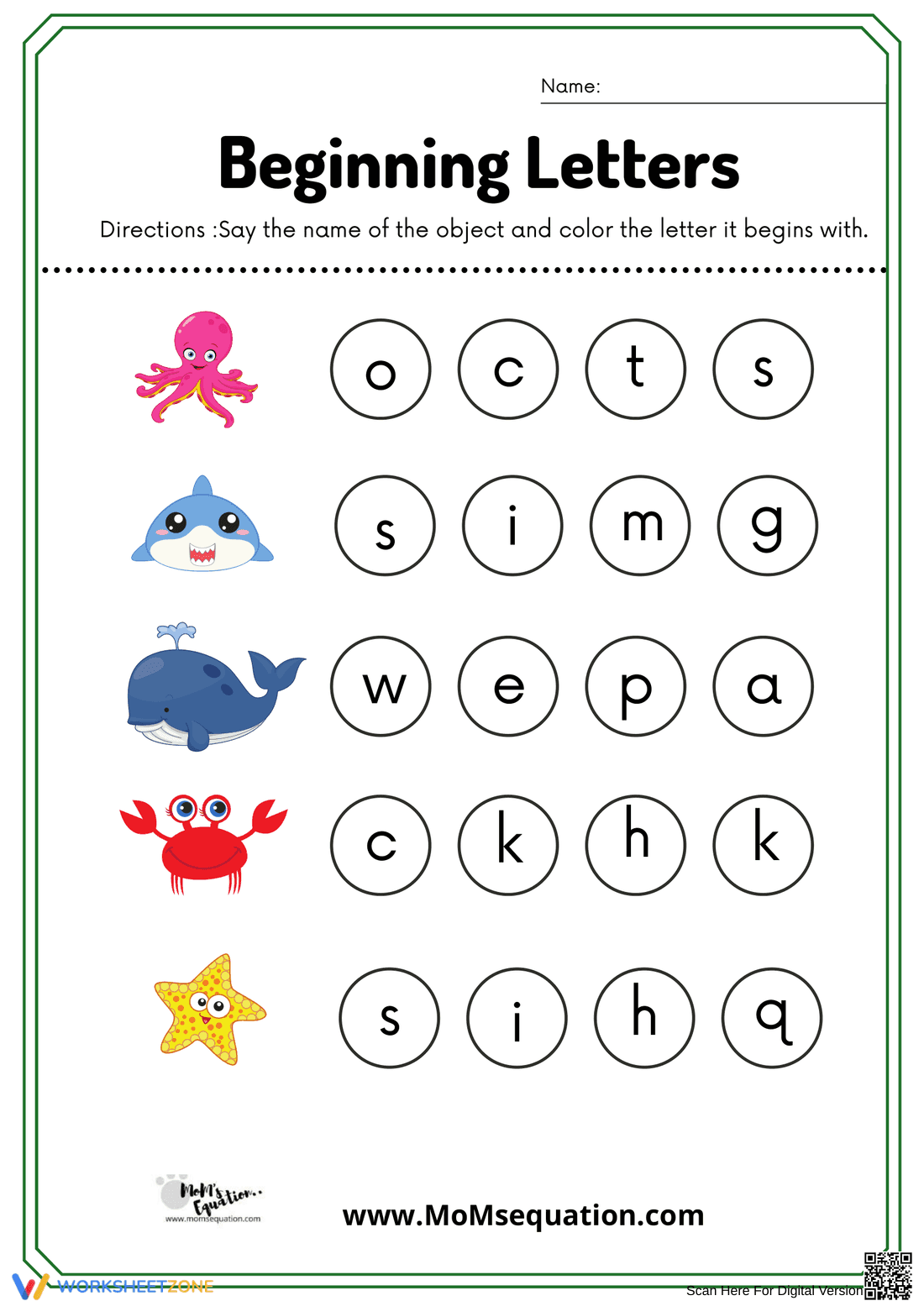
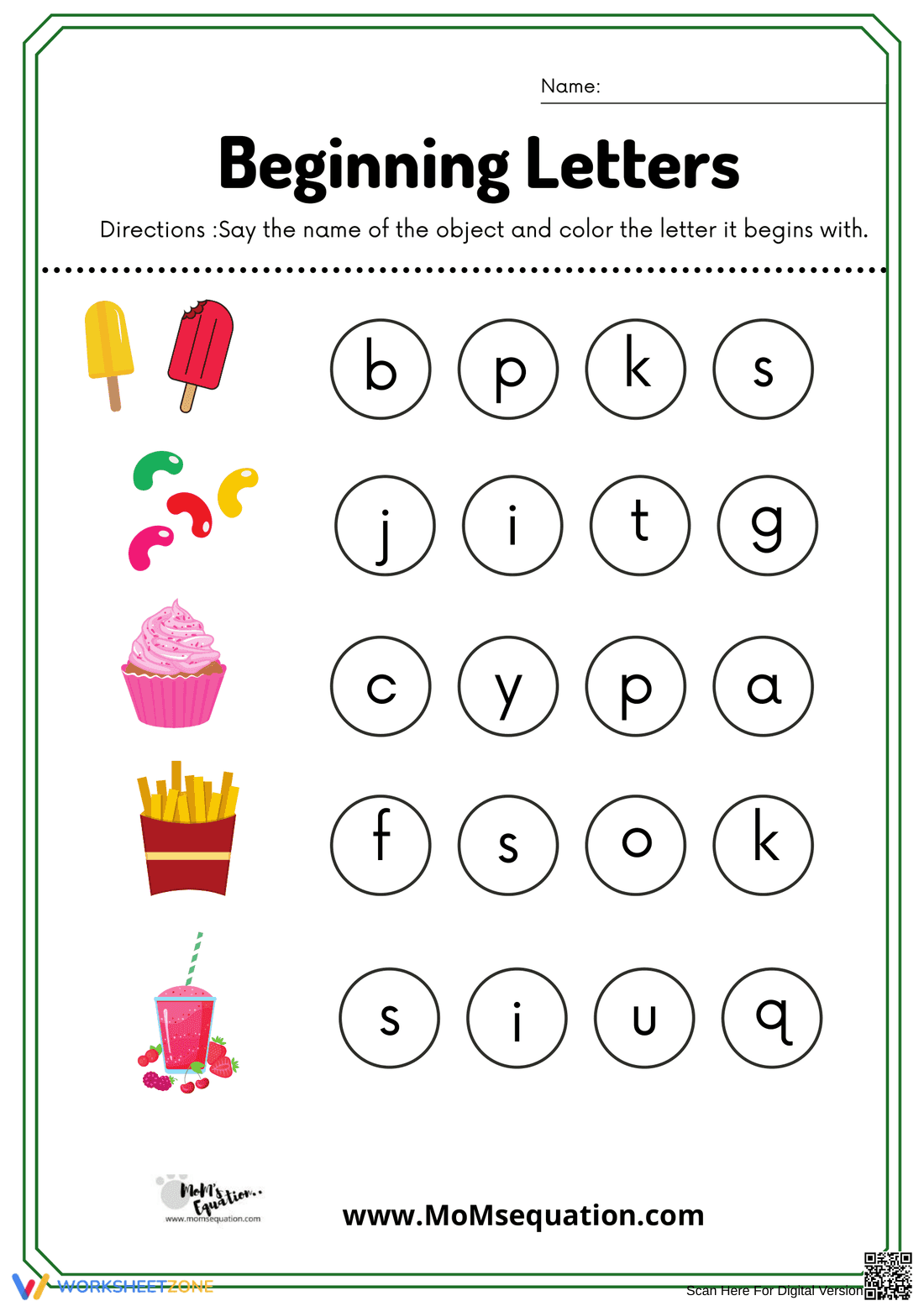
The resource consists of two high-quality printable pages featuring ten distinct vocabulary items. Each task presents a colorful illustration—ranging from common fruits like pineapples and blueberries to zoo animals like cheetahs and hippos—paired with a multiple-choice selection of four lowercase letters. The clean layout includes a dedicated name line and simple, bold instructions for student independence.
Teachers can implement this activity in under two minutes. Simply print the two-page PDF, distribute it to students with crayons or markers, and review the answers as a whole group using the included key. Because the visual cues are self-explanatory, this worksheet serves as an ideal "grab-and-go" resource for substitute folders or unexpected schedule gaps.
This worksheet is directly aligned with `CCSS.ELA-LITERACY.RF.1.2.C`, which requires students to isolate and pronounce initial, medial vowel, and final sounds in spoken single-syllable words. It specifically targets the phonological awareness strand by requiring students to map auditory phonemes to visual graphemes. Both standard codes can be copied directly into lesson plans, IEP goals, or district curriculum mapping tools.
Use this worksheet during the "You Do" phase of a gradual release lesson on consonant sounds. After modeling the sound for "B" as in "Bear," assign the animal page to assess individual mastery. It also functions well as a formative assessment tool; observe if students are subvocalizing the names of the objects to hear the initial phoneme before coloring. Completion typically takes 12 minutes.
This resource is designed for first-grade students, though it provides excellent remedial support for second graders or enrichment for advanced kindergarteners. It is particularly effective for English Language Learners (ELLs) who benefit from the clear pictorial representations of vocabulary. Pair this with a beginning sound anchor chart or a tactile letter-tracing activity for a comprehensive literacy block.
Research from Fisher & Frey (2014) emphasizes the importance of visual scaffolding in early literacy development, noting that pictorial cues significantly reduce cognitive load during phoneme isolation tasks. This worksheet applies these principles by providing high-clarity images that allow students to focus entirely on the phonological task of identifying the beginning letter. By targeting CCSS.ELA-LITERACY.RF.1.2.C, the resource ensures that Grade 1 students build the foundational decoding skills necessary for reading fluency. The 10-task structure provides sufficient repetition to move from guided recognition to independent mastery without causing student fatigue. Educators can rely on this evidence-based design to support phonics instruction within a balanced literacy framework, ensuring that every student develops the ability to isolate and pronounce initial sounds in spoken single-syllable words.


