


























Views
Downloads
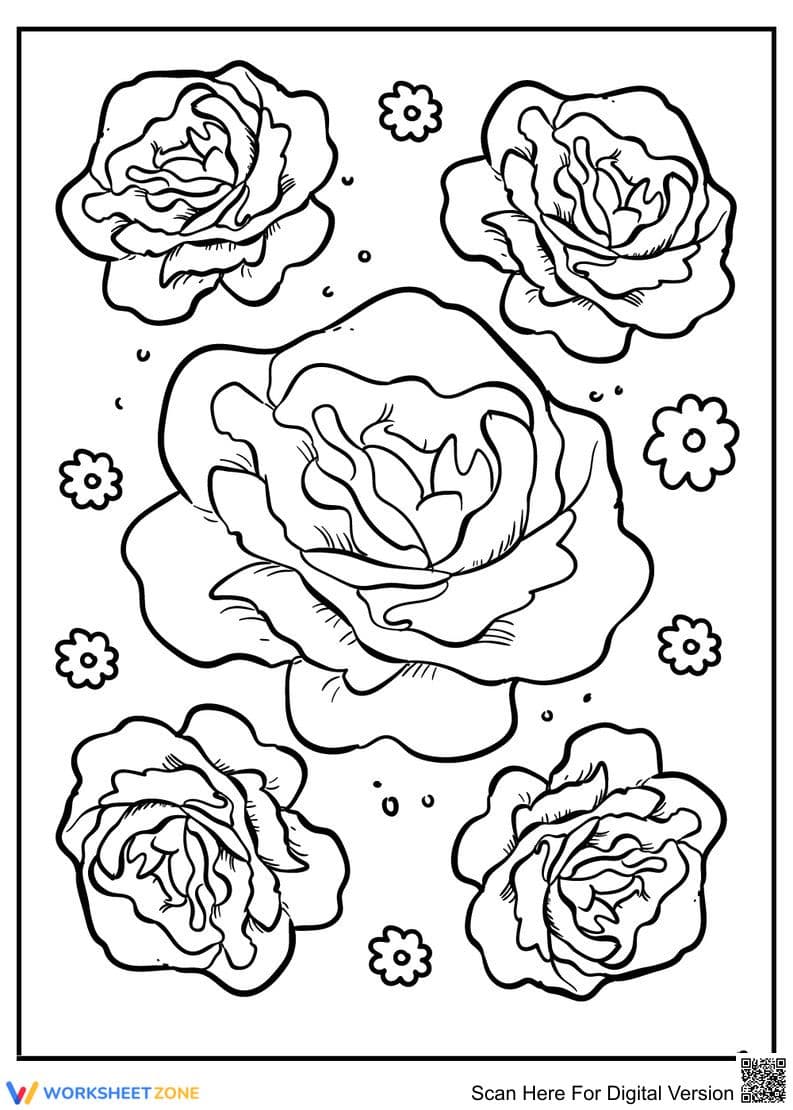

Beautiful Roses Coloring Page | Essential Grade K-5 Art
Paste this activity's link or code into your existing LMS (Google Classroom, Canvas, Teams, Schoology, Moodle, etc.).
Students can open and work on the activity right away, with no student login required.
You'll still be able to track student progress and results from your teacher account.
This printable rose coloring worksheet provides students with a detailed nature-themed canvas to practice fine motor control and artistic expression. By engaging with the intricate lines of the floral arrangement, learners develop the hand-eye coordination necessary for early writing and creative focus. It is a perfect addition to any elementary classroom or home learning environment.
At a Glance
- Grade: K-5 · Subject: English / Art
- Standard:
CCSS.ELA-LITERACY.L.K.1— Use fine motor control to develop writing readiness and focus- Skill Focus: Fine motor development
- Format: 1 page · 1 task · No answer key · PDF
- Best For: Early finishers and creative brain breaks
- Time: 15–20 minutes
Inside this resource, you will find a single-page PDF featuring five large, detailed roses and several smaller accent flowers. The varying sizes of the floral elements allow students to choose between broad coloring areas and more intricate details. The clean, high-contrast lines ensure that the worksheet remains clear when printed in black and white for the whole class.
The zero-prep workflow for this worksheet is designed for maximum efficiency. First, print the single-page PDF in under 30 seconds. Next, distribute the sheets to students along with crayons, markers, or colored pencils. Finally, review the completed artwork to observe student grip and color selection. Total teacher preparation time is under two minutes, making it an ideal sub plan or emergency activity.
This activity aligns with `CCSS.ELA-LITERACY.L.K.1`, which focuses on the command of conventions through writing readiness. While primarily an artistic task, the precision required to color within the lines directly supports the muscular development needed for letter formation. This standard code can be copied directly into lesson plans, IEP goals, or district curriculum mapping tools.
Use this worksheet as a calming transition activity after recess or as a reward for early finishers who have completed their primary English assignments. Teachers can use this as a formative assessment moment by observing a student's pencil grip and their ability to follow visual boundaries. Expect students to spend 15 to 20 minutes on this task depending on their detail level.
This resource is designed for students in Kindergarten through Grade 5, with particular benefits for those needing extra fine motor practice. It pairs naturally with a nature-themed reading passage or a science lesson on plant parts. It is also an excellent tool for English Language Learners to practice color vocabulary in a low-stakes, high-engagement environment.
According to the RAND AIRS 2024 report, integrating creative tasks like coloring into the elementary curriculum supports cognitive regulation and reduces academic anxiety. This worksheet focuses on the CCSS.ELA-LITERACY.L.K.1 standard, which emphasizes the foundational motor skills required for standard English writing conventions. By providing a structured yet open-ended task, educators can foster a positive classroom environment while reinforcing the physical mechanics of literacy. Research from Fisher & Frey (2014) suggests that brain breaks involving artistic expression can improve subsequent focus on complex linguistic tasks. This 1-page PDF serves as a reliable tool for teachers seeking to balance rigorous instruction with necessary developmental play. The inclusion of nature-based imagery further aligns with NAEP recommendations for cross-curricular engagement, ensuring that even simple activities contribute to a holistic educational experience for diverse learners in grades K-5.


