


























Views
Downloads
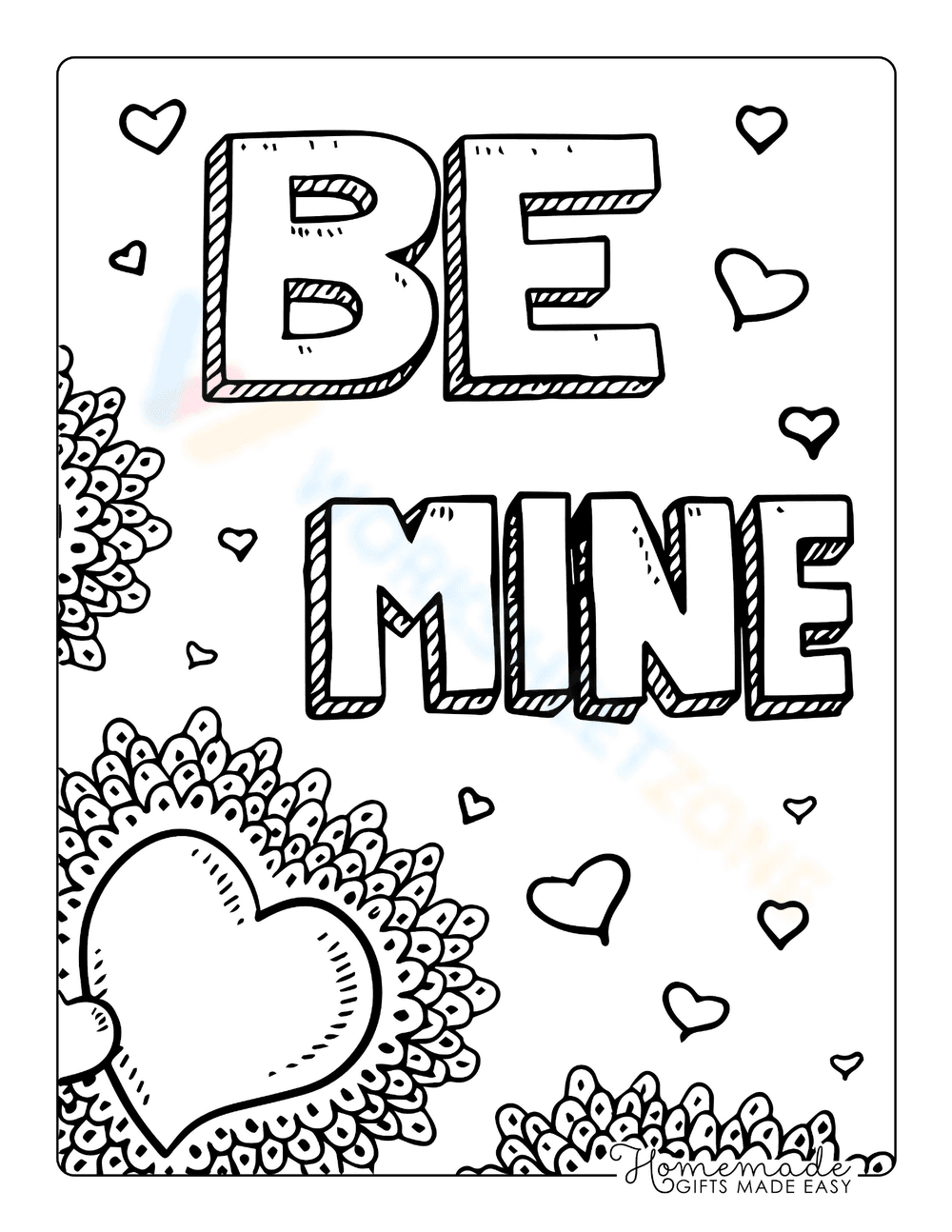

"Be Mine" Valentine Coloring Page | Printable Holiday Fun
Paste this activity's link or code into your existing LMS (Google Classroom, Canvas, Teams, Schoology, Moodle, etc.).
Students can open and work on the activity right away, with no student login required.
You'll still be able to track student progress and results from your teacher account.
This Valentine's Day coloring worksheet provides students with a creative way to practice fine motor control and letter recognition. By coloring the 'Be Mine' block letters and surrounding heart patterns, learners develop the hand-eye coordination essential for early writing success. This printable resource is designed to keep students engaged during seasonal transitions while reinforcing foundational literacy concepts.
At a Glance
- Grade: K-5 · Subject: Arts & Crafts
- Standard:
CCSS.ELA-LITERACY.L.K.1.A— Recognize and color uppercase block letters for holiday literacy- Skill Focus: Fine motor control
- Format: 1 page · 1 task · Answer key included · PDF
- Best For: Morning work or holiday parties
- Time: 15–20 minutes
Inside this resource, you will find one high-quality printable page featuring bold, 3D-style block lettering that spells out 'Be Mine.' The design includes 12 distinct heart shapes of varying sizes and two intricate floral mandalas in the corners to provide different levels of coloring complexity. There is no teacher setup required, and the clear borders make it accessible for younger learners.
Zero-Prep Workflow: Step 1: Print the single-page PDF (30 seconds). Step 2: Distribute to students during morning arrival or as a transition activity (1 minute). Step 3: Review student work for color choice and boundary awareness (30 seconds). Total teacher prep time is under 2 minutes, making this an ideal solution for busy holiday schedules or unexpected sub plans.
Standards Alignment
This resource aligns with `CCSS.ELA-LITERACY.L.K.1.A`, which requires students to print many upper- and lowercase letters. By interacting with the large-scale block letters, students gain a tactile sense of letter construction and proportion. Additionally, it supports fine motor standards related to tool use and grip. This standard code can be copied directly into lesson plans, IEP goals, or district curriculum mapping tools.
How to Use It
Use this as morning work on February 14th to set a positive tone. It also works as an early finisher task for students who complete primary assignments quickly. Teachers can observe student grip to assess fine motor readiness. Completion typically takes 15-20 minutes.
Who It's For
This worksheet is ideal for Preschool through Grade 2 students focusing on fine motor development, though older students in Grades 3-5 will enjoy it as a relaxing holiday activity. It is particularly effective for students requiring extra support with spatial awareness or those who benefit from tactile learning. Pair this with a Valentine-themed read-aloud or a letter-writing lesson for a comprehensive holiday experience.
The use of seasonal coloring activities like this 'Be Mine' worksheet serves as a vital bridge between creative expression and foundational literacy development in early childhood settings. According to Fisher & Frey (2014), purposeful coloring tasks help students refine the intrinsic hand muscles necessary for proper pencil grip and sustained writing stamina. This specific resource aligns with CCSS.ELA-LITERACY.L.K.1.A by presenting uppercase block letters in a high-interest, holiday-themed context, allowing students to internalize letter forms while engaging in artistic play. Research indicates that integrating seasonal themes into the curriculum can increase student motivation and task persistence by connecting classroom learning to real-world cultural events. By providing a low-stakes environment for fine motor practice, this worksheet supports the gradual release of responsibility model, moving from simple color recognition to complex spatial awareness. It remains a reliable tool for educators seeking to balance academic standards with the developmental need for creative, tactile learning experiences.


