


























Views
Downloads

Printable Dental Health Worksheet | Grade 2 Science
Paste this activity's link or code into your existing LMS (Google Classroom, Canvas, Teams, Schoology, Moodle, etc.).
Students can open and work on the activity right away, with no student login required.
You'll still be able to track student progress and results from your teacher account.
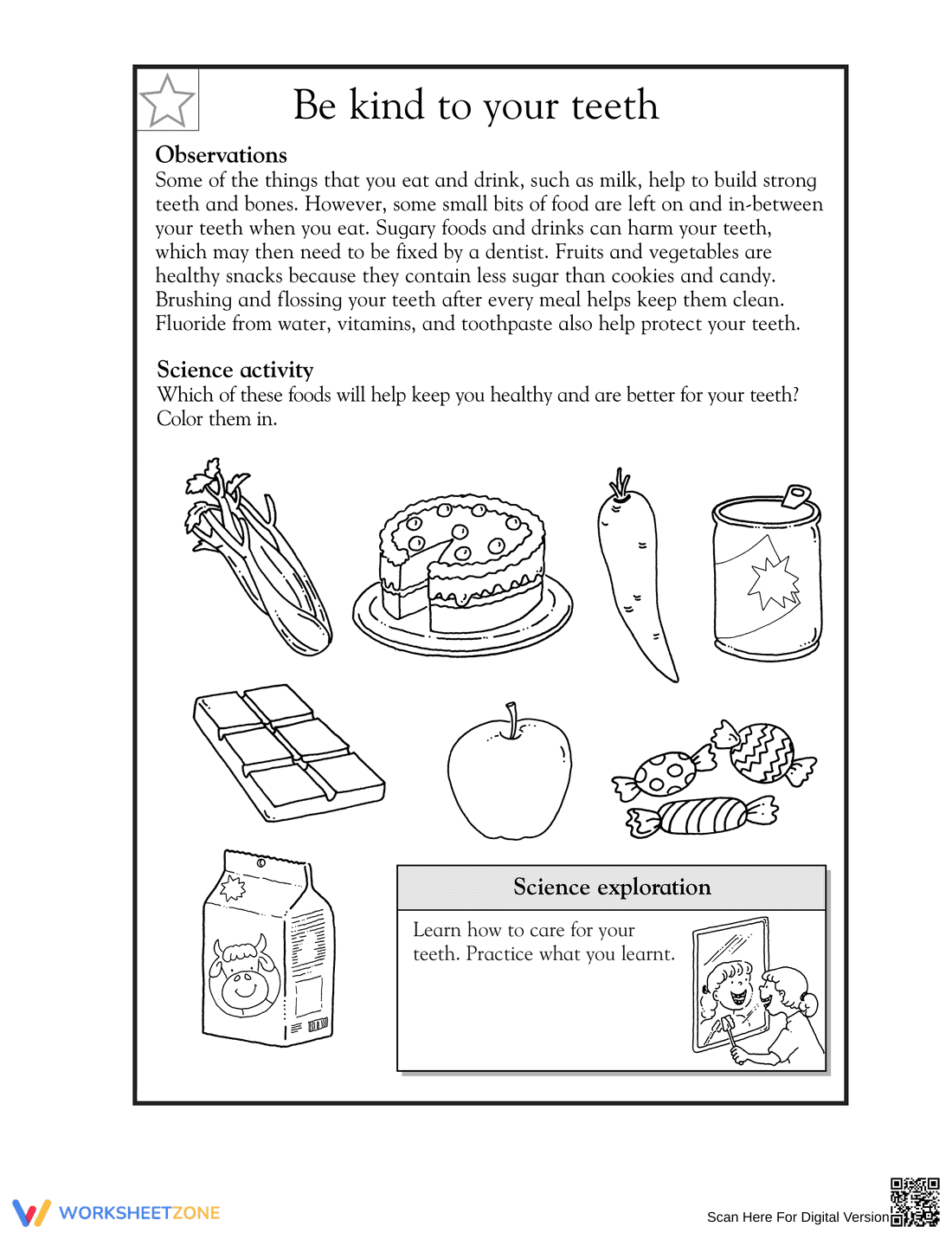
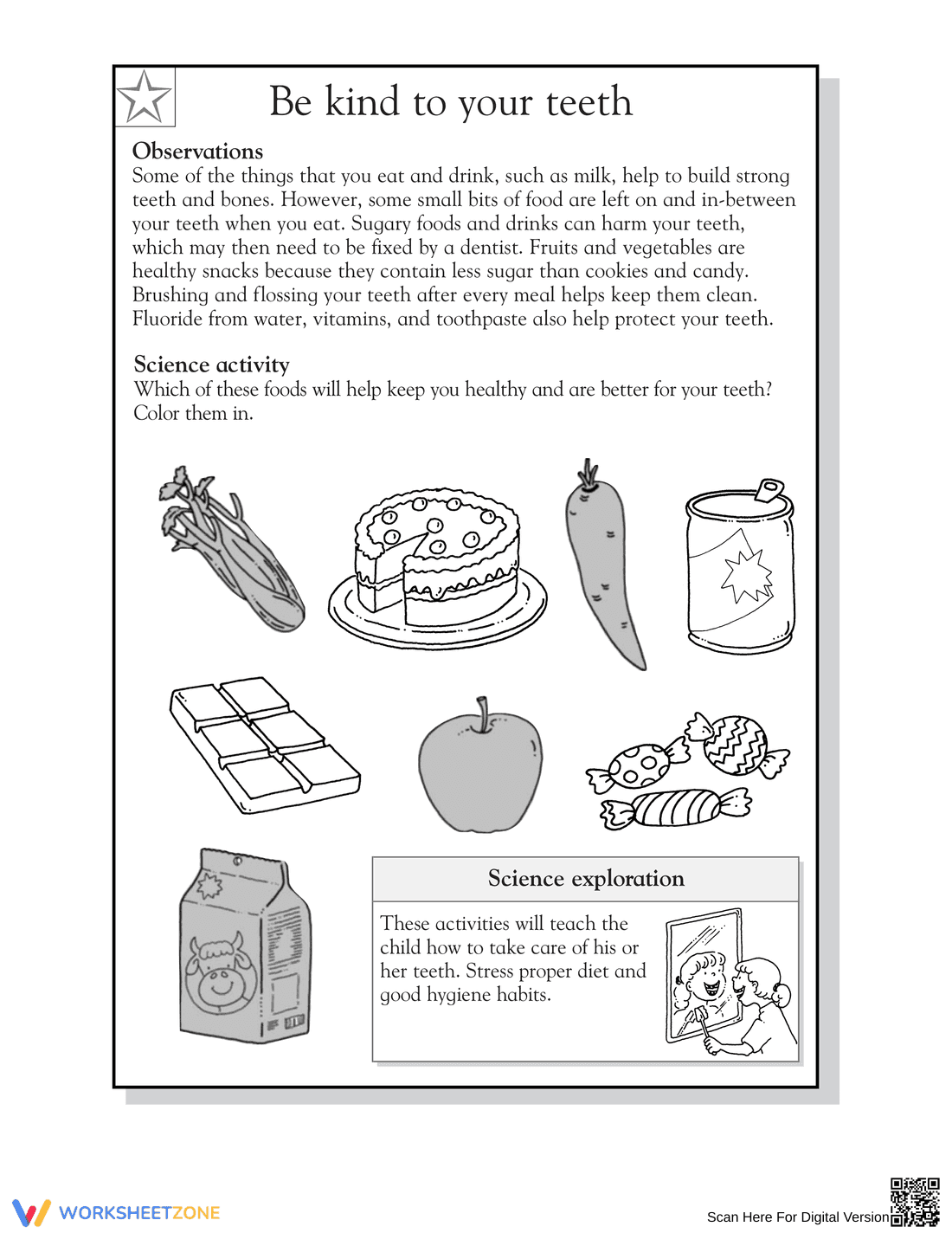
This printable dental health worksheet helps second-grade students identify which foods support strong teeth and which cause harm. By reading a short informational text and applying that knowledge to a coloring activity, learners build foundational reading comprehension skills while discovering practical habits for personal hygiene and wellness.
At a Glance
- Grade: 2 · Subject: Science
- Standard:
CCSS.ELA-LITERACY.RI.2.1— Demonstrate understanding of key details in a text- Skill Focus: Identifying healthy foods
- Format: 1 page · 8 problems · No answer key · PDF
- Best For: Independent practice
- Time: 15–20 minutes
Inside this single-page resource, students find a brief reading passage titled "Observations" explaining the impact of foods on dental health. A "Science activity" prompts children to evaluate eight illustrated food items—including celery, cake, and milk—and color only those promoting healthy teeth. A final box encourages practical application. The layout is clean and requires no materials beyond standard crayons.
Zero-Prep Workflow
This resource is designed for immediate classroom implementation:
- Print (1 minute): The single-page PDF format ensures rapid copying for the entire class.
- Distribute (1 minute): Hand out the sheets with basic coloring supplies. Instructions are self-explanatory.
- Review (3 minutes): Quickly check student work as a whole group by calling out the healthy items chosen.
With teacher prep time under two minutes, this activity is an excellent addition to any emergency sub plan.
Standards Alignment
This activity aligns with CCSS.ELA-LITERACY.RI.2.1, requiring students to ask and answer questions to demonstrate understanding of key details in a text. By reading the introductory paragraph and using that information to determine which foods to color, learners practice extracting facts from informational writing. Both standard codes can be copied directly into lesson plans, IEP goals, or district curriculum mapping tools.
How to Use It
This worksheet serves as an ideal independent practice activity following a whole-group lesson on nutrition or dental hygiene. Teachers can assign it during morning work or as a quiet transition task before lunch. As a formative assessment observation tip, watch how students reference the reading passage when deciding whether to color the milk carton or the apple; this indicates their ability to connect text evidence to the visual task. Expected completion time ranges from 15 to 20 minutes.
Who It's For
This resource is primarily designed for second-grade students, though it functions well for first graders needing reading support or third graders reviewing health concepts. For differentiation, teachers can read the passage aloud to emerging readers or challenge advanced learners to write a sentence explaining why they left the sugary items uncolored. It pairs perfectly with a classroom anchor chart categorizing "Sometimes Foods" versus "Everyday Foods."
Integrating cross-curricular activities that combine reading comprehension with health sciences significantly reinforces student retention of both subjects. According to a recent ScienceDirect TpT Analysis, elementary resources that require students to immediately apply information extracted from a short text improve overall engagement and factual recall by providing immediate context. This worksheet targets CCSS.ELA-LITERACY.RI.2.1, asking learners to demonstrate understanding of key details in a text by identifying healthy foods based on the provided reading passage. By connecting literacy skills directly to personal wellness routines, educators can maximize instructional time while promoting healthy life habits. The visual nature of the coloring task further supports cognitive processing for young learners, ensuring that the core message about dental hygiene is both understood and remembered long after the lesson concludes. This dual-purpose approach builds stronger foundational skills.


