


























Views
Downloads

Back to School Bingo | Essential Grade 1-5 Activity
Paste this activity's link or code into your existing LMS (Google Classroom, Canvas, Teams, Schoology, Moodle, etc.).
Students can open and work on the activity right away, with no student login required.
You'll still be able to track student progress and results from your teacher account.
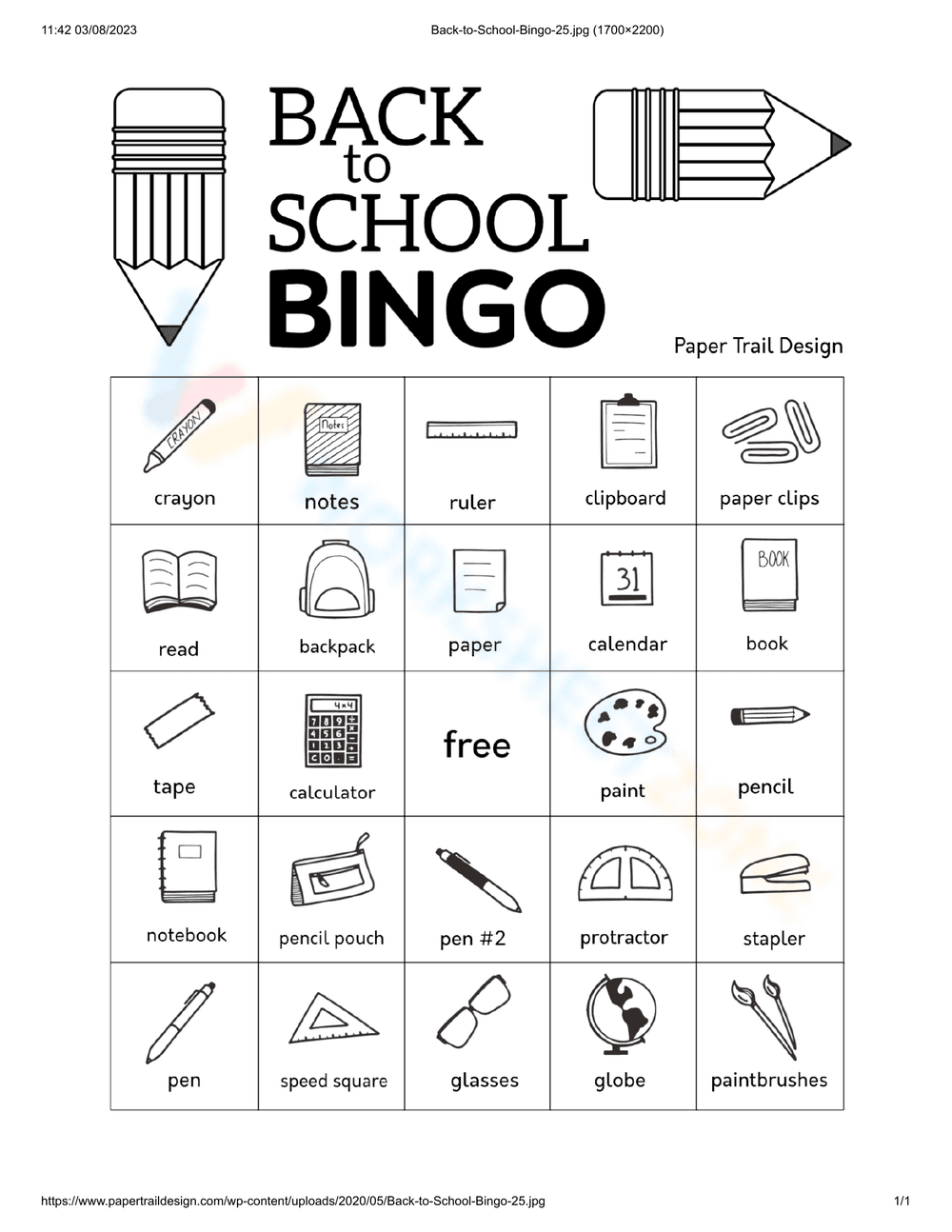
This Back to School Bingo worksheet helps elementary students build essential school-related vocabulary while fostering social connections during the first week of class. By identifying 24 common classroom items, students engage in a low-stakes, high-interest activity that eases the transition into the new academic year and establishes a positive classroom culture.
At a Glance
- Grade: 1-5 · Subject: English Language Arts
- Standard:
CCSS.ELA-LITERACY.SL.1.1— Participate in collaborative conversations with diverse partners about grade-level topics- Skill Focus: Vocabulary Recognition
- Format: 1 page · 24 items · No answer key needed · PDF
- Best For: First week icebreaker and community building
- Time: 15–20 minutes
This single-page PDF features a 5x5 grid containing 24 unique school-themed illustrations and labels, including items like "protractor," "globe," and "pencil pouch." Each square combines a clear black-and-white icon with its corresponding text label to support early readers and English Language Learners. The center "free" space ensures a quick start for all participants, making it an accessible entry point for students of all ability levels.
The zero-prep workflow for this activity is designed for maximum efficiency during the busy back-to-school season. First, print the required number of copies for your class (30 seconds). Second, distribute the cards along with markers or crayons (1 minute). Third, call out the items or have students find them in the room to review vocabulary (15 minutes). Total teacher preparation time is under 2 minutes, making it an ideal choice for the hectic first days of school.
The primary standard addressed is CCSS.ELA-LITERACY.SL.1.1, which focuses on participating in collaborative conversations with diverse partners about grade-level topics and texts. This activity encourages students to listen to instructions and interact with peers as they identify classroom objects. Both standard codes can be copied directly into lesson plans, IEP goals, or district curriculum mapping tools to ensure compliance with state and federal frameworks.
Use this worksheet as a whole-group icebreaker during the first morning of school to lower student anxiety. Alternatively, assign it as a "scavenger hunt" style bingo where students must find the physical item in the classroom before marking their square. Formative assessment occurs as you observe which students can independently match the spoken word to the visual icon and text, providing immediate data on student readiness.
This resource is ideal for general education students in Grades 1-5, as well as English Language Learners who benefit from the visual-text pairing. It serves as an excellent sub plan filler or a transition activity between direct instruction blocks. Pair this with a classroom tour or a "meet the teacher" presentation for a cohesive first-day experience that builds confidence and familiarity with the learning environment.
According to the RAND AIRS 2024 report on classroom climate, low-stakes social activities during the first week of school significantly correlate with increased student engagement and reduced behavioral incidents throughout the first quarter. This Back to School Bingo card utilizes the CCSS.ELA-LITERACY.SL.1.1 standard to bridge the gap between social interaction and academic vocabulary acquisition. By providing 24 visual cues, the worksheet supports the "I Do, We Do, You Do" model of gradual release, allowing students to practice word recognition in a collaborative environment. Research from Fisher & Frey (2014) emphasizes that establishing these routines early helps students internalize classroom expectations and vocabulary. This printable resource offers a structured yet flexible way to meet these developmental needs without requiring extensive teacher preparation, making it a staple for effective elementary classroom management and community building.


