


























Views
Downloads
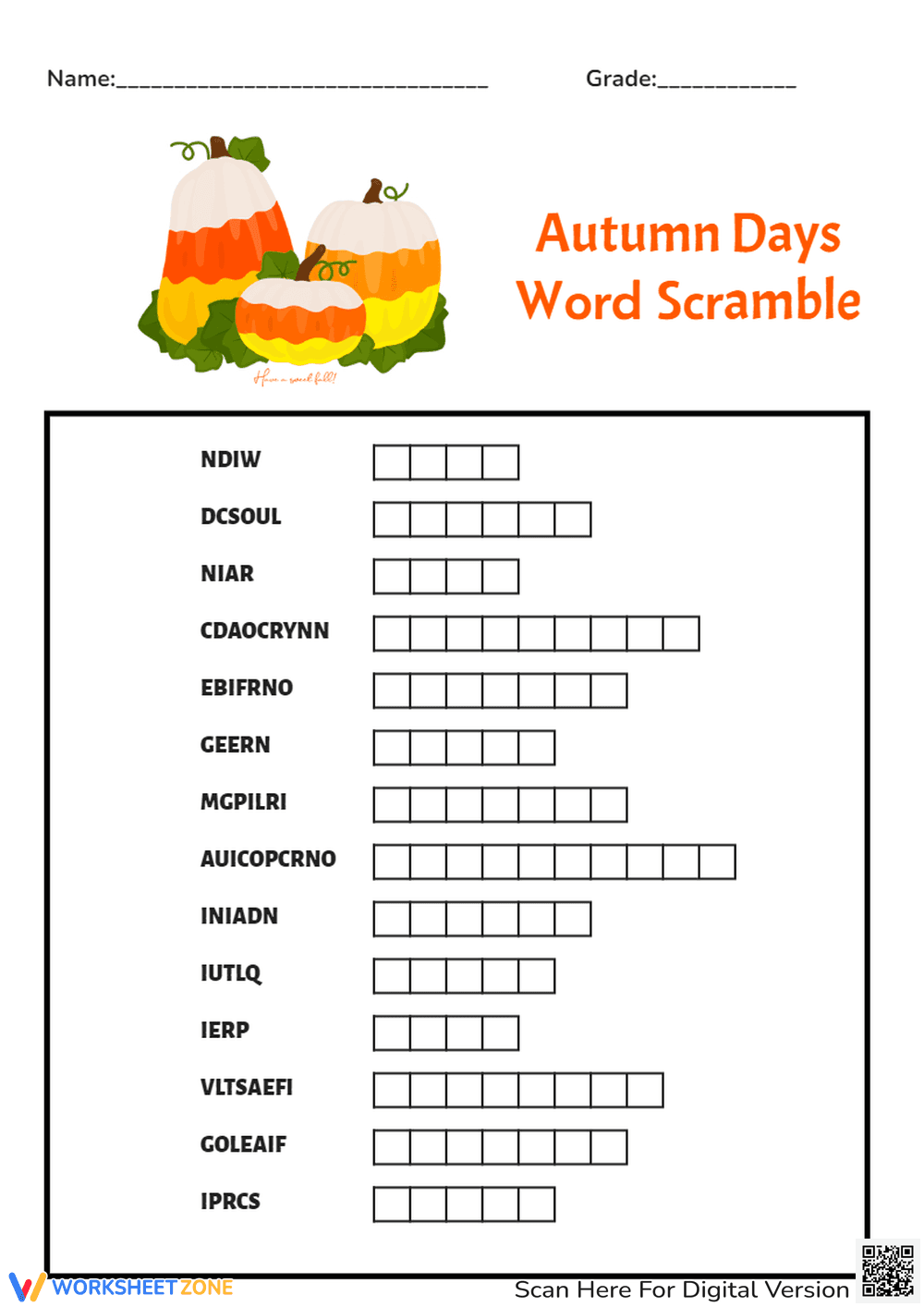

Printable Autumn Word Scramble | Grade 2 ELA
Paste this activity's link or code into your existing LMS (Google Classroom, Canvas, Teams, Schoology, Moodle, etc.).
Students can open and work on the activity right away, with no student login required.
You'll still be able to track student progress and results from your teacher account.
This seasonal word scramble helps students practice spelling and vocabulary recognition through engaging autumn-themed terms. By unscrambling letters to form familiar fall words, young learners reinforce their understanding of spelling patterns and phonics while building confidence in their independent reading and writing skills.
At a Glance
- Grade: 2 · Subject: ELA
- Standard:
CCSS.ELA-LITERACY.L.2.2— Spell words correctly using learned patterns- Skill Focus: Spelling and Vocabulary
- Format: 1 page · 14 problems · PDF
- Best For: Morning work or early finishers
- Time: 10–15 minutes
This single-page resource features 14 scrambled autumn-themed words, including seasonal vocabulary like "clouds," "bonfire," and "foliage." Each scrambled word is paired with a set of blank boxes corresponding to the correct number of letters, providing a visual scaffold to help students self-correct as they work. The clear, uncluttered layout features festive candy corn pumpkin illustrations to keep students engaged without distracting from the core spelling task.
Enjoy a streamlined zero-prep workflow:
- Print (1 minute): Simply download the PDF and print a class set. The layout ensures crisp copies.
- Distribute (1 minute): Hand out the worksheets during morning routines, literacy centers, or as a quick transition activity.
- Review (3 minutes): Go over the answers as a whole group or allow students to peer-grade.
With under two minutes of prep, it's perfect for sub plans.
This activity aligns with CCSS.ELA-LITERACY.L.2.2, which requires students to demonstrate command of the conventions of standard English spelling. By manipulating letters to form recognizable words, students actively apply their knowledge of phonics and orthographic mapping. Both standard codes can be copied directly into lesson plans, IEP goals, or district curriculum mapping tools.
Use this word scramble as independent morning work to settle students. It also serves as an effective early finisher activity during literacy blocks, keeping students academically engaged while others complete their primary assignments. As a formative assessment observation tip, watch how students approach the longer words; notice if they look for common digraphs or blends, which indicates a strong grasp of phonics. Expected completion time ranges from 10 to 15 minutes.
This resource is primarily designed for second-grade students, though it is highly adaptable for first graders needing an extra challenge or third graders requiring a quick spelling review. For differentiation, teachers can provide a word bank on the board for students who need additional support, or challenge advanced learners to write a short story using five of the unscrambled words. It pairs perfectly with a fall-themed read-aloud or a seasonal writing prompt.
Integrating thematic vocabulary exercises like this autumn word scramble provides meaningful repetition that supports orthographic mapping and long-term retention. According to Fisher & Frey (2014), targeted independent practice is essential for consolidating newly acquired literacy skills and fostering academic independence. When students engage with CCSS.ELA-LITERACY.L.2.2 to spell words correctly using learned patterns, they are not merely memorizing letter sequences; they are actively analyzing word structures and applying phonetic rules. This cognitive manipulation of letters strengthens their overall decoding and encoding abilities, which are foundational for reading fluency and reading comprehension. By embedding these spelling challenges within a seasonal context, educators can maintain high levels of student motivation and engagement while rigorously addressing core literacy standards. This approach ensures that foundational skills are practiced consistently and effectively throughout the school year.


