


























Views
Downloads
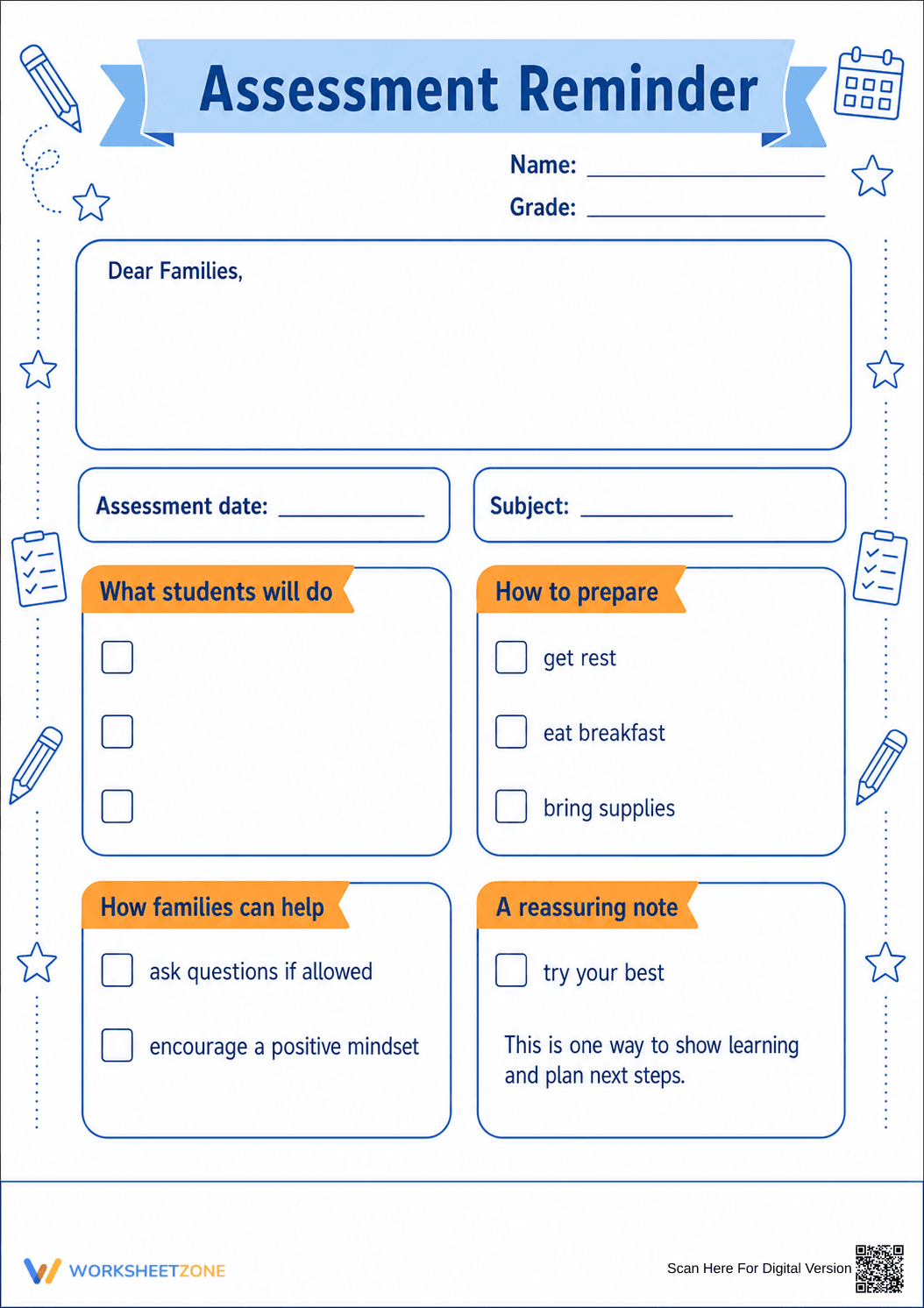

Assessment Reminder Letter | Grade 3 Essential
Paste this activity's link or code into your existing LMS (Google Classroom, Canvas, Teams, Schoology, Moodle, etc.).
Students can open and work on the activity right away, with no student login required.
You'll still be able to track student progress and results from your teacher account.
This Grade 3 assessment reminder letter bridges the gap between school and home, ensuring students feel prepared and supported before testing days. By providing clear expectations and actionable preparation tips, teachers can reduce student anxiety and foster a collaborative environment. This printable template streamlines communication, allowing educators to focus on instruction while keeping families informed.
At a Glance
- Grade: 3 · Subject: Classroom Management
- Standard:
CCSS.ELA-LITERACY.SL.3.1— Engage effectively in collaborative discussions and communication with diverse partners- Skill Focus: Home-school communication and test preparation
- Format: 1 page · 5 checklist items · Answer key N/A · PDF
- Best For: Pre-assessment family communication and student readiness
- Time: 2–5 minutes
This single-page PDF features a professional yet friendly layout with a soft blue and warm orange color palette. It includes dedicated fields for student name, grade, assessment date, and subject. The body contains four distinct sections: "What students will do," "How to prepare," "How families can help," and "A reassuring note." Five specific checkboxes cover essential readiness tasks like getting rest and eating breakfast.
The zero-prep workflow is designed for maximum efficiency. First, print the required number of copies for your class (1 minute). Second, fill in the assessment date and subject fields, or have students do this as a responsibility task (1 minute). Third, distribute the letters to be sent home in folders or backpacks (1 minute). This resource functions as a perfect sub-plan addition or a recurring weekly communication tool.
The primary standard addressed is `CCSS.ELA-LITERACY.SL.3.1`, which focuses on engaging effectively in collaborative communication. By facilitating a clear dialogue between the teacher, student, and family, this resource supports the foundational social-emotional and organizational skills required for academic success. Both standard codes can be copied directly into lesson plans, IEP goals, or district curriculum mapping tools.
Use this letter three days before a major summative assessment to give families adequate time to prepare. During direct instruction, walk students through the "How to prepare" section to model self-regulation and organizational habits. As a formative assessment, observe which students return the letter or mention the checklist items to gauge home-school engagement levels. Completion takes approximately 5 minutes.
This resource is ideal for general education teachers, special education providers, and school counselors looking to standardize communication. It is particularly helpful for students who benefit from visual reminders and structured routines. Pair this with a study guide or a practice test to provide a comprehensive preparation package for your learners.
Effective home-school communication is a cornerstone of student achievement, particularly during assessment windows. Research by Fisher & Frey (2014) emphasizes that clear, scaffolded communication regarding academic expectations reduces student cognitive load and anxiety. This Assessment Reminder letter utilizes these principles by providing a structured framework for families to support their children. By addressing the standard CCSS.ELA-LITERACY.SL.3.1, the worksheet encourages collaborative dialogue between stakeholders. The inclusion of specific, actionable tasks—such as ensuring adequate rest and nutrition—aligns with evidence-based practices for improving testing outcomes. Furthermore, the reassuring tone of the document supports a growth mindset, which is critical for maintaining student motivation during evaluative periods. This tool serves as a practical application of research-backed communication strategies, ensuring that the transition from classroom learning to formal assessment is transparent, supportive, and focused on demonstrating student mastery across all subject areas.


