


























Views
Downloads

Grade 4-6 Area of Shapes — Printable No-Prep Worksheet
Paste this activity's link or code into your existing LMS (Google Classroom, Canvas, Teams, Schoology, Moodle, etc.).
Students can open and work on the activity right away, with no student login required.
You'll still be able to track student progress and results from your teacher account.
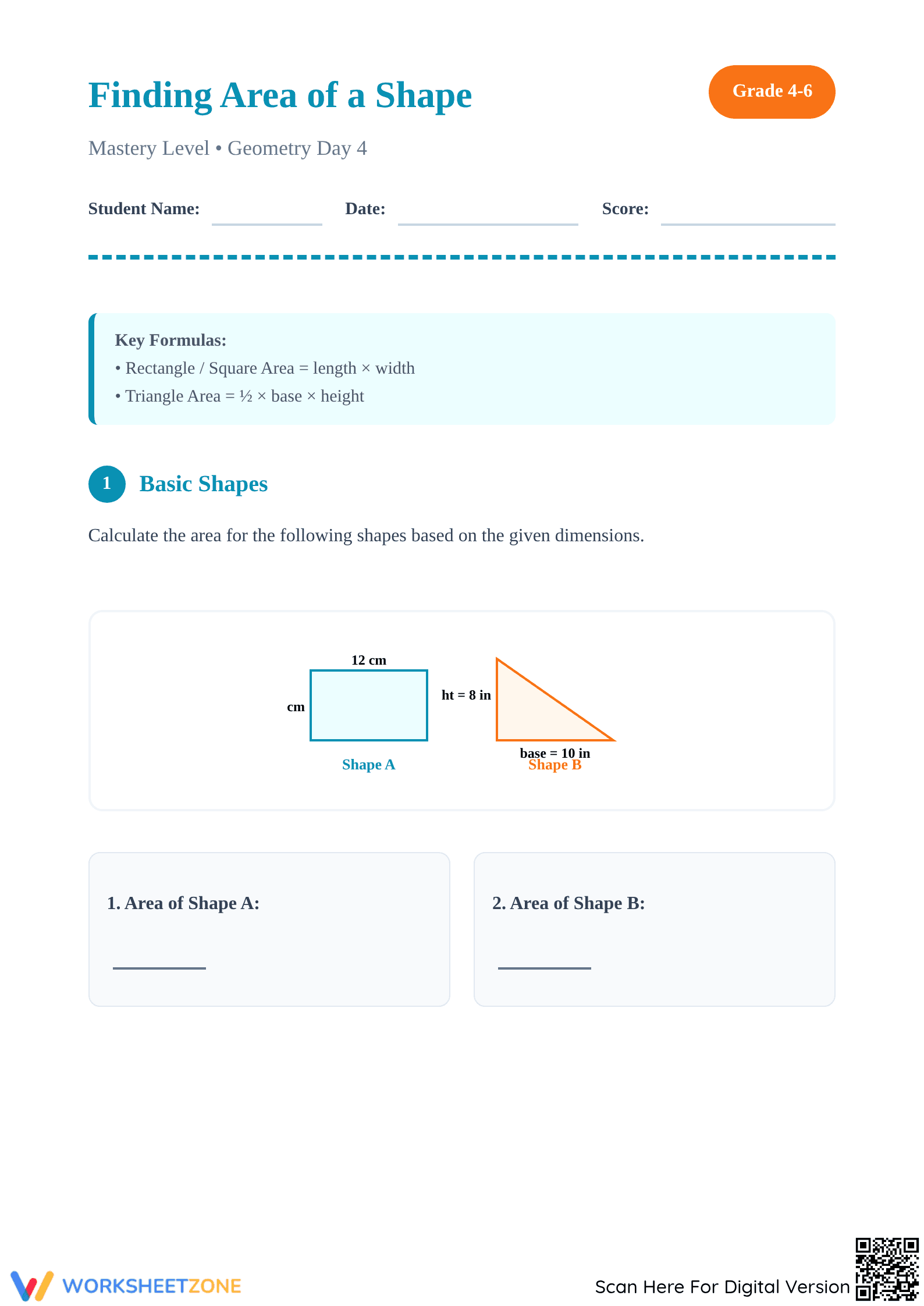
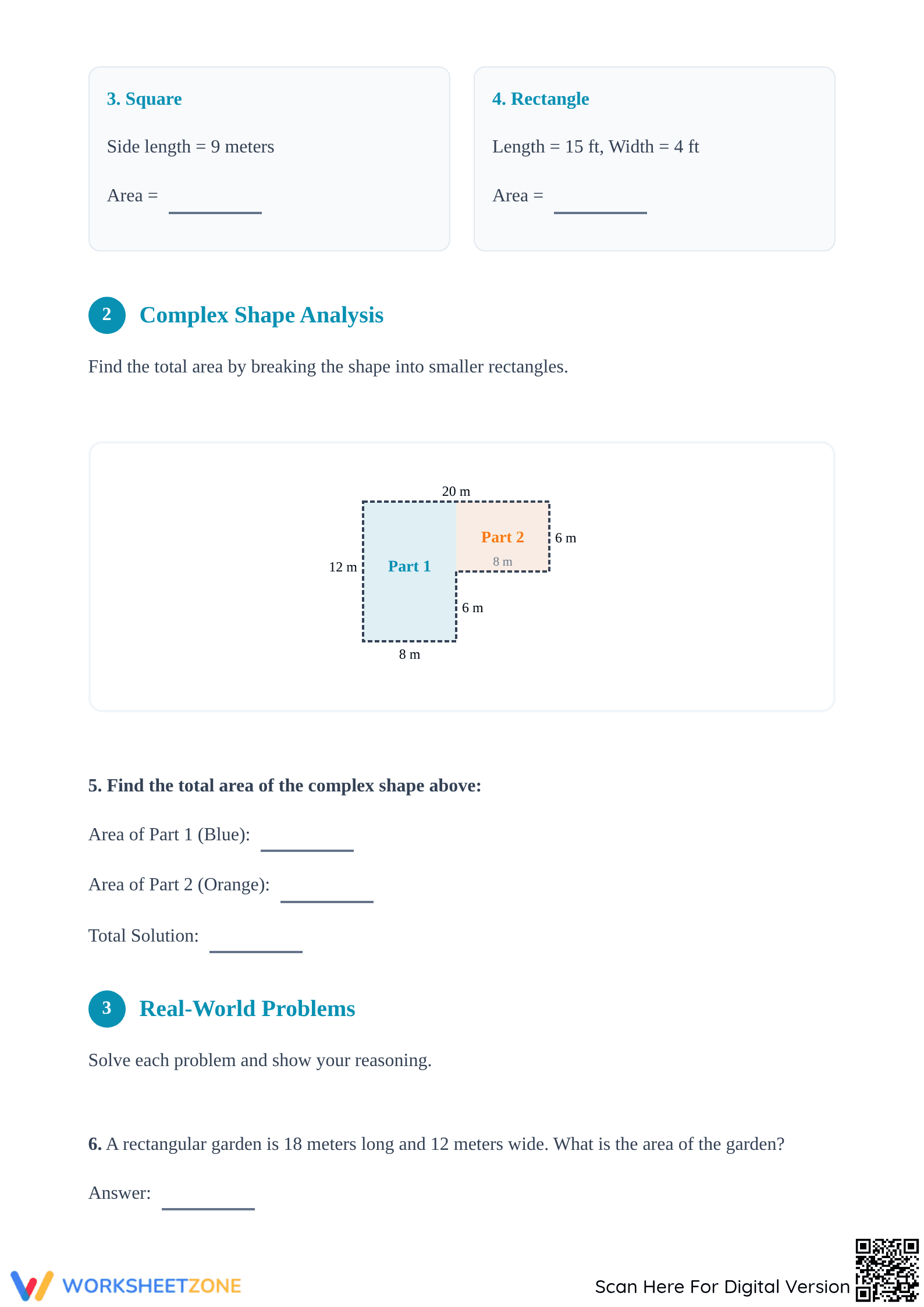
Students master geometry logic by calculating the area of simple and composite shapes. This comprehensive packet transitions from formula application to complex analysis and real-world problem-solving. Learners confidently determine surface coverage for rectangles, squares, and triangles across various contexts.
At a Glance
- Grade: 6 · Subject: Math
- Standard:
CCSS.MATH.CONTENT.6.G.A.1— Find the area of triangles, quadrilaterals, and polygons by decomposing into simpler shapes- Skill Focus: Area of 2D and composite shapes
- Format: 4 pages · 14 problems · Answer key included · PDF
- Best For: Independent practice or small group mastery
- Time: 40–55 minutes
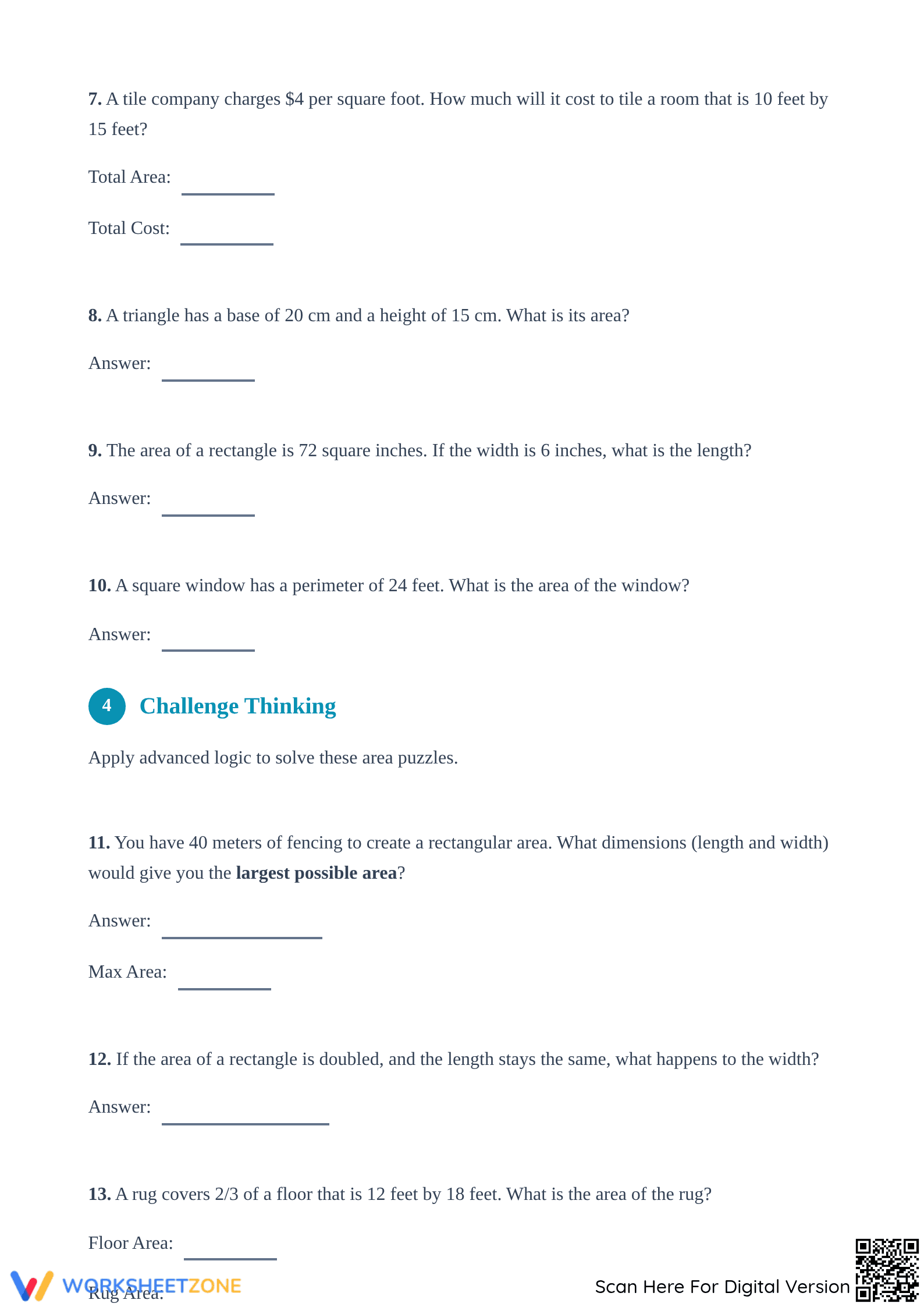
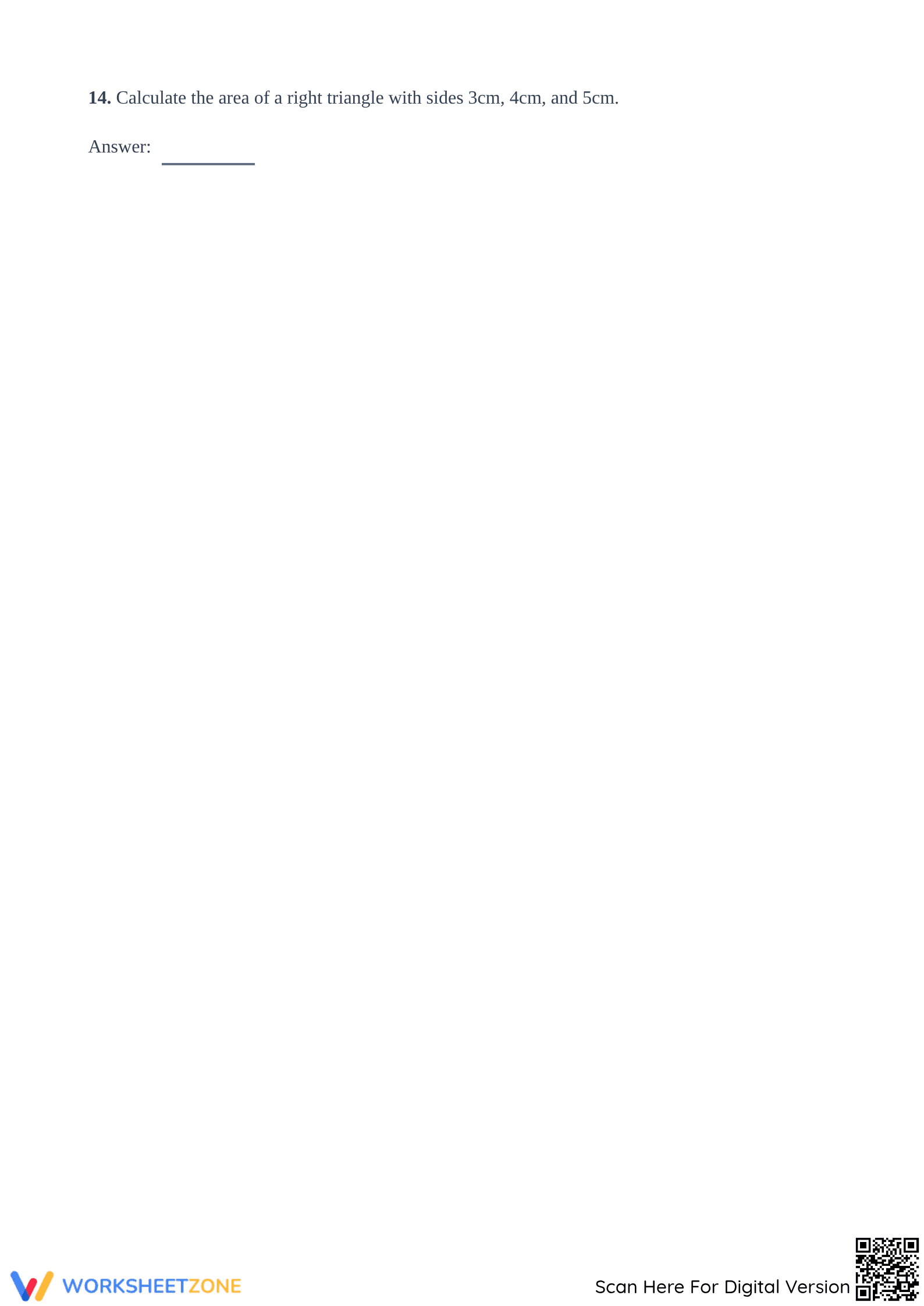
This four-page resource supports gradual mastery. The first page provides a formula bank for rectangles and triangles. Students progress to composite figures requiring decomposition. The final sections challenge learners with real-world scenarios like tiling costs and logic puzzles. A complete answer key is provided.
Step 1: Print (1 minute) – Select the PDF for your class. Step 2: Distribute (1 minute) – Students work directly on the worksheet using the formula guide. Step 3: Review (10 minutes) – Use the key for a quick check. This workflow is ideal for sub plans or reinforcement blocks.
This worksheet aligns to `CCSS.MATH.CONTENT.6.G.A.1`: find the area of triangles, quadrilaterals, and polygons by composing into rectangles or decomposing into triangles. It supports problem-solving stamina. Both standard codes can be copied directly into lesson plans, IEP goals, or district curriculum mapping tools.
Use this as a "Day 4" practice after introducing individual area formulas. It bridges abstract calculation and applied geometry. Observe whether students correctly identify "hidden" dimensions during composite analysis. This helps identify learners struggling with spatial decomposition. Expected completion time is 45 minutes.
This is tailored for Grade 5-6 students moving toward geometric fluency. It is effective for learners who benefit from visual scaffolds. It pairs naturally with graph paper activities. Differentiation is sequential, starting with high-success tasks before moving into demanding logical challenges.
According to an EdReports 2024 analysis, high-quality mathematics instructional materials must balance procedural fluency with conceptual understanding and application. This Area Finding worksheet achieves this triad by guiding students through the mechanics of formulas before requiring them to apply that knowledge to non-routine composite shapes. Research indicates that when students are asked to "decompose" figures—the core skill required for `CCSS.MATH.CONTENT.6.G.A.1`—they develop a deeper interiorized understanding of spatial properties than when simply memorizing a formula. The inclusion of a formula bank on the first page serves as a critical scaffold that reduces cognitive load, allowing students to focus on the higher-order task of problem setup and multi-step logic for 14 varied problems. This sequence provides the sufficient repetition necessary for mastery while maintaining a high level of cognitive demand through final challenge puzzles. This resource ensures students can calculate the area of any polygon using geometric decomposition.


