


























Views
Downloads
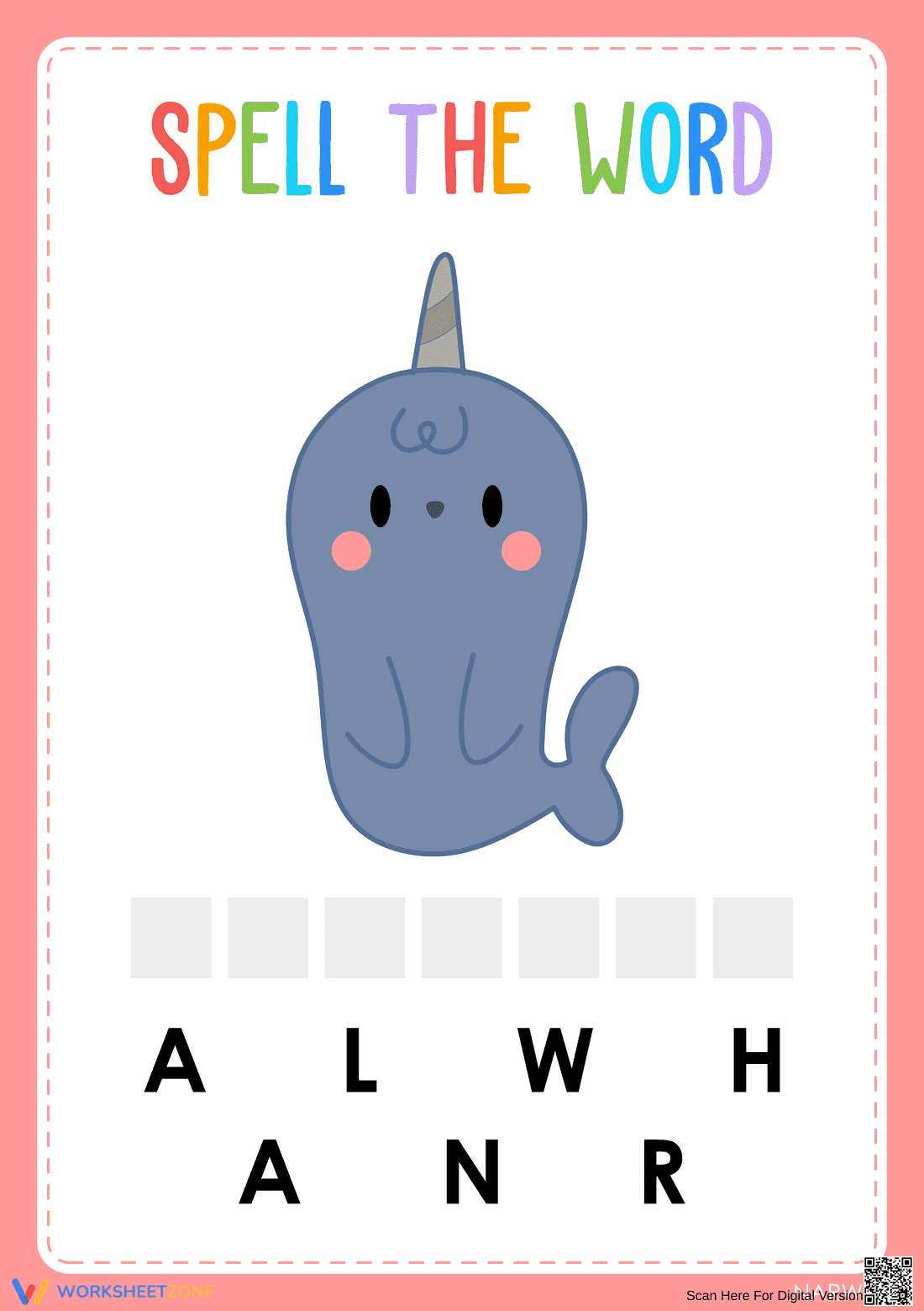

Animal Spelling Worksheet | Printable Grade K-1 ELA
Paste this activity's link or code into your existing LMS (Google Classroom, Canvas, Teams, Schoology, Moodle, etc.).
Students can open and work on the activity right away, with no student login required.
You'll still be able to track student progress and results from your teacher account.
This printable animal spelling worksheet helps early learners practice letter recognition and word formation. Students unscramble letters to spell the word "narwhal," building essential phonics and vocabulary skills. The engaging visual format keeps young readers focused while reinforcing their understanding of standard English spelling conventions.
At a Glance
- Grade: K–1 · Subject: ELA
- Standard:
CCSS.ELA-LITERACY.L.K.2.D— Spell simple words phonetically- Skill Focus: Spelling and letter unscrambling
- Format: 1 page · 1 problem · Answer key included · PDF
- Best For: Independent practice or morning work
- Time: 5–10 minutes
This single-page resource features a narwhal illustration alongside a targeted spelling task. Students receive seven blank boxes and scrambled letters to arrange correctly. A discreet answer key in the bottom right corner allows for quick teacher verification. The clean layout minimizes distractions, focusing entirely on the spelling objective.
This resource is designed for immediate classroom implementation with a zero-prep workflow:
- Print (1 minute): Generate the PDF and print the required number of copies. The high-contrast design prints clearly in both color and grayscale.
- Distribute (1 minute): Hand out the worksheets during morning work, literacy centers, or transition periods.
- Review (1 minute): Use the built-in answer key at the bottom of the page to quickly verify student responses.
Total teacher preparation time is under two minutes, making this an excellent option for emergency sub plans or spontaneous skill reinforcement.
This worksheet aligns directly with CCSS.ELA-LITERACY.L.K.2.D, requiring students to spell simple words phonetically, drawing on knowledge of sound-letter relationships. It also supports early vocabulary acquisition by categorizing words into familiar animal groups. Both standard codes can be copied directly into lesson plans, IEP goals, or district curriculum mapping tools.
Teachers can deploy this worksheet during literacy centers as a standalone spelling station. Alternatively, it serves as an effective morning work activity to settle students before direct instruction begins. While students work, observe their approach to unscrambling the letters; note whether they identify the initial consonant sound first or attempt to build the word randomly. This formative assessment observation helps identify students who may need additional phonics support. Expected completion time ranges from five to ten minutes.
This activity is designed for Kindergarten and first-grade students developing their foundational spelling and phonics skills. The visual scaffold of the animal illustration makes it highly accessible for English Language Learners and students requiring visual cues. Pair this worksheet with an anchor chart on consonant digraphs or a read-aloud book featuring ocean animals to create a comprehensive literacy experience.
Effective spelling instruction requires targeted practice that connects visual representations with phonetic structures. This resource directly targets CCSS.ELA-LITERACY.L.K.2.D, prompting students to spell simple words phonetically while unscrambling letters to form the word narwhal. According to Fisher & Frey (2014), providing early learners with structured, visually supported tasks significantly improves their ability to internalize spelling conventions and vocabulary acquisition. By integrating a familiar animal category with a specific spelling challenge, this worksheet reduces cognitive load and allows young students to focus entirely on letter sequencing and sound-letter correspondence. The inclusion of a scrambled word bank provides necessary scaffolding, ensuring students can successfully complete the task independently while building confidence in their growing literacy skills. This targeted approach to vocabulary and spelling reinforces foundational reading competencies that are absolutely essential for early academic success.


