


























Views
Downloads



Essential Informal Letter Reading Practice | Grade 2-3
Paste this activity's link or code into your existing LMS (Google Classroom, Canvas, Teams, Schoology, Moodle, etc.).
Students can open and work on the activity right away, with no student login required.
You'll still be able to track student progress and results from your teacher account.
This comprehensive reading comprehension packet helps students master reading and analyzing informal letters. By engaging with a relatable text about a new home, learners practice extracting key details and identifying structural components of correspondence. Students build confidence in reading and grammar through structured exercises.
At a Glance
- Grade: 2 · Subject: ELA
- Standard:
CCSS.ELA-LITERACY.RI.2.1— Ask and answer questions like who, what, and where to show text understanding.- Skill Focus: Reading Comprehension & Grammar
- Format: 5 pages · 27 problems · Answer key included · PDF
- Best For: Literacy centers and independent skill practice
- Time: 30–45 minutes
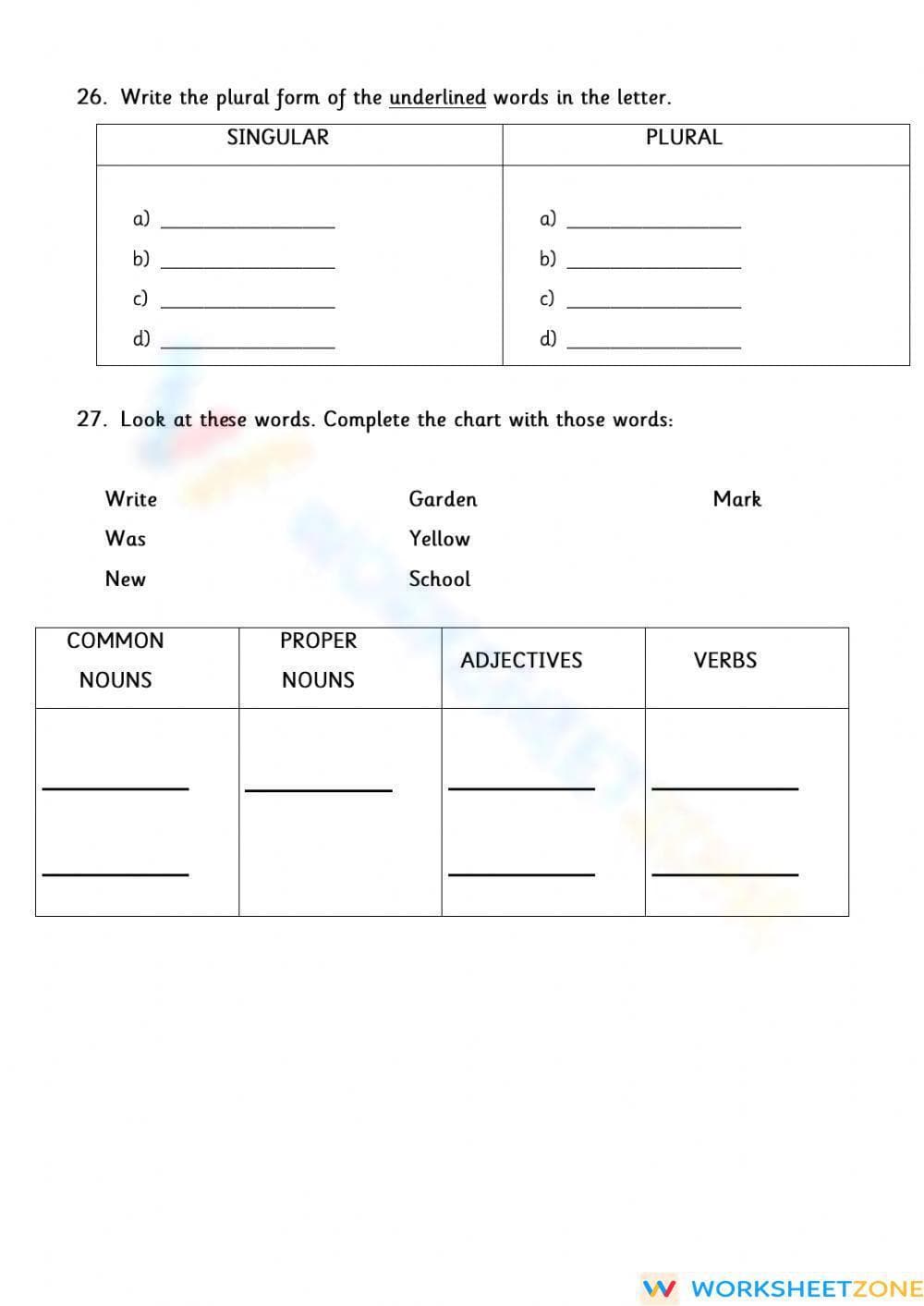
This five-page packet features a letter with 27 targeted tasks. The packet includes 24 multiple-choice questions focusing on reading comprehension and character analysis. Additionally, students work with three specialized grammar charts covering contractions, plural noun forms, and basic parts of speech classification.
Skill Progression
The worksheet follows a logical skill progression to scaffold learning effectively:
- Guided Practice: The first 9 questions focus on immediate recall of the sender, recipient, and key dates from the letter.
- Supported Practice: Questions 10 through 24 require students to infer character feelings and identify specific plot points within the correspondence.
- Independent Practice: Tasks 25 to 27 challenge students to independently categorize parts of speech and apply grammatical rules for plurals and contractions.
This structure adheres to the "I Do, We Do, You Do" model of gradual release, moving students from foundational facts to complex application.
Standards Alignment
The primary focus is CCSS.ELA-LITERACY.RI.2.1, requiring students to ask and answer questions such as who, what, where, and when to show understanding of key details. By tracing the details of Jenny’s letter, students meet this requirement through evidence-based questioning. These standard codes can be copied directly into lesson plans or district curriculum mapping tools.
How to Use It
This resource is ideal for use during independent practice following a direct instruction lesson on letter writing. Teachers can utilize the multiple-choice section as a formative assessment to observe how well students navigate text for specific facts. Expected completion time ranges from 30 to 45 minutes.
Who It's For
This packet is designed for Grade 2 and Grade 3 students, though it provides excellent remediation for Grade 4 or enrichment for advanced first graders. It serves as a natural pairing resource for an anchor chart on the "Parts of a Letter" or as a follow-up to a shared reading passage about friendships.
Aligned to the CCSS.ELA-LITERACY.RI.2.1 standard, this worksheet targets the foundational skill of extracting literal meaning from functional texts. Research from Fisher & Frey (2014) emphasizes that "close reading" of high-interest texts like personal correspondence is essential for developing the stamina required for Grade 3 literacy. By combining comprehension with grammar tasks—including contractions and parts of speech—this resource ensures a thorough approach to language arts. The structured layout with 27 tasks allows educators to monitor specific sub-skills in accordance with NAEP recommendations. This evidence-based design promotes the gradual release of responsibility, moving students from identification to independent categorization. The variety of question types ensures that learners are prepared for standardized assessment formats while maintaining engagement through a narrative context. Educators can confidently implement this tool knowing it aligns with best practices for vocabulary acquisition and informational text analysis in the early elementary years.


