






























Aligned Visual Data Limits Worksheet | Grade 9 English I
Paste this activity's link or code into your existing LMS (Google Classroom, Canvas, Teams, Schoology, Moodle, etc.).
Students can open and work on the activity right away, with no student login required.
You'll still be able to track student progress and results from your teacher account.
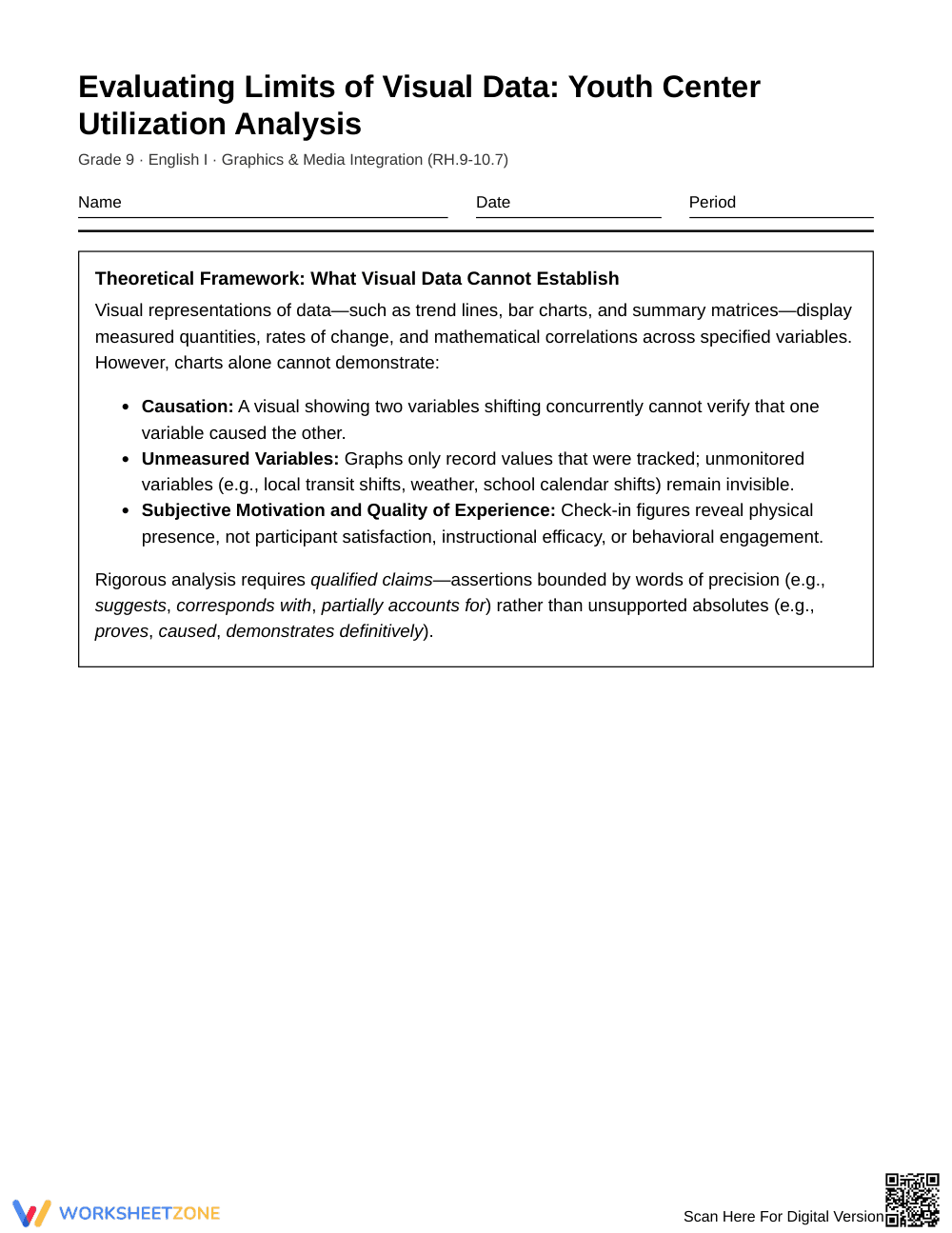
This Grade 9 worksheet trains students to identify the evidentiary boundaries of visual data. Learners analyze youth center attendance logs alongside narrative context, discovering why charts cannot establish causation or unmeasured variables. Through 8 structured tasks, students practice distinguishing verifiable trends from unsupported claims.
At a Glance
- Grade: 9 · Subject: English I
- Standard:
RH.9-10.7— Integrate quantitative analysis with qualitative text to evaluate evidentiary limits- Skill Focus: Explain What a Visual Cannot Establish
- Format: 6 pages · 8 problems · Answer key included · PDF
- Best For: Informational text and graphic data analysis
- Time: 45–60 minutes
What's Inside
This 6-page printable resource pairs an institutional case study with 8 analytical tasks. Students analyze a multi-variable table, a trend line graph, and qualitative logs. A complete 3-page answer key provides sample written responses, criteria for qualified claims, and common interpretive errors.
Skill Progression
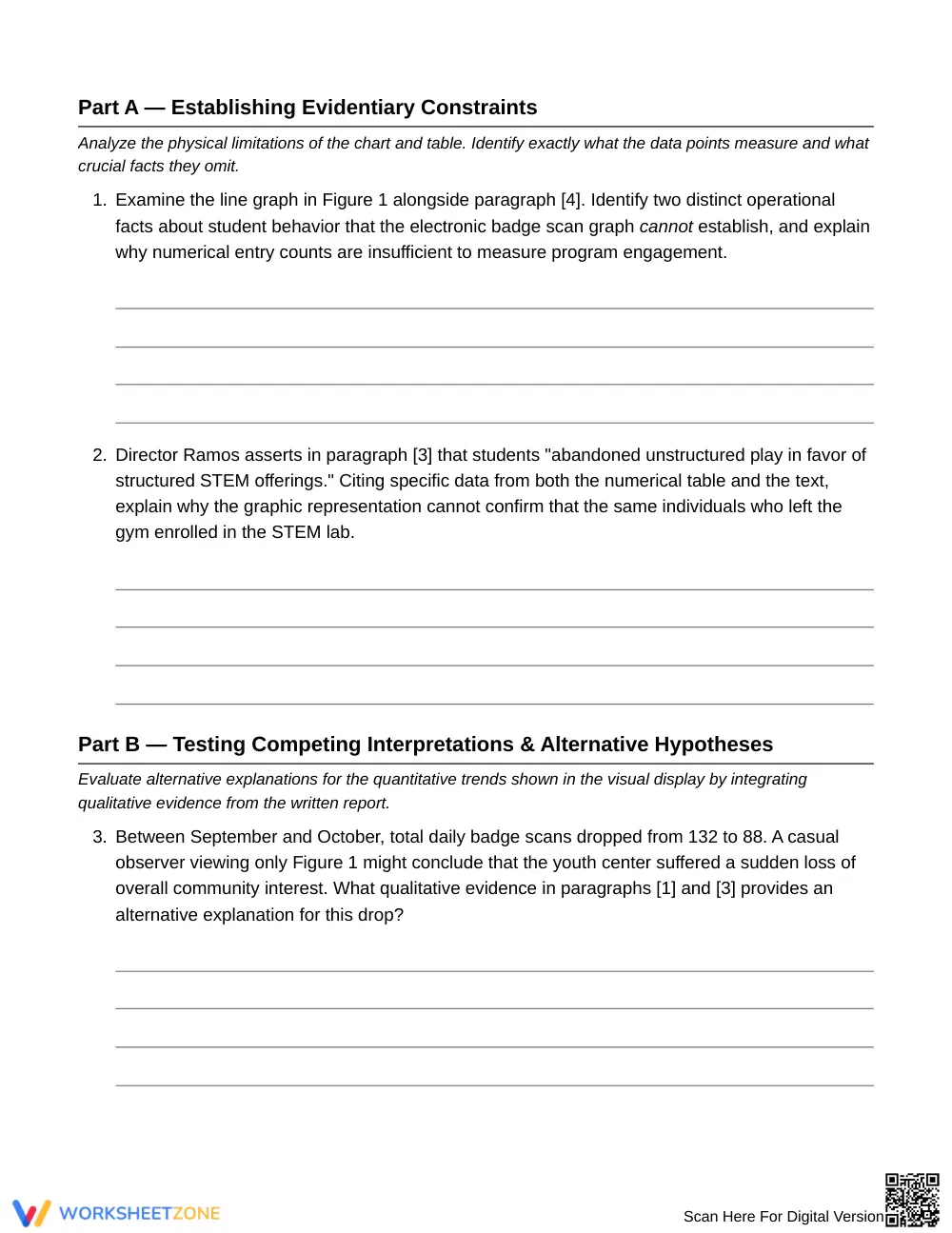
- Guided practice (Part A, 2 tasks): Students identify operational facts omitted from badge scan totals using the theoretical framework.
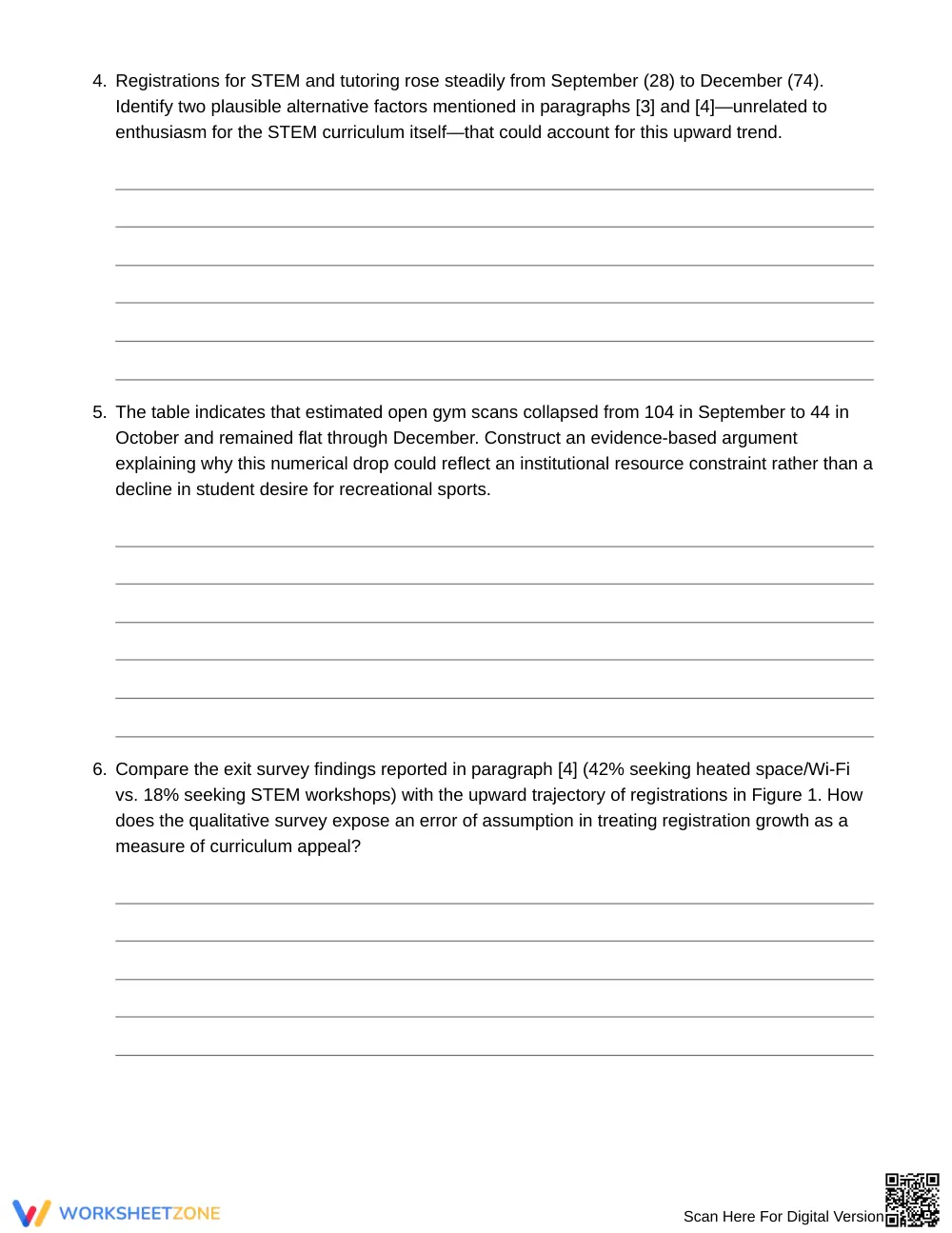
- Supported practice (Part B, 4 tasks): Learners evaluate qualitative factors—such as transit disruptions and weather—to challenge simplistic trend interpretations.
- Independent practice (Part C, 2 tasks): Students critique an absolute claim and draft an evaluative synthesis defending evidence-based conclusions.
This progression applies gradual release to build disciplined analytical reasoning.
Standards Alignment
This resource aligns with `RH.9-10.7`, requiring students to integrate quantitative analysis with qualitative text to evaluate evidentiary limits. It also supports `RI.9-10.8` by evaluating arguments and exposing false causal premises. Both standard codes can be copied directly into lesson plans, IEP goals, or district curriculum mapping tools.
How to Use It
Use this worksheet following direct instruction on argument analysis. In a 45–60 minute session, students read the case study collaboratively before completing Parts A and B in pairs. Formatively monitor whether students identify external variables in Part B before assigning Part C as an independent writing task.
Who It's For
Designed for Grade 9 English I, this resource supports students developing non-fiction synthesis skills. Provide sentence starters for learners writing qualified arguments in Part C. Pair this worksheet with an anchor chart on hedging language or an introductory lesson on correlation versus causation.
Under standard `RH.9-10.7`, ninth-grade students must critically evaluate what visual data cannot establish when integrated with complex qualitative texts. Modern informational literacy requires readers to disentangle simple correlation from proven causation, recognizing that graphic representations frequently omit vital confounding variables such as facility infrastructure, transit schedules, and environmental conditions. According to Fisher & Frey (2014), intentional gradual release instruction enables secondary learners to transition from guided analytical identification to independent qualified synthesis when engaging with complex cross-modal data sets. By interrogating data boundaries within authentic institutional scenarios, students develop crucial analytical skepticism, systematically preventing hasty overgeneralizations across academic tasks. This instructional approach reinforces rigorous academic communication by replacing unjustified absolute declarations with disciplined, evidence-bounded arguments, ensuring high school students acquire the evaluative reading competencies essential for civic participation, technical coursework, and standardized literacy assessments.


