


























Views
Downloads

Grade 5 Decimals — Printable No-Prep Worksheet
Paste this activity's link or code into your existing LMS (Google Classroom, Canvas, Teams, Schoology, Moodle, etc.).
Students can open and work on the activity right away, with no student login required.
You'll still be able to track student progress and results from your teacher account.
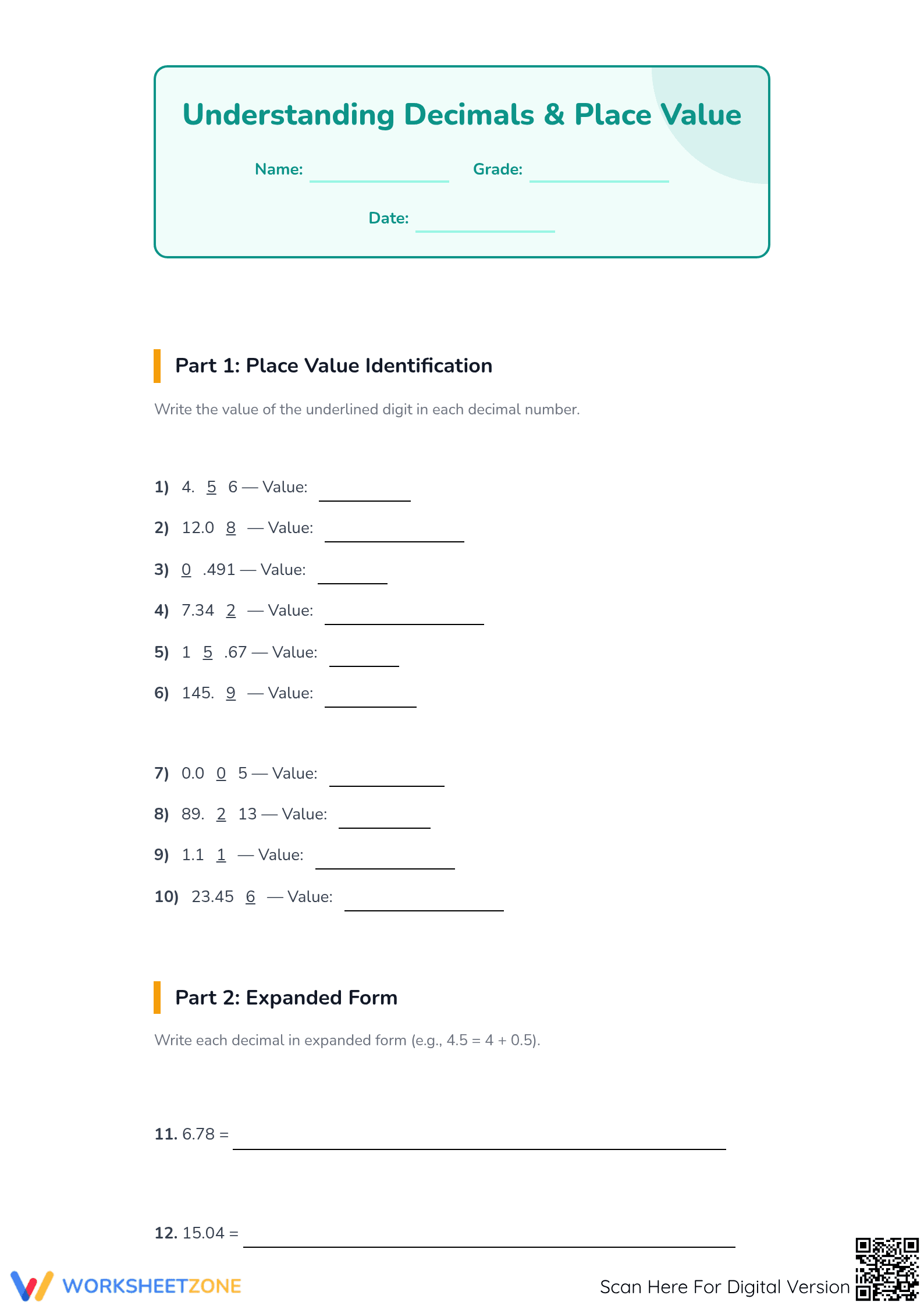
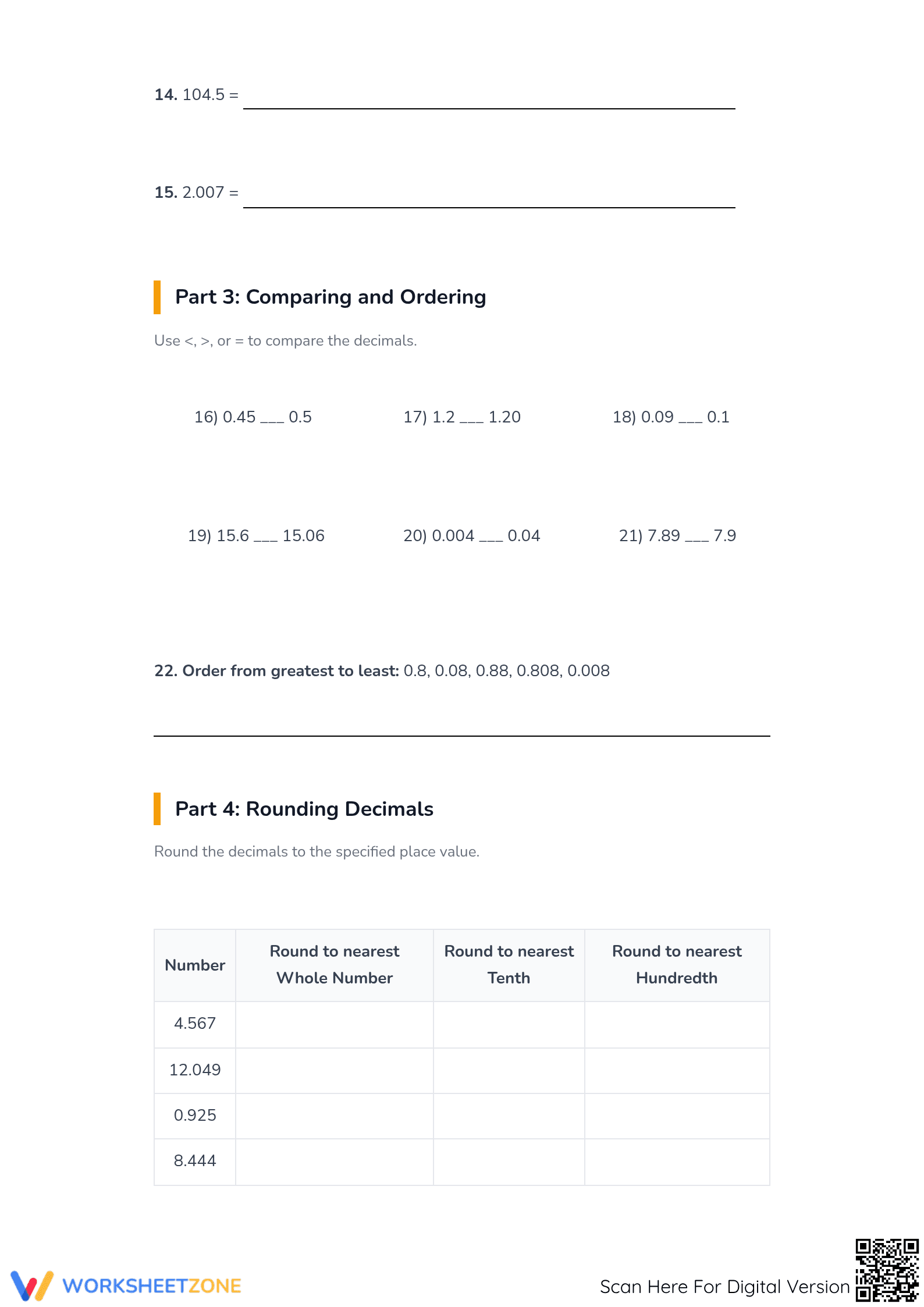
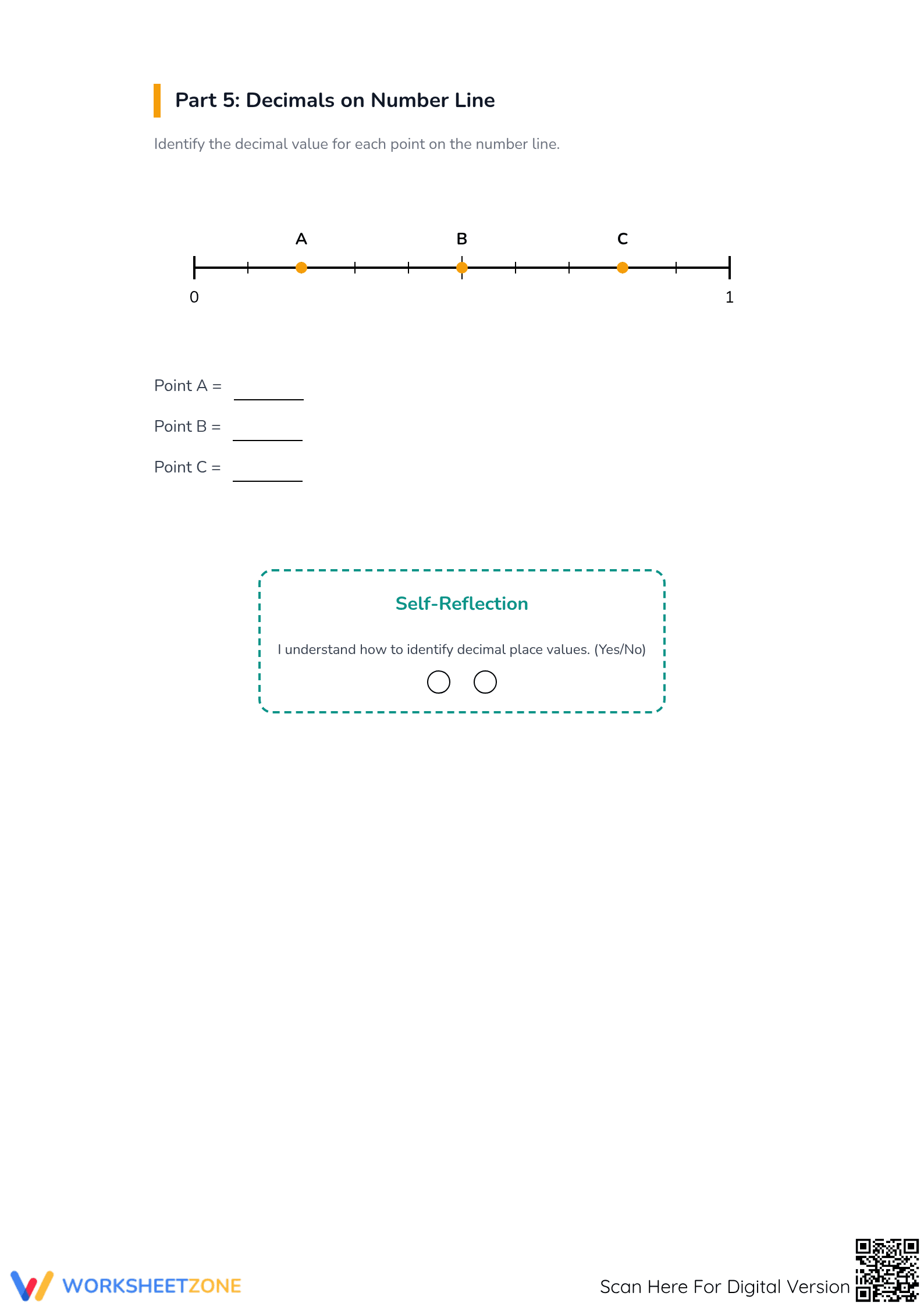
This Grade 5 decimal worksheet provides comprehensive practice for students mastering operations with decimals to the hundredths place. By solving a variety of structured problems, learners build fluency in decimal computation and place value understanding. This resource ensures students can confidently perform decimal operations in various mathematical contexts, bridging the gap between conceptual understanding and procedural mastery.
At a Glance
- Grade: 5 · Subject: Math
- Standard:
5.NBT.B.7— Add, subtract, multiply, and divide decimals to hundredths using strategies based on place value- Skill Focus: Decimal Operations
- Format: 3 pages · 36 problems · Answer key included · PDF
- Best For: Independent practice and formative assessment
- Time: 20–30 minutes
This three-page PDF features 36 carefully sequenced problems designed to reinforce decimal concepts effectively. The worksheet includes a mix of vertical and horizontal alignment to challenge student accuracy and organizational skills. A complete answer key is provided with the download, allowing for quick grading or student self-correction, which is essential for providing immediate feedback during independent work sessions.
Zero-Prep Workflow
This resource is designed for maximum efficiency in busy classrooms. The workflow consists of three simple steps: Print the three-page PDF (30 seconds), Distribute to your Grade 5 learners (1 minute), and Review using the included answer key (5 minutes). Total teacher preparation time is under two minutes, making it an ideal choice for sub plans, morning work, or last-minute instructional needs.
Standards Alignment
This worksheet is strictly aligned to `CCSS.MATH.CONTENT.5.NBT.B.7`, which requires students to add, subtract, multiply, and divide decimals to hundredths using strategies based on place value, properties of operations, and the relationship between addition and subtraction. Both standard codes can be copied directly into lesson plans, IEP goals, or district curriculum mapping tools to ensure instructional compliance.
How to Use It
Assign this worksheet as an independent practice set during a decimal operations unit to gauge student mastery of the concept. It also functions as an effective formative assessment tool; teachers can observe students as they work through the problems to identify common misconceptions regarding decimal point placement or regrouping. Expected completion time for the full set is approximately 25 minutes.
Who It's For
This resource is tailored for Grade 5 students who are developing their fluency with multi-digit decimal operations. It supports general education learners and provides necessary repetition for students requiring additional intervention. It pairs naturally with a decimal place value anchor chart or a direct instruction lesson on aligning decimal points during addition and subtraction.
According to the RAND AIRS 2024 report, high-quality, standards-aligned instructional materials are critical for closing achievement gaps in elementary mathematics. This Grade 5 worksheet addresses the `5.NBT.B.7` standard by providing focused practice on decimal operations, a key component of the Number & Operations in Base Ten domain. Research from Fisher & Frey (2014) emphasizes that gradual release of responsibility, supported by structured practice like this 36-problem set, leads to higher retention of mathematical procedures. By engaging with these decimal tasks, students transition from guided instruction to independent mastery. This printable resource serves as a reliable tool for educators seeking to align their daily activities with rigorous state and national frameworks, ensuring that students meet the proficiency benchmarks required for success in middle school mathematics and beyond. Such targeted practice is essential for building the procedural fluency that underpins more complex algebraic thinking in later grades.


