


























Views
Downloads
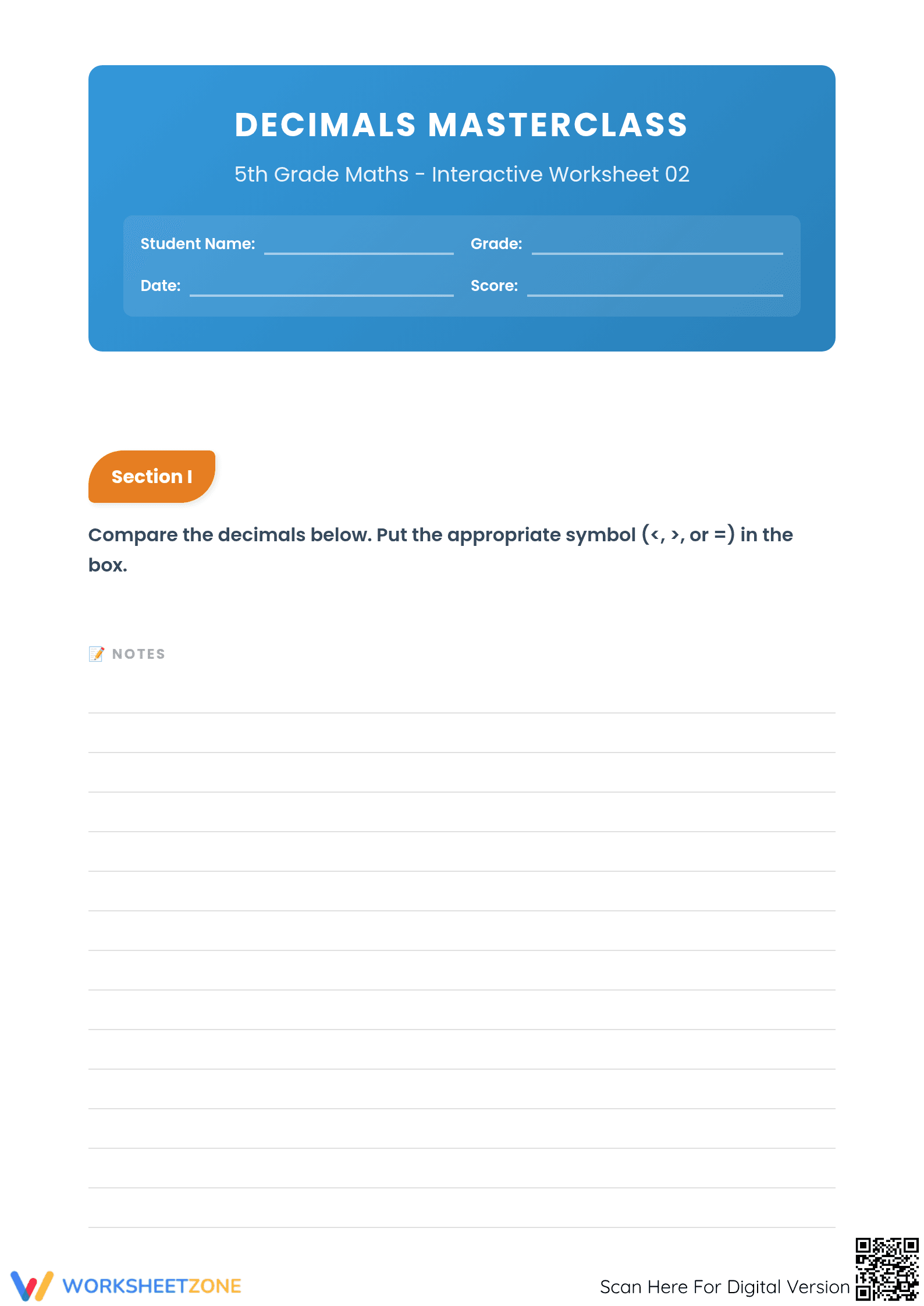

Grade 5 Decimals Masterclass: Essential Printable Worksheet
Paste this activity's link or code into your existing LMS (Google Classroom, Canvas, Teams, Schoology, Moodle, etc.).
Students can open and work on the activity right away, with no student login required.
You'll still be able to track student progress and results from your teacher account.
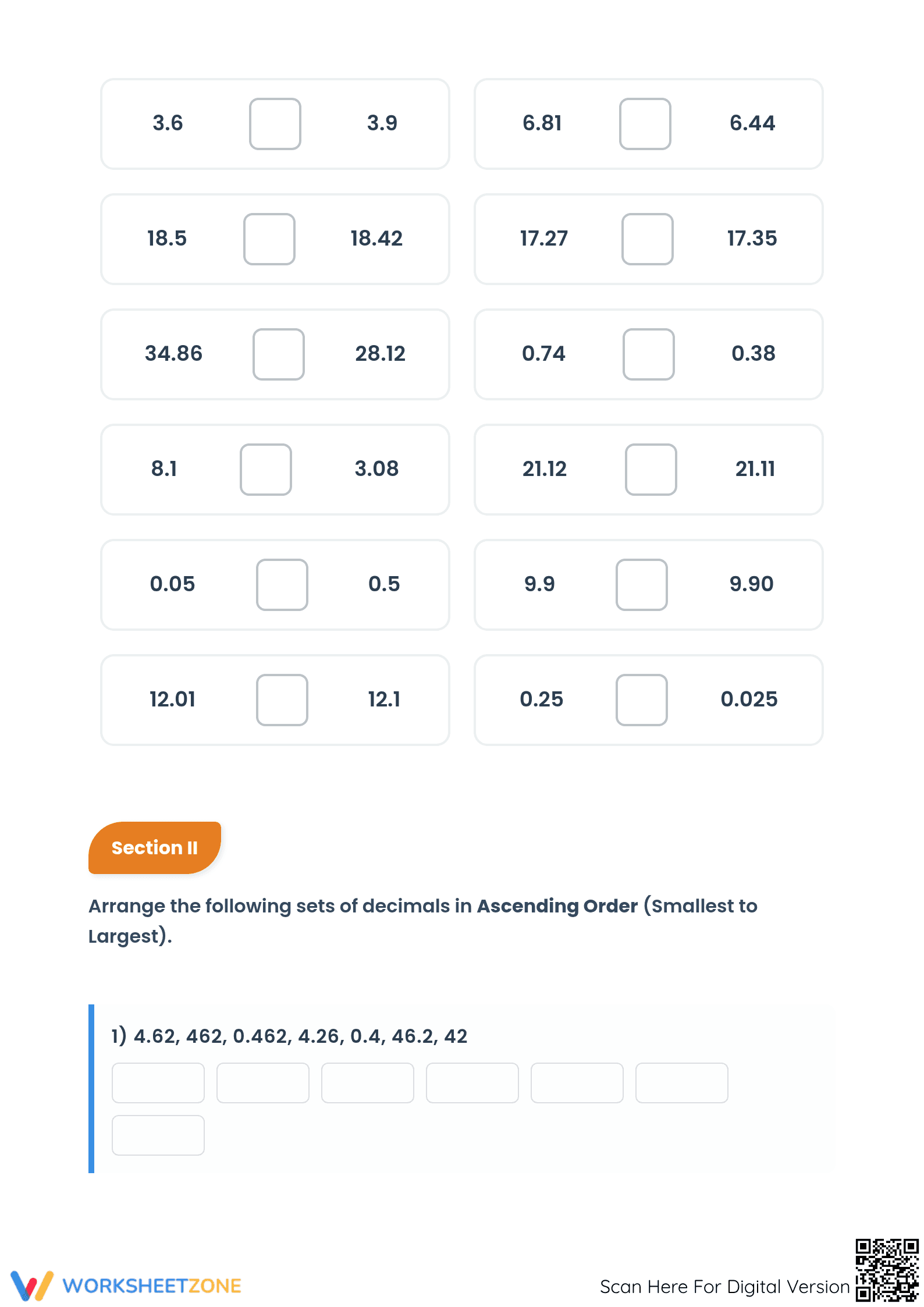
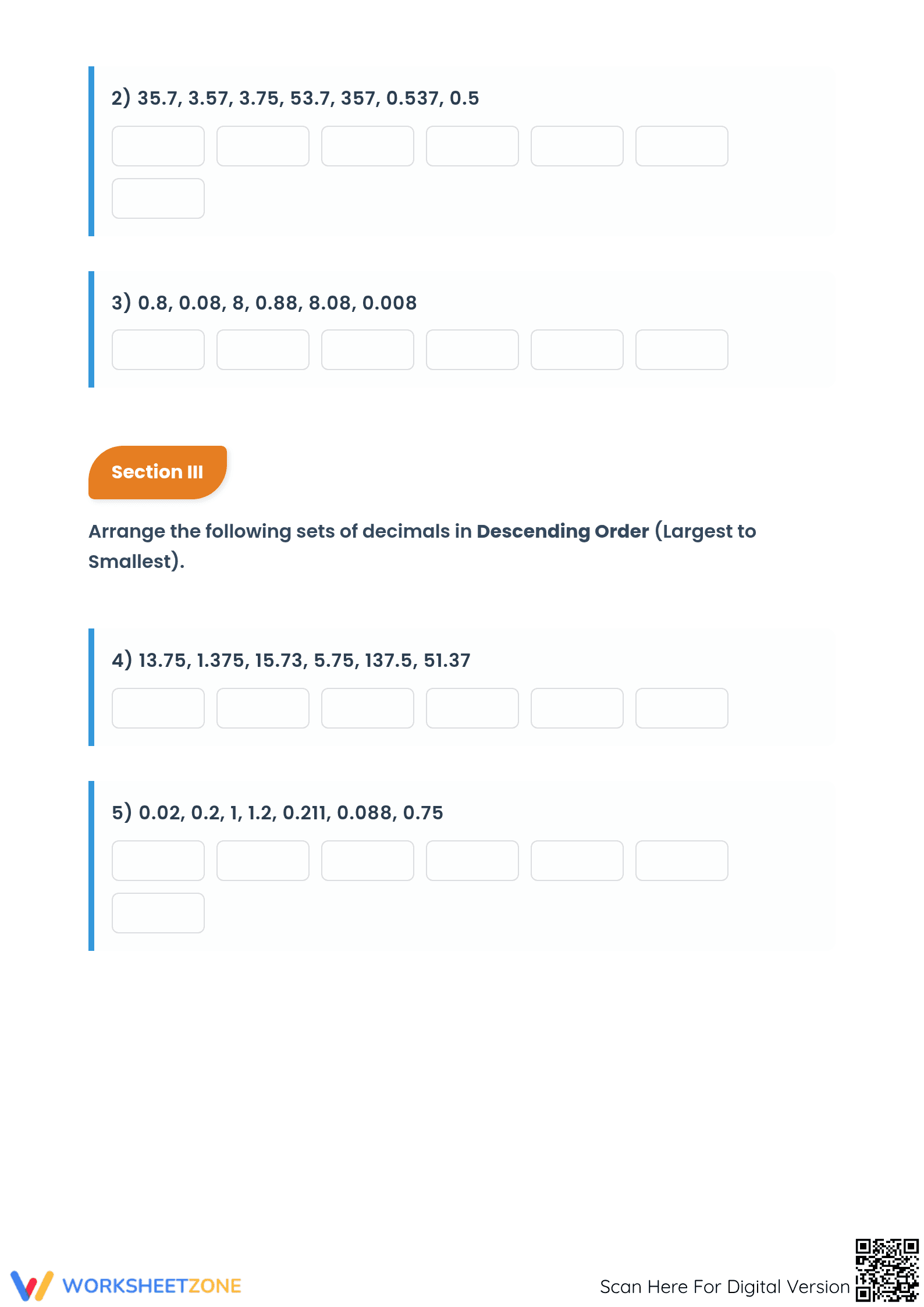
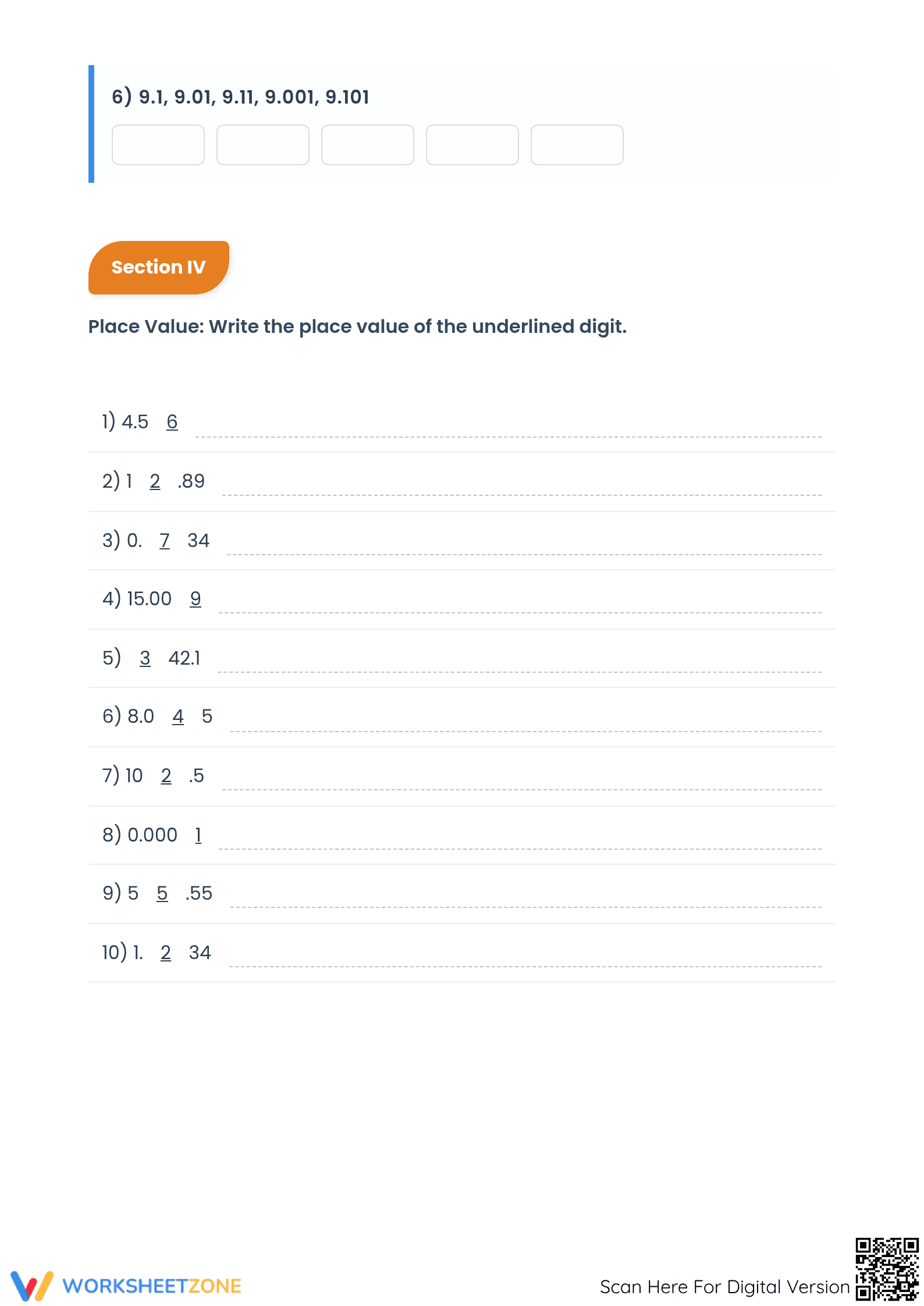
This Grade 5 Decimals Masterclass worksheet provides comprehensive practice for students to master decimal place value, comparing decimals, and converting between forms. By engaging with these structured exercises, students develop deep fluency with hundredths and thousandths. It transitions students from basic identification to complex numerical representations.
At a Glance
- Grade: 5th Grade · Subject: Fifth Grade Mathematics
- Standard:
CCSS.MATH.CONTENT.5.NBT.A.3— Read, write, and compare decimals to thousandths accurately using multiple notation systems- Skill Focus: Place value recognition and decimal comparison mastery
- Format: 5 comprehensive pages · 20 structured problems · Full answer key included · High-resolution PDF
- Best For: Grade-level independent practice, homework, and decimal mastery reinforcement
- Time: 25–40 minutes of focused student work time
What's Inside
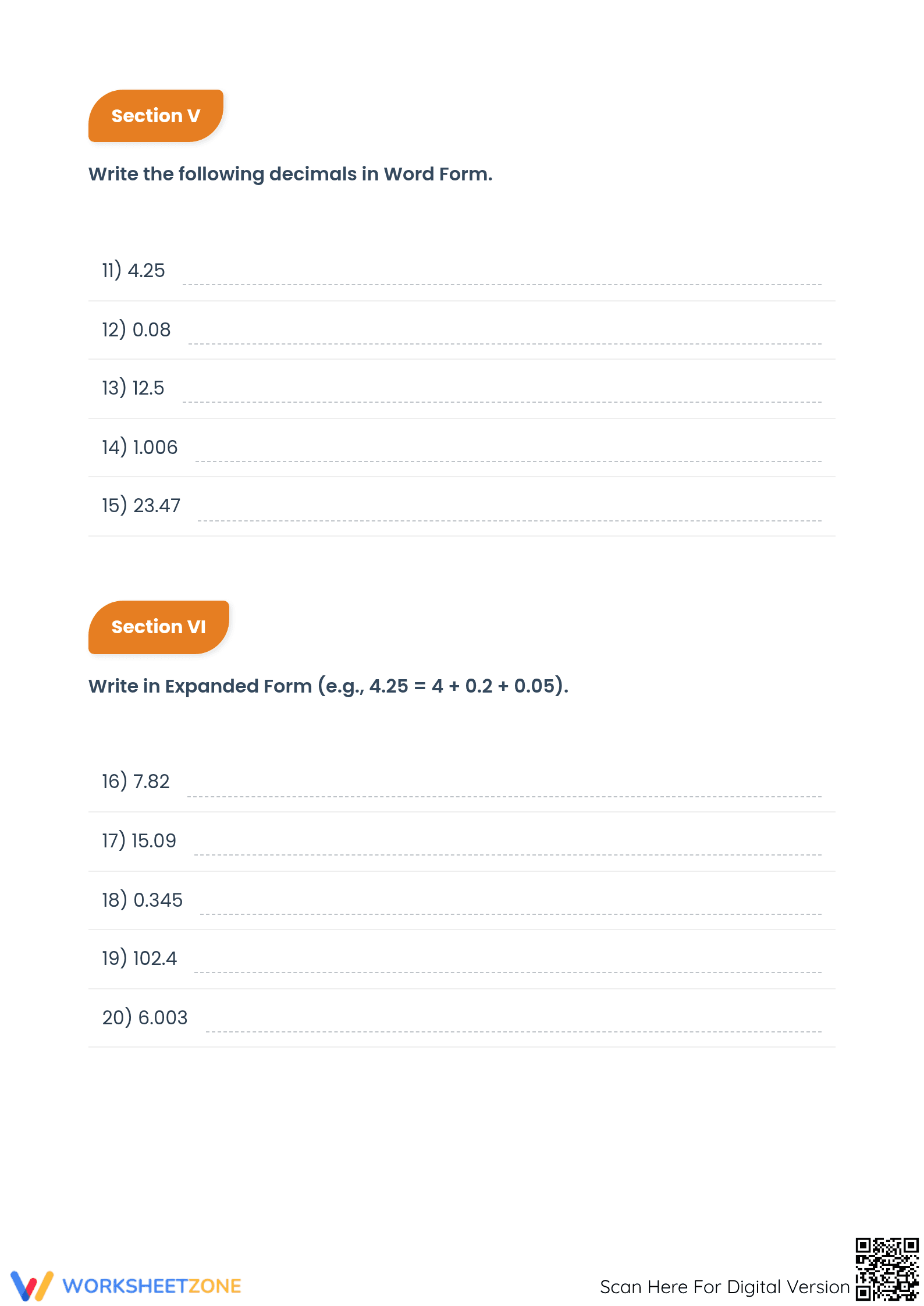
This 5-page packet features six distinct sections designed to build decimal proficiency. It includes tasks for comparing values using inequality symbols, writing decimals in word form, and decomposing numbers into expanded form. The clear layout provides workspace for student notes, and a complete answer key is included for immediate feedback.
Zero-Prep Workflow
- Step 1: Print — Select "Actual Size" to ensure decimal points are clearly legible for student work (20 seconds).
- Step 2: Distribute — Hand out the 5-page packet as a unit or separate pages for targeted daily bell-ringers (40 seconds).
- Step 3: Review — Use the included answer key to grade work or allow student self-correction (1 minute).
Standards Alignment
Primary alignment is CCSS.MATH.CONTENT.5.NBT.A.3: Read, write, and compare decimals to thousandths. The worksheet addresses 5.NBT.A.3.A (Read and write decimals using base-ten numerals and expanded form) and 5.NBT.A.3.B (Compare two decimals). This code can be copied directly into lesson plans or IEP goals.
How to Use It
Use this as a summative assessment after a unit on decimals to gauge individual mastery. Alternatively, it serves as an excellent zero-prep sub plan; the "Masterclass" structure and included examples allow students to work with minimal intervention. Observe students as they compare decimals to see if they line up place values.
Who It's For
Designed for Grade 5 learners, this resource is effective for students needing structured reinforcement of decimal concepts. It supports differentiation, allowing teachers to assign specific pages based on needs. It pairs perfectly with an interactive place value anchor chart or a digital decimal conversion tool for extra support.
The CCSS.MATH.CONTENT.5.NBT.A.3 standard is a critical milestone in elementary mathematics, bridging the gap between whole number place value and fractional reasoning. According to NAEP analysis, students who master decimal representation and comparison in the 5th grade demonstrate significantly higher success rates in middle school algebra and statistics. This worksheet focuses on the high-utility skill of translating between numerical, verbal, and expanded forms, which reinforces the underlying base-ten structure of our number system. Research from ScienceDirect suggests that repeated, scaffolded practice with decimal forms reduces "whole-number bias," where students incorrectly apply whole-number rules to decimals. Furthermore, recent EdReports findings emphasize that standard-aligned worksheets are vital for maintaining curriculum coherence across varied learning environments. By providing twenty targeted problems across five pages, this resource ensures students move beyond surface-level recognition to a deep, procedural fluency that is essential for complex multi-step problem solving in later grades.


