


























Views
Downloads

Printable Sentence Scramble Worksheet | Grade 3 ELA
Paste this activity's link or code into your existing LMS (Google Classroom, Canvas, Teams, Schoology, Moodle, etc.).
Students can open and work on the activity right away, with no student login required.
You'll still be able to track student progress and results from your teacher account.
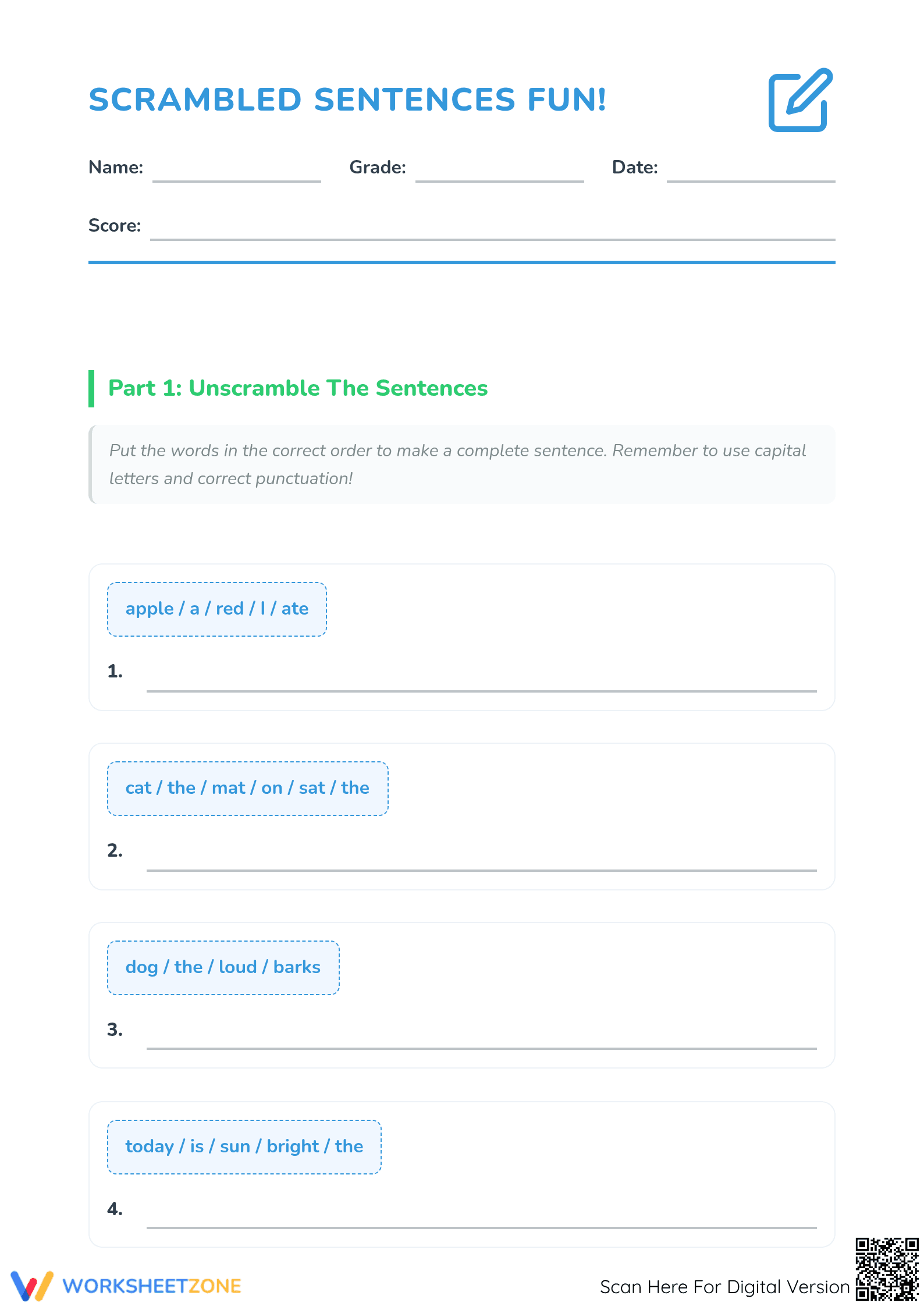
This Grade 3 sentence scramble worksheet helps students master word order and sentence structure. By unscrambling words to form complete thoughts, learners practice essential grammar rules, including capitalization and punctuation. This resource provides a clear, structured approach to building strong foundational writing skills.
At a Glance
- Grade: 3 · Subject: ELA
- Standard:
CCSS.ELA-LITERACY.L.3.1— Produce complete sentences with proper word order- Skill Focus: Sentence Structure and Word Order
- Format: 5 pages · 23 problems · Answer key included · PDF
- Best For: Independent practice and grammar review
- Time: 25–35 minutes
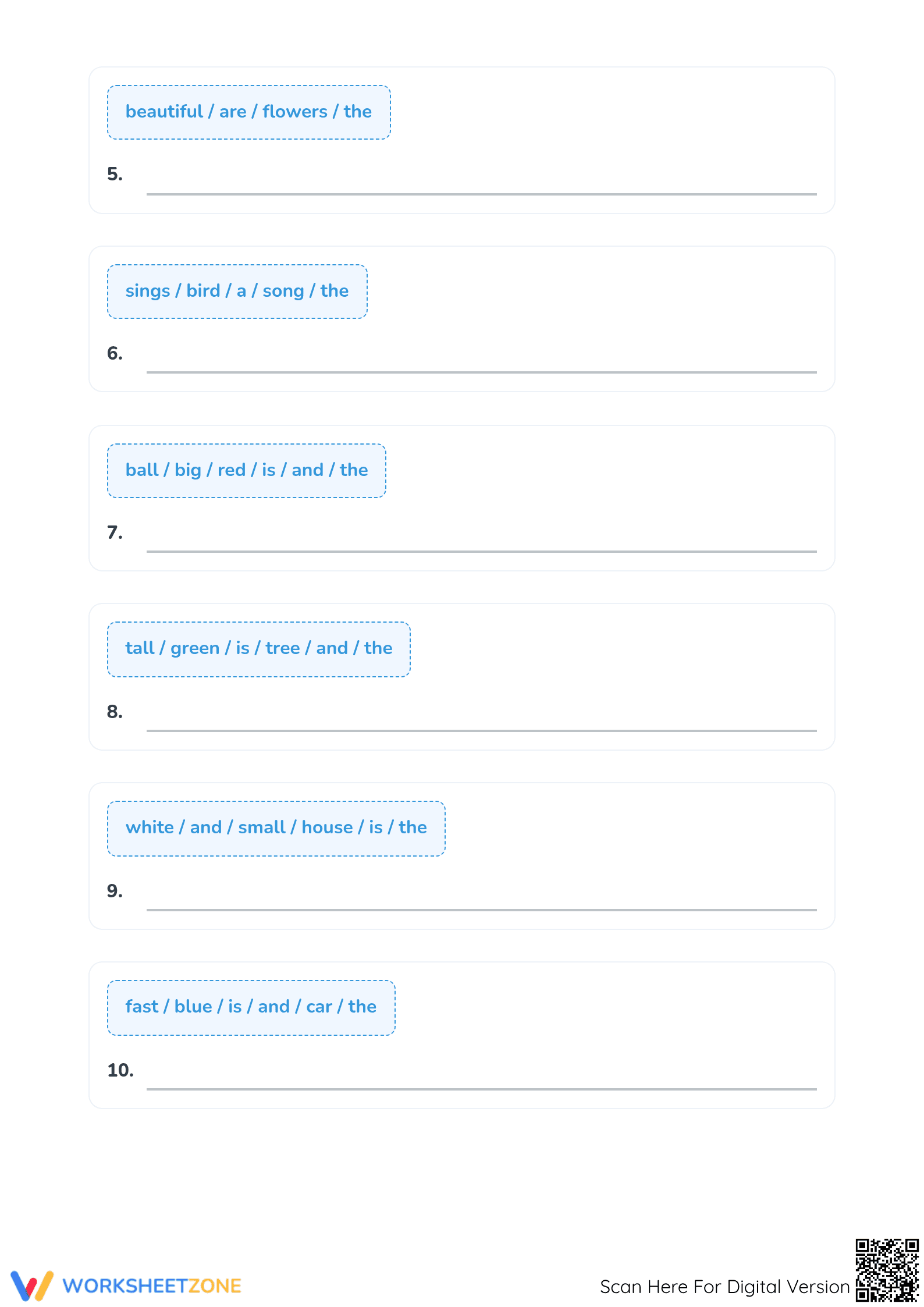
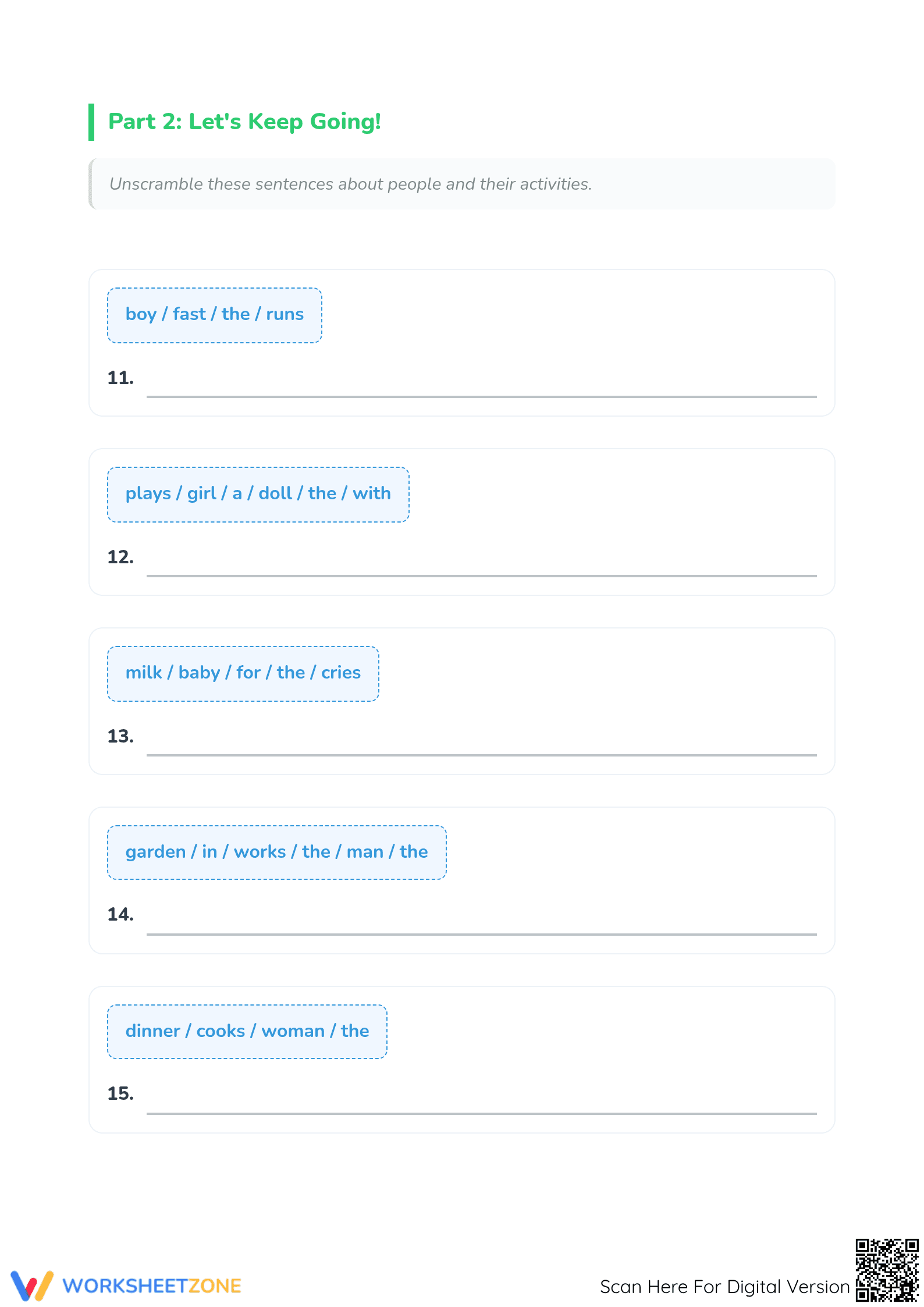
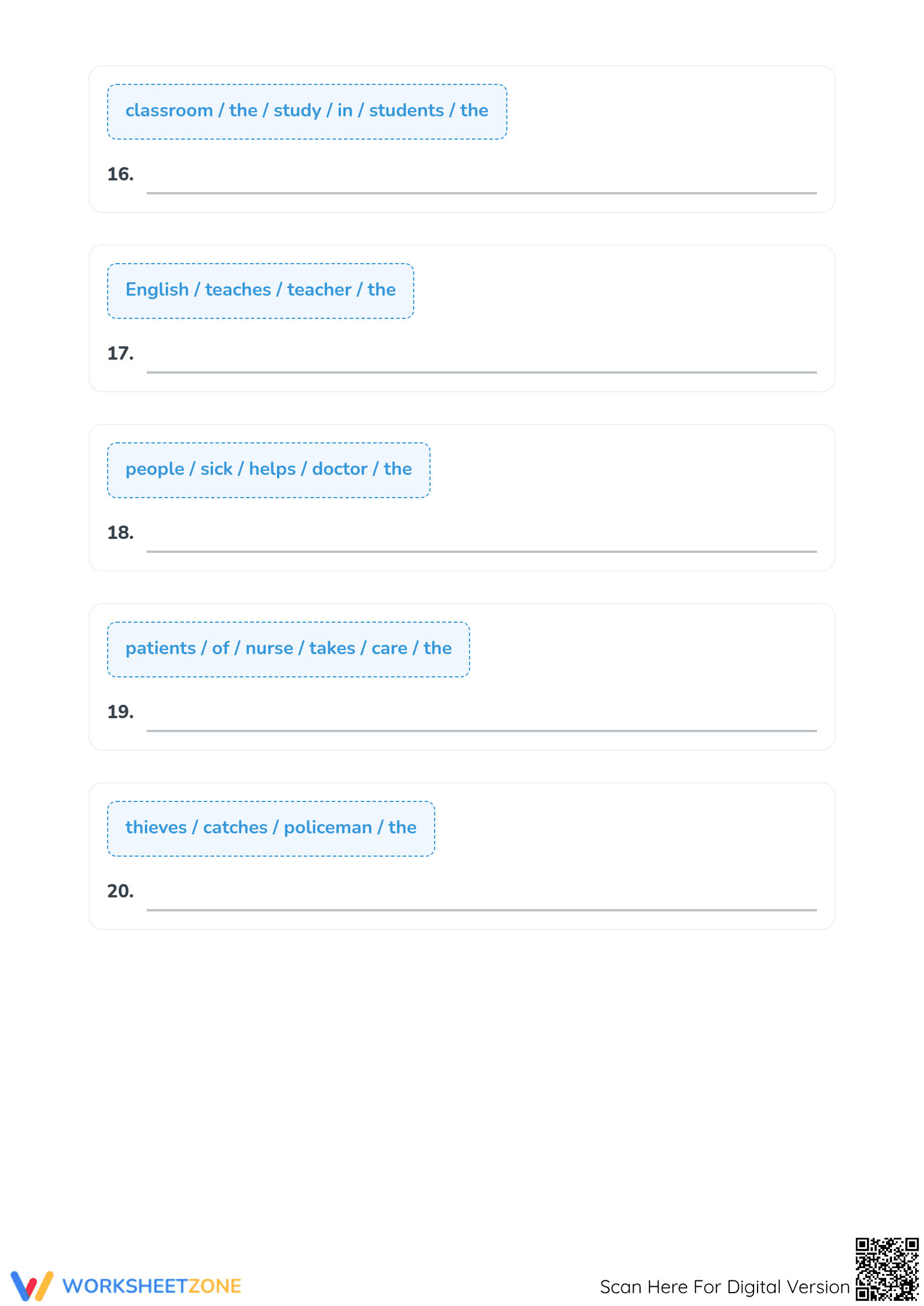
This comprehensive five-page packet features 23 distinct tasks designed to reinforce sentence mechanics. Students will find 20 scrambled sentence problems divided into two thematic sections, followed by a creative writing component where they generate their own scrambled puzzles. The layout includes clear word banks in dashed boxes and ample writing space on primary lines. A complete five-page answer key is provided for quick and accurate grading.
- Guided practice: Part 1 introduces 10 straightforward scrambled sentences using familiar vocabulary, allowing students to focus purely on basic syntax and capitalization.
- Supported practice: Part 2 offers 10 slightly more complex sentences about people and their activities, challenging students to apply their understanding of subject-verb agreement and phrasing.
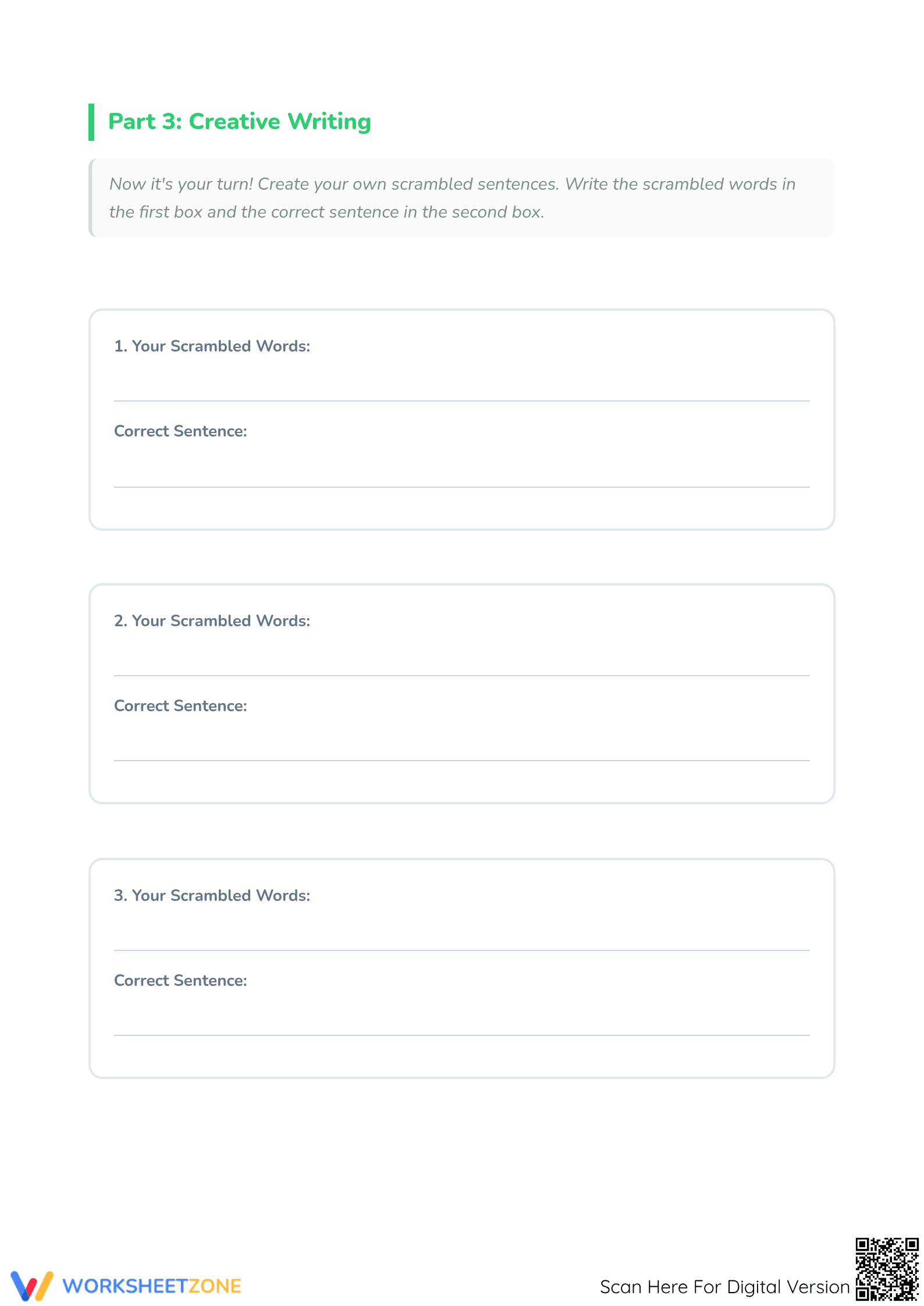
- Independent practice: Part 3 requires students to create three of their own scrambled word sets and provide the correct sentences, demonstrating full mastery of the concept.
This gradual-release model ensures students build confidence as they move from structured unscrambling to independent sentence creation.
This resource is directly aligned to CCSS.ELA-LITERACY.L.3.1, which requires students to demonstrate command of the conventions of standard English grammar and usage when writing or speaking. It also supports capitalization and punctuation standards by reminding students to apply these mechanics to every sentence they construct. Both standard codes can be copied directly into lesson plans, IEP goals, or district curriculum mapping tools.
Deploy this worksheet during your literacy block after a mini-lesson on sentence structure. It serves as an excellent independent center activity while the teacher pulls small groups for targeted reading instruction. As a formative assessment tip, observe whether students consistently capitalize the first word and add ending punctuation before they move on to the creative writing section. Expected completion time is 25 to 35 minutes.
This resource is ideal for third-grade students who need targeted reinforcement in basic grammar and syntax. The clear visual boundaries and dashed word boxes provide built-in scaffolding for English Language Learners or students receiving special education support. Pair this activity with a classroom anchor chart on "What Makes a Complete Sentence?" to maximize student success.
Mastering word order and syntax is a critical component of early literacy development in elementary classrooms. According to a recent EdReports 2024 analysis, explicit instruction in sentence construction significantly improves overall reading comprehension and written expression. When students practice unscrambling words to produce complete sentences with proper word order, as outlined in CCSS.ELA-LITERACY.L.3.1, they internalize the grammatical structures necessary for fluent communication. Activities that require learners to manipulate sentence parts help bridge the gap between isolated grammar drills and authentic writing tasks. By engaging with these targeted exercises, students develop the cognitive flexibility required to decode complex texts and articulate their own thoughts clearly. This foundational skill set not only supports immediate academic requirements but also fosters long-term proficiency in both expressive and receptive language domains across all subject areas.


