


























Views
Plays


John Keats Poetry Analysis | Grade 5 Essential Worksheet
Paste this activity's link or code into your existing LMS (Google Classroom, Canvas, Teams, Schoology, Moodle, etc.).
Students can open and work on the activity right away, with no student login required.
You'll still be able to track student progress and results from your teacher account.
This Grade 5 literature worksheet guides students through a comprehensive analysis of John Keats' classic poem, "On the Grasshopper and Cricket." By engaging with structured questions, learners identify central themes, seasonal symbols, and poetic structure. The activities ensure students move beyond surface-level reading to a deeper appreciation of nature-focused imagery and lyrical expression.
At a Glance
- Grade: 5 · Subject: ELA Literature
- Standard:
CCSS.ELA-LITERACY.RL.5.2— Determine a theme of a poem and summarize the text- Skill Focus: Poetry Analysis & Theme Identification
- Format: 4 pages · 9 problems · Answer key included · PDF
- Best For: Poetry units and reading comprehension practice
- Time: 30–45 minutes
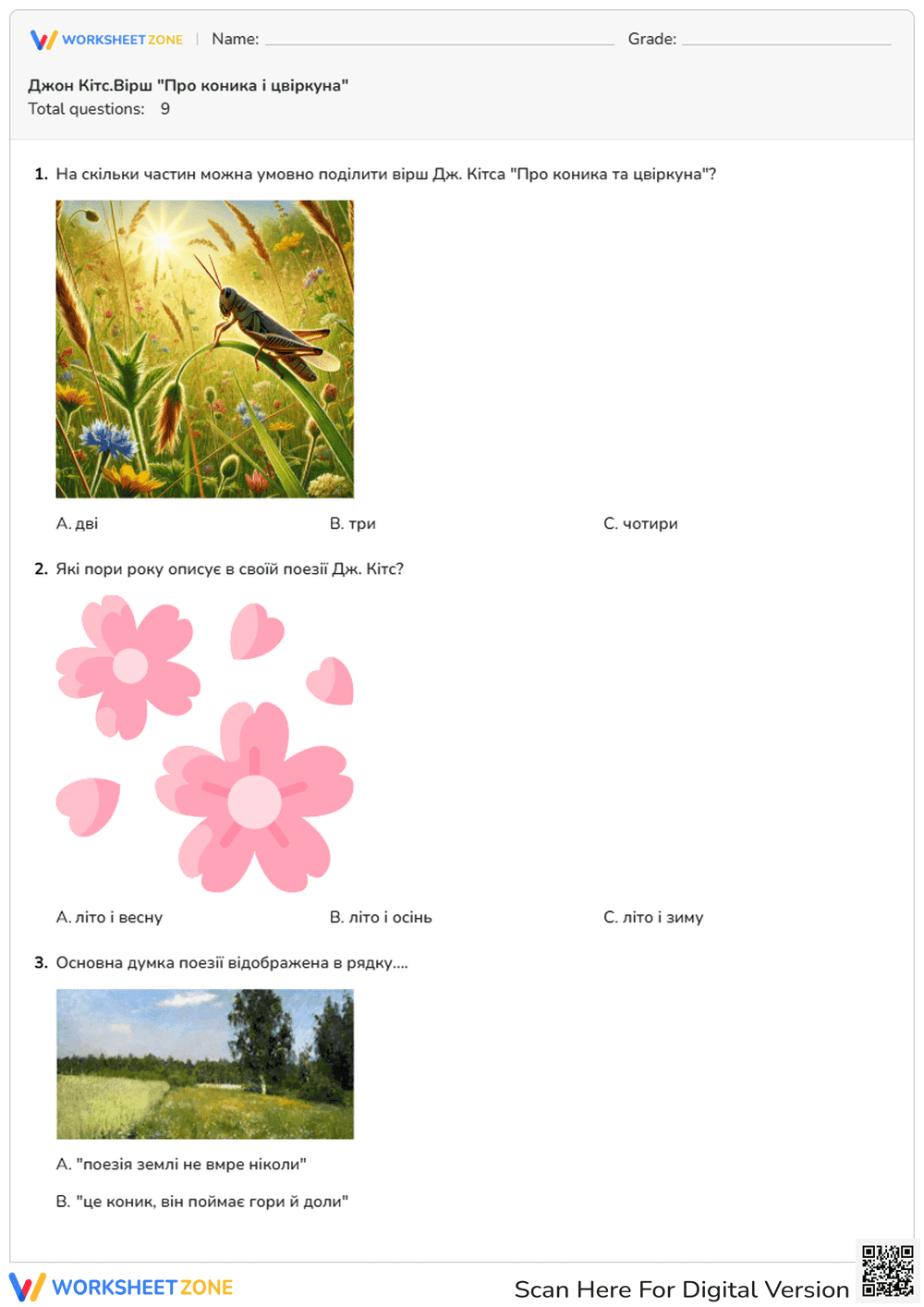
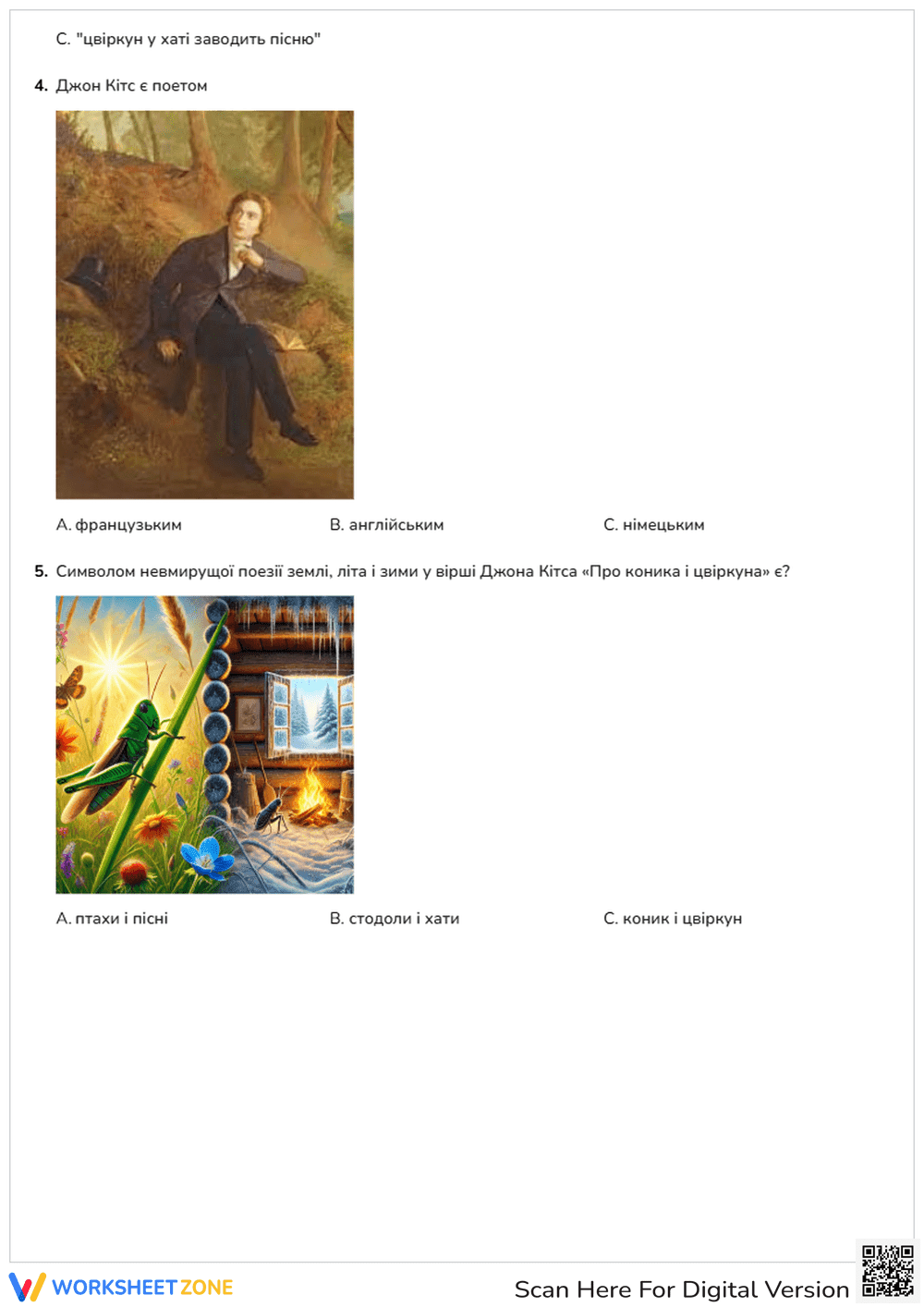
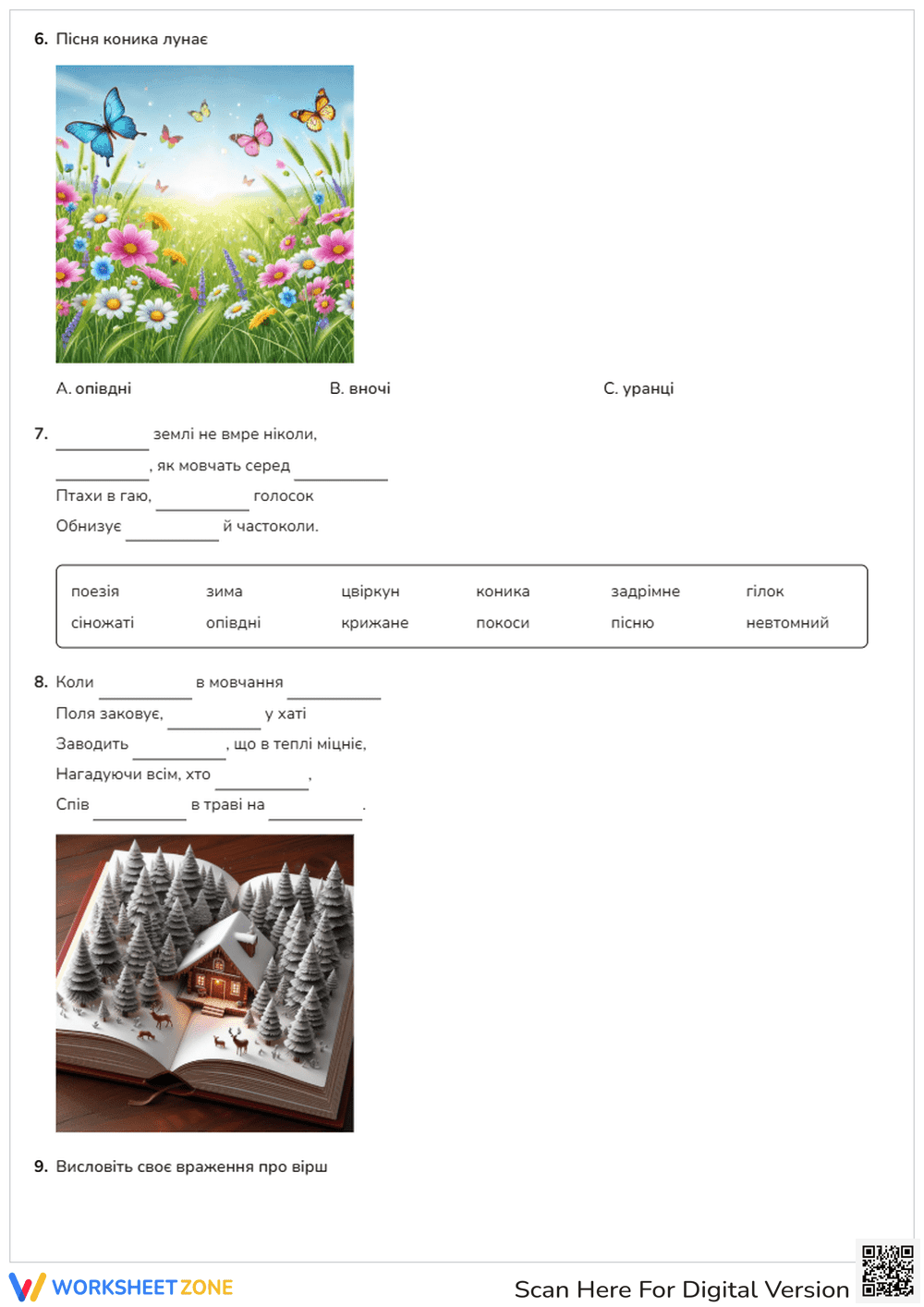
The 4-page PDF contains a balanced mix of assessment styles. It features 6 multiple-choice questions supported by visual cues, a word-bank-driven cloze activity for 2 stanzas, and a dedicated reflection page for open-ended responses. The layout includes vibrant illustrations that help students visualize the grasshopper and cricket, making the 19th-century text more accessible to modern learners.
- Guided Practice: The first 6 questions use multiple-choice formats and visual aids to help students identify basic facts about the poet, the poem's structure, and primary symbols.
- Supported Practice: Tasks 7 and 8 utilize a word bank to help students reconstruct key lines of the poem, reinforcing vocabulary and rhythmic awareness.
- Independent Practice: The final task requires a written reflection where students express their personal impressions, demonstrating a synthesis of the poem's emotional impact.
This sequence follows a gradual-release model, moving from recognition to application and finally to creative evaluation.
Standards Alignment
This resource is aligned with CCSS.ELA-LITERACY.RL.5.2, which requires students to determine a theme of a poem from details in the text and summarize the content. It also supports RL.5.4 by focusing on how the poet uses imagery and seasonal metaphors to convey meaning. Both standard codes can be copied directly into lesson plans, IEP goals, or district curriculum mapping tools.
How to Use It
Use this worksheet during the "during reading" phase of a poetry unit to check for understanding of Keats' work. It serves as an excellent formative assessment tool; teachers should observe how students use the word bank in the cloze section to gauge their grasp of poetic diction. Expect completion within 30 to 45 minutes depending on the depth of the final reflection.
Who It's For
This resource is designed for Grade 5 students, including English Language Learners who benefit from the visual supports provided alongside the text. It pairs naturally with an anchor chart on personification or a direct instruction lesson on Romantic-era nature poetry.
According to the RAND AIRS 2024 report, structured poetry analysis that combines visual scaffolding with text-dependent questions significantly improves reading comprehension scores for upper elementary students. This worksheet addresses CCSS.ELA-LITERACY.RL.5.2 by requiring students to identify how the speaker reflects upon the "poetry of earth" through the contrasting seasons of summer and winter. By utilizing a 9-task progression that includes multiple-choice, cloze, and open-ended reflection, the material ensures that learners engage with the text at various cognitive levels. Research from Fisher & Frey (2014) emphasizes that such multi-modal approaches—integrating imagery with word-bank supports—help bridge the gap between literal understanding and thematic mastery. This 4-page PDF provides a complete instructional cycle, making it a reliable tool for teachers aiming to meet rigorous state standards while maintaining high student engagement through nature-themed literary exploration.


