


























Views
Downloads

Long Vowel A Worksheet | Grade K ELA Printable
Paste this activity's link or code into your existing LMS (Google Classroom, Canvas, Teams, Schoology, Moodle, etc.).
Students can open and work on the activity right away, with no student login required.
You'll still be able to track student progress and results from your teacher account.
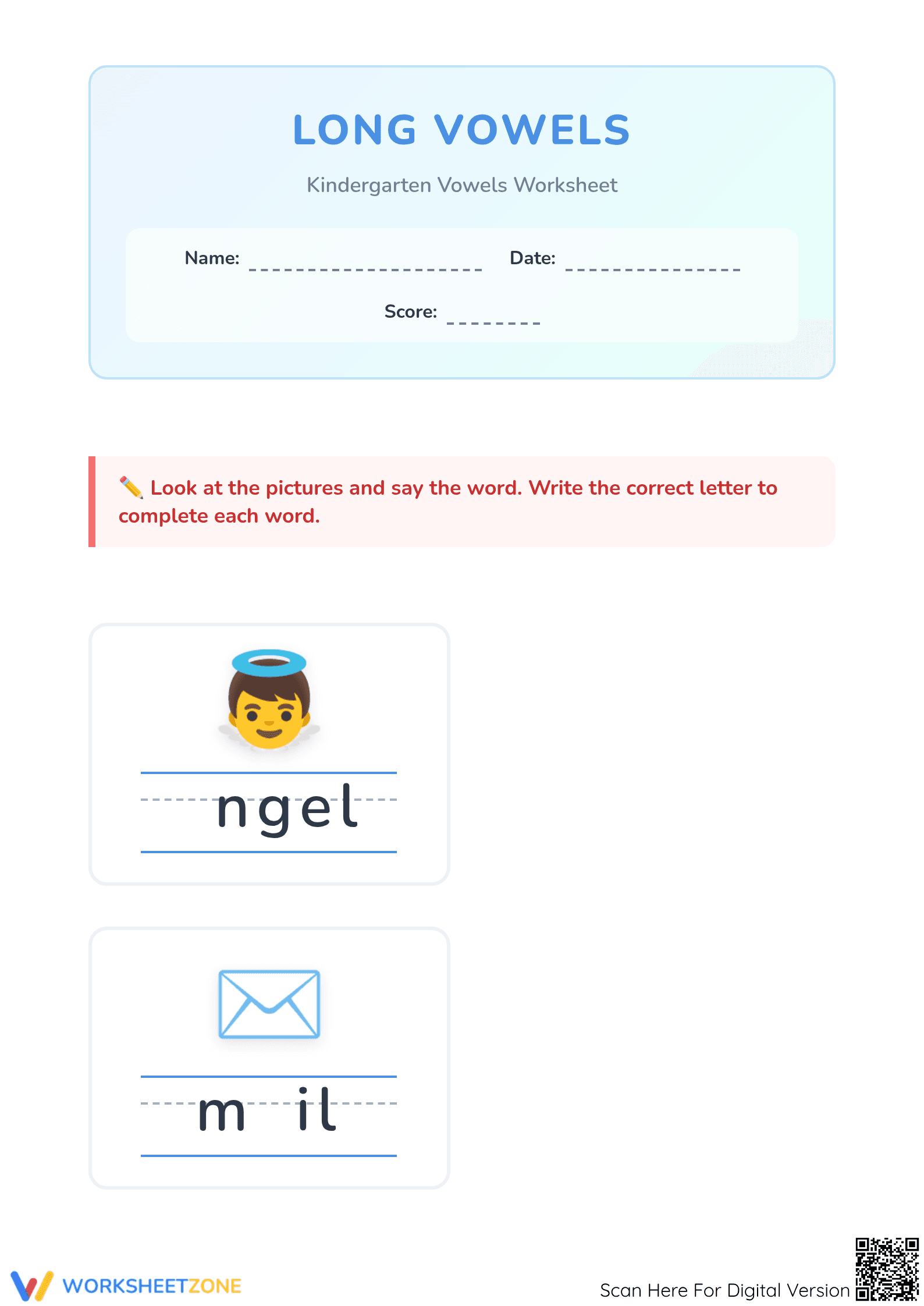
This printable long vowel A worksheet helps early readers connect spoken sounds to written letters. By looking at familiar pictures and filling in the missing vowel spelling, students build essential phonics skills and improve their spelling accuracy for common words featuring the long A sound.
At a Glance
- Grade: Kindergarten · Subject: ELA
- Standard:
CCSS.ELA-LITERACY.RF.K.3.B— Associate long sounds with common vowel spellings- Skill Focus: Long Vowel A Spelling
- Format: 4 pages · 10 problems · Answer key included · PDF
- Best For: Independent phonics practice
- Time: 10–15 minutes
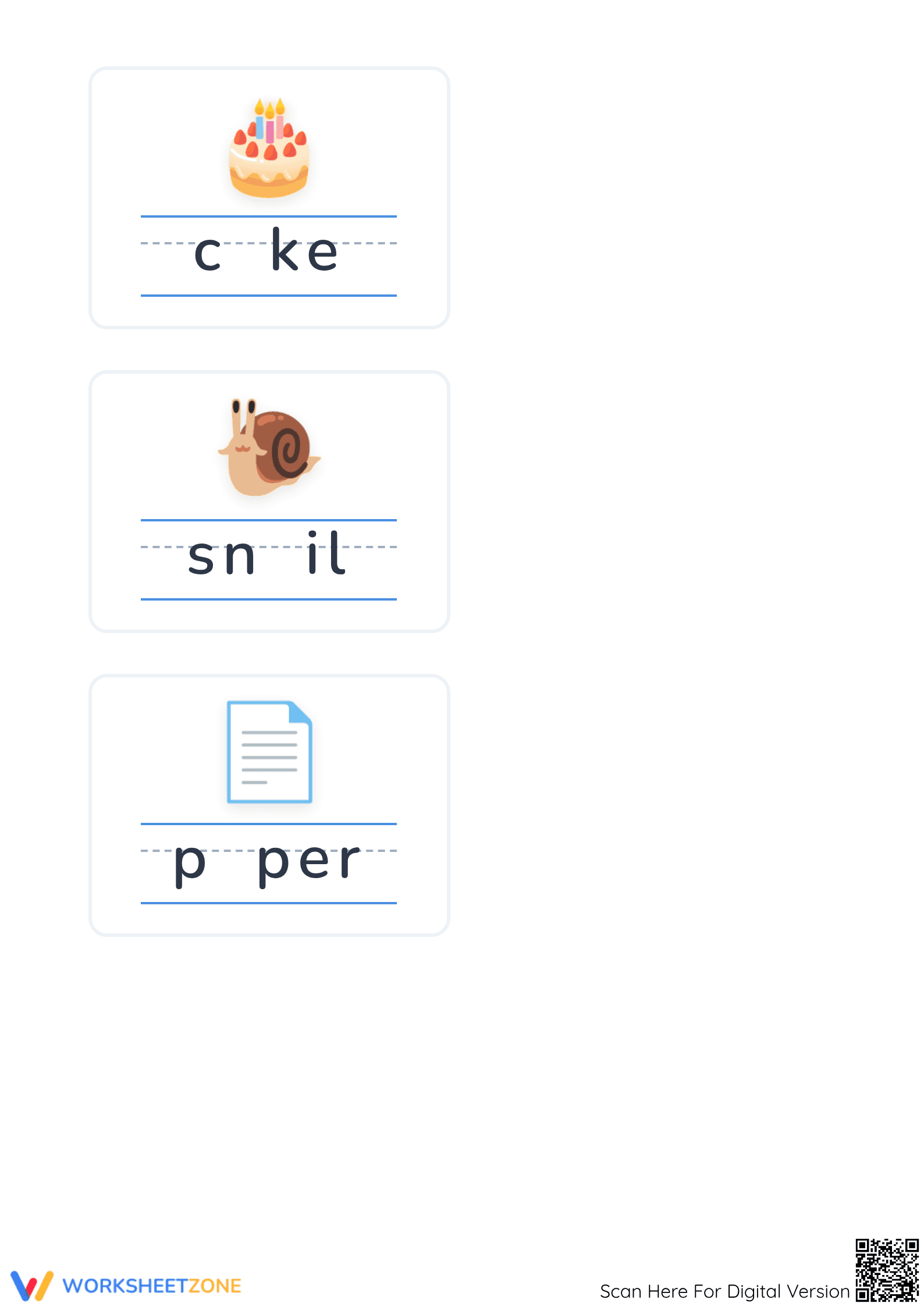
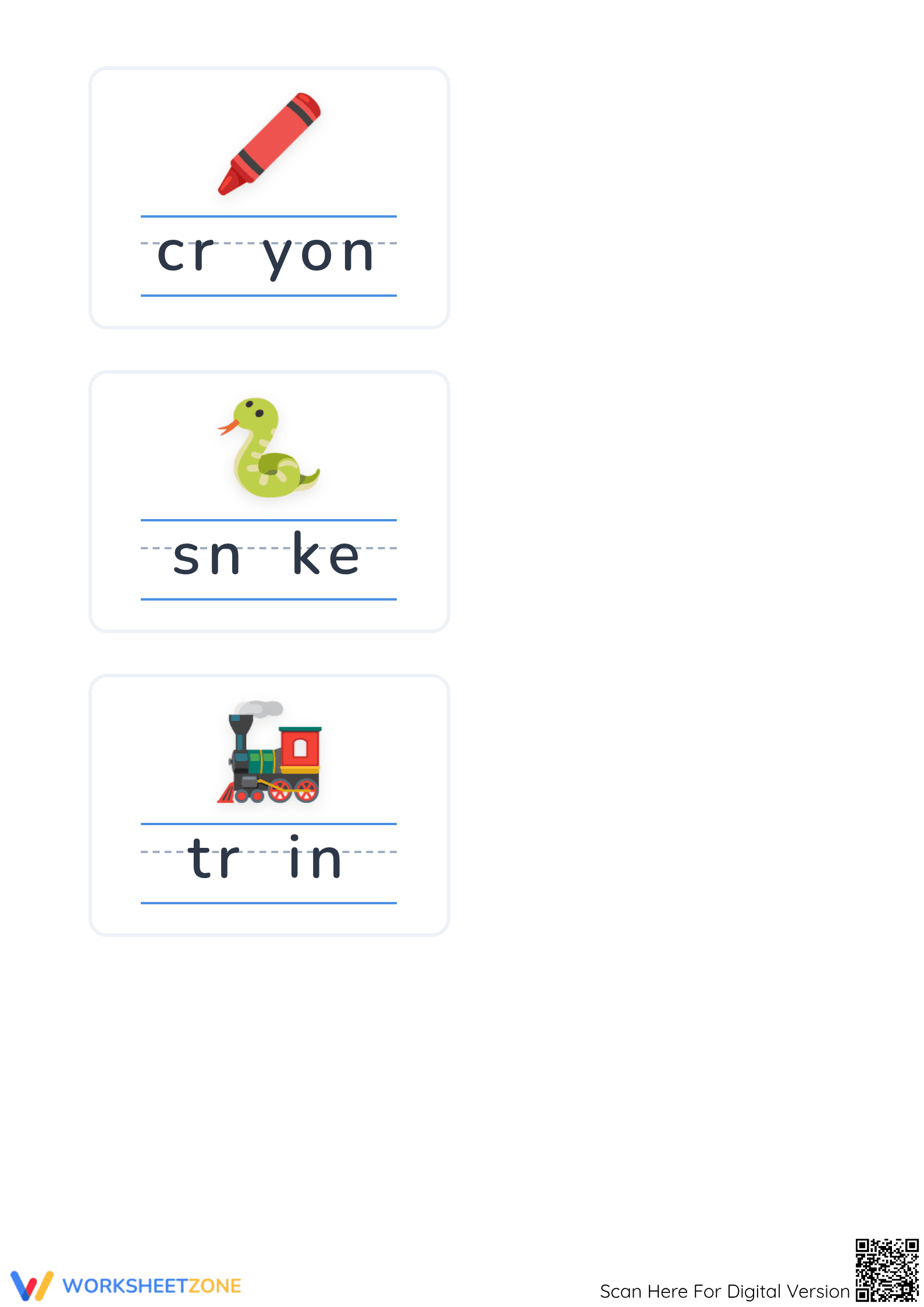
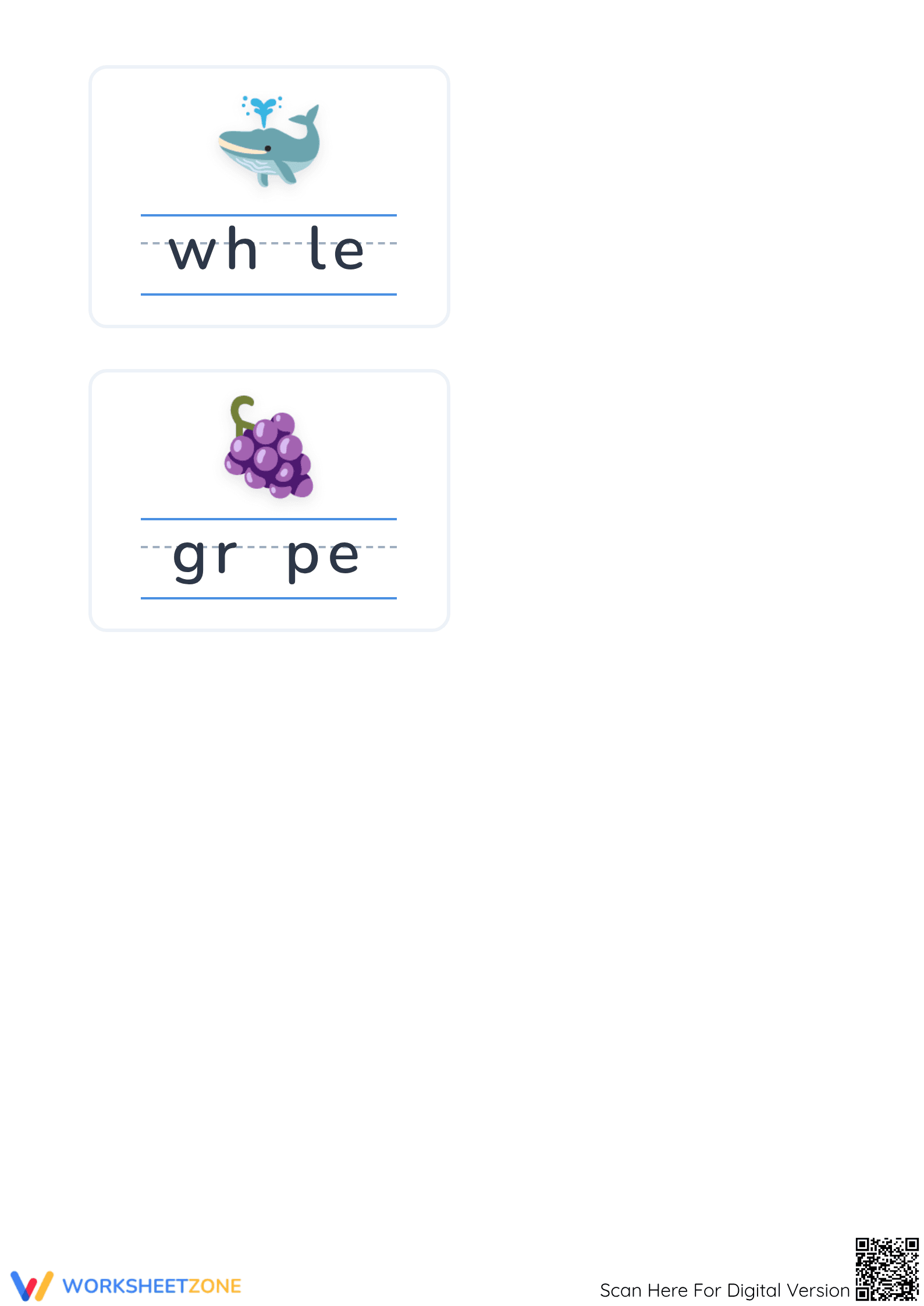
This resource features four pages of highly visual phonics practice. Students are presented with ten colorful illustrations of familiar objects, such as a snail, cake, and whale. Beneath each image, the word is partially spelled, requiring learners to write the missing letter or letters that create the long vowel A sound. A complete answer key is provided to ensure quick and accurate grading.
- Guided practice: The first few problems can be completed together, allowing the teacher to model how to say the word aloud and isolate the middle vowel sound.
- Supported practice: Students use the clear visual cues (like a picture of a train or grape) to sound out the remaining words with peer or teacher assistance.
- Independent practice: Learners complete the final pages on their own, applying their knowledge of vowel teams and silent E patterns to fill in the blanks.
This structure perfectly supports a gradual-release, I Do, We Do, You Do instructional model.
This worksheet is directly aligned to CCSS.ELA-LITERACY.RF.K.3.B: Associate the long and short sounds with the common spellings (graphemes) for the five major vowels. It also supports first-grade phonics goals by introducing common vowel team conventions for representing long vowel sounds. Both standard codes can be copied directly into lesson plans, IEP goals, or district curriculum mapping tools.
Deploy this worksheet during morning work or as a dedicated literacy center activity after direct instruction on long vowels. As students work, observe whether they are correctly identifying the long A sound or if they are confusing it with short vowel sounds. This formative assessment will help you determine which students need targeted small-group review. Most kindergarteners and first graders will complete this activity in 10 to 15 minutes.
This resource is designed for kindergarten and first-grade students who are transitioning from short vowel sounds to long vowel spelling patterns. For students needing extra support, provide an anchor chart showing common long A spellings (like a-e, ai, and ay) to reference while they work. It pairs excellently with a decodable reading passage focused on the long A sound.
Mastering vowel sounds is a critical milestone in early literacy development. According to Fisher & Frey (2014), explicit phonics instruction that connects visual symbols to auditory sounds significantly improves decoding fluency and reading comprehension in primary grades. This worksheet targets CCSS.ELA-LITERACY.RF.K.3.B, requiring students to associate long sounds with common vowel spellings. By prompting learners to actively write the missing letters for the long A sound while referencing visual cues, the activity reinforces orthographic mapping. This cognitive process helps students store words in their long-term memory for automatic retrieval later. Providing structured, repetitive practice with specific phonemes ensures that early readers build the foundational skills necessary to tackle more complex texts as they progress through elementary school. Consistent exposure to these spelling patterns reduces decoding errors and builds reading confidence.


