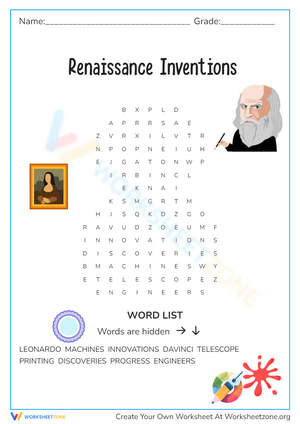
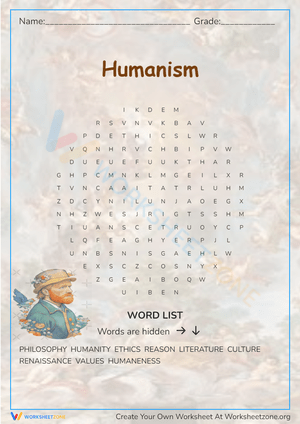
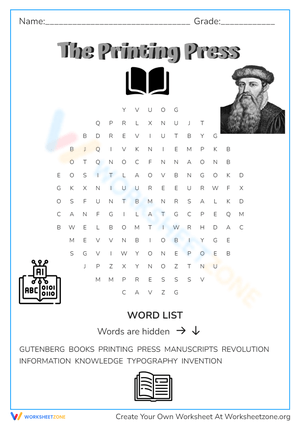
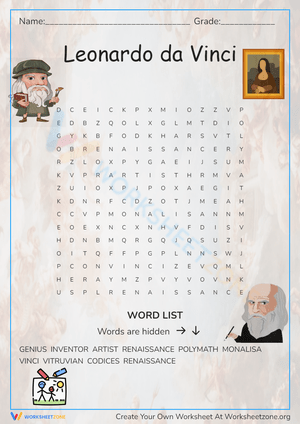
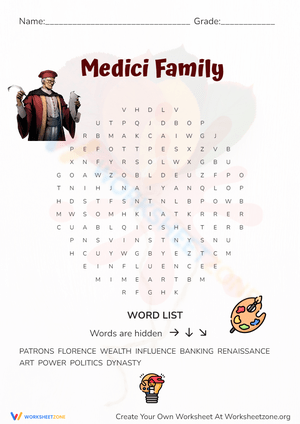
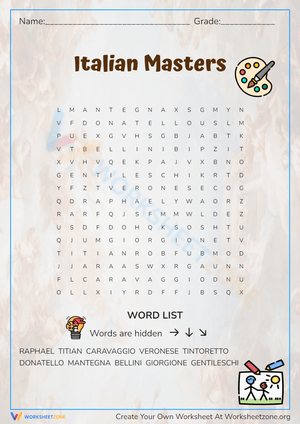
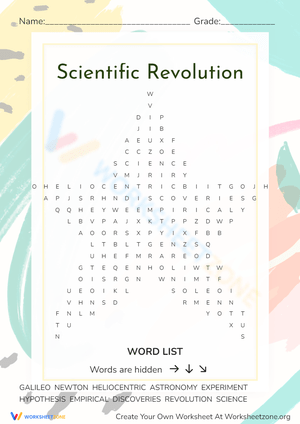
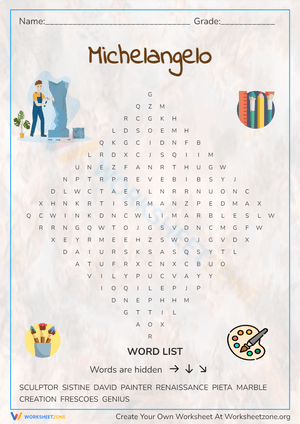
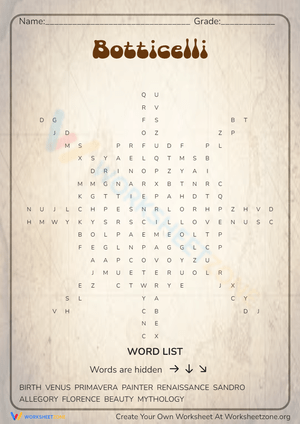
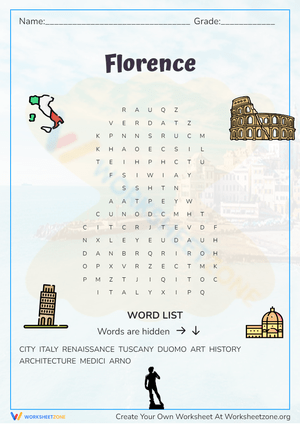
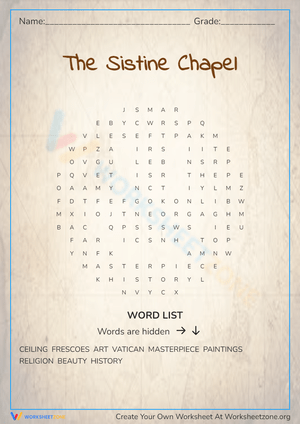
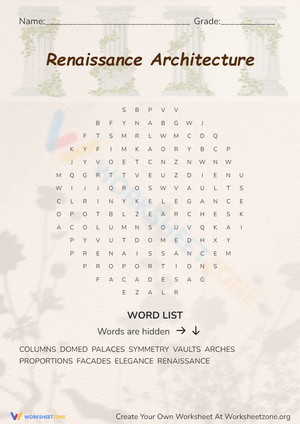
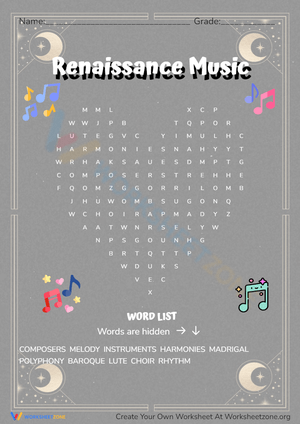
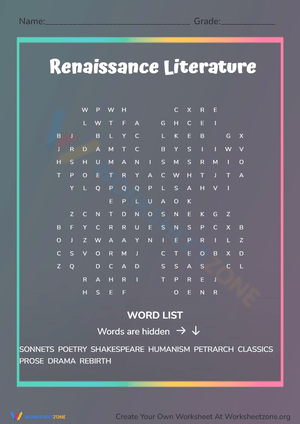
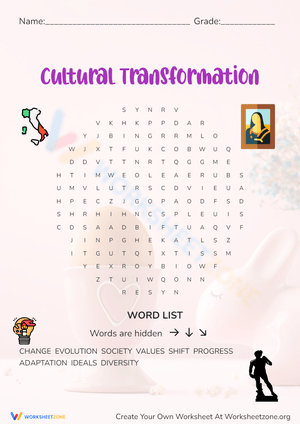
Renaissance word search puzzles give teachers a classroom activity that requires very little explanation and delivers immediate learning value. Students can begin working independently within seconds, giving teachers time to take attendance, prepare the next lesson step, or support students who need extra help. The puzzle format is simple, focused, and familiar, which makes it especially useful during busy history units when students need repeated exposure to key vocabulary.
The vocabulary embedded in each activity covers the people, ideas, and inventions that shaped this defining period of history. Students encounter names like Leonardo da Vinci and Michelangelo alongside terms such as printing press, humanism, perspective, patron, and rebirth. Instead of only reading these words in a textbook, learners actively search for them, which strengthens recognition and makes the terms feel less intimidating before a quiz, discussion, or writing task.
Parents supporting home study will also appreciate how a Renaissance word search turns complex historical content into a manageable, low-pressure challenge. A student who finds textbook chapters overwhelming may engage more readily with a puzzle that presents the same vocabulary in a more approachable format. Worksheetzone designs each grid so the difficulty can scale naturally, with shorter and more familiar words building confidence before longer, subject-specific terms appear. For a deeper look at how to structure word search activities in your lesson plan, the guide at creating effective word search worksheets offers practical classroom advice.
Reliable classroom resources should support learning without adding extra stress to the lesson schedule. Whether this Renaissance word search collection serves as a substitute teacher activity, a station rotation task, an early-finisher option, or a home review activity, it helps students stay focused on meaningful vocabulary practice. By the time learners finish the puzzle, they have seen important Renaissance terms multiple times and are better prepared to connect those words to people, events, art, inventions, and ideas from the era.
Frequently Asked Questions
Question 1: What grade level is this Renaissance word search suitable for?
These Renaissance word search puzzles are designed for students in grades 4 through 8, though teachers and parents can use them at any level where Renaissance vocabulary is part of the curriculum. The grid layouts range from straightforward to more challenging, making them appropriate for classroom differentiation, home review, or independent study sessions.
Question 2: Can parents use this Renaissance word search at home?
Yes. Parents can use a Renaissance word search at home to reinforce key historical vocabulary in a simple and approachable way. The puzzles introduce important terms without requiring long explanations, making them a practical tool for supporting what students are learning in class or for supplementing a home education lesson focused on this period.
Question 3: How does a word search support vocabulary learning in the classroom?
A word search builds recognition of subject-specific terms by requiring students to identify letter patterns within a grid. For topics like the Renaissance, this repeated visual exposure helps students remember how specialist vocabulary looks and feels before they are asked to use those words in writing or discussion. Teachers often use word searches as low-stakes warm-up or review activities.
Question 4: What vocabulary is commonly included in a Renaissance word search?
A Renaissance word search often includes terms such as Leonardo da Vinci, Michelangelo, humanism, printing press, perspective, patron, scholar, invention, art, science, rebirth, explorer, and philosophy. These words help students build a stronger understanding of the people, ideas, and cultural changes that defined the Renaissance period.












 Interactive Worksheet Maker
 Quiz Maker
 Word Search Maker
 Crossword Puzzle Maker
 Word Scramble Generator
 Sentence Scramble Generator
 Handwriting Worksheet Generator
 Name Tracing Generator
 Fill In The Blank Generator




 BACK TOSCHOOL