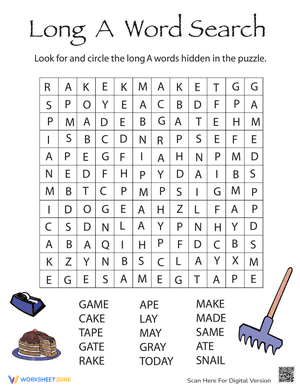
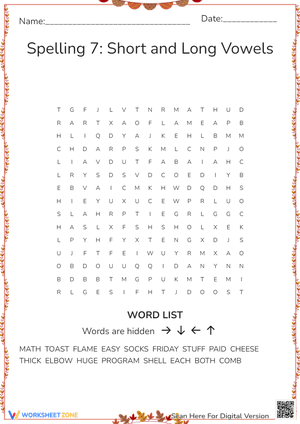
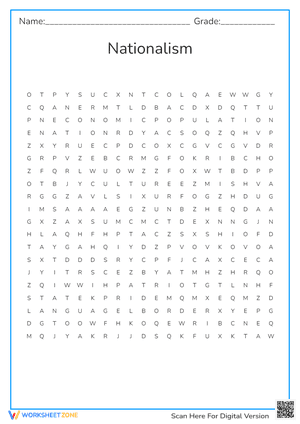
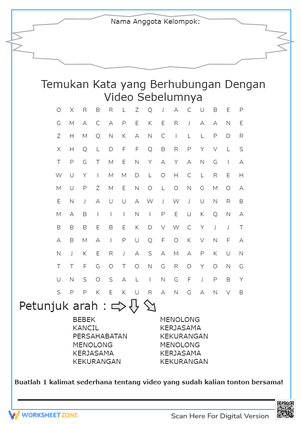
Unlike a worksheet packet that requires modeling and guided practice, a word search for kids only needs a pencil and a clear word bank. Students can start the moment it lands on their desk, which makes it a natural fit for bell-ringers, early-finisher stations, and the first ten minutes after a fire drill throws off your schedule.
Teachers reach for word searches because they are self-explanatory and self-paced. A student who finishes in six minutes and a student who needs the full class period are both engaged and both practicing the same target vocabulary. That flexibility is rare in a single-page activity, and it is why word search puzzles show up across grade bands, subjects, and support settings rather than being confined to language arts.
Classroom Implementation
To get real instructional value out of a word search for kids rather than pure busywork, tie the puzzle to a specific goal before you print it. Build the word bank directly from your current spelling list, vocabulary unit, or content-area terms so the practice time reinforces something students will be tested on later.
Set a time limit rather than leaving the activity open-ended. Five to eight minutes is enough for most grids and keeps the puzzle from eating into instructional time. If you use word searches as an early-finisher station, keep a small stack pre-copied by theme so you are not scrambling to print mid-lesson. For sub plans, a themed puzzle paired with a short written response, such as writing one sentence using three found words, converts the activity from filler into an accountable task the substitute can collect and you can review.
Frequently Asked Questions
1. What grade levels are word searches most effective for?
Word searches work across K-6 when the grid size and word placement match the grade band. Keep K-2 puzzles small with horizontal and vertical words only, and increase grid size and add diagonal words for grades 3 and up.
2. How can teachers use word searches to support ELL students?
Word searches give ELL students a low-stakes way to practice vocabulary recognition without the pressure of producing full sentences. Building puzzles around classroom or survival vocabulary helps newcomers gain confidence with new words quickly.
3. Are word searches useful for vocabulary retention or just busywork?
Research on word search puzzle games has found this format more effective than straight lecturing for vocabulary mastery, because locating and tracing target words reinforces spelling and word shape through active recall rather than passive listening.
4. How long should a word search activity take in class?
Most grids are appropriately sized for five to eight minutes of focused work. Setting a visible time limit keeps the activity from expanding into instructional time better spent on direct teaching.
5. Can word searches be tied to specific subject content like science or social studies?
Yes. Building the word bank from current unit vocabulary, whether science terms like photosynthesis or social studies terms like democracy, turns the puzzle into a pre-teach or review tool tied directly to what students are already learning.















 Interactive Worksheet Maker
 Quiz Maker
 Word Search Maker
 Crossword Puzzle Maker
 Word Scramble Generator
 Sentence Scramble Generator
 Handwriting Worksheet Generator
 Name Tracing Generator
 Fill In The Blank Generator