




























Views
Downloads

Months of the Year Printable Worksheet | Grade 1 ELA

Paste this activity's link or code into your existing LMS (Google Classroom, Canvas, Teams, Schoology, Moodle, etc.).
Students can open and work on the activity right away, with no student login required.
You'll still be able to track student progress and results from your teacher account.
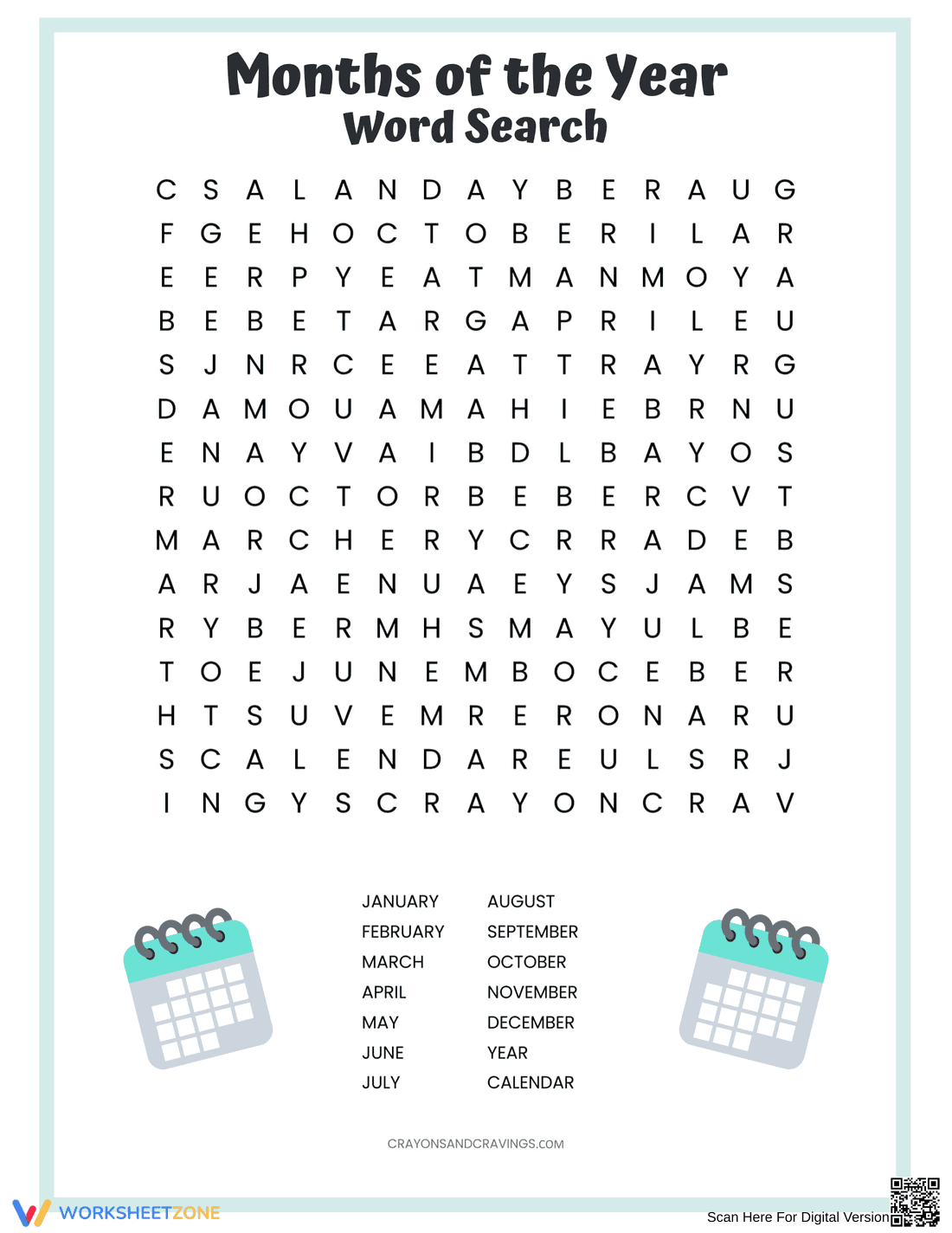
This printable Grade 1 vocabulary worksheet helps students master spelling and recognition of calendar months. By searching for hidden words, learners reinforce reading stamina and letter-pattern recognition. This activity builds foundational language skills necessary for reading calendar text and writing dates correctly in daily classroom routines.
At a Glance
- Grade: 1 · Subject: ELA & Vocabulary
- Standard:
CCSS.ELA-LITERACY.L.1.6— Use grade-appropriate words acquired through conversations and reading- Skill Focus: Months of the year spelling
- Format: 1 page · 14 words · Answer key not included · PDF
- Best For: Morning work or independent spelling practice
- Time: 15–20 minutes
This single-page activity features a clear grid containing 14 themed vocabulary terms, including all twelve months from January to December, plus the words "year" and "calendar." The clean layout uses uppercase letters to support early readers who are still developing letter-case familiarity. Two calendar graphics anchor the page visually, providing a thematic context that helps young learners connect the puzzle to real-world time concepts.
Zero-Prep Classroom Workflow
This worksheet requires minimal teacher preparation and integrates into your daily routine in three steps:
- Print (1 minute): Run copies of the single-page PDF. No collation or stapling required.
- Distribute (1 minute): Hand out the sheets. The clear visual layout allows students to begin working immediately.
- Review (5 minutes): Project the sheet to highlight the hidden words together, or have students peer-check findings.
Total prep time is under two minutes, making this resource an excellent option for emergency substitute plans or transition periods.
Standards Alignment
This activity aligns directly with the Common Core State Standard CCSS.ELA-LITERACY.L.1.6, which focuses on acquiring and using grade-appropriate words. By identifying temporal terms like months, students build the vocabulary needed to discuss schedules. Both standard codes can be copied directly into lesson plans, IEP goals, or district curriculum mapping tools.
How to Use It
Use this worksheet during morning arrival to settle students into a quiet, focused task. Alternatively, assign it as a post-lesson activity after introducing calendar concepts. During the activity, walk around and observe which students struggle to locate words starting with complex blends, using this as a quick formative assessment. Expect completion to take 15 to 20 minutes.
Who It's For
This resource is designed for first-grade students learning to read and spell the months of the year. It also serves as a supportive intervention for second graders needing spelling reinforcement or English language learners building basic temporal vocabulary. Pair this worksheet with a daily calendar pocket chart to reinforce auditory and visual learning pathways simultaneously.
According to educational research, structured word puzzles reinforce orthographic mapping in early childhood. By scanning the grid for specific letter sequences, first-grade students strengthen visual memory of spelling patterns in words like "January" and "February." This exercise supports CCSS.ELA-LITERACY.L.1.6 by transitioning vocabulary from passive recognition to active recall. Utilizing targeted printables during independent practice blocks allows educators to maximize instructional efficiency while providing students with self-paced opportunities to master essential calendar terms. A study by Fisher & Frey (2014) highlights that purposeful word play and visual search tasks support vocabulary acquisition by encouraging students to pay close attention to letter sequences. This method reinforces word form recognition, which is critical for developing fluent reading skills in early elementary grades, helping young learners build reading stamina and confidence during daily literacy blocks.


