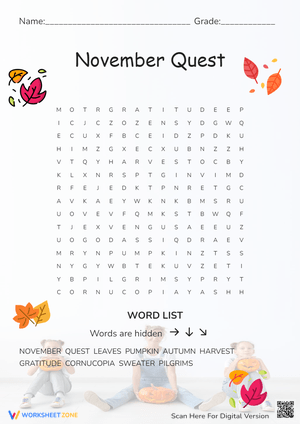
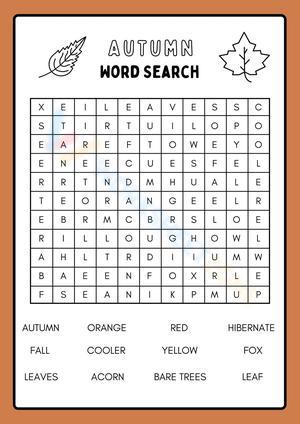
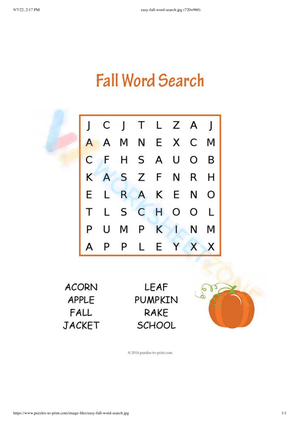
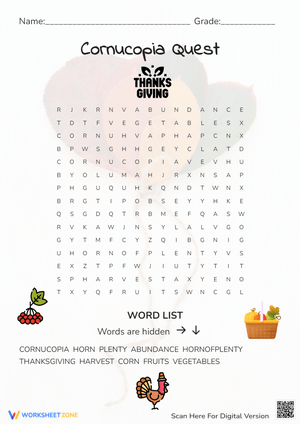
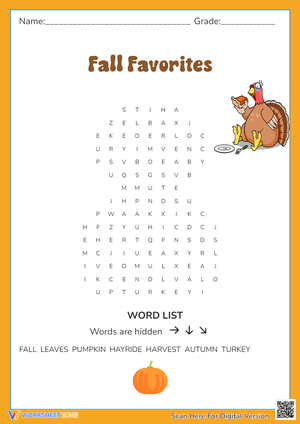
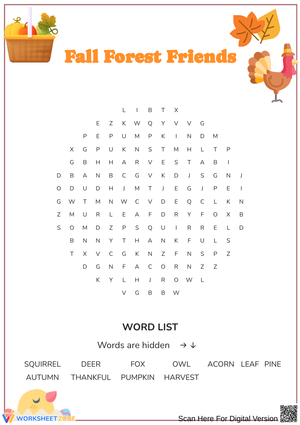
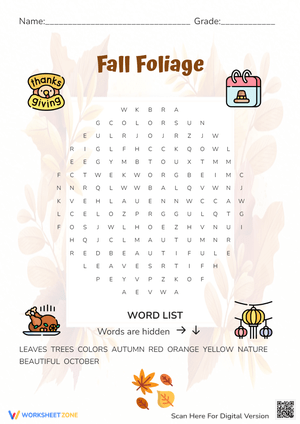
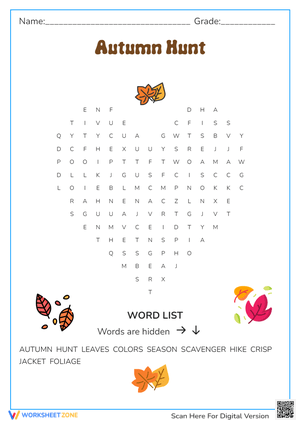
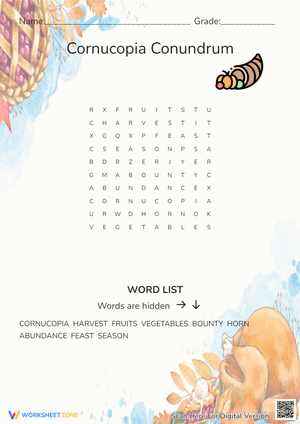
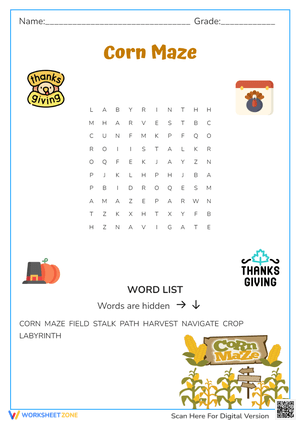
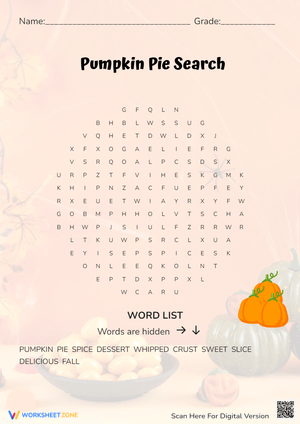
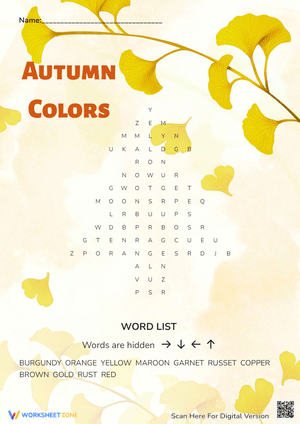
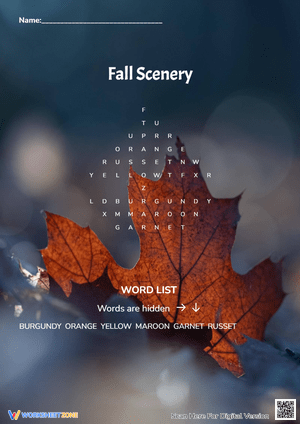
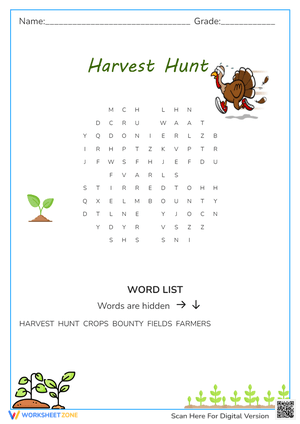
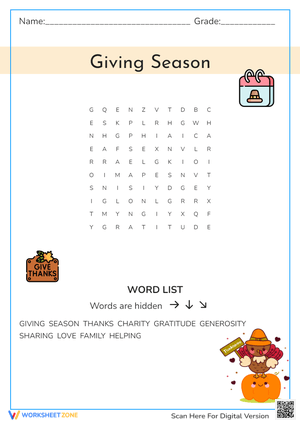
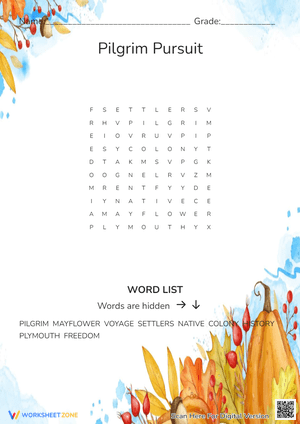
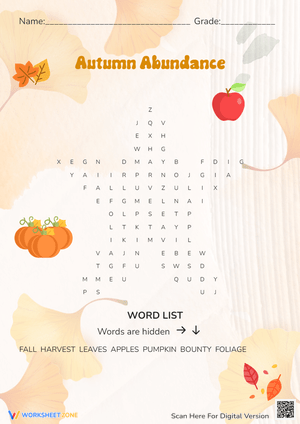
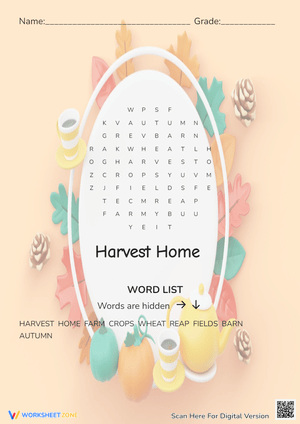
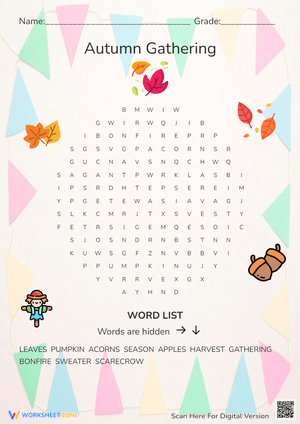
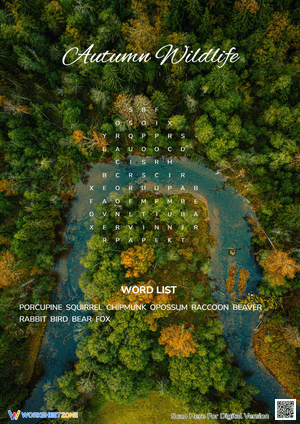
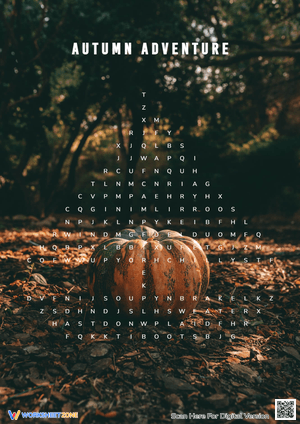
Every fall word search on this page puts a specific challenge in front of you: scan the grid, track the patterns, and uncover the hidden autumn terms before the timer runs out. Whether you are a student working solo at a desk or a teacher setting up a station rotation, these puzzles deliver a focused and genuinely satisfying kind of practice. The hunt for each word sharpens attention and keeps learners locked in on the task at hand.
Worksheetzone has built this fall word search collection to cover a wide range of difficulty levels, so the puzzles scale well from early elementary to upper primary grades. Younger students discover familiar autumn words like leaves, pumpkin, and harvest, while older learners track down longer seasonal terms buried diagonally or backward in the grid. That range makes the collection useful across multiple classroom settings without requiring separate prep for each group.
Parents running home learning sessions find fall word searches particularly effective on afternoons when screen time needs to be balanced with something quieter and more deliberate. The activity requires no supplies beyond a pencil and a printed page, and most puzzles take between ten and twenty minutes to complete. That time window fits neatly into study routines, homework sessions, or weekend learning blocks without feeling like a burden on either parent or child.
Vocabulary retention is one of the strongest reasons to use fall word search worksheets alongside seasonal reading or writing units. When students encounter a word in a puzzle grid and later meet it in a sentence or a book, recognition comes faster and feels more natural. Teachers who pair these puzzles with autumn vocabulary lists often notice that students reach for the right seasonal term without hesitation during creative writing assignments. The fall word search acts as a low-pressure rehearsal for language they will use across the entire season.
Classroom stations, morning warm-ups, and early finisher bins are all strong fits for this type of activity. The puzzles are self-directed, which means students can work through them without needing constant guidance, opening up teacher time for small group instruction. Pair a fall word search with fall arts and crafts activities to build a complete seasonal learning block that covers both language skills and creative expression. Worksheetzone makes it easy to pull exactly what you need from the collection and put it to work the same day.
Frequently Asked Questions
Question 1: What grade levels are fall word search puzzles best suited for?
Fall word search puzzles work well from first grade through fifth grade, with difficulty adjusted by word length and grid size. Simpler grids featuring short autumn words suit grades one and two, while larger grids with words hidden backward or diagonally challenge grades three through five. Teachers can select the appropriate level for each group without additional prep work.
Question 2: How do fall word searches support vocabulary development?
Searching for seasonal words trains students to recognize letter patterns and builds familiarity with autumn-themed vocabulary. When a student locates a word like harvest or migration in a puzzle grid, that repeated visual and mental engagement strengthens word recognition. This makes the fall word search a practical companion to any reading or writing unit focused on the season.
Question 3: Can fall word search worksheets be used during classroom transitions?
Yes, fall word searches are an excellent transition activity because they require no instructions and students can start immediately. Placing a puzzle on each desk before the bell rings gives students a focused task while attendance is taken or materials are distributed. The activity settles the room quickly and reinforces seasonal vocabulary at the same time.
Question 4: Are fall word search puzzles effective for homeschooling routines?
Fall word search worksheets fit well into homeschooling schedules because they are self-directed and easy to set up. A parent can hand a child a fall word search puzzle as a warm-up exercise or a quiet independent activity between structured lessons. The puzzles reinforce seasonal language skills while giving the student a sense of accomplishment when all words are found.












 Interactive Worksheet Maker
 Quiz Maker
 Word Search Maker
 Crossword Puzzle Maker
 Word Scramble Generator
 Sentence Scramble Generator
 Handwriting Worksheet Generator
 Name Tracing Generator
 Fill In The Blank Generator