


























Views
Downloads
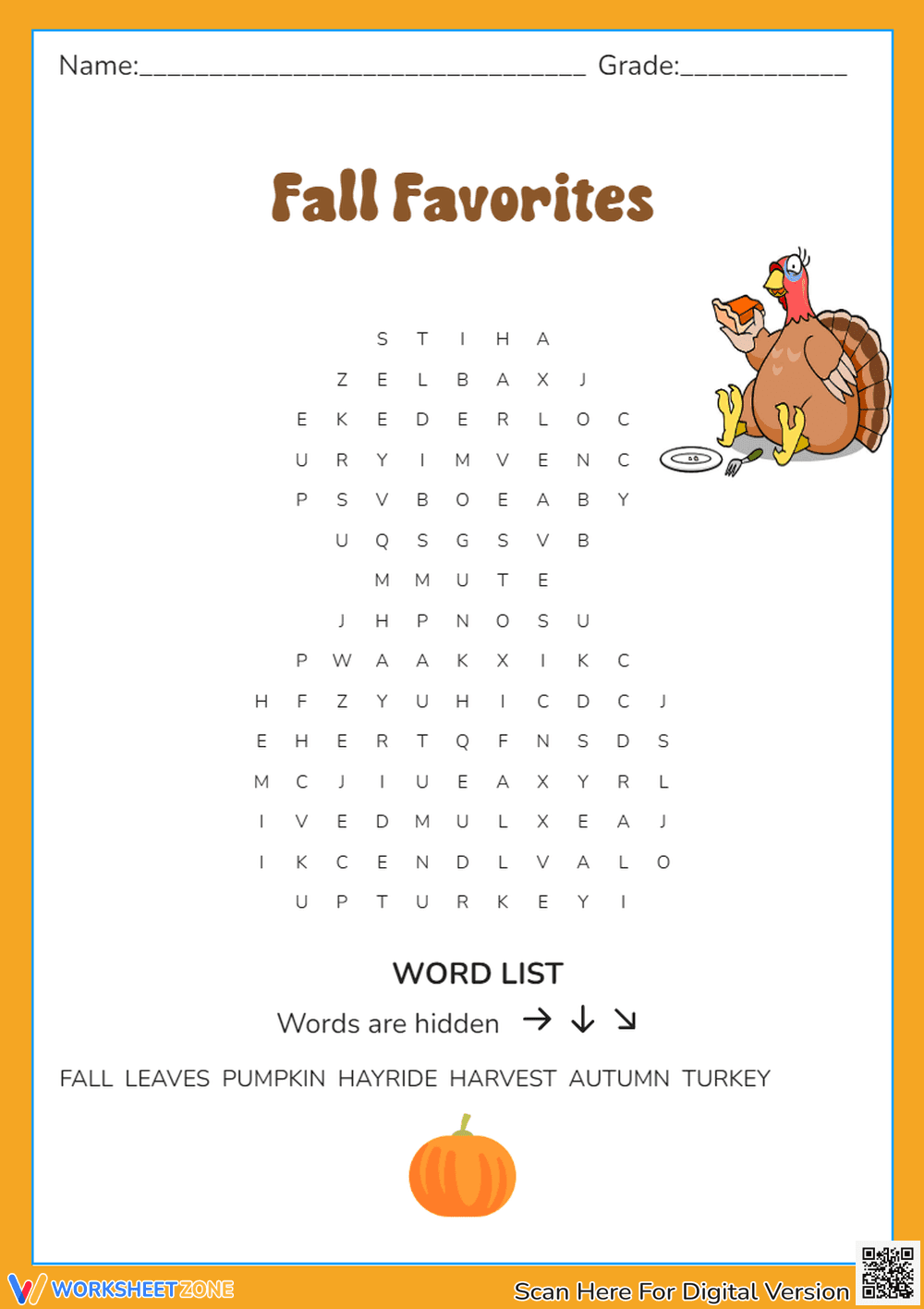

Fall Word Search Printable | Grade 2 ELA
Paste this activity's link or code into your existing LMS (Google Classroom, Canvas, Teams, Schoology, Moodle, etc.).
Students can open and work on the activity right away, with no student login required.
You'll still be able to track student progress and results from your teacher account.
This engaging fall word search worksheet helps early elementary students build seasonal vocabulary and improve visual scanning skills. By locating seven autumn-themed words within the puzzle grid, young learners reinforce spelling patterns and word recognition in a fun, low-pressure format that celebrates the changing seasons.
At a Glance
- Grade: 2 · Subject: ELA
- Standard:
CCSS.ELA-LITERACY.RF.2.3— Apply word analysis skills in decoding words- Skill Focus: Vocabulary and Spelling
- Format: 1 page · 7 problems · Answer key included · PDF
- Best For: Morning work or early finishers
- Time: 10–15 minutes
This single-page printable features a festive autumn word search with turkey and pumpkin illustrations. The activity includes a clear word bank with seven seasonal terms: fall, leaves, pumpkin, hayride, harvest, autumn, and turkey. Directional arrows show students that words are hidden horizontally, vertically, and diagonally, providing structural support for early readers. A complete answer key ensures quick grading.
Zero-Prep Workflow
This resource requires absolutely no teacher setup.
- Print (1 minute): Simply download the PDF and print a class set. The black-and-white text ensures crisp, ink-saving copies.
- Distribute (1 minute): Hand out the puzzle during morning arrival, transition times, or as part of a seasonal literacy center.
- Review (1 minute): Use the included answer key to quickly check student work or project it on the smartboard for self-correction.
With a total prep time of under two minutes, this worksheet is an ideal, self-explanatory addition to any emergency sub plan.
Standards Alignment
This activity aligns with CCSS.ELA-LITERACY.RF.2.3, requiring students to know and apply grade-level phonics and word analysis skills in decoding words. By repeatedly scanning for specific letter sequences, students strengthen their orthographic mapping abilities. Both standard codes can be copied directly into lesson plans, IEP goals, or district curriculum mapping tools.
How to Use It
This worksheet fits perfectly into morning routines as a quiet activity before direct instruction begins. It also serves as an excellent anchor activity for early finishers during literacy blocks, keeping students engaged without requiring additional guidance. As students work, teachers can use this as a formative assessment opportunity by observing how quickly learners recognize familiar letter clusters versus scanning letter-by-letter. Expected completion time ranges from 10 to 15 minutes depending on the student's reading level.
Who It's For
This resource is designed for K-3 students developing foundational reading and spelling skills. For students needing extra support, teachers can pre-highlight the first letter of each hidden word in the grid. Advanced learners can be challenged to write a short creative story on the back of the page using all seven vocabulary words. This worksheet pairs naturally with a seasonal read-aloud book or a direct instruction lesson on autumn weather changes.
Integrating thematic vocabulary activities like this word search supports broader literacy development by reinforcing orthographic patterns. Aligned with CCSS.ELA-LITERACY.RF.2.3, this task requires students to apply word analysis skills in decoding words, a critical step in building reading fluency. According to Fisher & Frey (2014), providing students with repeated, low-stakes exposure to target vocabulary significantly improves their ability to recognize and retrieve those words during independent reading and writing tasks. Word searches specifically train the brain to identify letter sequences and spelling conventions, moving students away from phonetic guessing and toward automatic word recognition. By embedding these foundational skills within an engaging, seasonal context, educators can maintain high levels of student motivation while meeting rigorous academic standards. This targeted practice ensures that young learners build the visual tracking and spelling proficiency necessary for long-term academic success.


