




















Fall words are a wonderful way to help kids grow their vocabulary while enjoying the cozy colors and changes of the season. Whether you’re teaching in the classroom, homeschooling, or learning at home, a strong list of fall-themed words can spark creativity and enrich literacy lessons. From crunchy leaves and pumpkin treats to seasonal weather and holidays, fall vocabulary helps children express what they see and feel. In this article, you’ll find a helpful A-Z list of fall words to inspire engaging activities.
170+ fall words start from A-Z
This collection of more than 170 fall words is organized alphabetically to make it easy for kids, teachers, and parents to explore seasonal vocabulary.
Fall words that start with A
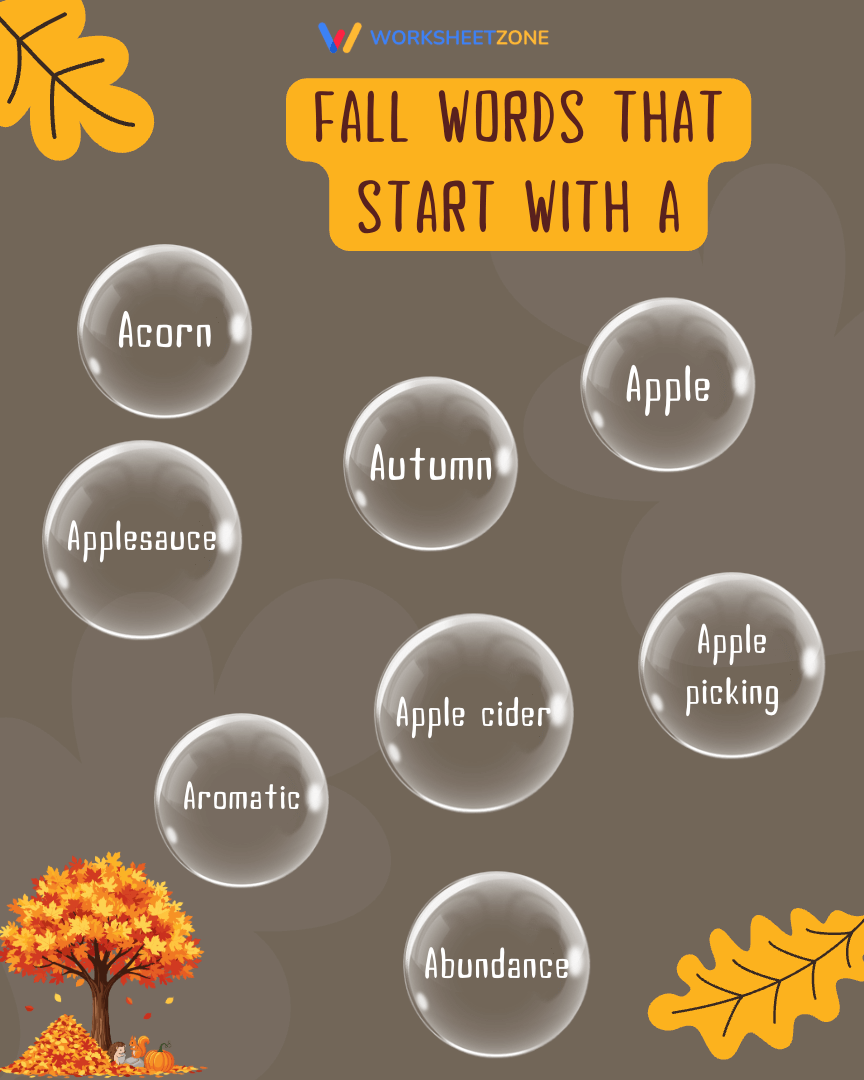
- Acorn
- Apple
- Autumn
- Applesauce
- Apple cider
- Apple picking
- Aromatic
- Abundance
Fall words that start with B
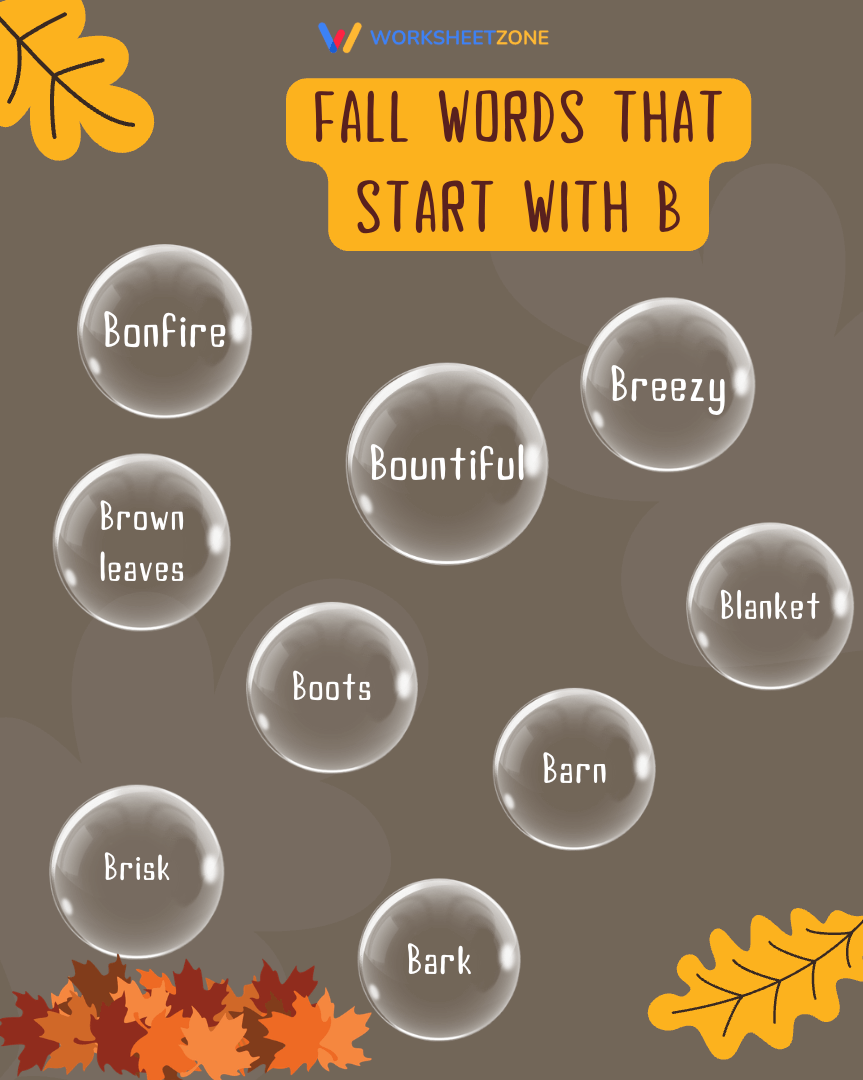
- Bonfire
- Breezy
- Bountiful
- Boots
- Brown leaves
- Brisk
- Blanket
- Bark
- Barn
Fall words that start with C
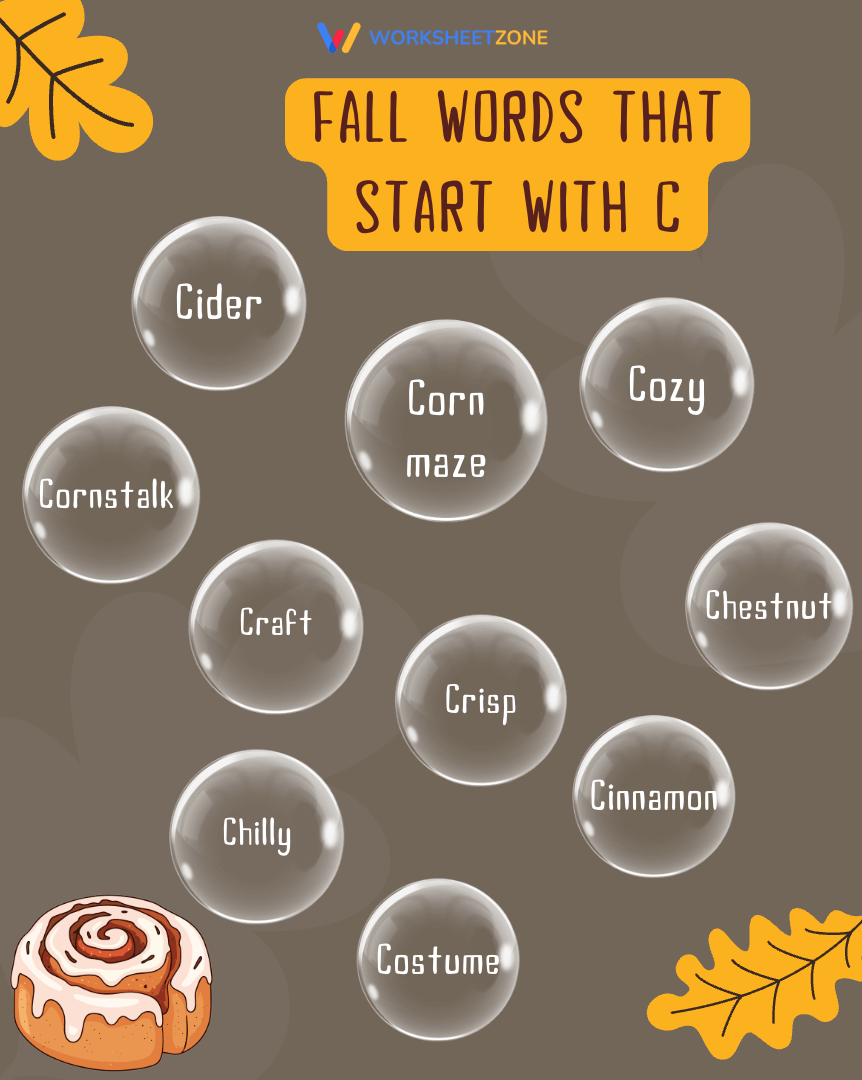
- Cider
- Cozy
- Corn maze
- Cornstalk
- Crisp
- Chestnut
- Cinnamon
- Craft
- Costume
- Chilly
Fall words that start with D
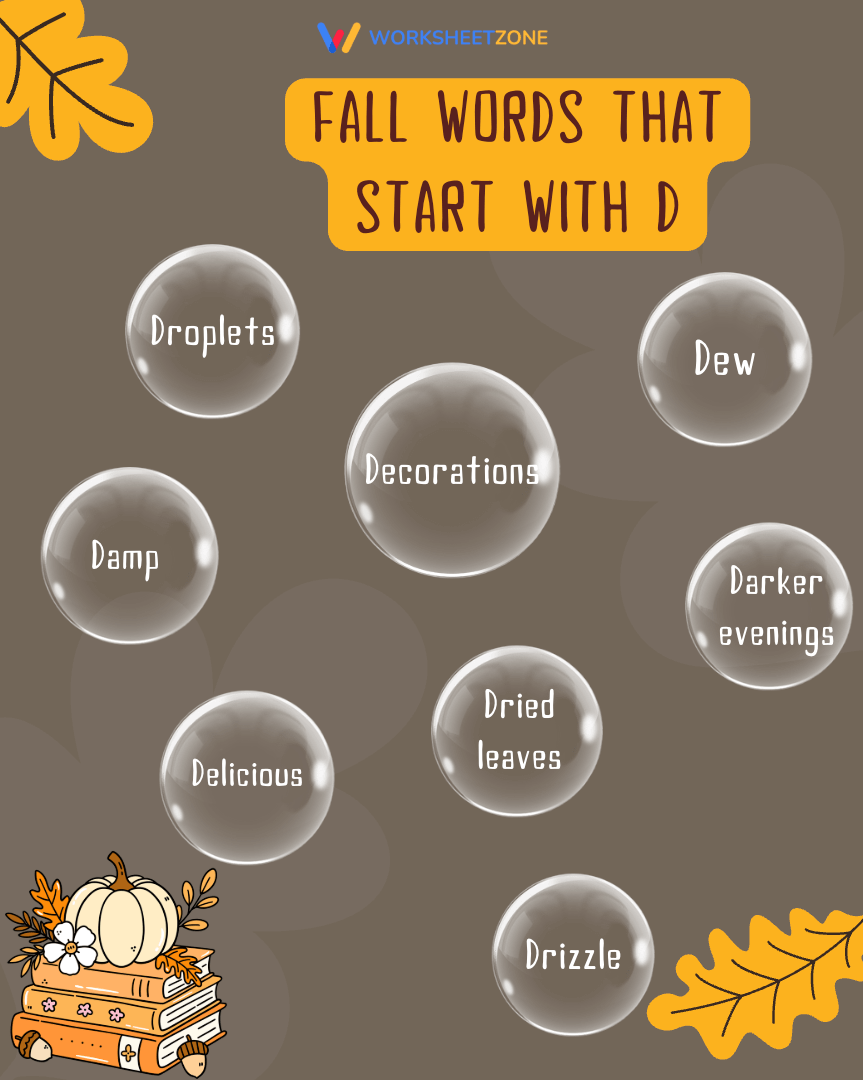
- Decorations
- Droplets
- Dew
- Damp
- Delicious
- Dried leaves
- Darker evenings
- Drizzle
Fall words that start with E
- Equinox
- Earthy
- Evergreen
- Ember
- Enjoy
- Evening chill
- Early sunset
Fall words that start with F

- Fall
- Foliage
- Festival
- Flannel
- Feast
- Firewood
- Fireplace
- Frost
- Football
- Farmers market
Fall words that start with G
- Gourds
- Golden leaves
- Grateful
- Gathering
- Goosebumps
- Garden harvest
Fall words that start with H
- Harvest
- Hayride
- Halloween
- Haystack
- Hearth
- Hot cocoa
- Hoodie
- Homey
Fall words that start with I
- Indian corn
- Incense
- Inside activities
- Ingredients
- Inspired
- Icy breeze
Fall words that start with J
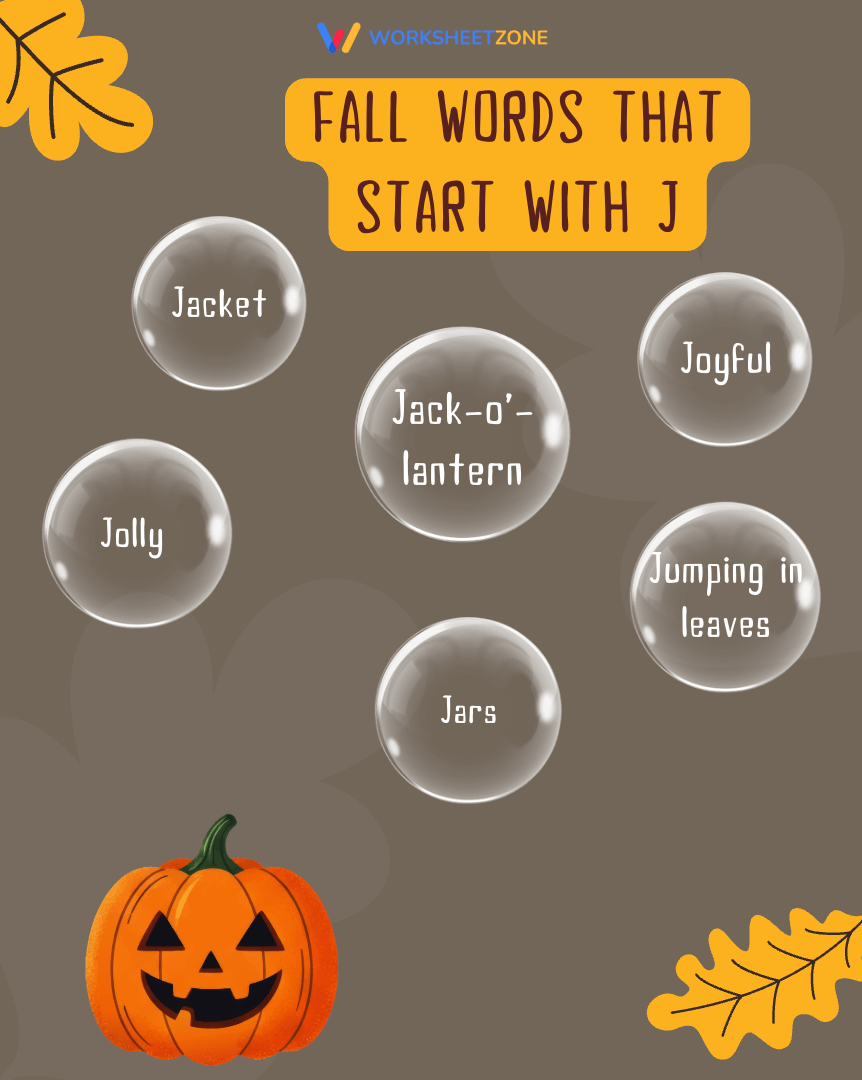
- Jack-o’-lantern
- Jacket
- Joyful
- Jolly
- Jars
- Jumping in leaves
Fall words that start with K
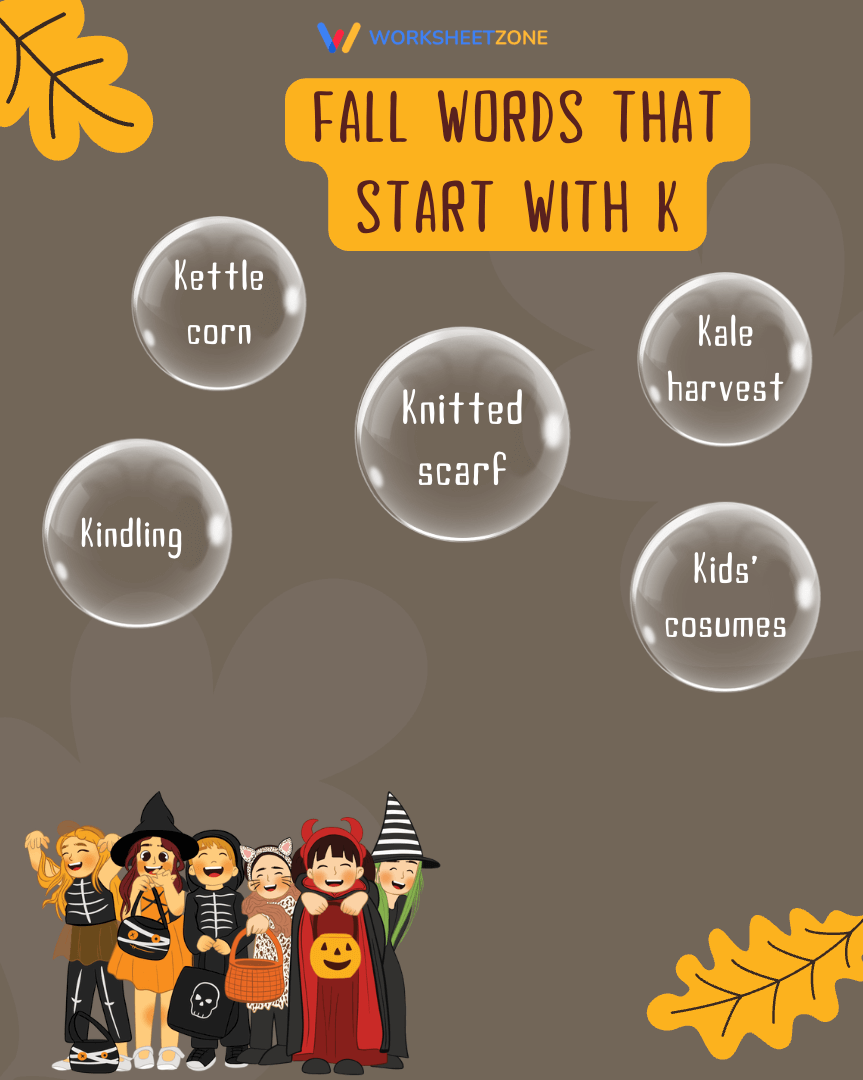
- Kettle corn
- Knitted scarf
- Kale harvest
- Kindling
- Kids’ costumes
Fall words that start with L
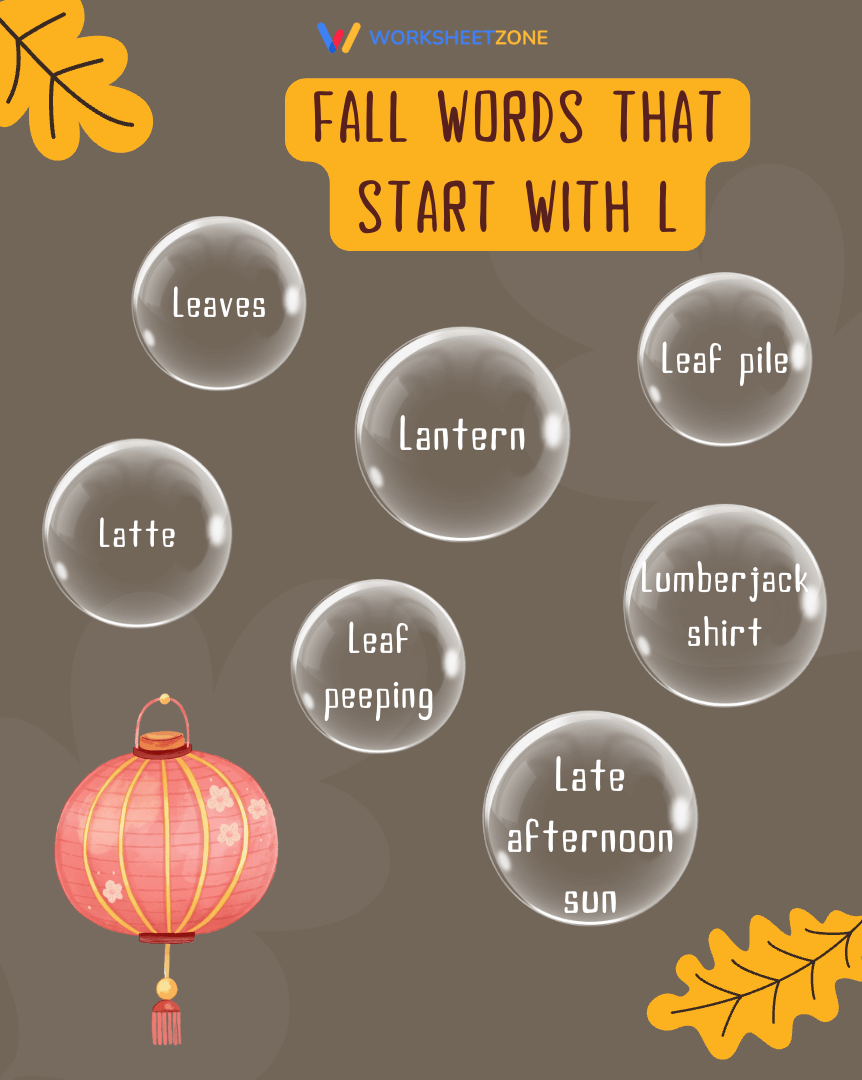
- Leaves
- Leaf pile
- Lantern
- Latte
- Lumberjack shirt
- Leaf peeping
- Late afternoon sun
Fall words that start with M
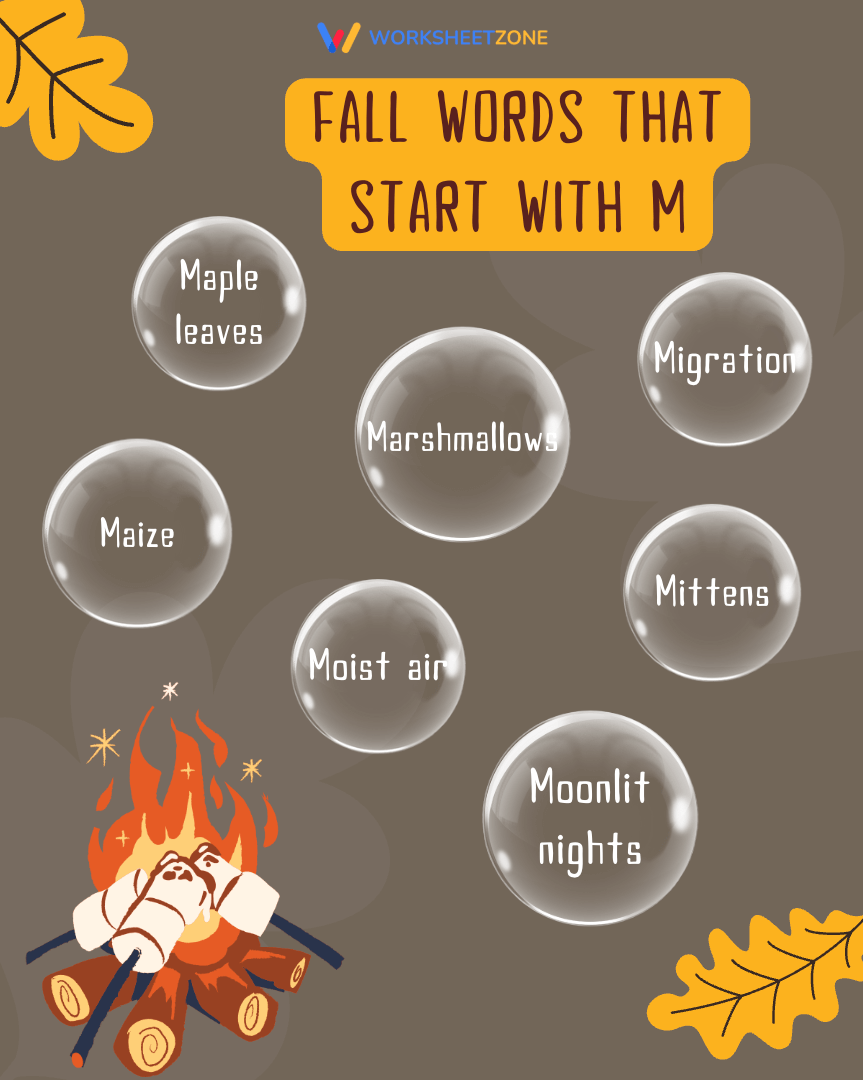
- Maple leaves
- Migration
- Marshmallows
- Maize
- Mittens
- Moonlit nights
- Moist air
Fall words that start with N
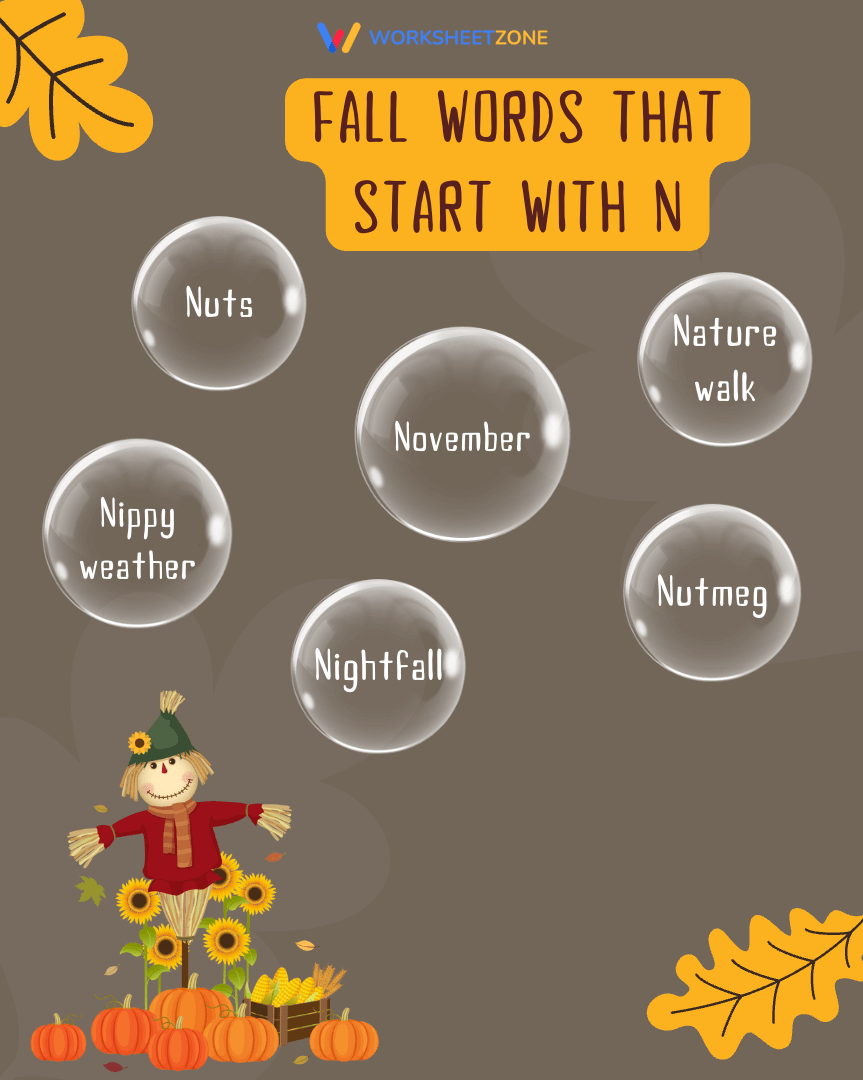
- November
- Nuts
- Nature walk
- Nippy weather
- Nightfall
- Nutmeg
Fall words that start with O
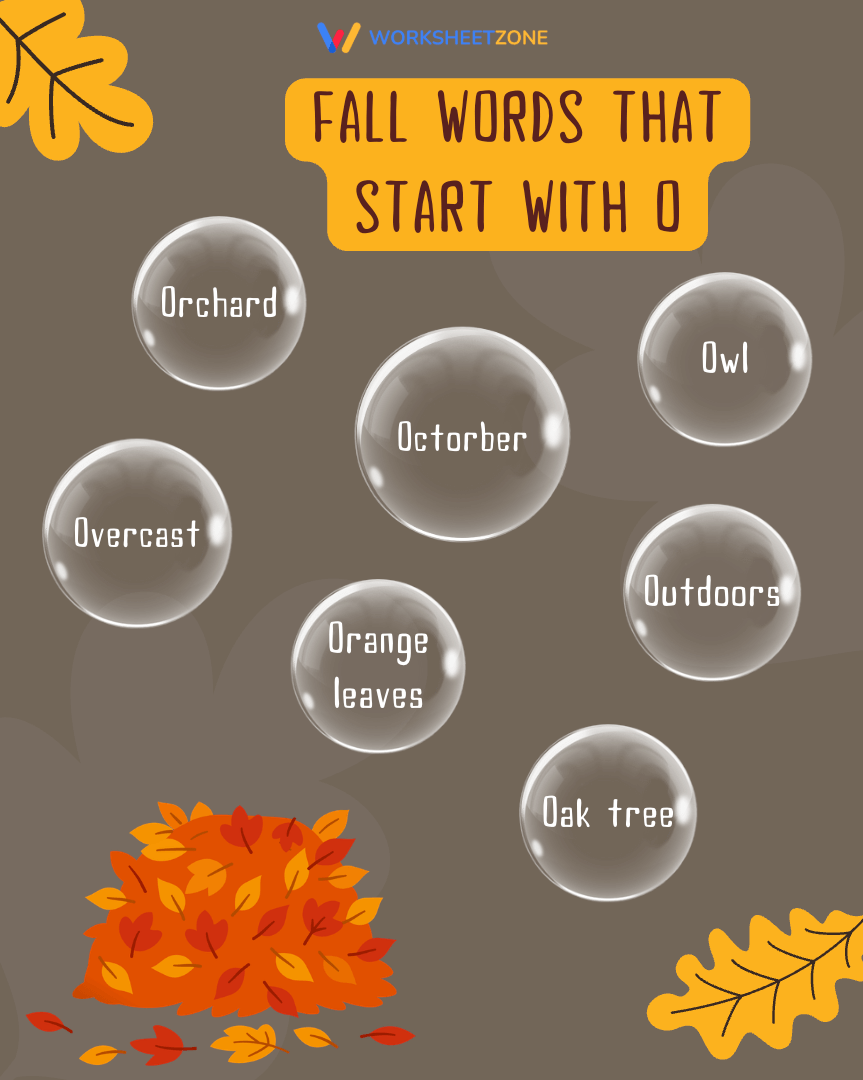
- Orchard
- October
- Owl
- Overcast
- Orange leaves
- Outdoors
- Oak tree
Fall words that start with P
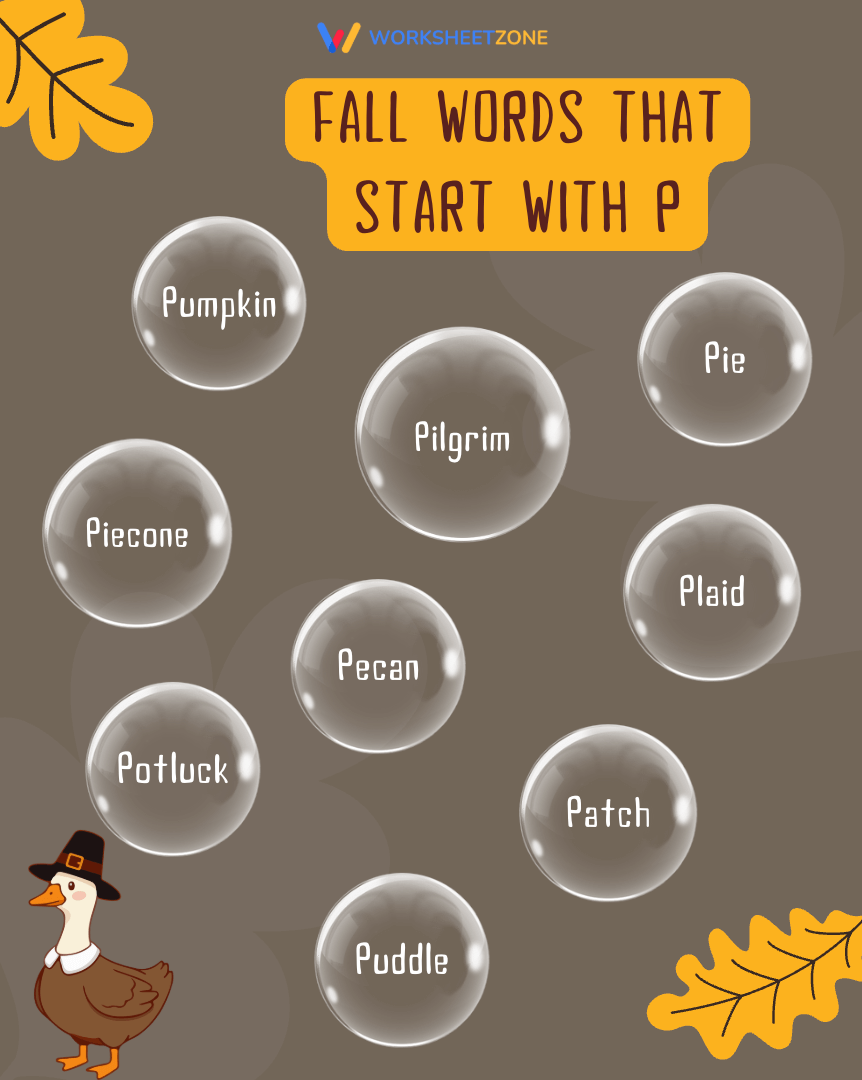
- Pumpkin
- Pie
- Pinecone
- Plaid
- Pecan
- Pilgrim
- Patch
- Potluck
- Puddle
Fall words that start with Q

- Quilt
- Quiet woods
- Quince
- Quaint cabin
Fall words that start with R
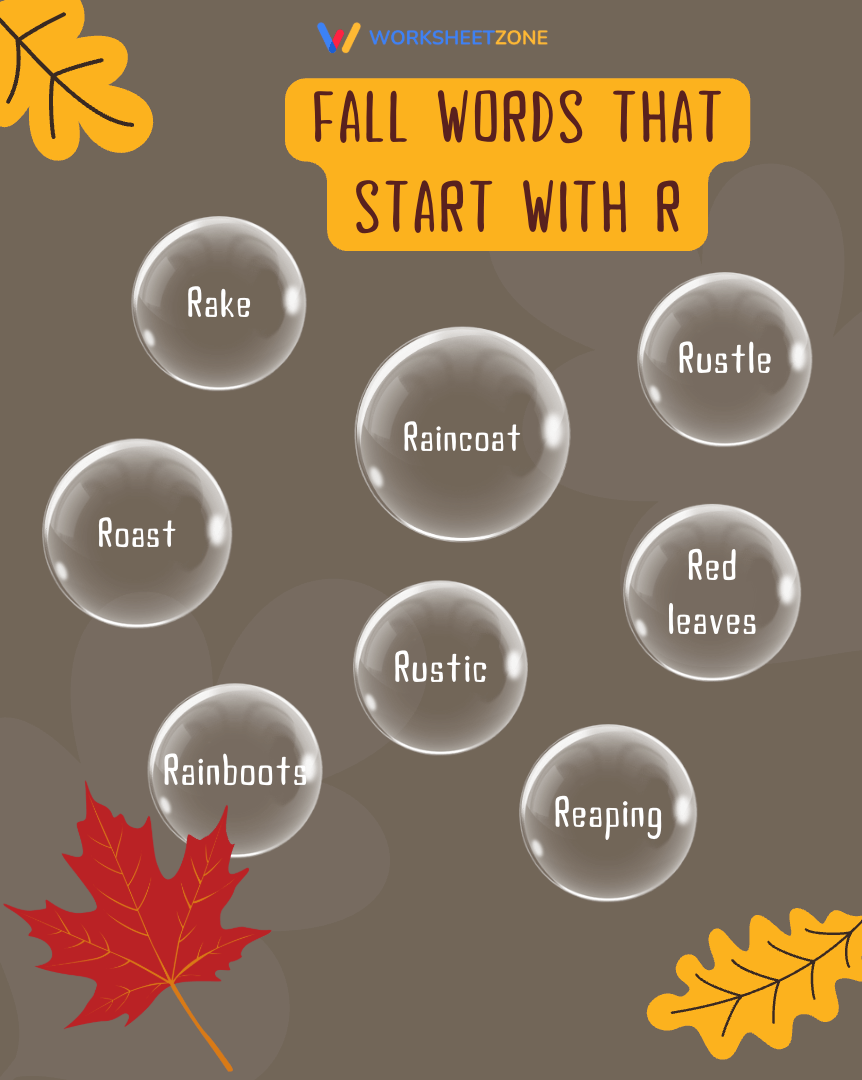
- Rake
- Raincoat
- Rustle
- Red leaves
- Roast
- Rustic
- Rain boots
- Reaping
Fall words that start with S
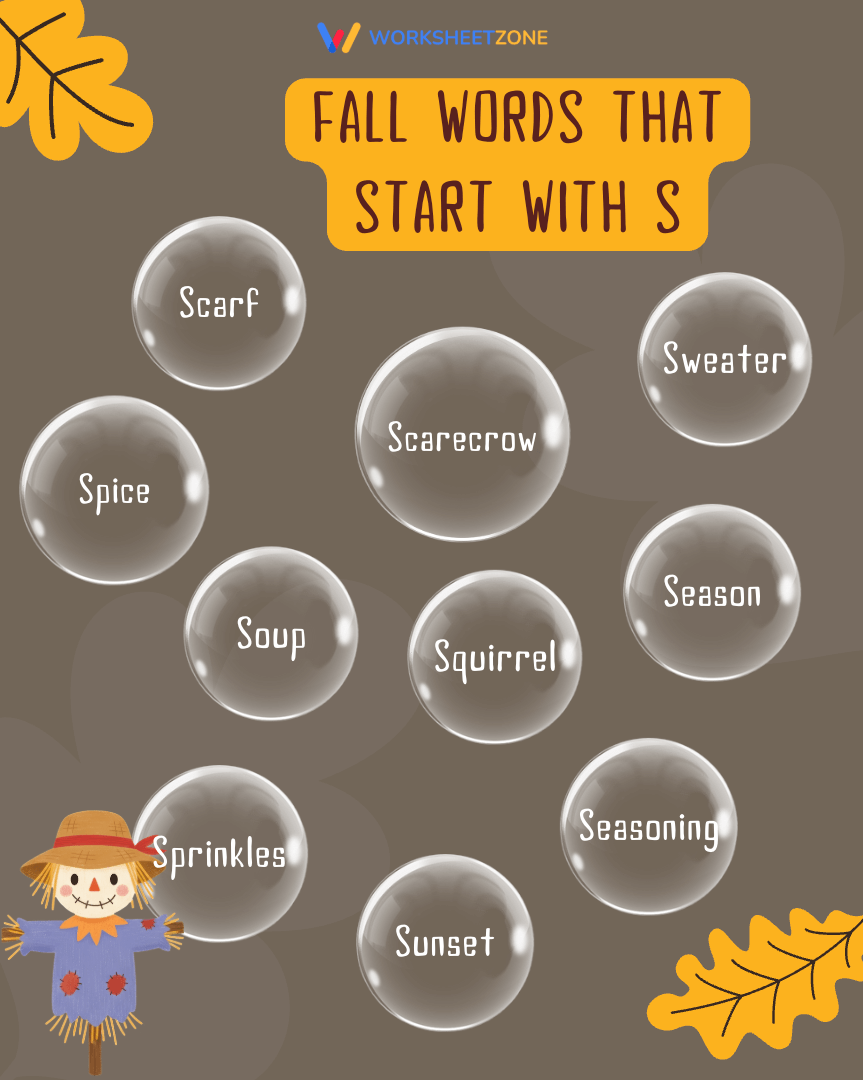
- Scarf
- Sweater
- Spice
- Season
- Squirrel
- Soup
- Scarecrow
- Seasoning
- Sunset
- Sprinkles
Fall words that start with T

- Thanksgiving
- Turkey
- Trees
- Twilight
- Tractor
- Taffy apples
- Tradition
- Toasty
Fall words that start with U
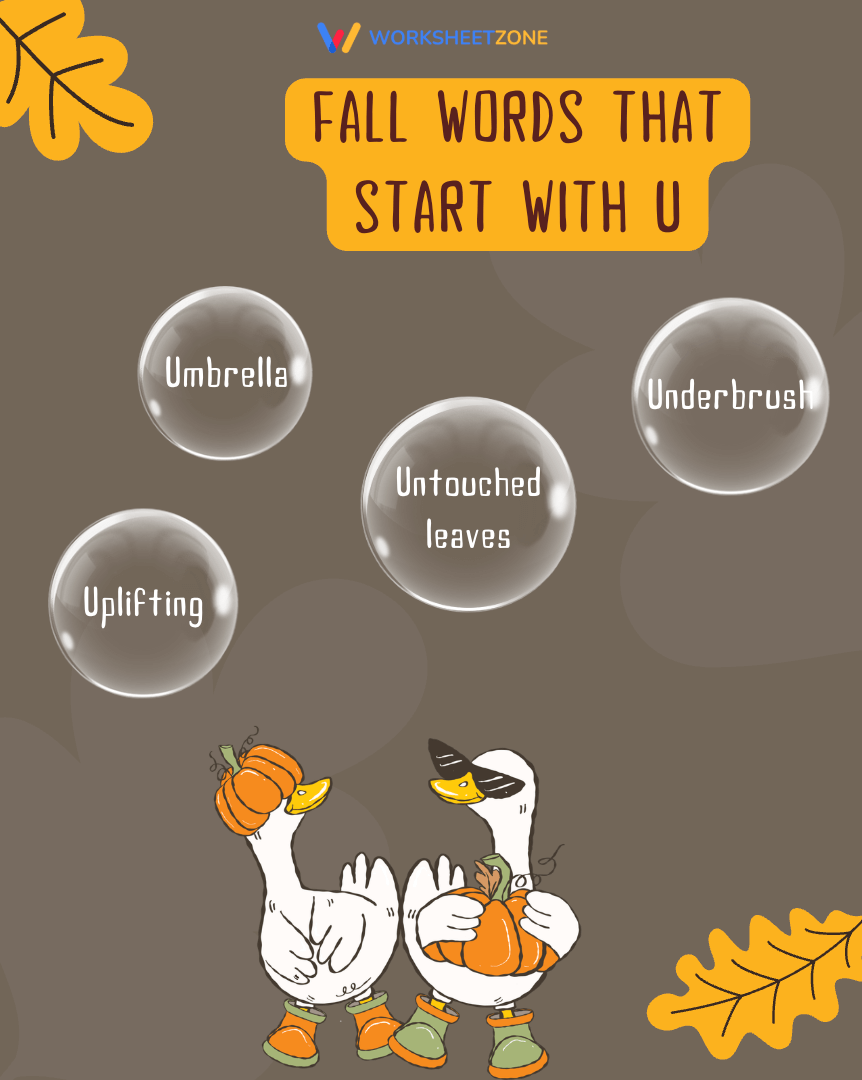
- Umbrella
- Underbrush
- Untouched leaves
- Uplifting
Fall words that start with V
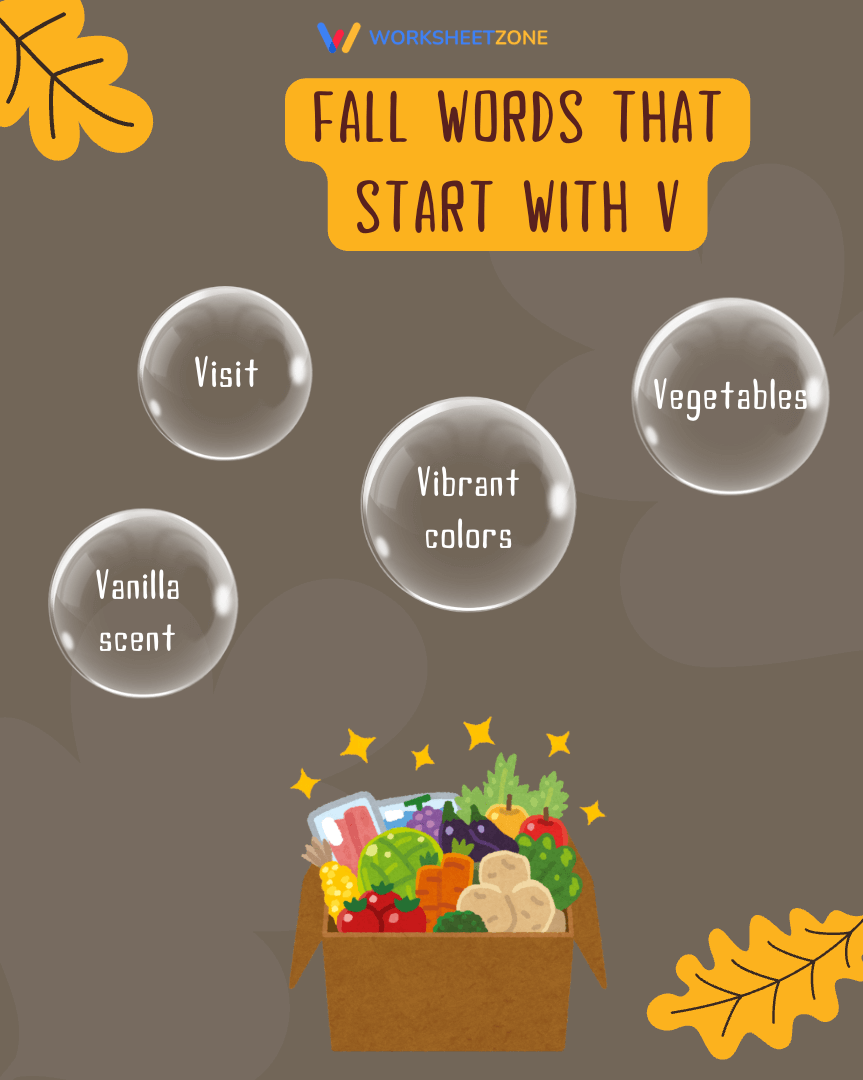
- Vibrant colors
- Vegetables
- Visit
- Vanilla scent
Fall words that start with W
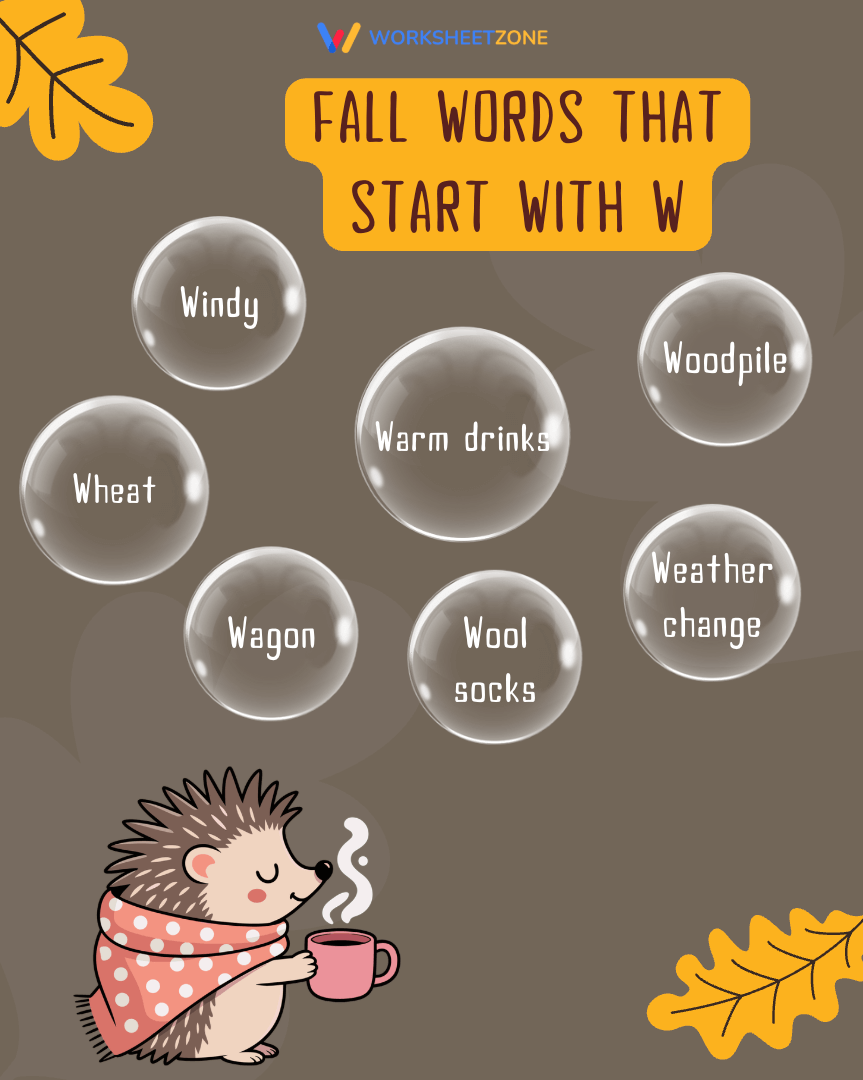
- Windy
- Warm drinks
- Woodpile
- Wheat
- Wagon
- Wool socks
- Weather change
Fall words that start with X

- Xanthophyll
- X-country (cross-country)
Fall words that start with Y

- Yellow leaves
- Yardwork
- Yams
- Yarn crafts
Fall words that start with Z
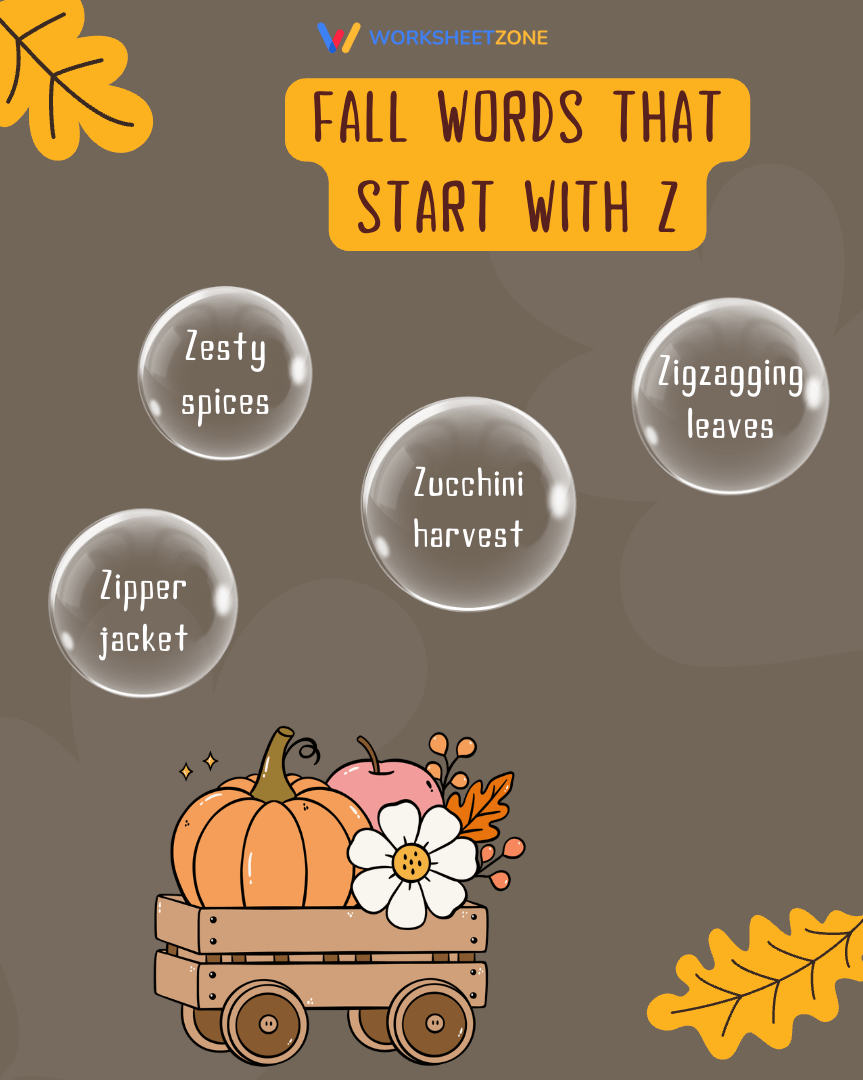
- Zesty spices
- Zipper jacket
- Zucchini harvest
- Zigzagging leaves
If you’re also looking to build seasonal vocabulary, check out our list of helpful Thanksgiving words to support your autumn lessons.
FAQs
1. How can fall words improve student writing?
Using descriptive autumn vocabulary allows students to move beyond generic terms and paint vivid pictures with their words. When children learn specific nouns like “maize” or adjectives like “vibrant,” they gain the tools needed to describe sensory details in their narrative essays. This depth of expression significantly enhances the overall quality and creativity of their writing assignments during the school year.
2. What are the best ways to teach autumn vocabulary to preschoolers?
For younger learners, multisensory activities are most effective for retaining new vocabulary. Teachers can pair words like “crunchy” or “smooth” with actual leaves and acorns for students to touch and feel. Combining visual aids with physical objects helps establish strong mental connections between the word and its meaning. We suggest starting with simple words and gradually introducing longer seasonal terms.
Final thoughts
Exploring fall words is an easy way to help children connect literacy skills with seasonal experiences. This vocabulary list can spark writing prompts, inspire poems, support spelling practice, or simply help kids describe the world around them during autumn. Whether you see these words in worksheets, journals, morning warm-ups, or seasonal bulletin boards, teaching fall vocabulary boosts language development while keeping learning fun and festive. As leaves turn and temperatures drop, let these fall-themed words guide creative lessons all season long.


