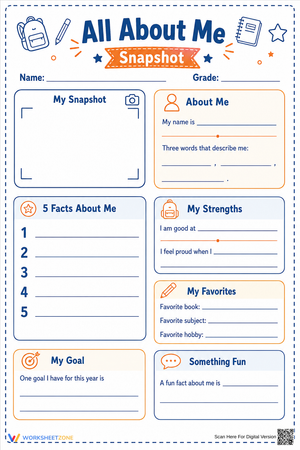
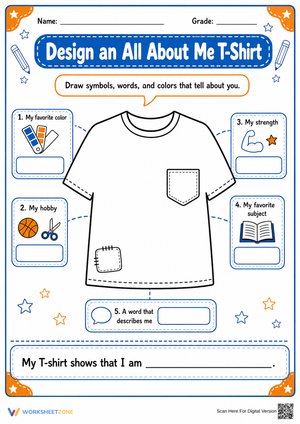
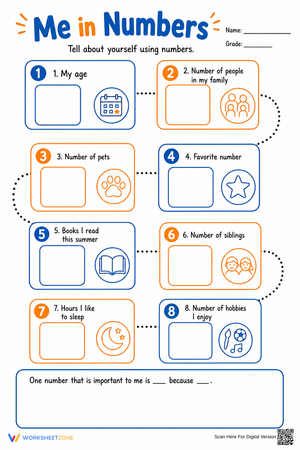
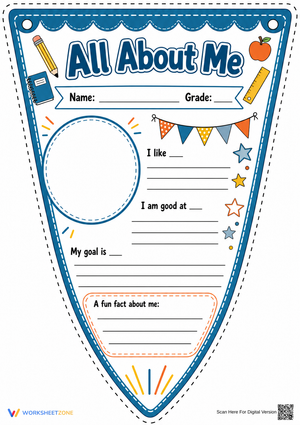
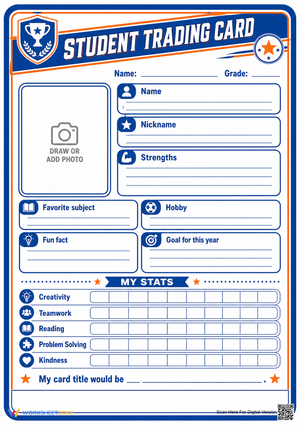
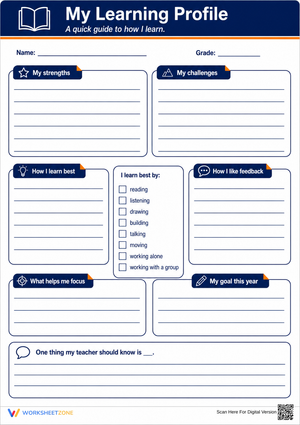
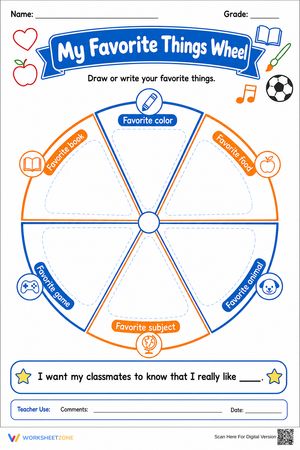
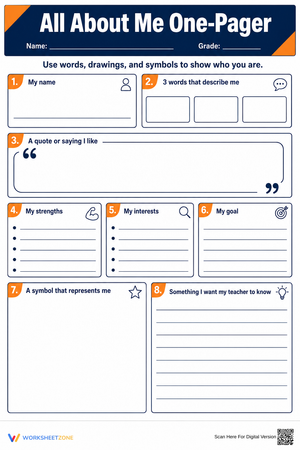
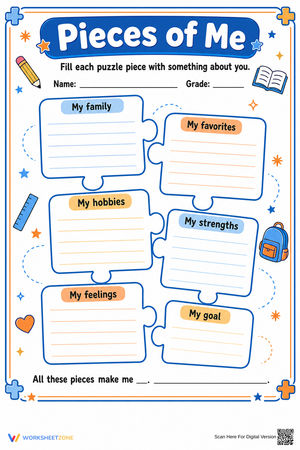
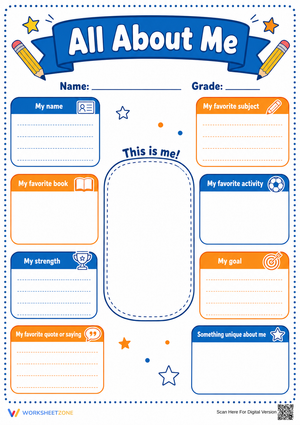
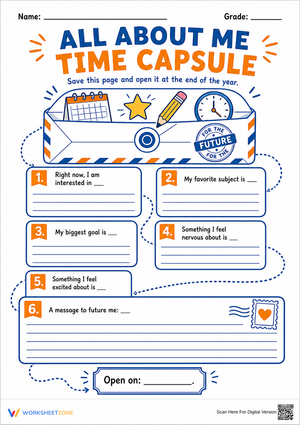
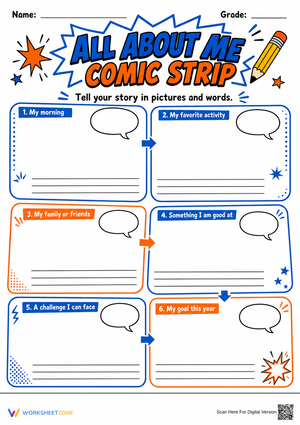
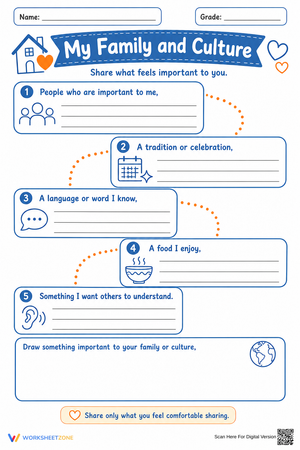
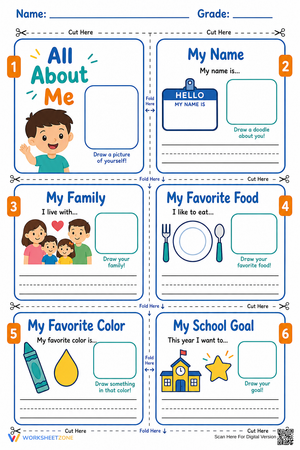
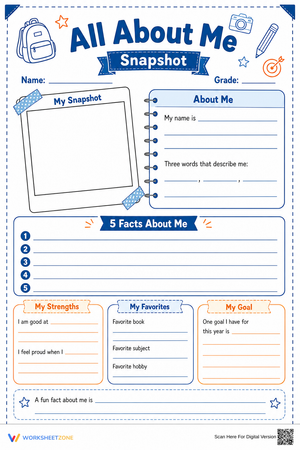
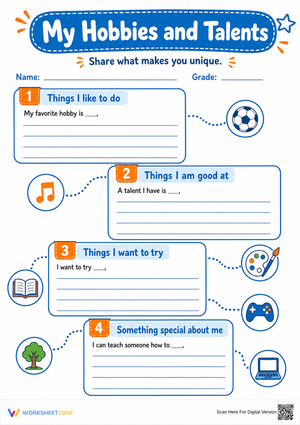
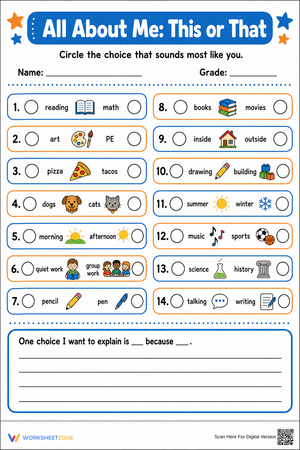
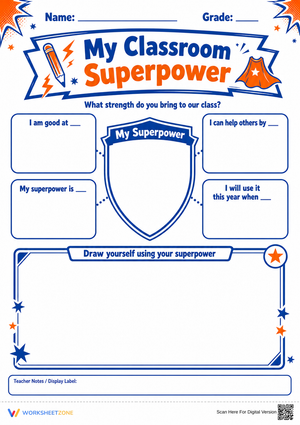
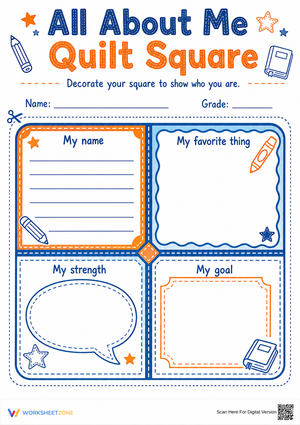
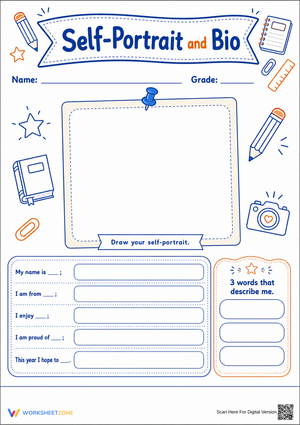
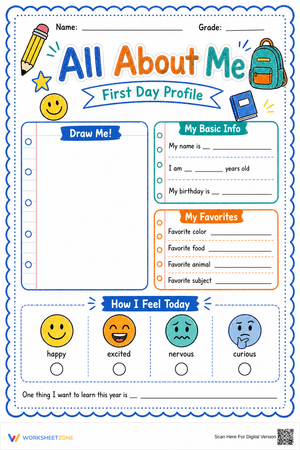
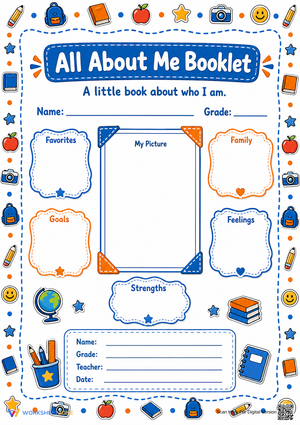
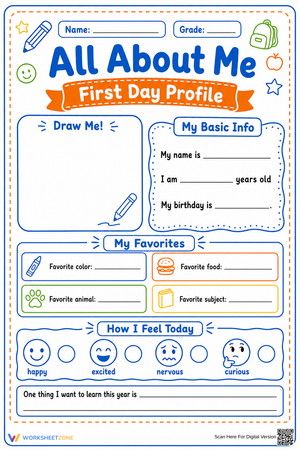
The first days of school move fast, and homeroom teachers often have only a few quiet minutes to learn who is actually sitting in front of them. A free All About Me worksheet gives you a low-prep way to close that gap. Instead of designing an original getting-to-know-you page from scratch, you print one sheet, hand it out, and immediately have a starting point for conversation with every student in the room.
These worksheets are commonly used on the first or second day of school specifically because they let classmates and teachers get to know each other before academic routines take over, which means the payoff comes fast: you walk away with real information about each child's interests within a single class period, not weeks into the term.
Building Classroom Community From Day One
Getting-to-know-you worksheets do more than collect facts. They signal to students that you see them as individuals with their own stories, not just names on a roster. That signal matters most in the first week, when students are still deciding whether the classroom feels safe enough to participate.
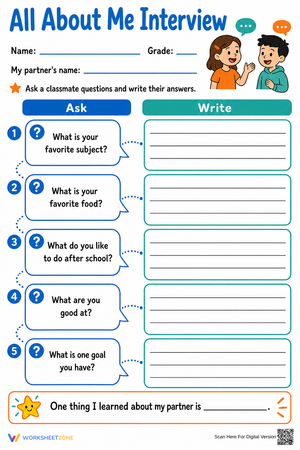
Consider setting aside ten minutes after students finish the worksheet for a quick share-out. Even a simple structure, where each child reads one line to a partner or to the whole group, turns a solo writing task into a community-building moment. This also gives you a chance to hear how comfortable each student is speaking in front of others, which is useful information heading into the rest of the year.
Using the Worksheet as an Informal Baseline
Beyond the icebreaker function, an All About Me worksheet doubles as a quick, informal check on where students currently stand with writing and self-expression. You can see who confidently fills every blank with full sentences and who needs more support forming a single idea. None of this replaces formal assessment, but it gives you an early, low-stakes read on your class.
Keep the completed worksheets in a simple folder or binder. When you are planning independent reading choices, small-group topics, or classroom incentives later in the semester, flipping back through what students wrote in week one can remind you of details that are easy to forget once routines settle in.
Turning the Worksheet Into a Bulletin Board or Open House Display
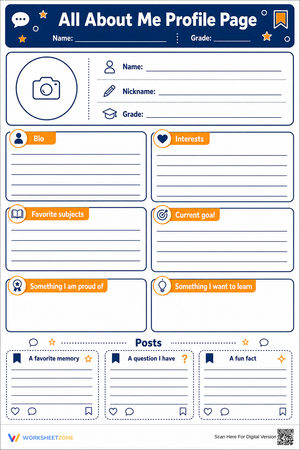
Once students finish, the pages themselves become useful beyond the desk. Many teachers pin completed All About Me sheets to a bulletin board near the classroom entrance, creating an instant, personal display for the first open house or back-to-school night. Families get a window into how their child sees themselves, and students get the small thrill of seeing their own work on the wall.
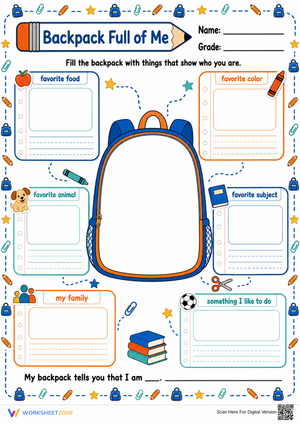
If you plan to display the worksheets, consider having students add a quick self-portrait in any drawing box included on the page. The visual element makes the board more inviting for younger siblings and visiting families, and it gives reluctant writers a way to contribute even if their written answers are brief.
Frequently Asked Questions
1. Is this All About Me worksheet free to download and print for classroom use?
Yes. The worksheet is designed as a no-cost, ready-to-print resource so teachers can grab it and use it right away without creating an original activity from scratch.
2. What grade levels is an All About Me worksheet best suited for?
It works best in early elementary classrooms, generally kindergarten through second grade, though the seasonal, adaptable format means it can be adjusted for slightly older students as well.
3. How can teachers use an All About Me worksheet beyond the first day of school?
Beyond day one, the completed pages serve as an informal baseline of student interests and writing ability that you can revisit later when planning small groups, book choices, or classroom incentives.
4. What classroom community or social-emotional benefits come from All About Me activities?
These activities build self-awareness and self-esteem by having students identify and share their own interests and strengths, while also signaling to the class that each student is seen as an individual.
5. Can the worksheet be adapted for students who need extra support, like ELLs or younger writers?
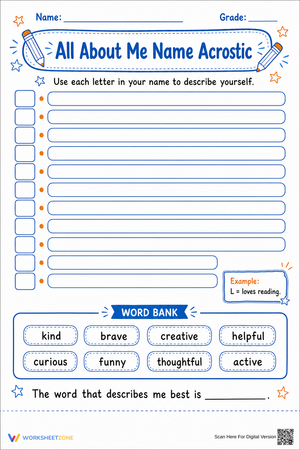
Yes. Picture prompts, sentence starters, word banks, and partner support all help English language learners and younger writers complete the worksheet even before their independent writing skills are fully developed.












 Interactive Worksheet Maker
 Quiz Maker
 Word Search Maker
 Crossword Puzzle Maker
 Word Scramble Generator
 Sentence Scramble Generator
 Handwriting Worksheet Generator
 Name Tracing Generator
 Fill In The Blank Generator