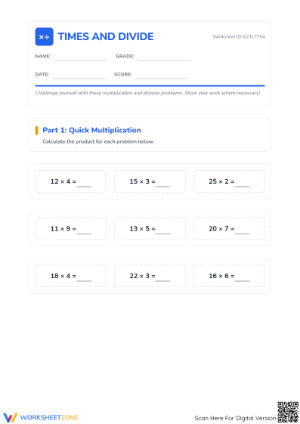
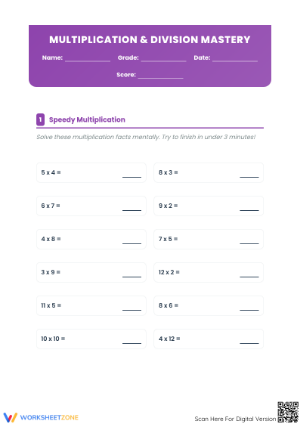
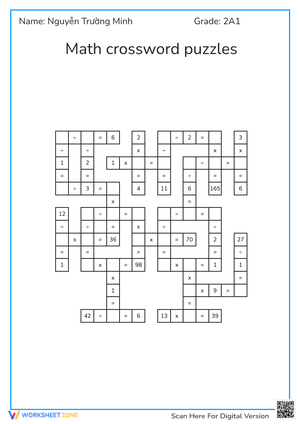
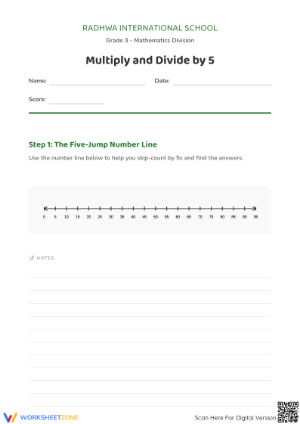
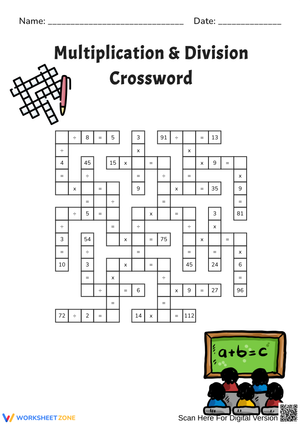
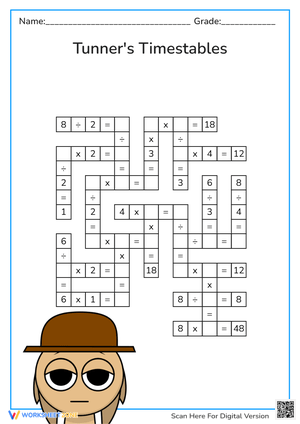
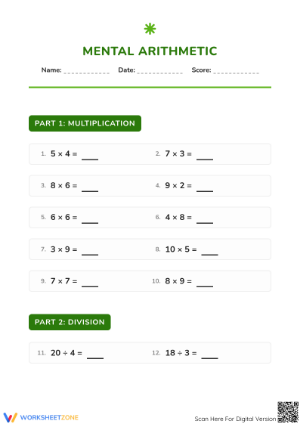
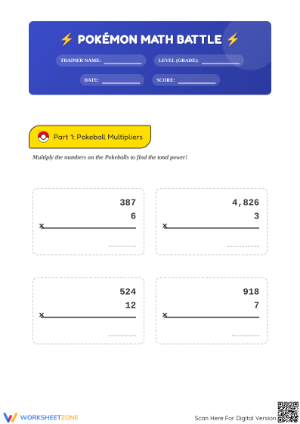
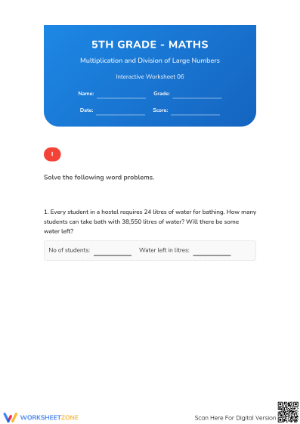
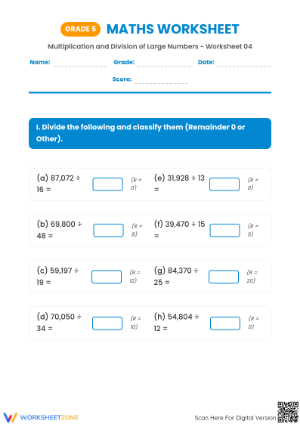
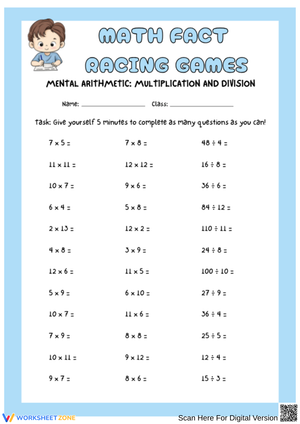
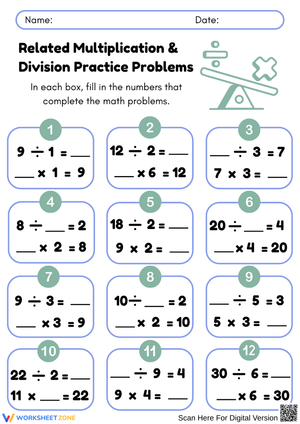
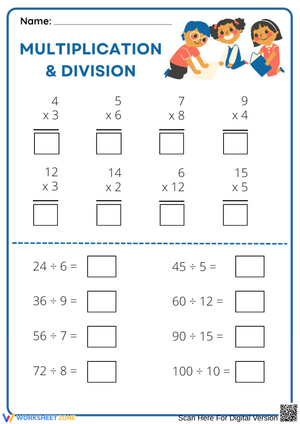
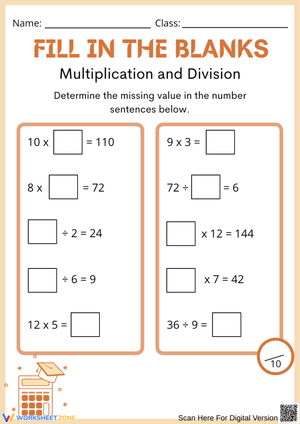
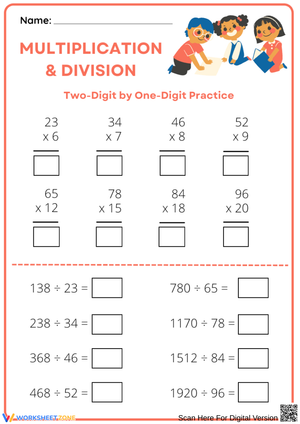
These multiplication division worksheets give grades 3–5 teachers a ready set of mixed-operation practice that treats the two operations as what they actually are: two sides of the same fact. Each worksheet moves students away from single-operation routines and into the kind of flexible thinking that shows up again when fractions and algebraic reasoning enter the picture.
The Specific Practice Targeted With These Multiplication & Division Worksheets
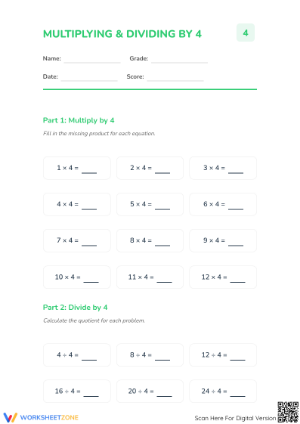
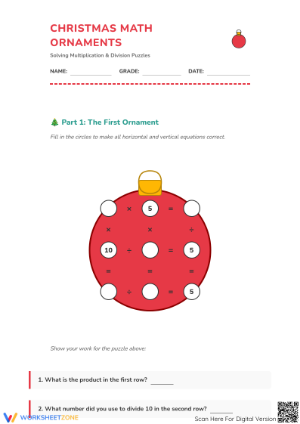
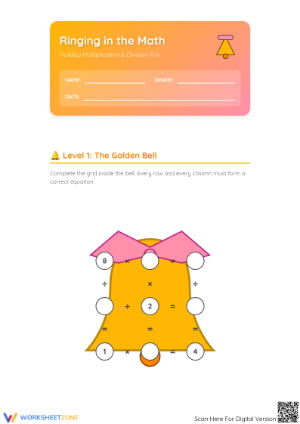
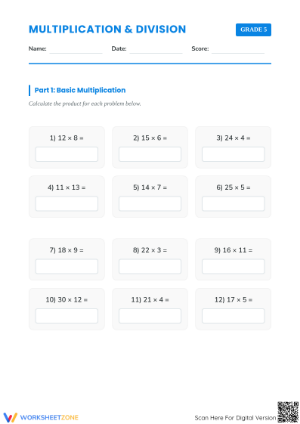
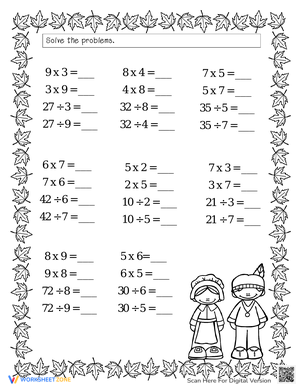
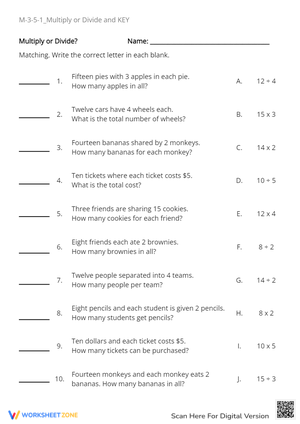
The core work in this set sits at the intersection of procedural fluency and relational thinking. Students don't just solve equations — they sort multiplication from division by reading operational symbols carefully, recall facts under varied formatting, and write the complementary sentence from a given equation. Fact family tasks show up across multiple worksheets: students who see 6 × 9 = 54 are asked to produce all four related sentences, which exposes whether they genuinely understand the inverse relationship or are pattern-matching on symbol placement.
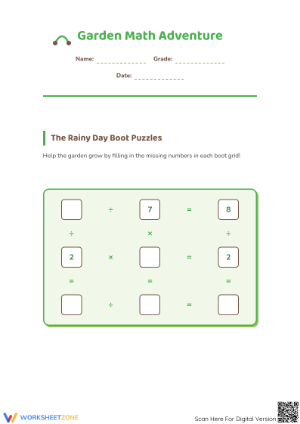
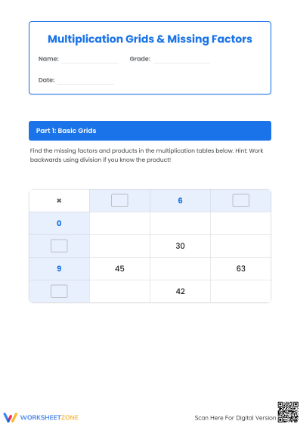
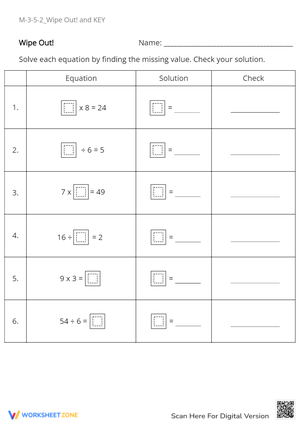
A few worksheets extend that work into missing-factor problems — equations written as 56 ÷ □ = 7 or □ × 4 = 36 — which require students to reason multiplicatively even when the format looks like division. That shift in structure is deliberate. It mirrors the way standardized assessments and upper-elementary word problems present the operations, and it surfaces a specific reasoning gap that shows up often in fourth grade: students who are fluent multipliers but still treat division as a completely separate memory task.
Standard Alignment
The primary standard addressed across this set is CCSS.MATH.CONTENT.3.OA.C.7, which requires students to fluently multiply and divide within 100 by the end of third grade and to know from memory all products of two one-digit numbers. The CCSS frames fluency as accuracy, efficiency, and flexibility — not just speed — which is why interleaved multiplication and division practice aligns better with that standard than timed single-operation drills alone. The fact family and inverse-relationship tasks also connect directly to 3.OA.B.6, which asks students to understand division as an unknown-factor problem: if 32 ÷ 4 = □, think of □ × 4 = 32. These worksheets make that connection explicit rather than incidental.
Common Mistake Of Students That Teachers Should Aware and Address
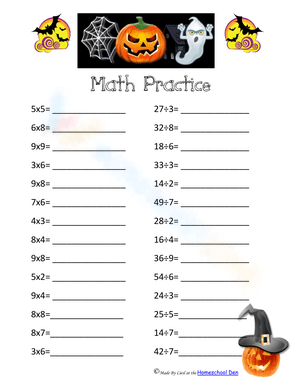
The most persistent error pattern isn't forgetting facts — it's sign blindness. When worksheets cluster all multiplication problems together, students stop reading the symbol and default to whichever operation they practiced last. On mixed worksheets, that habit breaks down fast: a student who has just answered three division problems and then encounters 7 × 8 will sometimes write 1 (subtracting instead of multiplying) or 56 ÷ 7 = 8 written in the multiplication slot. The error is usually not a fact error — it's an attention-to-structure error, and it's worth naming for students before they start.
A second pattern involves the 6s, 7s, and 8s multiplication division facts specifically. A student may know 7 × 8 = 56 solidly but still pause on 56 ÷ 7, because the retrieval path through a division frame feels like unfamiliar terrain even when the underlying fact is there. Worksheets that pair those equations — placing the multiplication and its inverse close together on the same worksheet before separating them — help students start building the bidirectional retrieval that automaticity actually requires.
Recommended Lesson Planning Strategies To Take Full Advantages Of These Worksheets
The most consistent classroom use is the morning warm-up block — the five to eight minutes after attendance and before the lesson opens. A single worksheet kept at desk level means students start working immediately rather than waiting for instruction. That routine also gives teachers a quick read on where students landed overnight: a worksheet collected at the end of warm-up tells you more about retention than most exit tickets do.
Math rotations are a natural fit too. A fluency station stocked with these worksheets runs independently while the teacher pulls a small group, and the mixed-operation format means students have to stay alert rather than going on autopilot. Some teachers laminate a small selection and keep them at the station with dry-erase markers for repeated use — particularly useful mid-year when the goal is maintenance rather than initial instruction.
For targeted intervention, individual worksheets work well as a diagnostic starting point. Give the same worksheet twice — once at the start of a unit, once two weeks in — and the comparison tells a precise story about which facts are approaching automaticity and which aren't. That's more actionable than a timed test score because you can see exactly which equations a student skipped, rewrote, or answered incorrectly both times.
Adapting These Worksheets For Different Levels of Students
For students who are still building fact fluency, keep a multiplication chart visible while they work — the goal at that stage is practicing the decision-making process, not adding a memory burden on top of it. You can also assign only the multiplication rows of a given worksheet first, then have the student return to the division rows once the multiplication is solid. That's a sequencing adjustment, not a content reduction, and students don't experience it as being given less work.
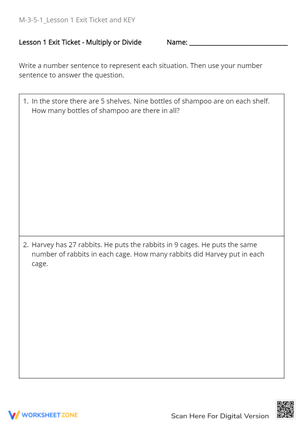
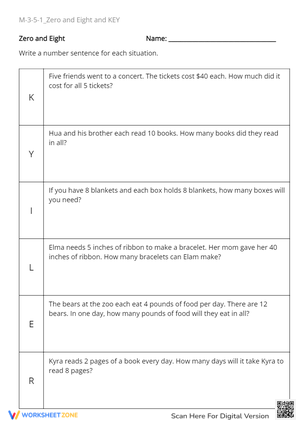
Students who have reached automaticity on basic facts benefit from the missing-factor format mentioned above, and also from being asked to generate a word problem that matches a specific equation on the worksheet. Writing a context for 72 ÷ 9 = □ is harder than solving it, and it reveals whether the student understands what division means — not just how to retrieve the answer.
Frequently Asked Questions
Which grade should introduce these mixed-operation worksheets?
Third grade is the entry point, typically in the second half of the year once students have had explicit instruction on both operations. Using mixed multiplication division worksheets too early — before division has been introduced conceptually — creates confusion rather than fluency. Fourth and fifth grade teachers use the same worksheets for maintenance practice and to close gaps that surface during multi-digit operations instruction.
Do students need to have memorized their facts before using these?
No — and that distinction matters. Students who are still developing fact fluency benefit from the operational decision-making practice even if they need reference support for individual facts. Waiting until all facts are memorized to introduce mixed practice delays the habit of reading and responding to operational symbols, which is its own learnable skill. Use a reference chart as a scaffold, then fade it as automaticity develops.
How do these worksheets work as formative assessment tools?
Each worksheet gives a snapshot of two things at once: which facts a student retrieves accurately, and whether they switch between operations without errors. Look at the division problems specifically — a student who answers all multiplication problems correctly but leaves division problems blank or consistently wrong is showing you a retrieval pathway issue, not a general math difficulty. That distinction changes how you plan intervention. Collecting worksheets at the end of warm-up two or three times a week gives you a running record without requiring a separate assessment.
Can these worksheets be used in a partner or small-group format?
Yes, and it often produces better results than silent independent work during initial instruction. One effective structure: Partner A solves a multiplication equation and states the answer aloud; Partner B writes the inverse division equation and solves it, then both partners confirm the fact family relationship before moving on. The verbal explanation step forces students to articulate the inverse connection rather than just compute, which deepens retention. This works particularly well for the missing-factor problems, where disagreement between partners usually signals a genuine conceptual gap worth addressing with the whole group.













 Interactive Worksheet Maker
 Quiz Maker
 Word Search Maker
 Crossword Puzzle Maker
 Word Scramble Generator
 Sentence Scramble Generator
 Handwriting Worksheet Generator
 Name Tracing Generator
 Fill In The Blank Generator